
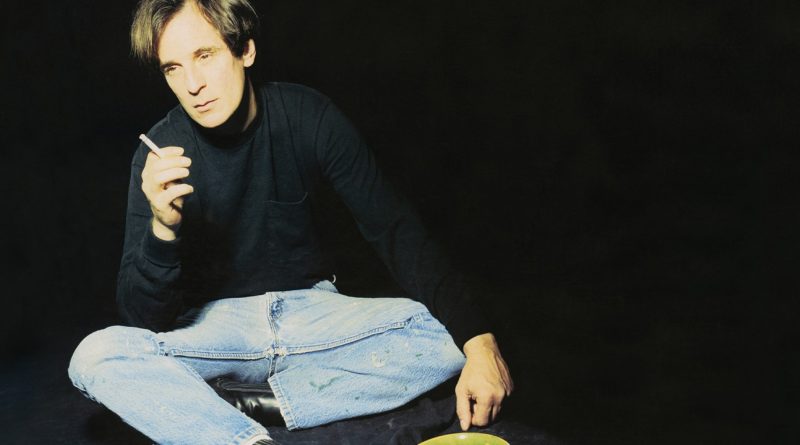
If He Was From Venus: Alex Chilton at 75
Celebrating the life of a Memphis rock icon
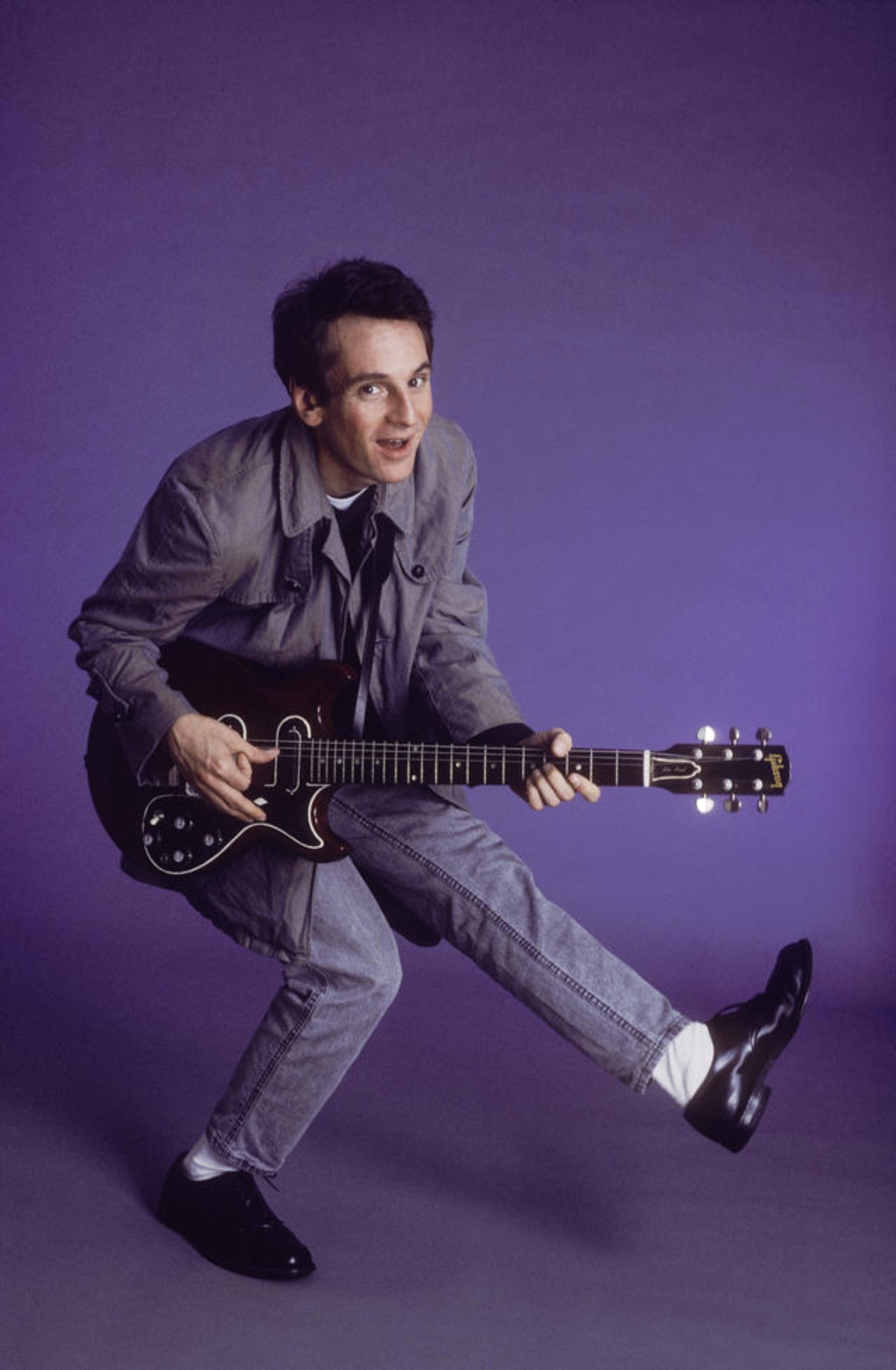
Alex Chilton would have celebrated his 75th birthday today.
Death came calling 15 years ago and, while the former co-leader of Big Star and the Box Tops guy who sent us “The Letter,” wasn’t in good health, he was killed as much by insurance as anything else.
By that, I mean lack of insurance and/or lack of money to buy insurance. Alex was a well-respected man, but he was not a rich rock star. He struggled. He had underlying heart issues, but delayed going to the hospital until, well, it was too late. He collapsed while mowing his lawn on March 17, 2010.
And not to get all 2026 here, but come Jan. 1 a whole lot of Americans are going to be in Alex Chilton’s shoes.
I reviewed Chilton several times, talked to him a bit, was pleased to find out he and my friend Ray Davies had become friends when Ray lived in New Orleans. When it came time for a Ray Davies tribute album, 2010’s See My Friends, Chilton contributed the Kinks’ classic “Till the End of the Day.”
Chilton was a hero to many who ply the pop trade — saluted specifically in song by The Replacements and indirectly by virtually everyone else in the know, a legend in many a mind even if radio and mainstream pop fans had forgotten about him. When new wave hit, Chilton gained something of a new cachet, a lesser version of what happened with Iggy Pop. Chilton was the soft-spoken genius who survived the rock ‘n’ roll sausage grinder.
He re-entered my world, in a way, by producing the Cramps debut LP in 1980, Songs the Lord Taught Us. Clearly, it seemed, Chilton had a pretty cool rock ‘n’ roll sensibility if he was eager to dive into the Cramps psychobilly jumble.

I caught Chilton in 1995 at a Boston club, the Paradise. I was reviewing for the Boston Globe and went backstage prior to the set. Chilton sat, quietly strumming a guitar, and when prompted, considered the impact of the four-star reviews his latest album, A Man Called Destruction, had been garnering.
“Doesn’t seem to help record sales much,” he said, in a deadpan Memphis drawl. Not bitter, not blase.
“I’ll buy one!” chirped in Lisa Mednick, a Boston-area keyboardist who’d played with The Chills was about to join Juliana Hatfield to do the same on tour.
“I’ll buy one!” said her friend exclaimed.
A pause and a smile. “That’ll increase sales about 100%,” said Chilton.
Chilton was used to critical acclaim and minimal sales. As the prime mover of Big Star, he had become many a dark-tinged modern pop band’s influence. He’s the ultimate cult hero, his only “failure” being his unwillingness to surrender to his drug-and-drink demons and die a pop-tragic death like Johnny Thunders or Sid Vicious or fade away like Syd Barrett. Chilton carried on, mining a sassy, feelgood, non-trendy R&B/rock vein.
Chilton was so user-friendly those days, it was almost criminal. Yes, you missed the poignant desperation of “Holocaust,” but you easily slid into the slippery grooves of “Sick and Tired,” “Lies,” “What’s Your Sign Girl” and “B-A-B-Y.” And when Chilton issues a devotional plea, as in “I Turn Your Money Green,” it’s of this nature: “I’ll stand closer to you than Jesus to the cross.” That’s, uh, devotion. And pain.
You want jazzy lounge music?
You got it with a Nina Simone song and Chilton’s longtime staple “Volare.” The set these guys — Chilton was joined by singer-guitarist Chilton, bassist Ron Easley and drummer Richard Dworkin — served up was supple and subtle. Chilton chose the 20 or so songs from about 40 currently in his repertoire. The interesting thing was that Chilton treated Vegas schmaltz — an Ann-Margret song, say — with the same reverence as anything else. Slight and still boyish (if knowing), Chilton was the great equalizer.
He ripped off a few gut-wrenching blues guitar leads; he ventured into cynicism (“Money Talks”); and he encored with Brian Wilson’s darkly giddy “New Girl in School,” and then, bid adieu with a lullaby, “Goodnight my love, pleasant dreams.”
I’d seen him six years earlier a smaller (now sadly defunct) club called T.T. the Bear’s Place in Cambridge.
Even with no current U.S. LP to tour behind or no record company support — Chilton had just released the “Blacklist” mini-album on France’s New Rose — his status was secure enough that T.T. the Bear’s Place had to turn away patrons shortly after 11 pm. (Granted, the capacity might have been 270 but still …)
Those who made it inside got an odd — no surprise there — mostly satisfying show, rooted more in swampy Delta music and Southern blues than in pure pop. Chilton played a mean, slashing electric guitar when he got to it, but saxophonist Jim Spake was just as likely to get the call, and it made for a sassy, brassy evening that ended strangely. That is, Chilton hit his hard-rocking peak midway through with “No Sex” (more about that later) and “September Gurls,” but then slid into a lot of comfortably low-key soul and blues grooves: pleasant but no match for the aforementioned duo. It seemed that Chilton might have been revving up once again when the lights went on and the soundman cut a song after just a few bars. He had to. The club had a 1 a.m. license and Chilton showed no signs of leaving the stage. So, Chilton and his trio shuffled off on a disquieting note. Weird, haphazard pacing, not entirely of his fault.
Still, Chilton’s 90-minute set was generous in song and style, bracketed by the hard pop and dark wit of his old “Bangkok” and the new, swampy “I’ll Return Your Money Dream.”
Chilton was an affable entertainer, whose interests ranged from off-handedly prurient (“Tina the Go-Go Queen”) to purely poignant (“I Got a Thing for You”). “No Sex” was his masterwork, the best song about sex in the age of AIDS. “No sex, no sex, not anymore …I remember 1982/Some VD strain, but that’s all through/This year it’s a retrovirus/Now they’d just as soon gas and fire us … But no sex, not in the hall/No sex, not against the wall.”
And then: “I’m really worried about the future/Junkie blood is gonna pollute ya/Pretty soon we’re all gonna get it/It’s time to buy some stuff on credit.”
While it bemoans the passage of unbridled lust, it does so slyly, almost comically, without being irresponsible toward the disease or its victims. It’s just a sharp commentary that boasts a great, choppy guitar bridge and a slinky arrangement.
Chilton’s forte since the mid-’80s has been his juxtaposition of a funky soul groove with succinct, slashing guitar bits. This set was somewhat less witty, subtly confrontational and groundbreaking than is Chilton’s history — you always hope for the best — but it also was high on spirit and low on ego. Chilton is aware of his reputation, but he’s happier working at the simmering level. It’s gritty, angular rock ‘n’ roll, indebted to all the older, bluesier idioms that make sense today. Hard to categorize, easy to appreciate. Chilton’s Memphis-bred charm made it even more accommodating. After announcing “No Sex” as “N-O-S-E-X,” a fan shouted out the meaning of the letters and Chilton wagged an index finger at him: Yes, indeed, this was a smart crowd.
AUDIO: Alex Chilton “No Sex”
I asked a couple of Boston area musicians I greatly respect about their take on Chilton.
“The music has always sounded like a source of so much that has happened since,” said singer-songwriter-guitarist Will Dailey. “That may just be my mind playing tricks on me but something began there and it had a sense of freedom to be pop, rock and independent.’
“It seemed to me he always did what he wanted to do, regardless of the consequences to his career,” added singer-songwriter-guitarist Dennis Brennan. “And I admire that. I recall seeing him at [another now-defunct Boston club) The Channel in the late ‘80s and he was with a trio, himself on guitar with a bass player and a drummer. It was kind of chaotic, almost nondescript but you couldn’t stop watching and listening because at the same time it was mesmerizing. Almost like you were waiting for something beautiful or terrible to happen. Maybe, all at the same time.
“His own songs he seemed to toss off like he didn’t think much of them. The covers, I remember him treating them seriously. He did ‘Volare’ without a trace of irony. And Slim Harpo’s ‘Scratch My Back’ now a staple of blues bands was given serious attention too. ‘Little GTO’ by Ronnie & The Daytonas was a staple at his shows also. He played some new things, one of them he introduced as ‘a song for a very bad man, a pimp from New Orleans named Willie Tee’ (aka Will Turbington). Alex had that look of someone who’d seen it all and could not be surprised.”

- St. Vincent Goes to the Symphony - June 10, 2026
- A Decade Without Prince - April 21, 2026
- Rob Hirst Was the Engine of Midnight Oil - January 23, 2026
You May Also Like
-
 June 9, 2021
 -
 January 9, 2019
 -
 August 31, 2020
