
If the ‘Shoes’ Fit…
Catching up with the Illinois power pop greats
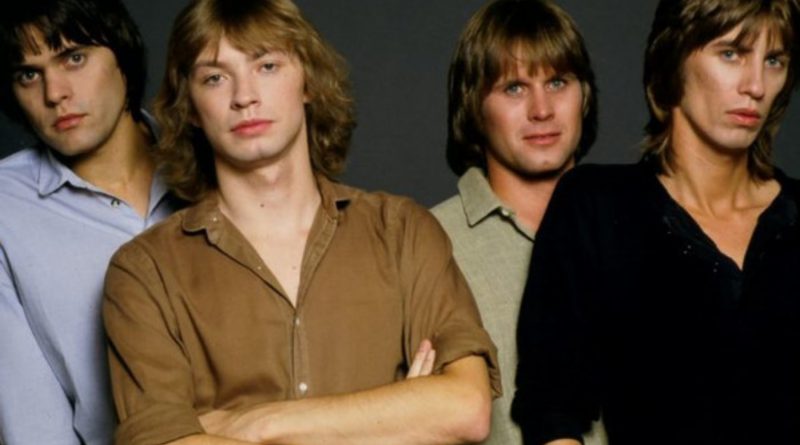
In a just world, the music of Shoes would have been blasting out of radios throughout America in the late ’70s and early ’80s.
This long-running band from Zion, Illinois, had a handful of minor hits and is definitely beloved in power pop circles. But for reasons that remain inexplicable, mainstream success eluded them. On paper, Shoes had it all: they wrote catchy, commercial songs; they were a good looking group of guys; and they were signed to a major label. And yet — not unlike their English compatriots The Records — they never received the success they deserved.
Shoes began in the ’70s when school friends John Murphy and Gary Klebe began writing songs, inspired by The Beatles and other bands. Soon they were joined by John’s younger brother Jeff. Klebe and Jeff Murphy both played guitar while John handled bass. Then, as now, all three members sang lead and wrote. They were assisted over the years by a rotating series of drummers. The first was a guy with the ironic name of Barry Shumaker! Skip Meyer played drums on all of the band’s major label releases while John Richardson has been behind the kit on their last few albums.
By the mid-70s, Shoes had started writing original material and releasing limited (very limited!) edition recordings. This culminated in 1977 when they issued the Black Vinyl Shoes album. In its own way, that disc was to the burgeoning power pop scene what the Buzzcocks’ Spiral Scratch was to English punk: a homemade album that helped kickstart a DIY movement. Journalists who heard Black Vinyl Shoes (Chicago native Cary Baker was one of the first) loved it. While the sound was far from polished, the band’s way with melodies, harmonies and fuzz guitars came through loud and clear. Eventually, Shoes was rewarded for their efforts with an Elektra Records contract.
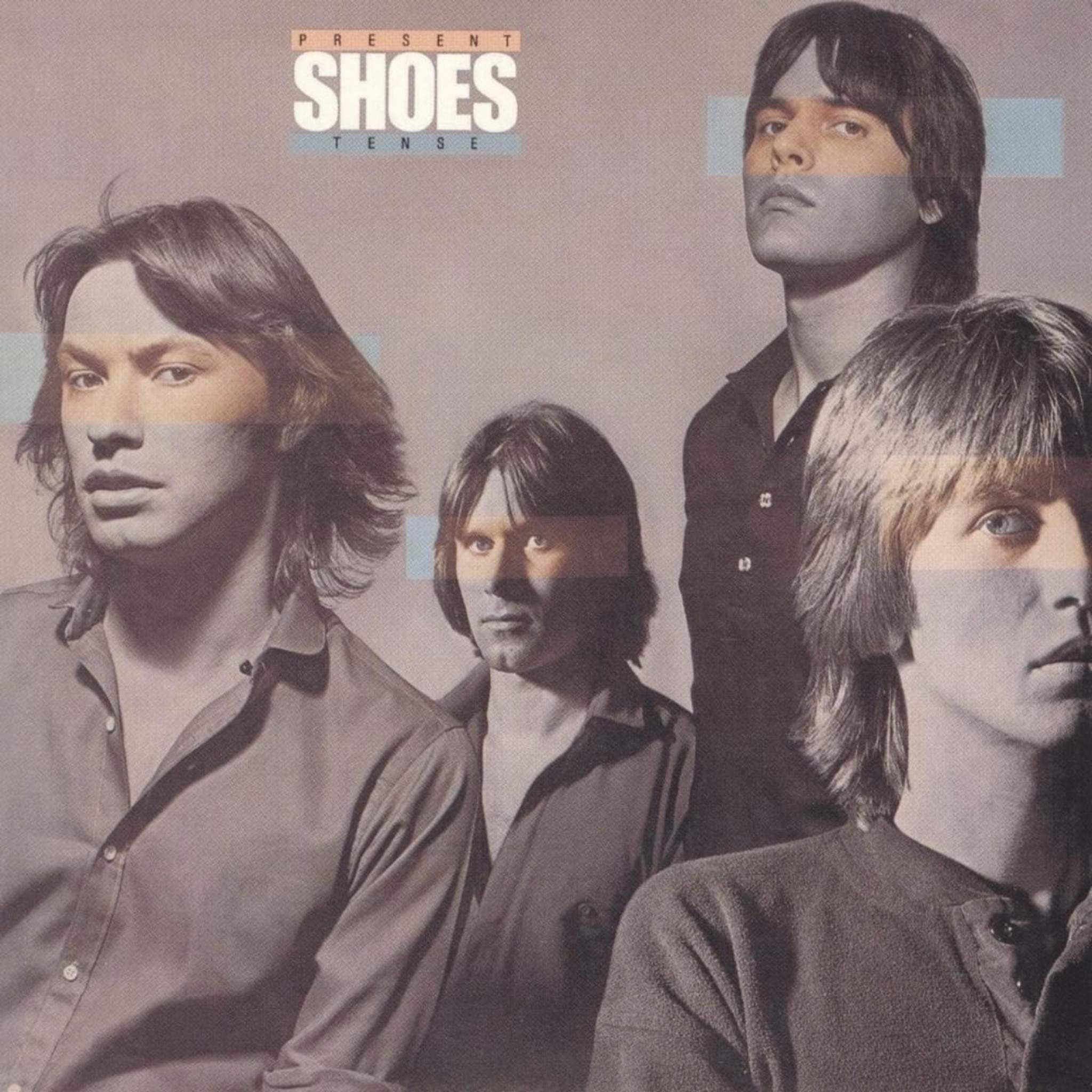
That should have been the turning point for the band. Power pop was enjoying a major resurgence thanks in large part to The Knack — and again, Shoes had everything going for them. Their Elektra debut, 1979’s Present Tense, was recorded in England with producer Mike Stone (who had worked with Queen). Everything was in place for success… or so it seemed. But the singles from Present Tense only got as far as the mid-reaches of the Billboard charts. Undaunted, the band recorded the album Tongue Twister the following year. If anything, their sophomore set for Elektra was even better than Present Tense: a dozen songs that were produced by Richard Dashut of Fleetwood Mac fame. From the hyper opening track, “Your Imagination,” to John Murphy’s rocking closer “Hate To Run,” there wasn’t a bad tune in the bunch.
Unfortunately, because Elektra already had four albums in the Top 10 when Tongue Twister was ready, they persuaded the band to push the release date back. When it finally arrived — in late January of 1981 — some of the staffers who had championed Shoes were gone and the momentum had been lost. Shoes released one last major label disc — 1982’s Boomerang — and then returned to being an indie band.
Over the last 40 years or so, Shoes has released music — but much more sporadically. Silhouette, which came out in 1984, was a very good album that saw them integrating keyboards into their sound — but few people heard it, as there was no initial American release. Stolen Wishes, which arrived five years later, fared a bit better — even earning a four star review in Rolling Stone. Since then, there have only been two more studio efforts: Propellor, from 1994, and Ignition from 2012. There have also been numerous compilations, live albums and side projects over the years.
Recently, there has been a sudden flurry of activity in the Shoes camp. Gary Klebe will finally be releasing his solo debut in April on the band’s long running label Black Vinyl. Out Loud contains 11 exemplary pop songs that find Klebe playing everything but drums.
Jeff Murphy has been an in-demand producer for Midwestern bands over the years and is currently involved in a project called Evasive Species.
And anniversaries abound: January marked 45 years since the release of Tongue Twister and April will be 50 years since Shoes played their first gig!
I recently caught up with Jeff Murphy (by phone) and Gary Klebe (electronically) for the Rock & Roll Globe.
Jeff, I wanted to ask you [first] about Tongue Twister since it’s been 45 years.
J: Crazy.
It was your second major label album. Tell me any memories you have [of that time]. You worked with Richard Dashut; he was a pretty big producer at the time.
J: Yeah, having come off Rumours and Tusk for Fleetwood Mac. We were getting frustrated [and] talking to different producers; we didn’t wanna work with Mike Stone again. Nice enough guy, but we had some disagreement on how to make things sound. He didn’t like it when we would refer to our demos. He was like, “Ah, forget about those!” [But] that was our blueprint! We don’t write music, we don’t read music, we don’t know theory. Our way of remembering things is to record it.
I also remember — John would often play the reference rhythm guitar [on his] songs. And [Mike] was like, “What are you doing playing guitar? You’re the bass player!” (laughs) No! We all play whatever we want to; there’s no strict rules.
So we were looking for a producer. And Elektra was parading different people by [us]. But there was a certain feel that we were looking for. We were home here in the Midwest [so] we decided, “Let’s go out to Los Angeles.” That was where the record company was based. So we decided to go see a band that was friends with our manager called Great Buildings.
Oh yeah! They became The Rembrandts, right?
J: They became The Rembrandts, yes. They were playing at the Whiskey, so we went backstage to say hi. A bunch of people were milling around; it was the typical LA kind of thing. I looked over and recognized Richard Dashut! We had actually asked him to do the first album but he was busy doing Tusk.
So anyhow — we recognized Richard. I walked over to him and said, “Are you Richard Dashut?” He said yeah and I introduced myself and he said, “Oh, I remember you guys. You sent me a tape.” And as we were talking, the band started playing downstairs — so it got loud and hard to hear. I thought he said, “How long have you been here for?”
But what he really said was, “How long are you here for?” I said, “Just a couple of days.” And he said, “Too bad, I’d invite you out to the house.” I said, “Well, that’d be cool. We’re looking for a producer.”
And we hit it off. He was funny; that was very important to us. When we find somebody that clicks on that level, it’s fun. So he invited us out to his house. And he said, “The engineer that I used on Tusk was from Chile. [Guy] named Hernan Rojas. We could get him to come in and engineer.” [So we] said okay! We booked time at United Western which is still the best studio I’ve been in. The sound was fantastic. We were in Studio A and it was a wonderful place.
So we spent four months recording that album. Richard would drive [in] from Malibu, we’d do 12 or 14 hours, and then he would drive back home, sleep and then come back! (laughs) We worked him to death! [But] it was a fun process.
I wanted to ask you about a couple of songs on the album. The first song, “Your Imagination,” is your tune, right?
J: You know, it started out that way. I think we gave credit to all three of us. What happened was, I had started demoing a song; at the time I was calling it “Bad Habit.” And I was thinking of habits people have and how it affects their lives. Like there’s a line in there, “do the white heat” — which was a reference to people that did heroin and stuff.
I went away for the weekend. And while I was gone, unbeknownst to me, John and Gary came into the studio and put the song on and started working on it. When I came back and listened to it, it started with that bass line! It was completely different than what I expected. It was this great, gurgling bass [and] it changed the song completely! So we made it a collaborative effort. Then I rewrote the lyrics, keeping some of the stuff.
Then we called it “Time To Make It.” But we didn’t think that was a great title. So literally, I’m in the studio and [the] guys in the control room are ready to do the main vocals. And I”m like, “We gotta come up with a title. And it has to have this many syllables based on what I was singing.” John had a notebook where he had ideas written down. We paddled it back and forth and it became “Your Imagination.” (laughs) It still wasn’t quite the title that we wanted but I love that bass line!
I also wanted to ask you about “Found A Girl,” which is the ballad on the album. There’s something that sounds like a synthesizer in that song. But in the liner notes, it says “No keyboards!” So I was curious: Is that a certain type of guitar that you were playing?
J: Yes. More specifically, it was a gadget that I had built. When I was a kid, I was fascinated by tape recorders. Like you see on the old Mission: Impossible, where they have the little reel-to-reel tape recorders? And, you know, it goes up in smoke after you get your assignment. There was one of those at one of the local pharmacies; they had it for sale. I asked for that for Christmas or a birthday — I can’t remember what it was but I was eight years old, I think, when I got it.
So I would record TV shows and one of the motors died — but I had set up the electronics. So I took out all the electronics and [thought], “If I feed my guitar in where the playback head is and then hook up an output jack to the speaker, I wanna see what that sounds like.” And that’s the sound. It’s really compressed and really distorted. It was such a unique sound. That’s [also] what I used on the solo during “Girls of Today.”
I still use it occasionally. We’ve only done three cover versions on tape ever. And we did Cheap Trick’s “If You Want My Love” a number of years ago. [It] never got released [but] I did the solo on that gadget again. Every once in awhile, I”ll pull it out because it’s got such a cool sound. But that’s what that was.
That’s why we put “No keyboards.” It wasn’t because we were making a political statement; it was because people would always say, “Who plays keyboards?” And we’d say, “No, that’s all done with guitar.”
Interesting! I remember the solo [on] “Girls of Today.” That also sounds like a synthesizer. And it came out at a time when I think The Cars, who were also on Elektra, were getting big.
J: Yeah. It wasn’t that we were necessarily against them; in the years since, we’ve used piano and keyboards. It was just that we were proud that we made these sounds in kind of unorthodox ways.
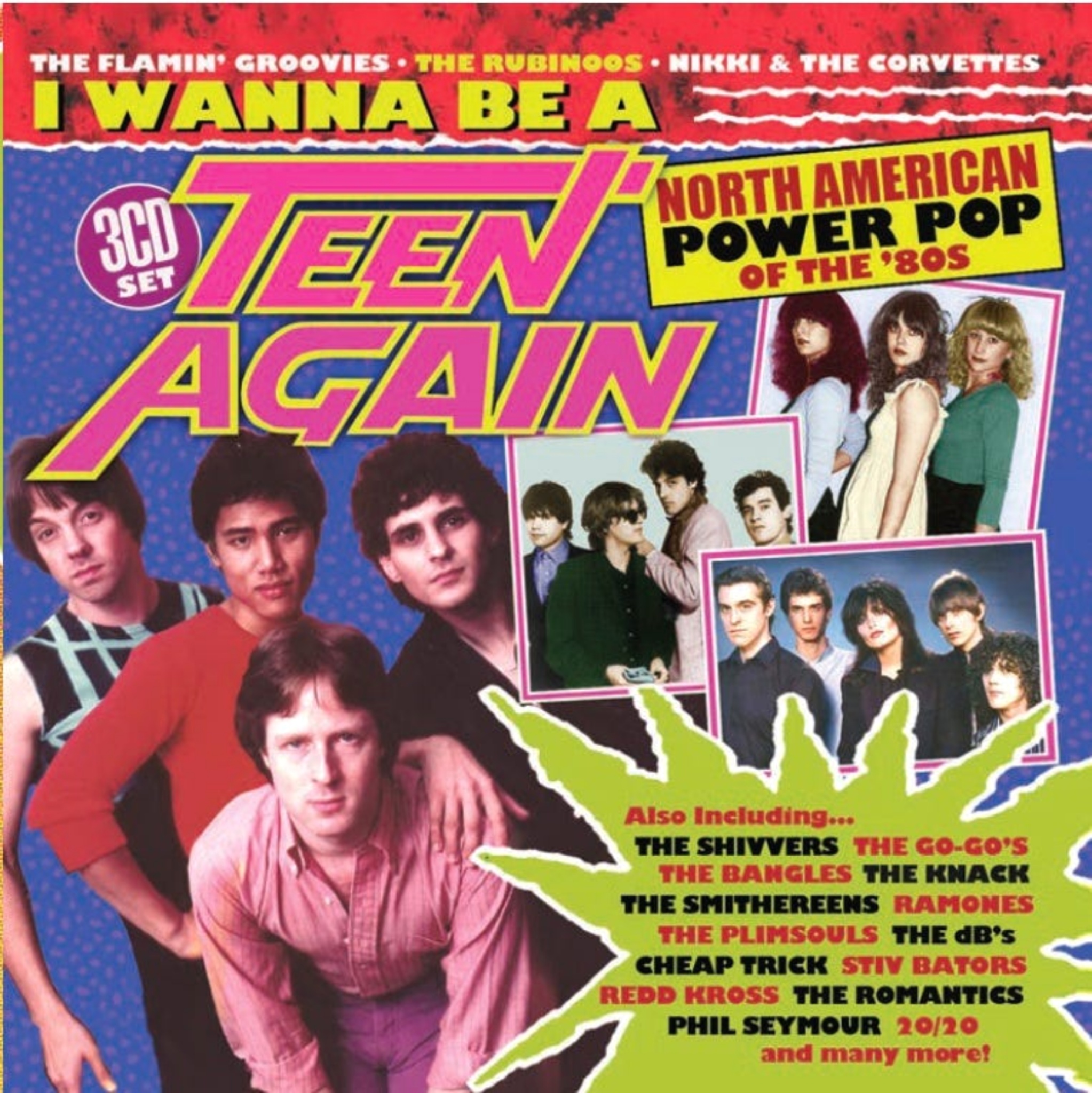
Gary, I wanted to know if you have any memories of “She Satisfies.” That was a great tune from Tongue Twister and it was included on the recent box set I Wanna Be A Teen Again.
G: As with most songwriting, the chords for “She Satisfies” came first. I remember recording a distorted guitar over a tape loop of a drum pattern that had the right feel. We added a temporary bass just to give it more fullness until John’s final bass track was ready to be laid down. Next, I listened to it over and over again at a painful volume until a melody fell into place along with some key lyrics.
Jeff, you had mentioned another project called Evasive Species. Tell me a little more about that. I think you said the other guys in the band were originally with Material Issue. [They] were a really good band but I didn’t recognize their names.
J: Right. When we split from Elektra, at the end of ’82, we were technically in the middle of a buyout. They had to buy us out of the rest of the contract because they owed us another album. So we took the money that we got from the buyout and we used it to buy gear. We built our first commercial studio and started recording bands. And one of the bands I started recording was Material Issue.
It was headed by Jim Ellison; he was the main singer [and] songwriter. In its original form, it was Jim, Lance Tawzer, who played bass, and Danny Thompson, who played drums. That lineup recorded maybe half a dozen songs together. And the next thing I knew, those two guys quit because Jim was pretty set in his ways on how he wanted his songs to be. They wanted more input and Jim wasn’t gonna see it! (laughs) So that’s when Material Issue changed. They ended up getting [drummer] Mike Zelenko and [bassist] Ted Ansani. We kept recording and their first album was actually demos that we had done. It cost them about $6,000!
So anyhow — Lance and Danny were still doing music. Lance was in a band called The Lupins. I think they had a deal with CBS. And Danny went on to play with a band called Face To Face.
That rings a bell.
J: Yeah, they were a California band. I think they [play] more kinda punky stuff. Anyhow, Lance ended up becoming the curator of the Abraham Lincoln Presidential Library down in Springfield, Illinois. They were doing a musical exhibit of all these bands and they asked if we would contribute a guitar for the display. So the display case that had power pop was the guitar from me, a guitar from Rick Nielsen, a bass drum from Material Issue and a bass drum from a band called Pezband, out of Chicago. And Lance was the curator!
So my wife and I decided to take a couple of days, go down and see the exhibit. Lance was really gracious. We reconnected and told stories and had a blast. And he said, “Wanna do some songs?” So he sent me some bits, I did some bits too and then he said, “Hey, why don’t we see if Danny wants to play drums on it?” So we sent [him] the tapes. We’ve been doing some more. I’ve got a fourth song now that we’re just finishing up. So that’s kind of an ongoing side project.
The wonderful thing about side projects is that I don’t have to do the back end. I mean, when we do a Shoes album, it’s a whole thing. Okay, now the recording’s done. [But] you have to do the manufacturing and the press and the promotion and the distribution — all that kind of ugly leg work that gets you away from being a musician.
Gary, Out Loud is your solo debut and it comes almost 50 years after Shoes first got together! Why now?
G: Through all my years with Shoes, I never had any serious urge to record a solo album. It just kind of snuck up on me. Soon after the release of Ignition, I began writing songs for the next Shoes project. For [the band] to commit to recording a new album, the timing needs to be just right for all three of us. By the time I had written three or four songs, I could see that we probably wouldn’t be ready for a while. It was then that I realized the songs could become the beginning of a solo project. With an album in mind, I began writing songs specifically to complement the tunes I had already written.
AUDIO: Gary Klebe “Not Tough Enough”
The first [single] from Out Loud is “Not Tough Enough.” Can you tell me about the inspiration for the song?
G: I’ve learned not to rely on my memory so I always keep my phone nearby to record any musical tidbits that I think may have potential. One day, when I was going back to review some of my recordings, I was struck by the simplicity of that particular chord progression. The melody came quickly. The lyrics were written from the standpoint of guy who is in disbelief that he has for the first time lost control in a relationship and is at the mercy of a woman who does things her way.
In all the years I’ve been talking to musicians, if there’s one [event] that inspired them to go into music more than anything else, it was when they first heard The Beatles or saw them on Ed Sullivan. So I wanted to ask if you have any memories of the first time you heard The Beatles.
J: Absolutely! That was a life changing moment. What I really remember was my stepfather and my mother — they were just dating, they hadn’t [gotten] married yet. But he had brought over a portable TV. So my Mom set that up in another room. We had two TVs. And what was on at the same time was the Disney [channel]. There was a show called The Scarecrow. At that point, I was nine years old. So my Mom was watching Ed Sullivan in the other room and John and I were watching The Scarecrow in the living room.
When they announced that The Beatles were coming, my Mom would call to us: “[The] Beatles are coming! They’re gonna be on!” So we would run in and watch The Beatles do their three minutes.
I’d heard [that] The Beatles were gonna be on TV and I was like, “What’s the big deal?” And my Mom said, “Well, it’s these four guys that make music. And they have their hair straight across in the front.” [So] I was thinking in terms of a barbershop quartet — like they wore pinstripe suits and straw hats. (laughter) That’s what I thought it was gonna be! So when I come running in, these guys look like they’re from a different planet!
That’s the fun of it now. I’ve got a DVD of those episodes of the Ed Sullivan Show. It’s interesting to watch The Beatles. But what’s really interesting is when they cut to the audience. You appreciate how different culturally The Beatles were and how they looked like something from a different planet. And it just captured the American ideals. I mean, it was amazing — how cool they looked compared with the Americans [who] had bush haircuts, white socks and patent leather shoes. And The Beatles are there with these Italian boots, tailored suits, long hair. And of course the music just took you on a ride!

- Gumboots: Paul Simon’s ‘Graceland’ Turns 40 - August 27, 2026
- In Quintessence: Squeeze’s ‘East Side Story’ At 45 - May 15, 2026
- If the ‘Shoes’ Fit… - March 31, 2026
You May Also Like
-
 June 9, 2021
 -
 July 19, 2023
 -
 July 29, 2019

Back in 1979, my high school buddy put the big Koss headphones on me and cranked up “Present Tense”. I have been a fan ever since.