
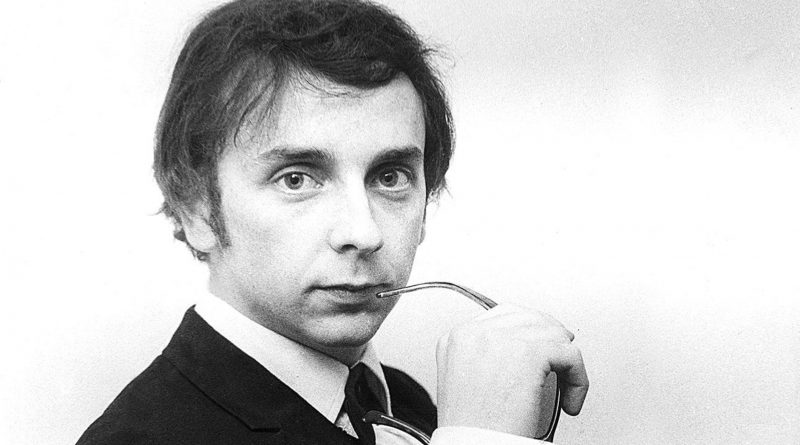
The Spectre of Phil Spector
Recounting a blood-stained legacy 5 years after his death
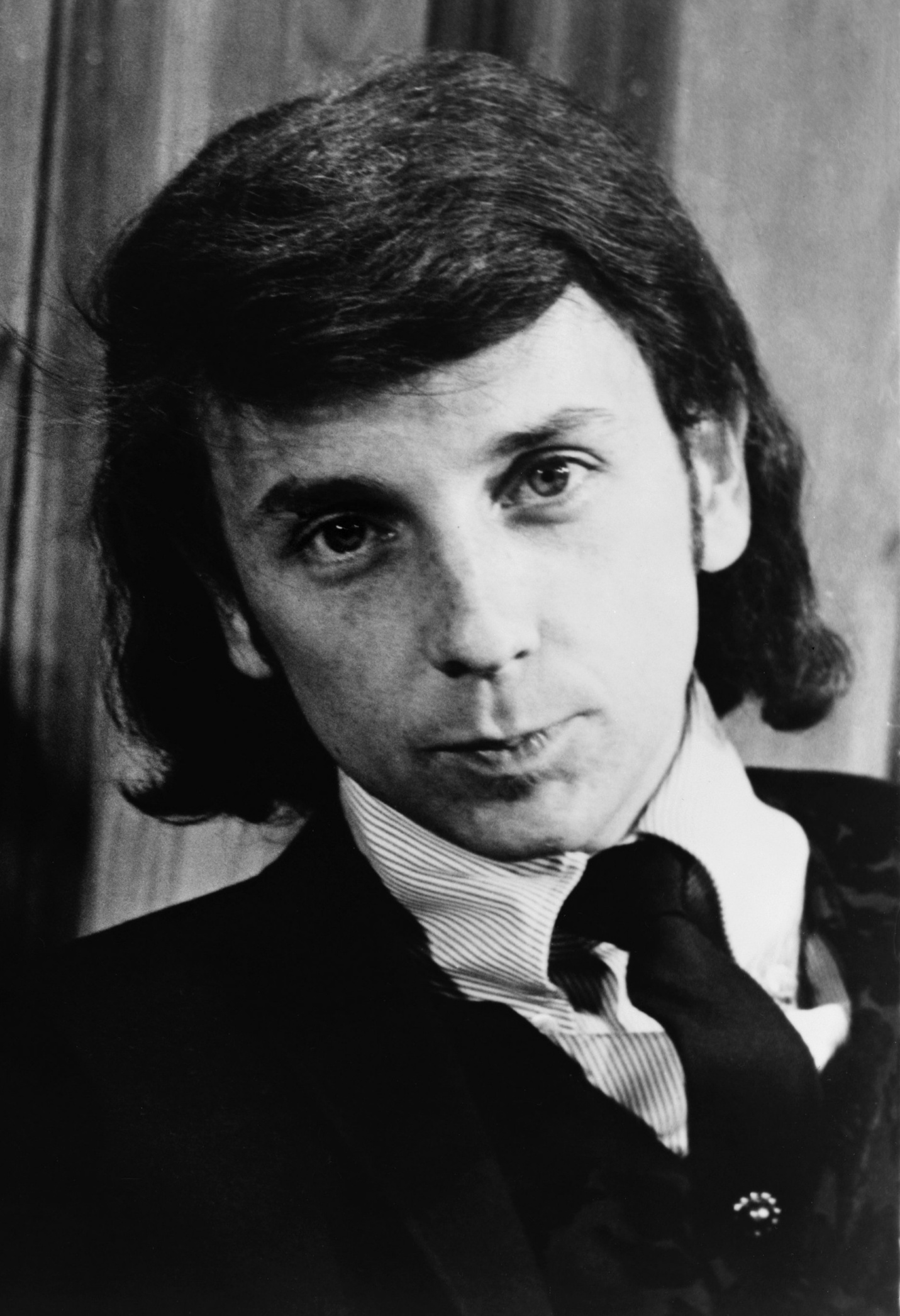
Phil Spector created some great music, did some horrible things and died five years ago today Jan. 16.
He had, to put it mildly, quite a legacy. This would include being the architect or auteur of the Wall of Sound, his various acts, many of them ‘60s girl groups, notching 19 top ten hits (including my fave, Ike & Tina’s tower-of-power gem “River Deep Mountain High”) He produced Leonard Cohen, The Beatles and the Ramones. He’s a Rock and Roll Hall of Fame inductee and a Songwriters Hall of Fame inductee, sharing writing credits on the Righteous Brothers’ “You’ve Lost That Lovin’ Feeling” and George Harrison’s “My Sweet Lord.”
AUDIO: George Harrison “My Sweet Lord”
And he killed actress Lana Clarkson in 2003. It was not the first time he had threatened one of his guests, dates or artists with a gun. It was the first time he shot anyone in the mouth.
So, I wouldn’t be shocked if the near-universal reaction, upon noticing the fifth anniversary of his death, would be along the lines of “good riddance.”
He was sentenced to 19 years (one year for each of his top ten hits?) to life (would’ve been eligible for parole in 2024) and ended his time on earth in an outside-the-prison hospital which he entered in December 2020, an early victim of COVID-19. He’d been there a month and a half.
A few years ago, I was having dinner with Darlene Love. No shock, she had some wild tales to tell about her days in the biz and some real good ones about Elvis, but most certainly about her one-time mentor Spector, for whom she had, again, to put it mildly, conflicted feelings.
To backtrack, Love, born Darlene Wright, joined the girl group the Blossoms in 1959 and over the years sang background vocals for a cavalcade of stars — among them, Dionne Warwick, Tom Jones, Sam Cooke, Marvin Gaye, Elvis Presley and U2. It was Spector who gave her a new surname and she was a key part of Spector’s legendary wall-of-sound girl group hit-makers in the early-mid ‘60s. She sang lead on “He’s a Rebel,” “He’s Sure the Boy I Love” and “Why Do Lovers Break Each Other’s Hearts” and backup on lots more.
“I give him his props,” Love told me. “I would not have a career if it wasn’t for those songs. Those songs are what made Phil famous and they also made me famous.”
And yet …
Either Spector was ahead-of-the-curve colorblind or he didn’t want young America to think of his young female vocal acts as Black and didn’t want their faces on the jackets of the singles. I was thinking the latter and so did Love.
VIDEO: Darlene Love “He’s a Rebel”
“Phil Spector had hid us for years,” Love said. “We had a ‘pop’ sound; we didn’t have a ‘Black’ sound — [all of us] the Ronettes, the Crystals, Darlene Love, Bob B. Soxx and the Blue Jeans. People didn’t know we were Black. He did that on purpose — [if] we were Black, so we couldn’t cross over. He wanted us to go on the Top 40, which was white, so if they didn’t know we were Black, they would play us.”
Love says it didn’t anger her back then. “People saying to me, ‘They wouldn’t give you credit when you did such and such a thing’ and I went, ‘You know, it was the business.’ That was what we did in the ‘60s. We all have to do things in our own way.”
Any thoughts about Spector’s genius — and he was, at least at certain times — are were long tainted by the stories about the abuse he lay on his singers — the waving the gun about, locking them in the studio, etc.
The relatively minor, if batshit crazy, infractions were peanuts next to his conviction for the Clarkson murder. We all employ cognitive dissonance when we consider the dirty deeds done dirt cheap by our favorite artists. But murder? Makes the lovely A Christmas Gift for You From Phil Spector — one of the best rock Christmas albums ever — a little harder to take.
But did Spector really kill Clarkson? Even after his conviction — which he appealed several times — there were doubts.
“I think he did it,” Love said. “But I think it was an accident. The Phil Spector I know wasn’t a vicious man. He could push your buttons, but if you knew him you would laugh at him. He was five foot-four; I’m five-three. But he had heels on. And I had heels on. I had four-inch heels and he only had on maybe two-inch heels. I had fun with him. We got on well. I was the only person he would take to lunch while we were recording.
“I think that’s why I got away with things: [I’d say] ‘Sit down, get out of my face!’ He never pulled a gun on me. I told him I’d make him eat it. I was gonna be as bad as he was gonna be. I mean he’s two feet tall, I can beat him up with my hands tied behind me.
“He was actually afraid of me because I had a big mouth. I was a bully. I would go to his house for a rehearsal, by myself, because I wasn’t afraid of him. I went by one night and I heard all this noise — the dogs were barking and I heard all this screaming and hollering — and I went up to the door and knocked on the door and he opened the door and I said ‘What it the world is going on, Phil?’ And he had his gun with him. I said, ‘I’m going home. Y’all crazy. I’m not coming in no house with nobody who’s got a gun on his hip.’
“He’d go, ‘Come on, Doll’ — he used to call me Doll — and I said, ‘You put the gun away or I’m going to get in my car and go home.’ Fortunately for me, he thought I was as crazy as he was. And I don’t know what I would have done if I’d gotten in those positions. Whenever he was at the studio and he had his guns, I would go home and it would be time to record and he’d say ‘What happened to Doll? I know she was here.’ And they said, ‘She went home. She ain’t coming in with you having that gun.’”
“The other part is he really did respect my talent. Over the years, I think what happened was he didn’t want anybody else to be responsible for making me a star. He wanted to be that person. He gave me my last name and everywhere I went over the years, even after I left California, he tried to block any success I was having. But, hey, I’m in the Rock and Roll Hall of Fame. Can’t get no better than that.”
Love saw Spector’s hyper-controlling personality right away. “I mean at first when it was happening — ‘Sonofabitch, man!, OK, when does this stop?’ — all the way up until the time I moved to New York and started singing ‘Christmas (Baby)’ on the Letterman show. Phil Spector called them and said ‘You’re not allowed to sing that on the show and if you sing that song, I’m gonna sue you.’”
He did not follow through on the threat. “That was his way of trying to control me,” said Love. “People would say: ‘What is about him that keeps messing with you? and I’d say, “He’s stupid, that’s all.”
Elvis Costello and the Attractions “Two Little Hitlers”
I mentioned that Love’s collaborator, the second Elvis, sang a song written by Nick Lowe and Dave Edmunds about somebody like that called “Two Little Hitlers.”
“That’s what he was,” said Love. “It all ends up getting you in trouble, like it got him in trouble. There were many women in that situation with him. They didn’t fight back and I think what happened with [Clarkson] was she said, ‘No, I’m gonna leave, I’m gonna go home.’ The other ladies got scared and just sat there.”
***
It was early 1979 and I was backstage at the Orpheum Theater in Boston with Johnny and Dee Dee Ramone, pre-show. The Ramones certainly had success — revered in punk rock circles and the venues they played were ratcheting up in size — but the big radio hit eluded them. They’d made four great slam-bam punk albums — Ramones, Leave Home, Rocket to Russia and Road to Ruin. The money spent and the production values increasing each time, but — as catchy as the songs were — mainstream FM radio still couldn’t stand the idea of “punk.” They’d go as far as the Police with “Roxanne.” but had no time for the band most people thought of when they thought “punk.”
The Ramones thought working with one of the most successful producers of all time might change their fate for the better. Enter Spector.
I hear that Phil Spector is producing your next album. That seems like quite a switch to the wall-of-sound guy. What can you tell me?
Johnny: I like him. We don’t know how we’ll be working with him or how much we’ll have to say. He’s already mixed two of the songs for the [Rock ‘n’ Roll High School] soundtrack, [the songs “Rock ‘n’ Roll High School” and “I Want You Around”] but we’re only gonna put one on it. [Note from 2026: Both made the film and soundtrack.] We haven’t even heard them yet. Maybe Spector will make a difference. If they [radio] see you have a big famous producer maybe they’d be interested in at least listening to the album.
What are some of the song titles?
Johnny: “I’m Affected,” “Rock ‘n’ Roll Radio” — Hey, [to Dee Dee] we have two songs with “Rock ‘n’ Roll” in the title?!
Dee Dee: [Shrugs]
Johnny: We never wrote a song with “rock ‘n’ roll” in the title before and now we wrote two. We’ve got “I Want You Around,” “This Ain’t Havana.” Joey had one that was called “I Don’t Care” but we have to change the title ‘cause we already wrote an “I Don’t Care.” [on 1977’s Rocket to Russia.]
Hope springs eternal, though, as Ian Dury told us in “This Is What You’ll Find,” “The hope that springs eternal springs right up your behind.”
End of the Century came out in February of 1980. Most Ramones fans hated it — the layers, the density, the absence of four-on-the-floor mania. (Honestly, I was baffled at first and then grew to love it.) Spector had always used the studio as his instrument and did so with the Ramones, much as he’d done with Cohen’s lush Death of a Ladies Man and The Beatles’ Let It Be, with its orchestral overdubs.
Back to End of the Century: “Phil would sit in the control room and would listen through the headphones to Marky [Ramone] hit one note on the drum, hour after hour, after hour, after hour,” wrote Dee Dee. “During the recording of ‘Rock ‘n’ Roll High School,’ Johnny was forced by Spector to repeat his part hundreds of times for several hours.”
“To Johnny, this must have been like the Chinese water torture,” said Sire Records president Seymour Stein.
“I understood [Spector’s] attitude,” said Marky. ” But he had his way of working that was very slow, and the Ramones had their way of working which was very fast. So that would sometimes irk everybody, and led to animosity with Johnny and Dee Dee.”
Dee Dee said Spector took Joey Ramone away for a three-hour private meeting in his mansion where the album was to be recorded, Dee Dee decided to try and find them.
VIDEO: The Ramones “Rock ‘n’ Roll High School
“The next thing I knew Phil appeared at the top of the staircase, shouting and waving a pistol,” Dee Dee wrote. “He leveled his gun at my heart and then motioned for me and the rest of the band to get back in the piano room … He only holstered his pistol when he felt secure that his bodyguards could take over. Then he sat down at his black concert piano and made us listen to him play and sing ‘Baby I Love You’ until well after 4:30 in the morning.”
Johnny, from a 1986 interview: “He always carried three guns around with him…We were prisoners in his house for about six hours, and we thought we were gonna get shot. I said, ‘Let’s go,’ and he pulled out a gun and said, ‘Do you wanna leave?’ I said, ‘No, that’s OK, we’ll stay for a while.’”
Spector testified in a 2005 court deposition that he had been treated bipolarity for eight years, saying, “No sleep, depression, mood changes, mood swings, hard to live with, hard to concentrate, just hard — a hard time getting through life, I’ve been called a genius and I think a genius is not there all the time and has borderline insanity.”
***
Finally, some thoughts from Jonathan Paley, who I know fairly well and with whom I corresponded about Spector. He had some tales to tell, Jonathan performed with his older brother, the late Andy Paley, as the Paley Brothers and recorded for Seymour Stein’s Sire Records and also did boatloads of music post-Bros. I asked if I could tag him as “a prominent musician/recording artist” and he said “a not-so prominent musician.”
“My brother and I recorded one song with Spector. Before that session, in 1977 we had met with Jack Nitzsche about him producing the Paley Brothers. We flew out to LA and Jack had booked studio time at Goldstar. A couple days before we were to start recording, Jack backed out. He said he saw that Spector had booked all of the time around the hours he had scheduled for us. He drove to Spector’s house, parked in the parking area, went to the door and rang the bell. Spector’s assistant/bodyguard answered the door and Jack asked to come in. The bodyguard had him wait outside and he returned in a few minutes and said, ‘Look Jack, I think you’d better leave ’cause Phillip is standing behind that curtain in that window and he’s holding a shotgun pointed at you.’
“So, Jack left and called [the band’s label president] Seymour Stein and said he didn’t want to produce the album. Fast forward to late 1978, the Paley Brothers album had pretty much died. Spector was getting ready to produce the Ramones and Seymour suggested to him that he cut a track with Andy and I. We flew out to LA and spent five or six days inside Phillip’s house just above Doheny and Sunset rehearsing. Phillip would sit at his Lowry organ and Andy and I would sing the same song — ‘Baby Let’s Stick Together,’ (not one of Phillip’s better compositions), over and over and over for hours and hours. We’d take a break now and then and as the afternoons went into evenings, Phillip would sometimes go alone into another part of the house for short periods and then reappear.
AUDIO: The Paley Brothers “Baby, Let’s Stick Together”
After a couple days I realized where he was going off to. He would sneak off to take a drink of wine. By the end of the rehearsal, he would be pretty soused. Now, when he was sober, he was the funniest, most intelligent and knowledgeable guy you’d care to meet. But after two or three glasses of wine he would do a Jekyll and Hyde personality switch. He’d become verbally abusive, insulting and hypercritical. Darlene [Love] came by one day, early, before Phillip had anything to drink. She stood next to him as he played the Lowry and belted out songs, shaking the room and leaving [my partner] and I awestruck.
“We finally went into Goldstar and Philip had much of the Wrecking Crew assembled to record the basic track. We did about 15 or 16 takes. Phillip was sober the whole day, totally in control of the recording process, knowing exactly what he wanted and how to get it. There was much good-natured back and forth banter between him and the guys playing and Larry Levine, the engineer. We returned the next day for some sax and percussion overdue. Once again Phillip was sober and in control. The next session was laying down the vocals and everything started off well, but as the day went on, he snuck off and took a couple drinks and the Mr. Hyde side came out. At one point he was shouting up into my face — he was a diminutive fellow — occasionally spraying some spit as he told me what a shitty singer I was. He was right. Compared to the talents he’d recorded, I was a shitty singer, but I didn’t need a drunken shrimp screaming and spraying in my face. We managed to finish laying down the tracks.
“At this time, I’d pretty much had all I could take and I left LA and headed back to Boston. I hadn’t been happy with what the Paley Brothers had been for some time and the Spector experience kind of pushed me to actually break up the act and join [Boston punk band] the Nervous Eaters. In hindsight, I should have done that second album with Andy AND joined the Nervous Eaters. The track we recorded with Spector would have been on our second album — that along with several other tracks remained unreleased and collecting dust until [a record company] put out a compilation in 2010.
“Phillip was verbally abusive when he was drunk. He never pulled a gun on us or threatened to. Like I said, when he was sober, he was a great guy. I believe that he shot and killed Lana Clarkson but I also believe it was accidental. He’d been pulling guns on people for 50-plu years and inevitably one went off. After his initial arrest, he got sober through therapy and medication. At this point, he met and married Rachelle [Short]. She had never seen him drunk. Andy had maintained a pretty close relationship with Phillip through the years and after I settled in LA in the ‘90s I would sometimes go along [with them] to the Alhambra castle [in Alhambra, California].
“We attended some of the second trial. He did kill Lana Clarkson and deserved to be locked up for it. In my opinion, it wasn’t murder, it was negligent homicide/manslaughter; it wasn’t planned. He was probably being the drunken, abusive, self-centered asshole Hyde and forced her to take the barrel of the gun in her mouth and it went off. I can only imagine how horrible those last moments were for her. A terrible crime. A senseless crime committed by a privileged asshole. But I still love those records he made, the sounds he created.”
VIDEO: Phil Spector death coverage on NBC

- St. Vincent Goes to the Symphony - June 10, 2026
- A Decade Without Prince - April 21, 2026
- Rob Hirst Was the Engine of Midnight Oil - January 23, 2026
You May Also Like
-
 January 19, 2021
 -
 January 2, 2019
 -
 April 3, 2022
