
Cheap Trick: The ‘Tide’ is High
Tom Petersson talks about the band’s boss new album, All Washed Up, and why he’s not a fan of their biggest hit
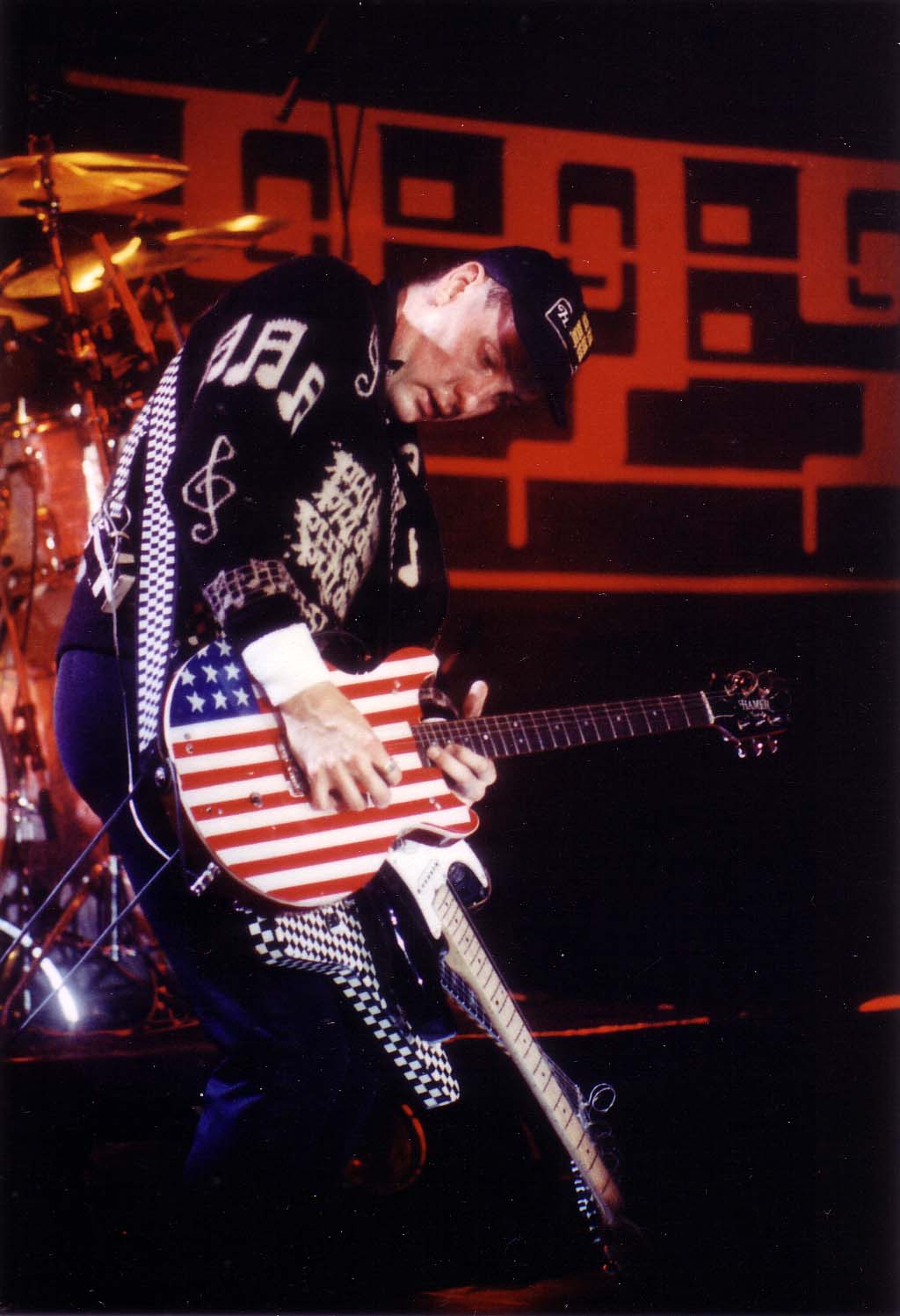
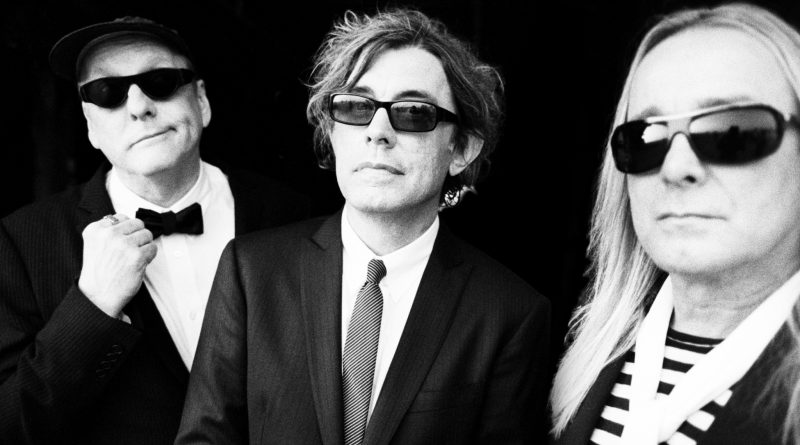
There’s no other band in rock ‘n’ roll quite like Cheap Trick.
Back in the late ‘70s, when punk rock happened around the same time arena rock was reaching its zenith, Cheap Trick was one of the few bands that had fans in both camps. Their music was infectious and, at times, radio friendly. But at the same time, they could be both menacing and offbeat when they wanted to.
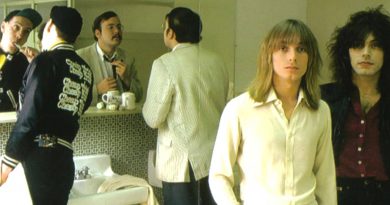
Similarly, the band members’ image was split down the middle. Singer Robin Zander and bassist Tom Petersson both boasted rockstar good looks. But lead guitarist (and chief songwriter) Rick Nielsen was nerdy looking and he used that to his advantage; he wore baseball caps, bowties and funny expressions. Drummer Bun E. Carlos, meanwhile, looked about as un-rock and roll as it gets: A heavy set, bespectacled guy who dressed, as one writer said, like Archie Bunker.
The origins of Cheap Trick lay in a band called Fuse. Nielsen and Petersson were members of this Midwestern rock combo. Fuse never quite hit and, after they broke up, Nielsen and Petersson set about trying to form their next band. Drummer Carlos (nee Brad Carlson) was added first. Their initial lead singer didn’t work out. But a year later, they hit pay dirt with towheaded Robin Zander who, for good reason, became known as “the man of a thousand voices.” Zander was equally adept at singing raucous rockers and more melodic songs. With this lineup in place, Cheap Trick began playing clubs in their native Illinois and beyond. They signed with Epic Records in 1976 and issued their eponymous debut, produced by Jack Douglas, the following year.
Cheap Trick wasn’t a huge commercial success but it was a critical hit and sold well enough to ensure a follow-up. The album’s 10 songs ranged from rockers like “Hot Love” and “ELO Kiddies” to the dreamy, melodic “Mandecello” to more offbeat fare like “The Ballad of TV Violence” (inspired by Chicago mass murderer Richard Speck). 1977 continued to prove to be a pivotal year for Cheap Trick as they released another excellent album, In Color (And In Black and White), produced by Tom Werman, was certainly more polished than their debut. But it was still a collection of great songs including “Southern Girls,” “Downed” and the original version of “I Want You To Want Me.” 1978’s Heaven Tonight, meanwhile, scored the band its first chart hit with the brilliant “Surrender.” It also included top-notch tunes like “Auf Wiedersehen,” “Takin’ Me Back” and the title track.
The real breakthrough came in 1979 — with a live album, oddly enough. Cheap Trick had built up a loyal fan base in Japan and released the Live At Budokan album that spring. It gave them two big hits: a much harder version of “I Want You To Want Me” and a cover of the Fats Domino chestnut “Ain’t that A Shame.” They were finally stars. Cheap Trick closed out the decade with Dream Police, which was released at the end of ’79. That album scored them another pair of big hits in the form of the dramatic, rocking title track and the Beatlesque ballad “Voices.”
The ’80s were not kind to Cheap Trick — at least the first half of the decade. Their 1980 effort All Shook Up was not a big hit despite being produced by George Martin and having some good songs on it. Petersson left the band shortly after the album’s release. Over the next half dozen years or so, Cheap Trick remained prolific with new bassist Jon Brant. But it wasn’t their best period either critically or commercially.
That changed in 1988 with the Lap of Luxury album. Whether it was due to Petersson being back in the fold or the fact that it was just a strong group of songs, the album became Cheap Trick’s most successful studio disc since Dream Police. They even got their first number-one hit with “The Flame,” an out of character ballad. To these ears, that song was a bit schmaltzy; I actually preferred Lap of Luxury’s other two hits, a cover of “Don’t Be Cruel” and the ballad “Ghost Town.” That said, it was just nice to see the band back in the public eye.
Between 1990 and the present, Cheap Trick has released 11 studio albums, not to mention a box set and several other live discs. They’ve also toured relentlessly and were inducted into the Rock & Roll Hall of Fame in 2016. These days, the band includes Rick Nielsen’s son Daxx on drums. But otherwise, the lineup is unchanged.
Cheap Trick returned this month with their 21st studio offering, All Washed Up. It’s a solid collection that was recorded in Nashville and LA with longtime producer Julian Raymond. The first three songs on the album — the title track, “All Wrong Long Gone” and “The Riff That Won’t Quit” — are balls to the wall rockers. But there is also the unabashedly romantic ballad “The Best Thing,” the catchy but wistful “A Long Way to Worcester,” the midtempo rocker “Twelve Gates” and the vaudeville-influenced closer, “Wham Boom Bang.”
I recently had the pleasure of catching up with Tom Petersson for the Rock & Roll Globe. He may be a rock God who invented the 12-string bass but he’s also a down to Earth, self-deprecating guy who is involved with raising awareness for autistic children.
I wanna start with the new album, All Washed Up. You guys recorded this with Julian Raymond [who] has produced a lot of your albums in the last 10 or 15 years. Why [do] you like working with Julian?
[Julian] was a fan of our band from the very beginning. He kind of understands us more than anyone we’ve ever worked with and he’s become like a fifth member. So we’re not going anywhere without him! (laughs)
He was originally my friend; I met him in like ’82. Julian is a vintage guitar enthusiast. None of us had any money [at the time] so he and I met at a pawn shop! We were getting rid of something. We had the same love of guitars. [He was a] singer, songwriter and performer. Then he started working for record labels. But we’ve remained friends through all those years.
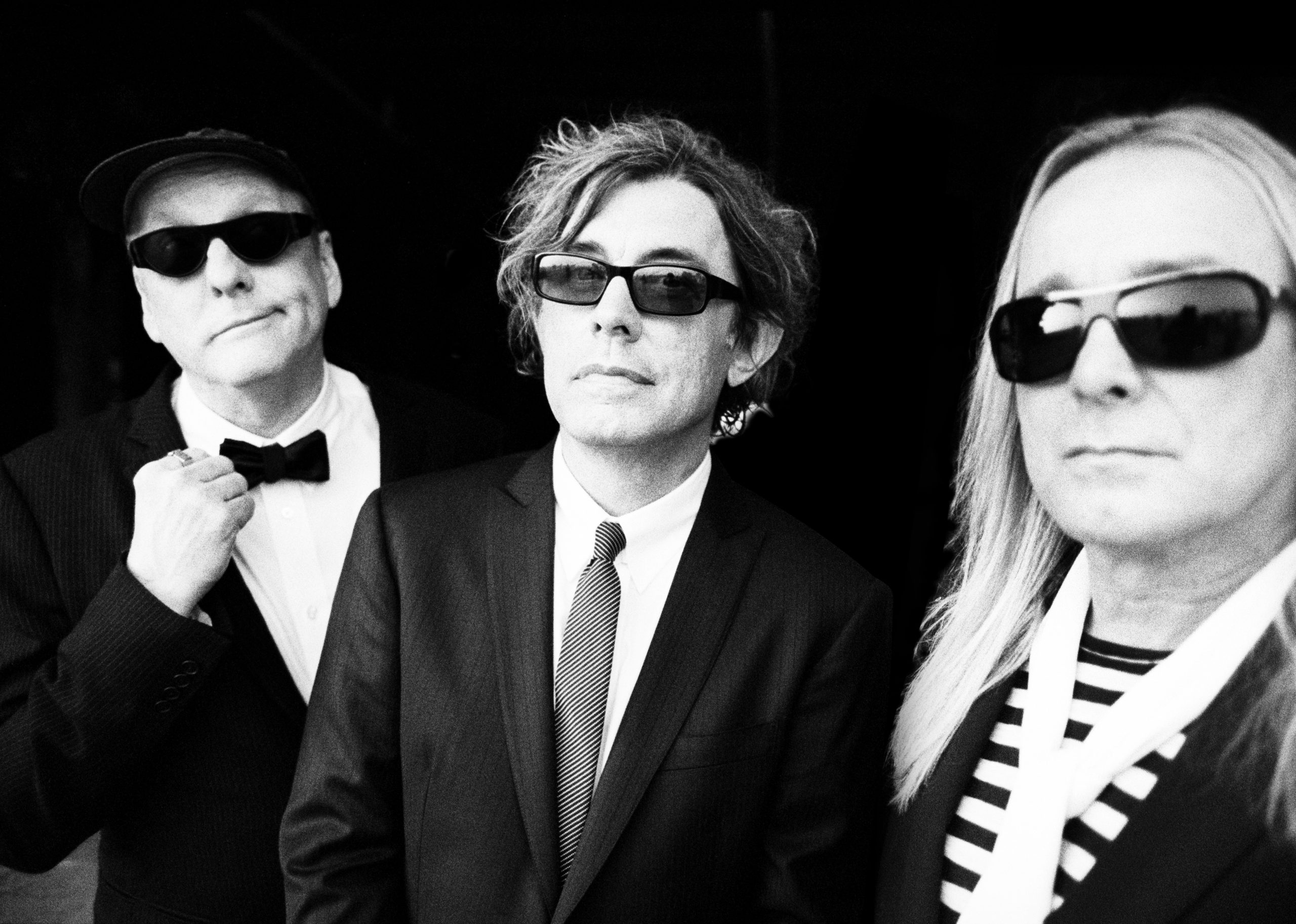
I wanted to ask you why “All Washed Up” is the first song on the album and the title track. I’m always curious to know why a band leads with a certain song.
We just thought it was a cool title. Then that song fell together after we decided on the title. But that was Robin’s idea for the title of the record [and] his title of the song.
“A Long Way from Worcester” is a rock song but it feels more reflective [and] somber than the other songs on the album. Was that inspired by someone’s experience?
We did that song many years ago. Robin and I did a demo with two guys from the Mavericks, Jerry Dale and Robert Reynolds. They did a song with us called “Carnival Game” [too]. We did a few demos with those guys and they hadn’t caught anybody’s attention. And Robin goes, “You know, why don’t we redo that?” So [we did].
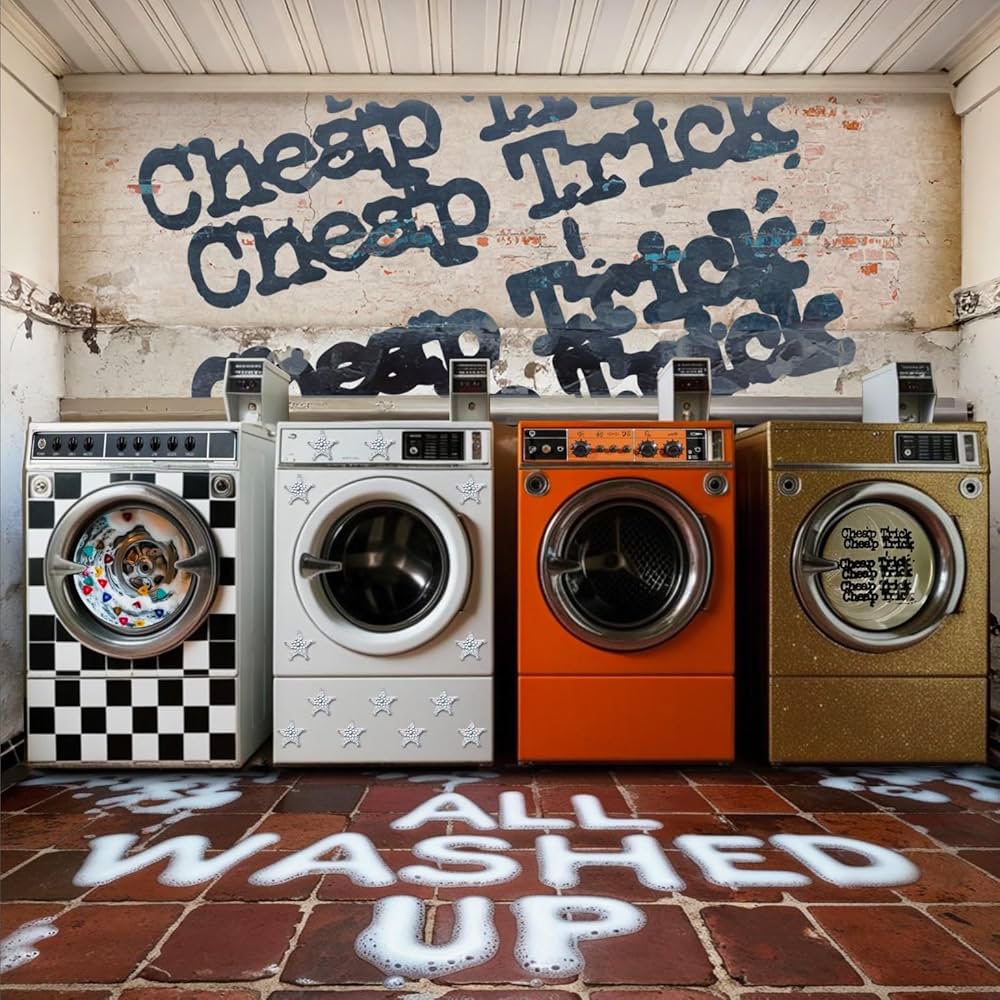
You invented the 12-string bass. What prompted you to do that and what it was like, back in the day, working with the people at Hamer?
Well, we knew Paul Hamer and Jol Danzig because they had a really cool guitar store in Chicago. This was in the early ’70s. We were talking to them and they said, “We’re gonna start this boutique guitar company. We’re gonna start making our own guitars, like they did in the ’50s and early ’60s.” Everybody was upset because all the newer instruments were shit! The older stuff was the best. Then they started cutting corners — every company. And they weren’t as desirable. At that time, you know, a ’59 or ’60 Les Paul was the newest guitar; there was no vintage thing.
But anyway — they said they were making [guitars so] I said, “I’ve got this idea for a bass. A 12-string.” I told them about it and they ended up doing it for me.
And what’s the advantage of a 12-string versus a standard four-string bass?
Well, it’s like two other guitar players are playing exactly what you [are]. You can make mistakes and it sounds like it’s the right thing! (laughs) It’s just a bigger, orchestrated sound. It’s not for fast movement or anything. It’s really an orchestration kind of thing; it’s what sounds good. It’s not typical rhythm playing. The sound I get on a four-strong — before I had a 12-string — it’s the same exact rig that I use. So it’s the same rig; it just sounds a lot bigger.
One other bass related question. When you were first starting out, what bass players inspired you?
When I started out as a musician, I was a rhythm guitar player. Since I didn’t start out playing bass, I wasn’t influenced in that way. But I switched over after a few years. First of all, if Jimi Hendrix is on the scene and you’re competing with him — you switch to bass. (laughter) Immediately! It was him, Jeff Beck [and Eric] Clapton? “No, I’ll go to bass.”
But then, my biggest bass heroes were John Entwistle, Paul McCartney. It was a pretty big list eventually… But you’re not competing with John Entwistle either. It’s [amazing] how great he was at that age!
When Cheap Trick became big in the late ’70s, it was right around the time punk happened. I was always curious to know if you guys felt a kinship with punk rock bands?
Oh yeah! We thought a lot of that shit was great. That’s right when the Sex Pistols record came out; that record still holds up. But [if you] listen to our first album — we were a heavy act! It wasn’t a pop, Partridge Family kinda thing.
Then the second record came out and it was nothing like us — nothing. You know — cool songs. But it came out as this lightweight pop album during punk, which we thought was great. But [the label] was like, “Oh no, that’s not what people wanna hear.”
But whatever. We did that second album, In Color, which sounded nothing like us. That was our producer [Tom Werman’s] idea because we had no success with the first album. People just didn’t get it. [He said] “Well, you guys [have] all these great songs. We should make this radio-friendly.” Whatever that meant, it meant not punk.
Interesting. I still think [In Color] is a great album — even though the first album and Heaven Tonight are probably heavier.
No comparison. But “I Want You To Want Me?” That thing is a joke. With that tick tack piano? It’s like [the] Shakey’s Pizza song! We wanted that thing to be heavy! Yeah, it’s a pop song but that’s not the way we play it.
VIDEO: Cheap Trick “I Want You To Want Me”
I really became a big fan when I saw you play live. I was on a business trip in New Orleans of all places. It was the late 90s [and] you guys were playing on Valentine’s Day. I was supposed to go to a conference and my friend Frank said, “Don’t go to the conference. Come with us [to see] Cheap Trick!” Got in trouble with my boss but it was worth it. It was one of the loudest, best and most entertaining shows I’ve ever seen! So I thank my friend Frank. He’s 10 years older than me and he’s seen everybody.
(laughs) And us, too! That’s good.
On a totally different note — I know that you and your wife have an organization called Rock Your Speech. Can you tell me a little about what kind of work you guys do?
Well, we’re really involved in the special needs world basically — every type. Our son is special needs. We’re just in that world and we’re doing what we can do to really get by. My wife [Alison] spearheaded that; [it] was her idea to do all that stuff. And now it’s different things. Everybody’s in the same boat; nobody knows what exactly to do.
We did a record which is available; you can get it online.
At the moment, I think you guys are on tour with Heart, right?
We played last night with them for the first time [on this tour but] we’ve worked with them a lot over the years — from our beginning and pretty much their beginning. And they’re easy to work with. We love those girls, they’ve got a great crew — it’s really cool.
VIDEO: Cheap Trick perform “I Know What I Want” live in Daytona, Florida, 1988
Can I ask you about an older tune? The one you sang lead on, on the Dream Police album: “I Know What I Want.” Tell me how that came to sing lead on that.
Sure. [Rick] said, “I had this idea. And I would like you to sing this song.” He kind of wrote it for me. It came out so well that I never did another one again! (laughter)
I was trying to [figure out] whether you sang lead on any other Trick songs and I couldn’t.
No. When you’ve got Robin Zander — come on!

- Gumboots: Paul Simon’s ‘Graceland’ Turns 40 - August 27, 2026
- In Quintessence: Squeeze’s ‘East Side Story’ At 45 - May 15, 2026
- If the ‘Shoes’ Fit… - March 31, 2026
You May Also Like
-
 May 31, 2019
 -
 January 6, 2023
 -
 April 24, 2023
