
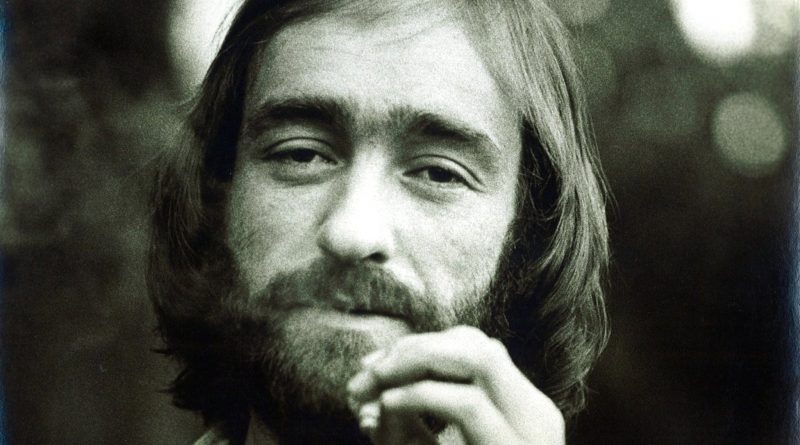
Remembering Dave Mason
Looking back on the career of a rock icon
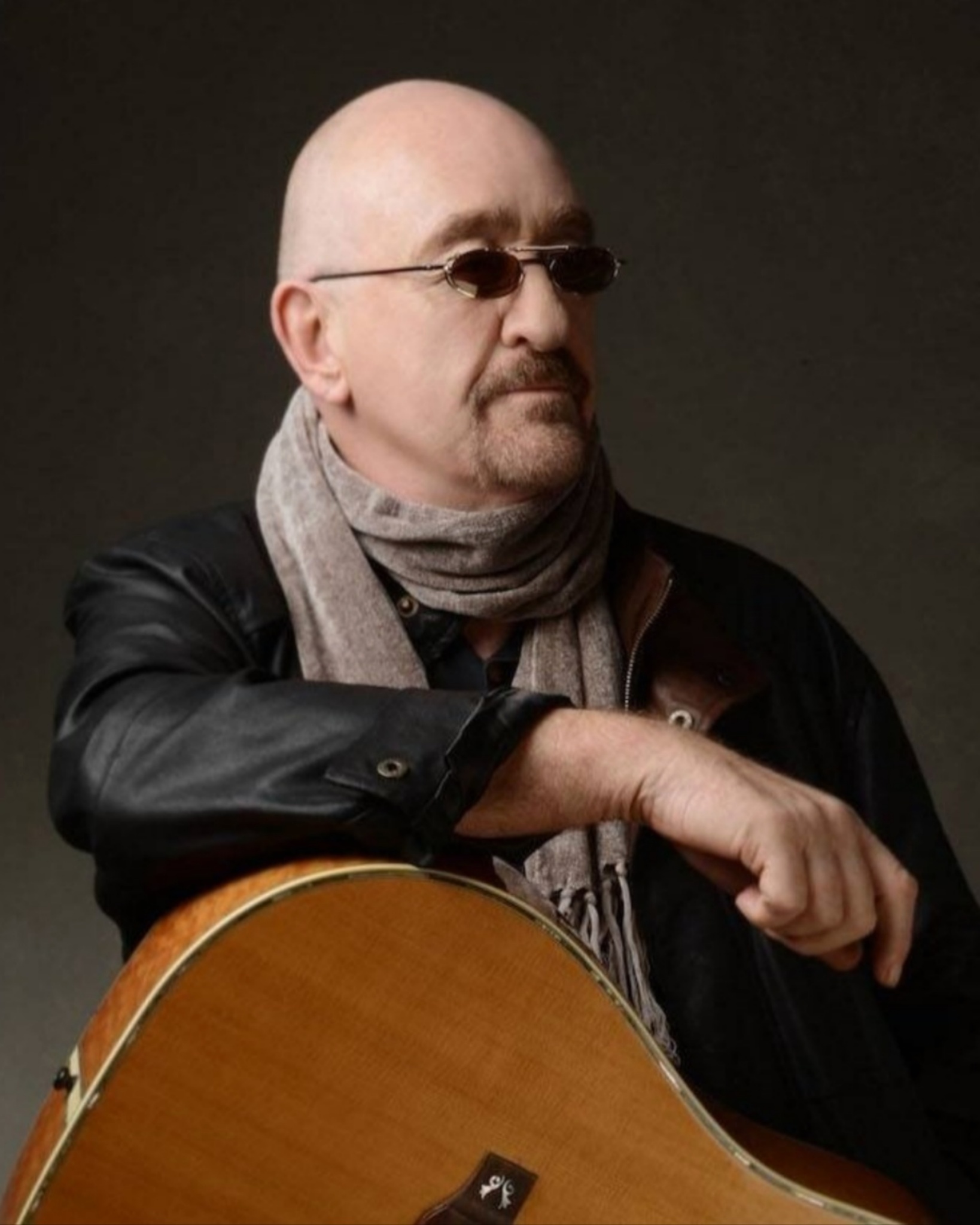
Few musicians could claim to have participated in more essential sessions that shaped the rock’s overall trajectory than Dave Mason. Mason, who died April 19 at the age of 79.
He contributed to the making of the Rolling Stones landmark Beggars Banquet album, Paul McCartney’s mid-70s hit “Listen To What the Man Said,” George Harrison’s All Things Must Pass, several tracks on his former roommate Jimi Hendrix’ Electric Ladyland (most famously “All Along the Watchtower”), a temporary role in Fleetwood Mac (resulting in the album titled Time), an abbreviated tenure early on with Derek and the Dominos, sessions with David Crosby and Graham Nash, and a tour with Delaney and Bonnie, which found him contributing one of his best known songs, “Only You Know and I Know.”
That’s aside from his essential role win the founding of the highly influential band Traffic and his subsequent solo career which found him achieving international success as as a singer, guitarist, songwriter and all round influential icon.
Mason originally met his future Traffic bandmate Steve Winwood when he worked as a roadie for Winwood’s seminal ensemble, the Spencer Davis Group. He eventually met drummer Jim Capaldi when the two convened in The Hellions, along with several other British musicians who later achieved limited success on their own.
Mason’s tenure in Traffic was fraught with disagreements, causing him to enter and exit the band several times. The cover of the band’s debut album on United Artists doesn’t even show him in the group’s line-up (flautist Chris Wood was the fourth member at the time). Mason would depart after that initial effort, only to return for their second, self-titled LP, which found him making his mark with such stellar selections as “Hole In My Shoe,” “Cryin’ To Be Heard,” “Don’t Be Sad,” “Vagabond Virgin,” and, most famously, “Feelin’ Alright,” the song that brought him the most fame after it was famously recorded by Joe Cocker.
AUDIO: Traffic “Feelin’ Alright”
Many years later, the two toured together and sang the song as a duet.
After splitting with the group, Mason would briefly rejoin Traffic for the live album Welcome To the Canteen. Following Traffic’s final demise, Mason and Capaldi toured together under the banner of “The 40,000 Headmen Tour,” which resulted in a live album following the tour. He also famously recorded a duo album with Cass Elliot, It’s Like You Never Left.
Mason’s solo career found him claiming fame on his own with his critically acclaimed debut Alone Together (known for its unique gatefold cover) and a smash hit single “We Just Disagree.” In 2004, he was inducted into the Rock and Roll Hall Of Fame alongside Traffic’s other surviving band members.
Rock & Roll Globe had the opportunity to interview Mr. Mason while sitting on the balcony of his stateroom during Justin Hayward’s “On the Blue Cruise,” which found Mason and his band taking part in the proceedings. When asked about his Zelig-like career, Mason replied succinctly.
“It’ll all be in the book anyway.,” he said, adding that he was “badgered” into approving it. Although he chose to re-record his classic Along Together album, he indicated he had no interest in releasing any new material.
“There’s no point. I mean, there’s been no point for for quite some time,” he insisted. “There’s new stuff, but it’s a waste of time putting it out. And there’s no radio anymore, which everybody seems to forget is a very powerful media…Nobody says, ‘Hey, check out this record.’ No one. Nothing. That’s the problem. There’s nothing and everybody’s just stealing everything. They politely like to call it a file share.”
Nevertheless, he eventually relented and released A Shade of Blues, his first unabashed tribute to his love of blues.
At the time however, he was adamant that there was no need to offer up any new material.
“Well, I suppose the problem is that what you sell doesn’t really cover the cost of doing it,” he argued. “So it’s just a waste of time. The problem is, you can’t create a new audience. I mean, basically the reason I have such a large audience is because they heard my music in every college and because that’s where my music first got played. But now my audience is dying off. That’s why my current tour is called the ‘Endangered Species’ tour. I can’t get the access to a younger crowd. And I can’t get it on the radio and it’s the same thing with the festivals. They don’t want to book older artists. They won’t put you on the bill… Now it’s a mercenary business.”
One might say Mason was a bit of a curmudgeon. He cited his reason for making music as simply a means of making money and meeting girls.
“At 19 and 20 years old, you’re not gonna give a shit,” he argued. “Anything’s possible. When you’re that age. It’s gonna go on forever… We were just jamming and doing all that shit back then.”
According to Mason, it beat getting a day job.
“I just wasn’t going to work 9 to 5, so it was either this or a life of crime,” he said somewhat dismissively. “I knew working nine to five wasn’t gonna work for me. I was 16 and I discovered all these bands and thought, I could do that. And I just got lucky. It’s just a lot of persistence. You just do it at the expense of everything else in your life.”
Still, Mason seemed to have retained his affection for those early years, when Traffic escaped to a cottage in the country and made such memorable music. At the same time, he was clearly disgruntled that he was given certain songwriting credits, He claimed that he helped write the band’s landmark classic, “Dear Mr. Fantasy,” along with the other three members of the band, but Winwood removed his name from the credit.
AUDIO: Traffic “Dear Mr. Fantasy”
He also groused that Winwood never seemed interested in a latter day reunion.
“I always thought Traffic would have been something that was a unit that would allow us to have done things together and then do our own solo stuff,” he confided. “It would be similar to Crosby, Stills and Nash, but it never worked out that way… I left after the first album and then I came back mostly because they only had five songs for the second album. And I had five songs that I’d written, one of them being ‘Feelin’ Alright.’ So it was like, ‘Hey, cool, come on back. And after that, I pretty much felt there really wasn’t anything there for me. And I tried actually to put something together with Ginger Baker after Cream, but it didn’t really work out, and I didn’t really want to do it because it was like, you know what, I know what’s going to happen. This is a three piece and I’m gonna get rated up against Eric Clapton, so I’m not going to go through that. There was nothing there for me to be part of. So I opted to find my inspiration elsewhere, from where it all started, with was American music.”
He then took a moment to reflect on the lingering memories he made for the passengers on what was clearly a cruise that basked in nostalgia. “For most of these people on this cruise, what I’m doing is selling memories,” he mused. “It’s about the memory of a song that they got laid to, who they were hanging out with at what college they were attending at the time. I wasn’t writing for anybody else but myself.
“I’m here to please me,” he continued. “Because if I’m not pleasing me, then you may as well just go home and put a record on and listen. Otherwise, there’ll be no authenticity to it. There’ll be no energy… I don’t want to be one of those acts going through the motions. Here are the hits and that’s it. I like to keep the music fresh. You either like it or you don’t. Getting wrapped up constantly in this nostalgic thing is a little bit of a drag… I know what they want, but I don’t know what they expect. To me, it doesn’t matter what they expect. I can’t worry about that. I’m doing this for me.”
Then he really let loose.
“It’s another show for me, that’s all,” he maintained. “I can’t stand up on this goddamn boat. I have to sit down… It’s the only paycheck we’ve got left. There are no royalties anymore, and the only way that happens is if somebody’s playing it heavily on a radio. Playing live is the only income we’ve got. With Spotify and Pandora, you can get 5 million fucking plays, and they send you a check for $250. That’s outrageous! These people don’t have a clue about that. They just want to hear the music… It’s odd to be in a very intimate relationship with people that I have no clue who they are.”
Eventually, Mason would revisit Traffic, albeit on his own, courtesy of his Traffic Jam Tour. And despite an apparent animus for Winwood, the majority of his later set lists consisted of songs Winwood had written, both with Traffic, and surprisingly enough, also with Blind Faith.
Despite his insistence that he would never retire (“Sit around and wait to die? No, of course not.”), he was finally forced to cancel several shows last year due to illness.
Mason died at his home in Nevada. He had been a U.S. resident since 1969, and his native English accent was all but indistinguishable. According to his family, he was sitting in his favorite chair, went to sleep and passed away peacefully.
Mark Stein, a founding member of the band Vanilla Fudge and later a key member of Mason’s touring band, told Rock & Roll Globe exclusively, “I was honored to have been part of his great and lasting career. Dave Mason was a great singer-songwriter whose music will live on forever. Rest in eternal peace, my friend. And thanks for so many wonderful moments that made my life more fulfilling. Much love in heaven.”
VIDEO: Dave Mason performs “We Just Disagree” on The Midnight Special
Steve Winwood quickly offered his condolences via Facebook. “We were deeply saddened to hear of Dave Mason’s passing, giving Mason the credit which was long overdue.
“Dave was part of Traffic during its earliest chapter, and played an important role in shaping the band’s sound and identity during that time. His songwriting, musicianship and distinctive spirit helped create music that has lasted far beyond its era, and continues to mean so much to listeners around the world. Those years remain a special part of the band’s story, and Dave’s contribution to them is not forgotten. His place in that history will always be remembered, and through the music, his presence endures.”
Given the pair’s professional schism, one would hope Mason would have appreciated Winwood’s words.

- High Voltage!: AC/DC’s ‘Dirty Deeds Done Dirt Cheap’ Turns 50 - September 21, 2026
- Remembering Dolly Parton - August 26, 2026
- More Than A Feeling: ‘Boston’ Turns 50 - August 25, 2026
You May Also Like
-
 May 10, 2021
 -
 June 18, 2018
 -
 March 24, 2020
