

Good Company: Queen’s A Night at the Opera Turns 50
Looking back on their breakthrough 4th LP
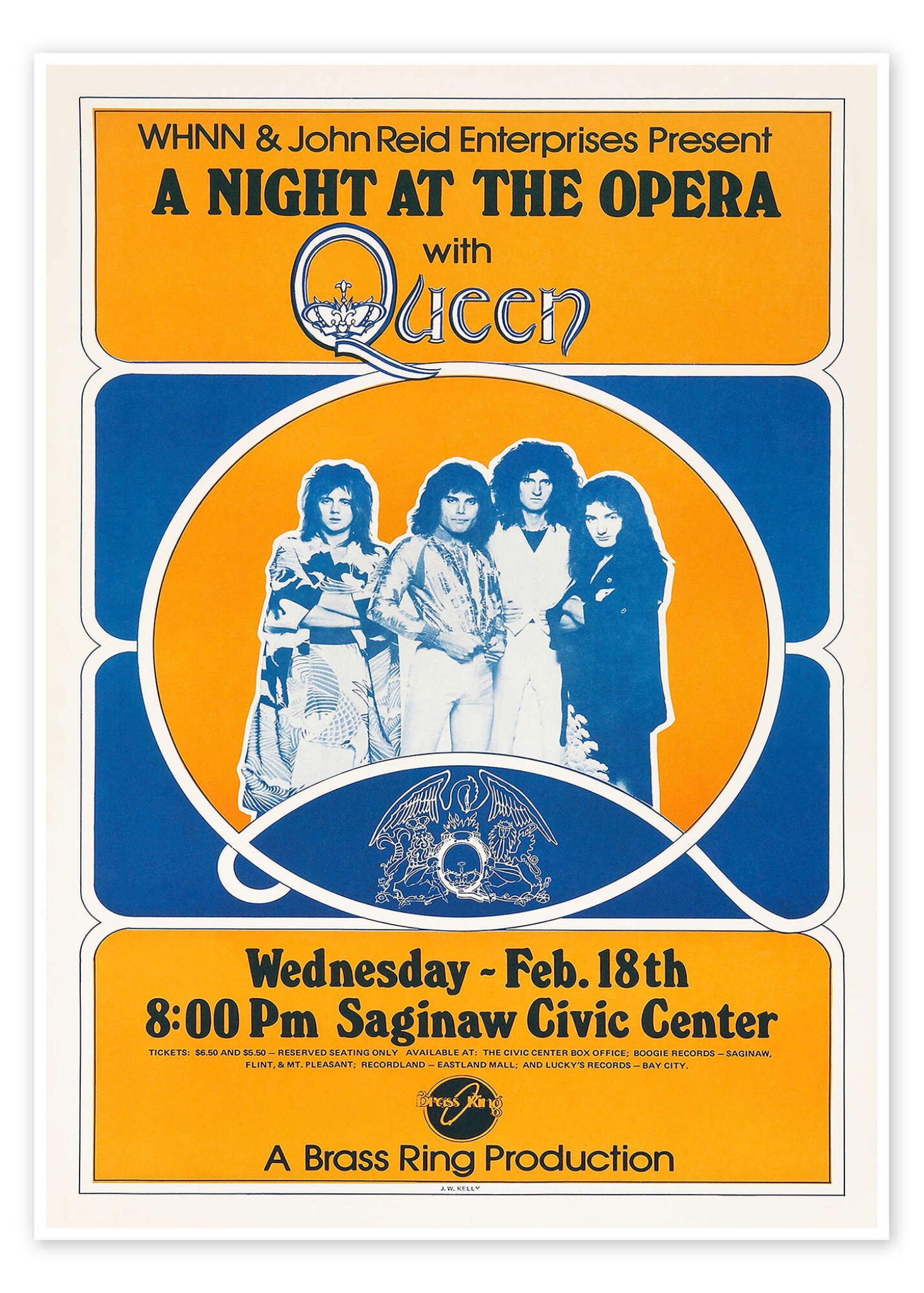
When talking about Queen’s classic A Night at the Opera, which turns 50 today, one can’t help but think of the elephant in the room — the nearly six-minute long pachyderm titled “Bohemian Rhapsody.”
It wasn’t their first global hit single — that would be the previous year’s “Killer Queen” off Sheer Heart Attack. Nor was it their biggest U.S. hit upon initial release, which would be 1980’s “Another One Bites The Dust.”
But all these years later, it’s Queen’s most identifiable song. An over-the-top insistent prog/rock behemoth memorable enough to be a hit twice — first on its initial release in the spring of 1976 and again over 15 years later thanks to the car scene built around it in the successful comedy Wayne’s World.
Given how memorable it remains, it’s instructive to recall what an outlier it was when it was released as a single. The band, to their eternal credit, refused to turn in a shorter single edit.
It was a risk at a point where station programmers wanted to go through three-minute song after three-minute song. But there was some precedent. The Beatles’ “Hey Jude” clocked in at over 7 minutes, but spent 9 weeks atop the U.S. single charts in 1968, one week shy of tying Debby Boone’s “You Light Up My Life” and Olivia Newton-John’s “Physical” for longest runs at No. 1 in the pre-Soundscan era.
VIDEO: Queen “Bohemian Rhapsody”
The only straightforward rock song in the Top 40 when “Bohemian Rhapsody” spent its second week at its peak position of No. 9 was Kiss’ “Shout Out Loud” in the 30s. Surrounding Queen in the upper reaches were disco classics like “Love Hangover” and “Disco Lady,” a folky soft rock TV theme (“Welcome Back”), the then-omnipresent Peter Frampton (“Show Me the Way”) and a country crossover in the top spot in the Bellamy Brothers’ “Let Your Love Flow.”
And there was “Bohemian Rhapsody” in all its over-the-top glory, complete with 180 or so vocal overdubs, to the point where the tape was practically see-through, unable to hold more.
The song, which hit without a repeated chorus, came from lead singer Freddie Mercury. Its origins, at least partially, dated back prior to Queen’s existence. He had a piece called “The Cowboy Song,” complete with the “Mama, just killed a man” line.
By the time Queen was recording A Night at the Opera, Mercury had a strong grasp of the song, even if he amused producer Roy Thomas Baker by simply saying, “And here is where the opera bit comes in” while playing a demo version.
The rest of the band added its own flavoring to Mercury’s idea, such as Brian May’s choice of tone for the guitar solo. The end result, audacious as it was, brimmed with justified confidence.
“Bohemian Rhapsody” is, in a way, the band’s version of what Pete Townshend had done with the Who in creating a suite as a song with “A Quick One (While He’s Away),” with much more theatrical flair and much less plot — a master class in what made Queen Queen.
Even without a repeated hook, the song is packed with memorable moments that stuck in the ear. The opening power ballad portion, full of harmonies, seems to be building towards an expected release. But in one of rock’s greatest bait-and-switches, listeners got the sudden swerve into opera (a section that took three weeks to record) where any concerns of being “too over the top” were chucked out like a TV out of a Holiday Inn window. Then there’s the switch to the expected release, with the band in full rock mode like a continuation of Sheer Heart Attack. But then they downshift into the song’s poppiest moment, echoing the opening as Mercury’s clear voice puts the button on the scene with the way he sings “nothing really matters to me” before adding, quietly, “any way the wind blows.”
This being Queen, the quiet little gong crash at the end was played on a 60-inch gong that the band got just so they could have one bigger than the one Led Zeppelin’s John Bonham used. That gong, by the way, now sits in drummer Roger Taylor’s backyard.
The song made no lyrical sense because, frankly, it wasn’t meant to, another in a long line of songs that sounded cool without having to be about anything. Any deeper intent obscured by the operatic randomness in the middle. Mercury, years later, said, “People still ask me what ‘Bohemian Rhapsody’ is all about and I say I don’t know.”
“‘Bohemian Rhapsody’ was totally insane, but we enjoyed every minute of it,” Baker told Mix in 1999. “It was basically a joke, but a successful joke. [Laughs]. We had to record it in three separate units. We did the whole beginning bit, then the whole middle bit and then the whole end. It was complete madness. The middle part started off being just a couple of seconds, but Freddie kept coming in with more “Galileos” and we kept on adding to the opera section, and it just got bigger and bigger. We never stopped laughing.”
The song, in a roundabout way, inspired the album’s title. The band, on a day off from recording after working on it, had access to an early video player. Baker had a copy of the Marx Brothers classic of the same name, with Groucho, as Otis P. Driftwood, delivering lines like “And now, on with the opera. Let joy be unconfined. Let there be dancing in the streets, drinking in the saloons, and necking in the parlor.”
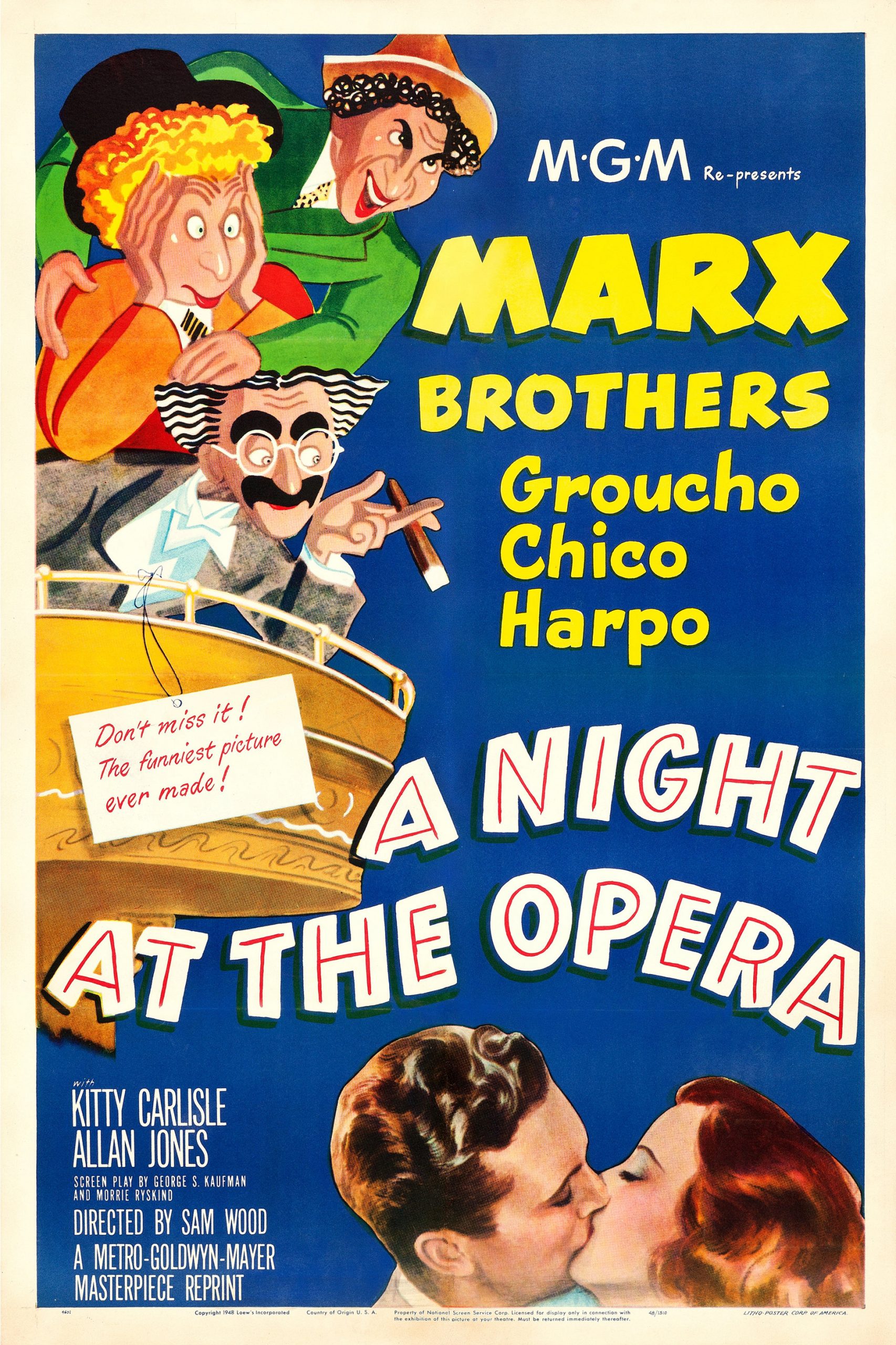
At some point, Mercury and Taylor looked at each other and said, “That would be a good title.”
“Bohemian Rhapsody” got a boost from tactics both new and old. On the former side, a music video (still referred to as a promo clip back then), directed by Bruce Gowers, mingled performance footage with shots of the band against a stark backdrop, in the same position and lighting as the cover photo of the Queen II album, shot by Mick Rock, itself an homage to a photo of Marlene Dietrich from the 1932 film Shanghai Express.
The older tactic was the intentional leak. Mercury was friends with Kenny Everett, a disc jockey at Capital Radio. Everett was invited to a recording studio to listen to some of the album’s material in progress. Mercury gave him a reel-to-reel of an in-progress version of “Bohemian Rhapsody, telling him not to play it in full on the air.
There was a heavy dose of wink-wink, nudge-nudge in that admonishment, because Everett, a prototypical wacky DJ, was absolutely going to play it and Mercury knew full well he would or he wouldn’t have given it to him. Everett did his job, playing teasing snippets which his audience responded favorably to before playing the song in full on multiple occasions to build the buzz.
It worked. “Bohemian Rhapsody” was a massive U.K. hit that spread globally. It launched the album that would effectively launch the rest of the band’s career.
It was a welcome change for Queen, which was not in a good situation in the not-too-distant past, thanks to an unfavorable deal they’d signed in 1972 with brothers Norman and Barry Sheffield, who owned Trident Studios.
Trident invested in the band, including studio time and stage clothes, but crucially, held the music and publishing rights, where the real money was to be made.
Things came to a head with 1974’s Sheer Heart Attack, itself highly worthy of discussion of Queen’s best albums with classics like “Stone Cold Crazy,” “Brighton Rock,” “Now I’m Here,” “In The Lap of the Gods” and that first hit single in Mercury’s “Killer Queen.”
Despite its success, the band was reduced to constantly having to ask for money, getting no royalties. It was like pulling teeth for Taylor to be able to get new drumsticks. Mercury was denied a piano. Bassist John Deacon couldn’t get money to buy a home to live in with his new wife.
“We had a very successful album — Sheer Heart Attack,” Taylor said in the Classic Albums episode on A Night At The Opera. “We had thought, you know, we thought it was a very good album, and it had done very well. We had a major worldwide hit with ‘Killer Queen,’ but we were broke and we wanted to know why.”
Queen searched for new management. One option was Zeppelin manager Peter Grant, who certainly had the mental will and physical strength that could prove useful in the situation, but the band balked at his insistence that they sign with Zeppelin’s label Swan Song.
VIDEO: Queen “Death On Two Legs”
Enter Scotsman John Reid, Elton John’s manager. He agreed to take them on, vowing to extricate the band from its Trident deal. The band itself couldn’t tour further in support of Sheer Heart Attack, but Reid told them to focus on their next album and not worry about the cost of making it, telling them to “go into the studio and make the best record you can.”
In the end, the band got its publishing back while Trident received reimbursement for half of its investment costs and a percentage point on the sales of Queen’s next six albums.
As to the cost, the final tally allegedly ran to around $500,000 in today’s money, an amount Reid says is overstated. The band used six studios (seven if you count the short closing instrumental”God Save the Queen” which had been recorded at Trident prior to the split), including three at one time at a certain point.
Mercury, one to hold a grudge, penned “Death on Two Legs (Dedicated to..)” about Norman Sheffield. He started the lyrics with “You suck my blood like a leech/You break the law and you breach/Screw my brain till it hurts/You’ve taken all my money – you still want more” and it gets more angry from there.
May worried the lyrics were a bit much, but the band’s rule was to respect the writer’s intent. Thus the song remained intact, a defiant album opener with May’s guitar riff taken from Mercury’s piano part on the demo.
Even though Mercury never named Sheffield, their now former manager responded litigiously. He sued for libel, thus ensuring that people absolutely knew the song was about him. He accepted an out-of-court settlement and always denied the band’s allegations and insisted in his 2013 memoir Life on Two Legs that the band was going to come into big money, but that Mercury was impatient.
The singer never softened when the band performed the song live, as it did through The Game tour. On the version of it on 1979’s Live Killers, if you removed the bleeps, you’d hear Mercury introduce it with “This is about a dirty, nasty old man, we call him motherfucker, you know what motherfucker means?”
Bolstering the album’s success was its second single, “You’re My Best Friend”, which remains one of the band’s pure pop joys, a love song written by Deacon to his wife Veronica (they married in January of that year and are still together 50 years later).
The song opens with the recognizable sound of the Fender Rhodes, played by Deacon out of necessity.
“Well, Freddie didn’t like the electric piano, so I took it home and I started to learn on the electric piano and basically that’s the song that came out you know when I was learning to play piano. It was written on that instrument and it sounds best on that. You know, often on the instrument that you wrote the song on,” he told the BBC in 1977.
Deacon was, by far, the quietest member of Queen, but he pushed for “You’re My Best Friend” to be a single. Not the most prolific writer in the band, his instincts were correct.
“He didn’t write that many, but you know, if you think about it: ‘Another One Bites The Dust,’ ‘You’re My Best Friend,’ ‘I Want to Break Free’ [all] big, big hits. And ‘You’re My Best Friend’ is still one of the most played tracks on American radio,” May said on Classic Albums.
VIDEO: Queen “You’re My Best Friend”
Taylor wouldn’t be as voracious a car collector of other successful musicians, but he did enjoy a lovely vehicle and it’s his Alfa Romeo heard on “I”m In Love With My Car,” a rocking midtempo rocker sung passionately by the drummer.
It is, indeed, about a guy who loves his car wholesomely and not in a Titane kind of way. Taylor said it was inspired by a member of the band’s road crew, Jonathan Harris, describing his Triumph T4 as “the love of his life.”
May, at first, thought Taylor wasn’t being serious when he presented the song, though he later called it “a memorable piece of writing.”
The guitarist didn’t buy that it was about one of Queen’s roadies. “He’ll tell you it’s written about someone else, you know, but we know the truth, don’t we Rog?” a smiling May said on Classic Albums. “And, I mean, Roger was always into fast things, you know, fast cars, etc. etc.”
Mercury contributed a love song of his own in the piano ballad “Love of My Life,” which featured the singer harmonizing with himself and just the slightest burst of guitar.
“Basically, I think if you sort of put them all in one bag, I think my songs are all under the label ‘Emotion,’ Mercury said. “You know, it’s emotion and feeling, so, I mean, I write songs that a lot of people have written before. It’s always to do with love and emotion, you know. I’m just a true romantic.”
It’s inspired by Mary Austin, the woman who he was in a relationship with and who remained his closest lifelong friend after he came clean about his attraction to men. It’s a poignant ode to a love that remained as true and deep in its way as the one Deacon wrote about “You’re My Best Friend.”
As if to remind listeners that this was Queen, the band’s throwing in the kitchen sink aesthetic wasn’t limited to layering dozens or hundreds of vocal tracks.
Mercury’s “Seaside Rendezvous” is tongue-in-cheek music hall camp, complete with the singer and Taylor imitating woodwinds with their voices and “tap dancing” with thimbles on their fingers.
Intentionally sillier is the brief “Lazing on a Sunday Afternoon,” more snippet than song in which the singer affects an old-timey radio crooner voice.
May also took a wayback machine trip on his own “Good Company,” less camp and more homage to his father, who carried a George Formby ukulele banjo with him through World War II and later taught his son to play it, giving him transferable skills when he picked up the guitar later.
Although he wrote the song on that ukulele banjo, it becomes more of a showcase for May’s guitar, as he uses various tracks to substitute for the jazz band horns and bells. He was no Freddie as a singer, but the whole thing is an amiable exercise in McCartney-esque music hall without the annoying premature jocularity of “Ob-La-Di, Ob-La-Da.”
“Bohemian Rhapsody” wasn’t even the longest song on the album. That honor goes to the May-penned “The Prophet’s Song,” where the tongue is removed from the cheek for a straight-faced prog experience. It’s not any more concerned with restraint, with an extended middle section where the multi-tracked vocals take over. It sounds great, both vocally and in the parts where the band is in rock mode, but there are also moments where one can’t help but think, “At least Styx knew how to edit.”
May fared better with “’39,” a folky transference of ship travelers from the sea to space, with the guitarist, who later earned a Masters in Astrophysics, playing with the concept of time. Wisely, they kept the song well under four minutes.
The guitarist wished the song could have been a single, but honestly, “Love of My Life” or “I’m In Love With My Car” (the latter earning Taylor a ton of royalties, to the others’ consternation, due to it being the B-side of “Bohemian Rhapsody”).
Even May’s rocker “Sweet Lady” could have fit the bill better if it had a sharper hook. Its straightforward nature is a welcome break from the album’s more self-indulgent tendencies.
Queen wasn’t a band to censor its indulgence at that point. Paying the cost no mind, the four were quite willing to throw everything in the pantry into the recipe, feeling quite confident in their skills.
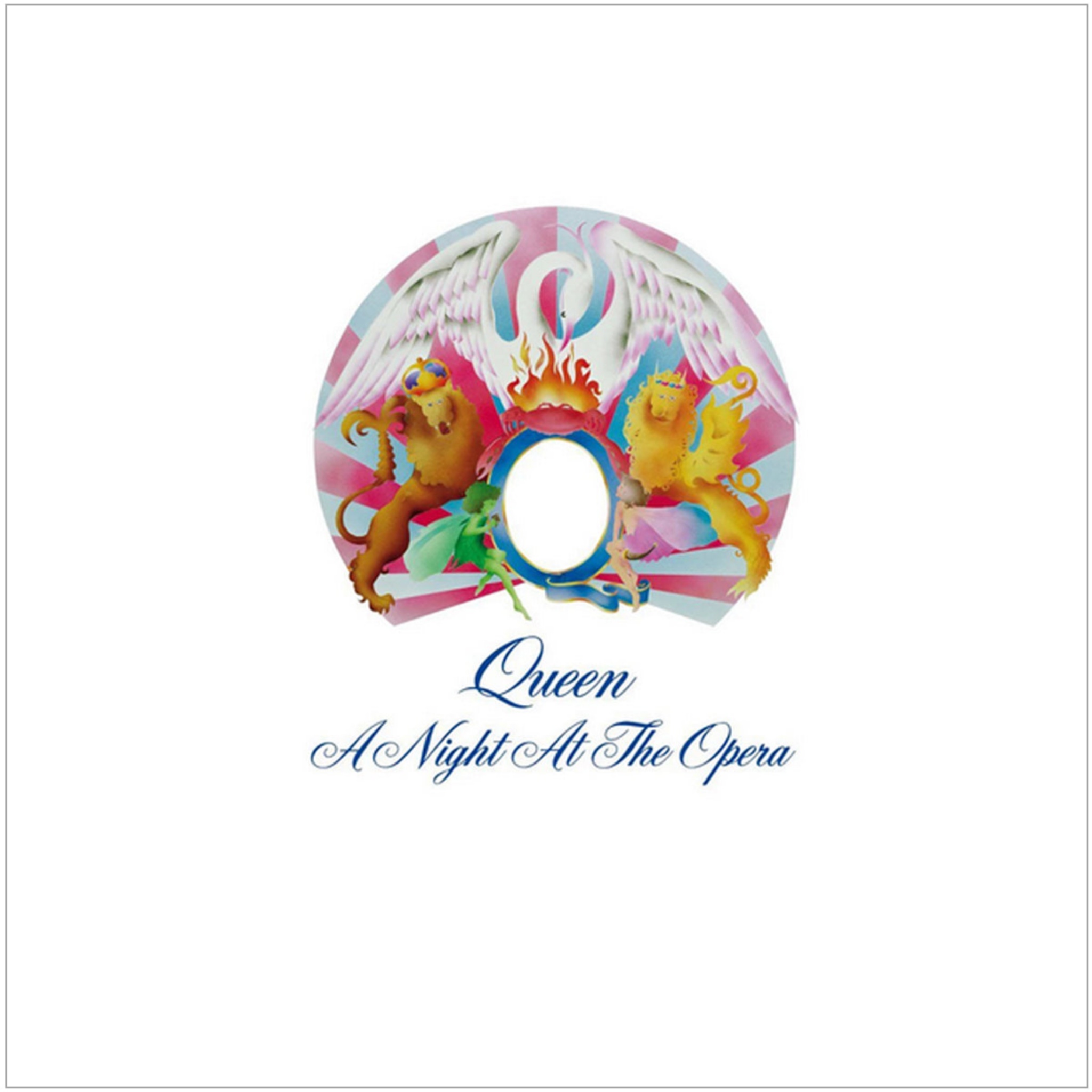
Their instincts proved correct. Bolstered by the success of its singles, A Night at the Opera carried the momentum of Sheer Heart Attack forward, featuring a successful six month tour. It ensured Queen stayed on track with more hit albums and singles followed over the next decade, not even derailed by the 1982 misfire Hot Space.
It was Mercury’s declining health that brought the band to a close. He was diagnosed with HIV in 1987 (not earlier, contrary to what the factually bullshit Queen biopic claimed) and died of AIDS in 1991, the day after finally issuing a statement that he had the disease. It brought the band to a sad close.
Deacon basically left music at that point, dropping out of the public eye entirely by the end of the ’90s. These days he lives privately, only keeping in touch on band matters with Taylor and May through intermediaries.
The remaining two brought the band back for tours, two with former Bad Company singer Paul Rodgers and over 280 shows between 2012 and 2024 with former American Idol runner-up Adam Lambert.
A Night at The Opera remains absolutely crucial in the band’s discography, a financial and critical success at a time where they absolutely needed it.
It can absolutely be argued that it’s not their best album (my vote still goes to Sheer Heart Attack), but it is the most unmistakably all-caps QUEEN of anything they ever recorded. Every bit of rock, pop and cheeky pomposity can be found in its grooves. Any way the wind blows, it’s indispensable.

- Tomorrow Never Knows: The Beatles’ Revolver Turns 60 - July 20, 2026
- Here Today: The Beach Boys’ ‘Pet Sounds’ at 60 - May 16, 2026
- Manifest Density: Local H’s ‘As Good As Dead’ Turns 30 - April 30, 2026
You May Also Like
-
 July 17, 2023
 -
 August 26, 2018
 -


Wow, what a legendary story! 🎸👑 “Bohemian Rhapsody” truly changed everything for Queen — the creativity, the risks, the laughs in the studio… it’s pure magic! ✨🥁 Love how even 50 years later, it still blows minds and gets us singing along. 🎶🙌