
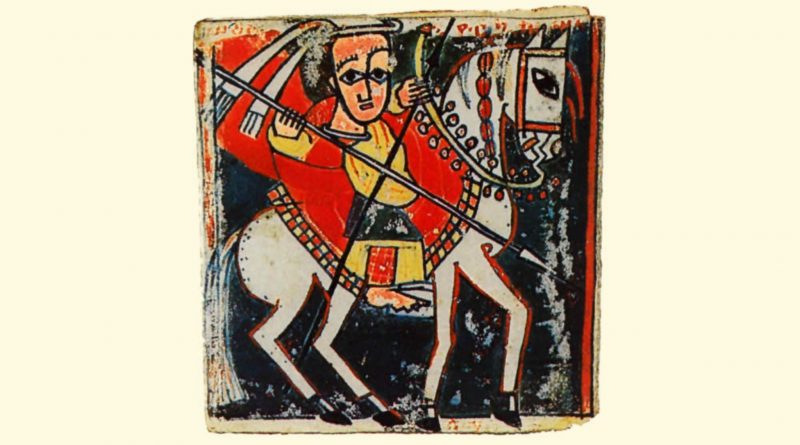
Gumboots: Paul Simon’s ‘Graceland’ Turns 40
New book shines light on a pop masterpiece
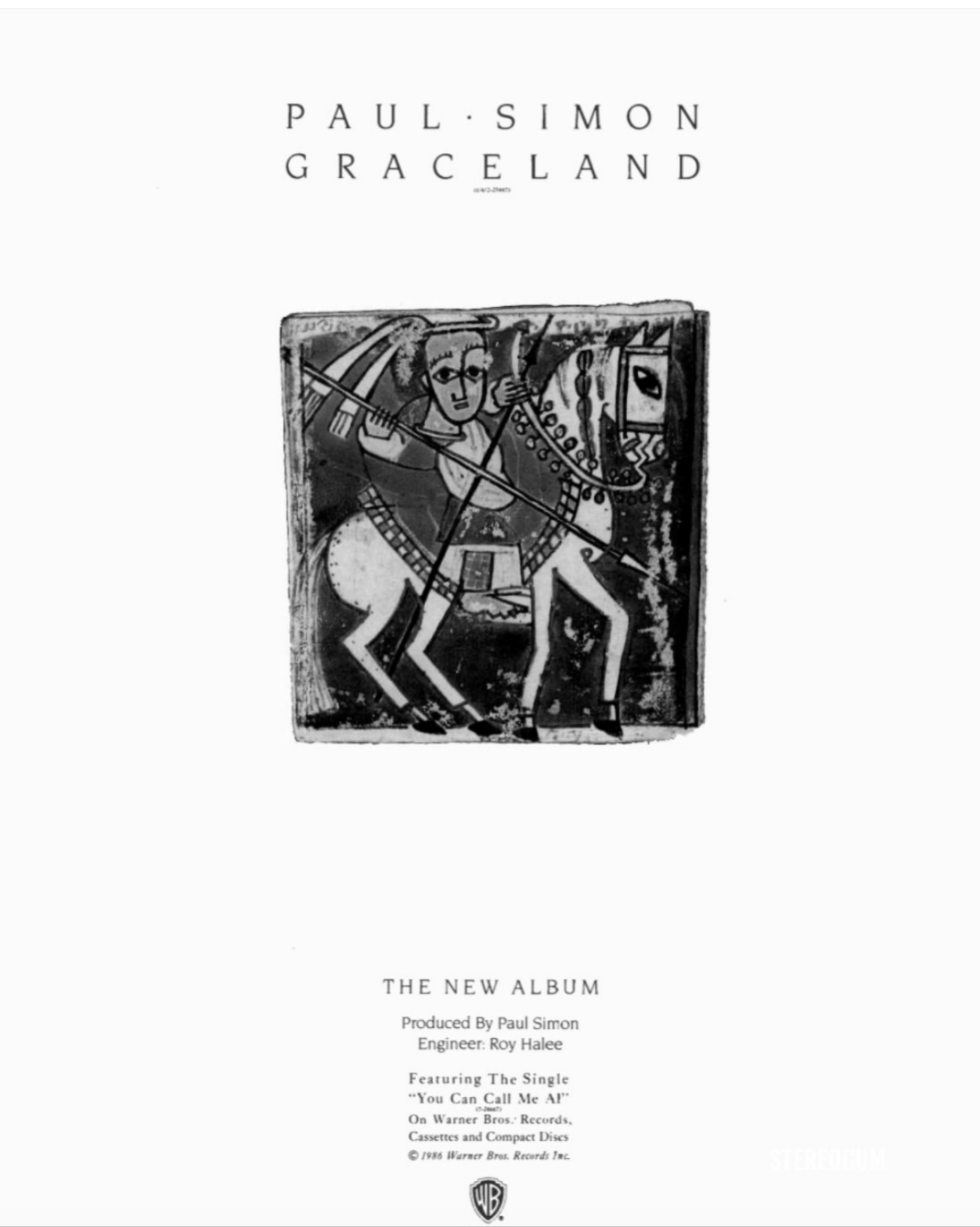
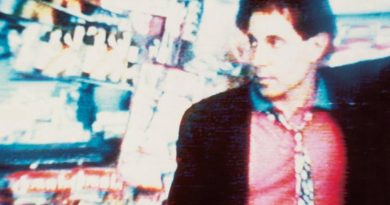
Paul Simon’s album Graceland — which turns 40 this month — was that rarest of artistic achievements: a critical and commercial smash that also crossed cultural boundaries.
In the mid 1980s, Paul Simon was not in a great place. His on-again, off-again relationship with Art Garfunkel was definitely in an “off” cycle. His previous album, 1983’s Hearts and Bones, did not produce a hit (despite being a good record that has aged very well). And his marriage to actress Carrie Fisher was deteriorating. By all accounts, including his own, Simon needed a pick-me-up.
Sometime in 1984, his friend Heidi Berg — a musician who had been part of SNL’s house band — gave him a cassette of an album called Gumboots: Accordion Jive Hits, Volume 2. In the liner notes to Graceland, Simon describes it as “very up, very happy music… familiar and foreign sounding at the same time.” The style of music on this tape was Mbaqanga, also known as “township jive” — South African street music. But at the time, Simon knew nothing about the musicians who created these songs nor the political climate in which they created them. All he knew was that he liked it.
After many years as a Columbia Records recording artist, Simon was now with Warner Brothers. With the label’s help, he contacted Hilton Rosenthal, who had produced Juluka — the first racially integrated band to hit big in South Africa. (Their frontman was the late Johnny Clegg.) Rosenthal began bombarding Simon with other albums from Africa that ran the gamut from traditional music to modern funk. He also encouraged the initially skeptical singer to record his own album of South African music.
In the 1980s, going to South Africa was not an easy thing to do — even for someone of Simon’s stature. Apartheid was in full swing, Nelson Mandela was still in jail and the United Nations had imposed a cultural boycott which “prevent[ed] all cultural, academic, sporting and other exchanges” with the county. Simon discussed the idea with Harry Belafonte and Quincy Jones who also encouraged him to go. And so, in early 1985, the singer and his longtime engineer and “old friend” Roy Halee made their first pilgrimage to South Africa.
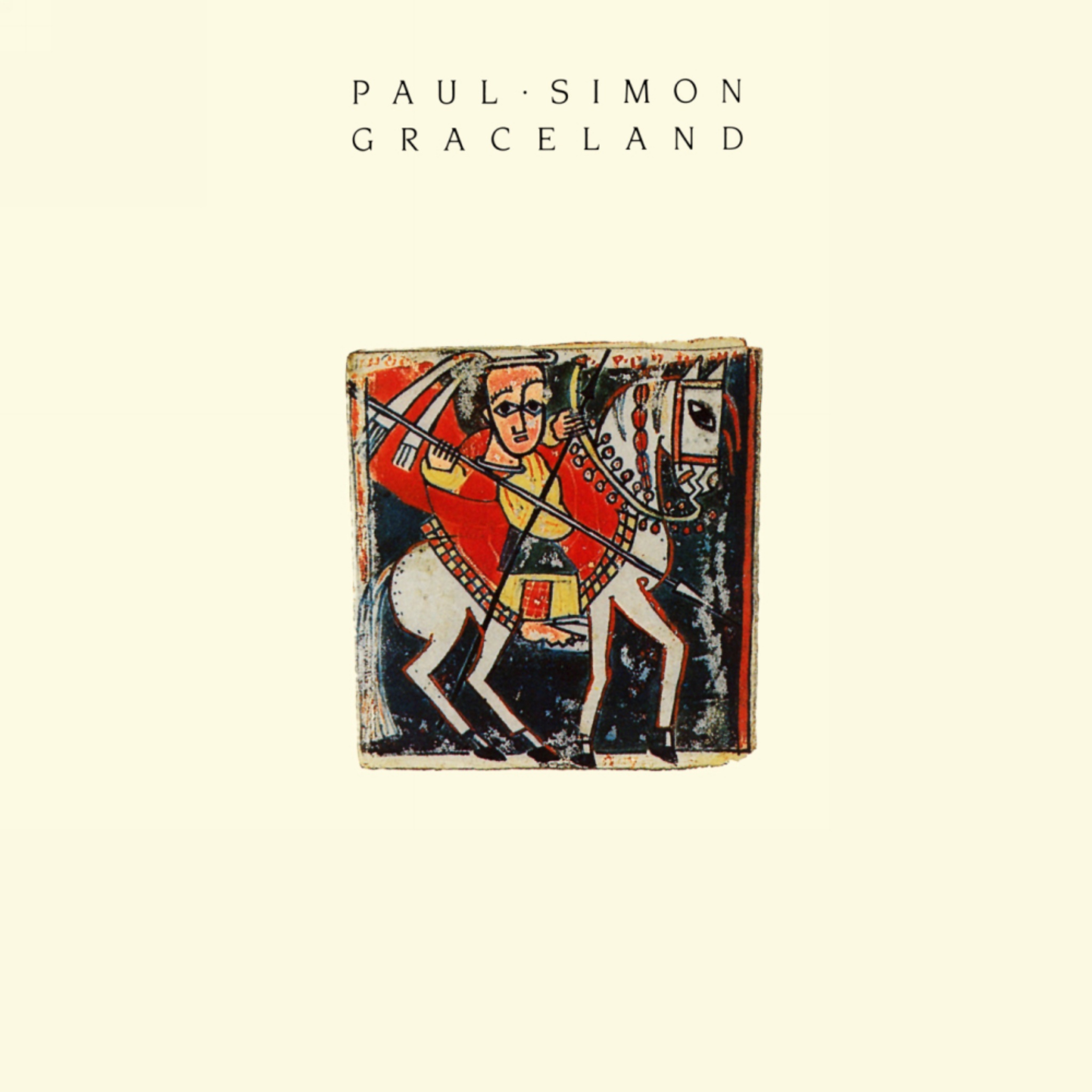
Still, the record that would become Graceland was a year and a half away from being released. At the time, there was no way Simon could have known that his sixth solo album (seventh if you count The Paul Simon Songbook which saw a limited release in 1965) would be the musical, personal and cultural event that it was.
Graceland opens with “The Boy in the Bubble,” a midtempo tune that is simultaneously unsettling and reassuring. Simon is backed on this song by the South African group Tau Ea Matsekha and the bass is the lead instrument. “The Boy in the Bubble” was initially written for Philip Glass but reworked; it was the first song Simon and Halee worked on for Graceland but took the longest to complete. The vivid lyrics alternate between specifics and generalities and, as Simon told Rolling Stone at the time, between hope and dread:
“It’s a turnaround jump shot/It’s everybody jump start
It’s every generation throws a hero up the pop charts
Medicine is magical and magical is art
The Boy in the Bubble and the baby with the baboon heart…”
The title track comes next. As Simon says in the liner notes, “[It] is less typical of South African music than most of the other tracks… It almost has the feel of American country music.” Indeed, though most of the musicians on the song are South African, “Graceland” is more guitar-based and features harmonies from none other than The Everly Brothers (one of Simon & Garfunkel’s big influences). Lyrically too, it tells a very American story. Writing in the first person, Simon sings of a pilgrimage he’s making to Tennessee after a breakup. The lyrics are somewhat autobiographical — inspired specifically by the end of his marriage to Fisher — and include the wonderful, left field line “My traveling companion is 9 years old/He’s the child of my first marriage.” It’s a song about seeking redemption and it’s great.
The next two songs are also great — but both are upbeat, funny and much more in line with South Africa musically. “I Know What I Know” is an infectious gem that features the group General M.D. Shirinda and the Gaza Sisters. (Simon actually cowrote this one with Shirinda.) It’s definitely one of Graceland’s lighter songs, featuring lines like “She was the kind of a girl who could say things that weren’t that funny.” The backing vocals of The Gaza Sisters are distinct and serve the song well.
“I Know What I Know” is followed by “Gumboots,” a short song that maintains the mood. It takes its name from the cassette that first got Simon hooked on Mbaqanga. Simon has said it’s not one of his favorites — but to these ears “Gumboots” is a fun, catchy tune. With backing from yet another South African group, The Boyoyo Boys, he sings stream of consciousness lyrics. (Side note: my father was a psychologist and a big Paul Simon fan and he loved the line “Breakdowns come and breakdowns go/What are you going to do about it/That’s what I’d like to know.”)
VIDEO: Paul Simon feat. Ladysmith Black Mambazo “Diamonds on the Soles of Her Shoes”
Side one of Graceland closes with “Diamonds on the Soles of Her Shoes.” This ballad tells the story of an urban romance between a rich girl and a poor boy. “Diamonds” features Ladysmith Black Mambazo (who probably became the most popular of the South African groups Simon worked with) as well as Senegalese singer-percussionist Youssou N’Dour and American sax player Lenny Pickett.
The disc’s second side kicks off with what is undoubtedly its best known song, “You Can Call Me Al.” Initially, the single stalled just outside the Top 40 here in the States. But as acclaim for Graceland grew — and after the album won a Grammy — Warner Brothers re-released the single and it soared to number-23. It did even better in the UK and was accompanied by a humorous video that featured the five-foot-three Simon with Chevy Chase (who is a foot taller!).
“You Can Call Me Al” pulls off the neat trick of wrapping existential lyrics in a catchy melody. Initially, the unnamed protagonist of the song is experiencing a midlife crisis of sorts — but he remains somewhat abstract and separate from the writer. That changes in the third verse when Simon describes his experience of visiting South Africa. To wit:
“A man walks down the street
It’s a street in a strange world
Maybe it’s the Third World
Maybe it’s his first time around
He doesn’t speak the language
He holds no currency
He is a foreign man
He is surrounded by the sound…”
Musically, “You Can Call Me Al” finds Simon backed by an all-star cast of musicians from here and abroad. These include American guitarist extraordinaire Adrian Belew, Black South African bassist Bakithi Kumalo and white South African horn player Morris Goldberg on pennywhistle. It is the best known track on Graceland for good reason.
VIDEO: Paul Simon “You Can Call Me Al”
From there, we get to the two most quintessentially South African songs on the album. “Under African Skies” retains the rhythm section of bassist Kumalo and drummer Isaac Mtshali but, notably, adds Linda Ronstadt on harmony vocals. Set to a Zulu walking rhythm, Simon’s lyrics tell the story of a man named Joseph. This is probably the prettiest tune on Graceland.
“Homeless,” which follows, delves even deeper. Simon cowrote this one with Joseph Shabalala, the frontman of Ladysmith Black Mambazo. The song is a capella which allows the beauty of the 10-piece South African group’s vocals to take center stage. The lyrics carry a sense of foreboding and alternate between Zulu and English. Shabalala’s melody was reportedly inspired by an African wedding song.
We get back to instrumentation with “Crazy Love, Vol. 2,” another song that manages to be infectious and melancholy at the same time. Simon is backed here by South African guitarist Ray Phiri and his group Stimela. The lyrics — which are likely somewhat autobiographical — deal with a divorce and are some of the album’s best. In particular, I’ve always loved the line “Fat Charlie the Archangel files for divorce/He says well this will eat up a year of my life and then there’s all that weight to be lost.” Great stuff!
The last two songs on Graceland find Simon, as he put it, “searching for a musical connection to home.” So he returned to America but continued to explore sounds and rhythms that were somewhat outside the usual Anglo-American arsenal. The wonderful “That Was Your Mother” is sung from the POV of a man who is reminiscing about meeting his young son’s mom. It finds Simon working with the Louisiana-based Zydeco outfit Good Rockin’ Dopsie and The Twisters. On the final track, “All Around the World” (which is subtitled “The Myth of Fingerprints”), he is backed by Los Lobos, the Latin-American band from East LA that was already popular at the time.
VIDEO: Paul Simon “Under African Skies”
Simon ultimately recorded Graceland over the course of eight months. He and Roy Halee worked in South Africa, London, New York City, Los Angeles and Louisiana. Recording was finished in June of 1986 and the album was finally unveiled on Aug. 25 of that year. It was a sensation, albeit not necessarily an overnight one. Of course, Simon did have a fan base that would buy anything he put out. But Graceland appealed to many people beyond that base.
The album produced five singles: “You Can Call Me Al,” “The Boy in the Bubble,” “Diamonds on the Soles of Her Shoes,” “Under African Skies” and the title track. It won the Grammy for Album of the Year in 1987, sold more than 16 million copies worldwide and got uniformly positive reviews. Even the notorious curmudgeon Robert Christgau gave Graceland an A and deemed it Simon’s best disc since his eponymous effort from 1972. In 2006 — a full 20 years after its release — Graceland was added to the US National Recording Registry as being “culturally, historically, or aesthetically important.”
Of course, there were some bumps in the road too. Some people accused Simon of appropriating the music of another culture while groups like Artists United Against Apartheid criticized him for breaking the cultural boycott on South Africa. Closer to home, the band Los Lobos felt that Simon should have given them a co-writing credit for “All Around the World.”
But on the whole, there’s no question that Graceland was a success — and its success went far beyond sales figures, awards and hit singles. It also changed the way that Simon approached songwriting. Previously, he had generally started out with either a lyric or a chord progression and built things up from there. With Graceland, he used rhythm as the foundation for songwriting.
Most important, however, is that Graceland was the album that introduced many people in the West to South African music. At a time when Apartheid was in full swing and most Americans were wary of listening to anything from other parts of the world, Simon proved that music could transcend racial and cultural differences. And in a way, that may have been the greatest political statement of all.
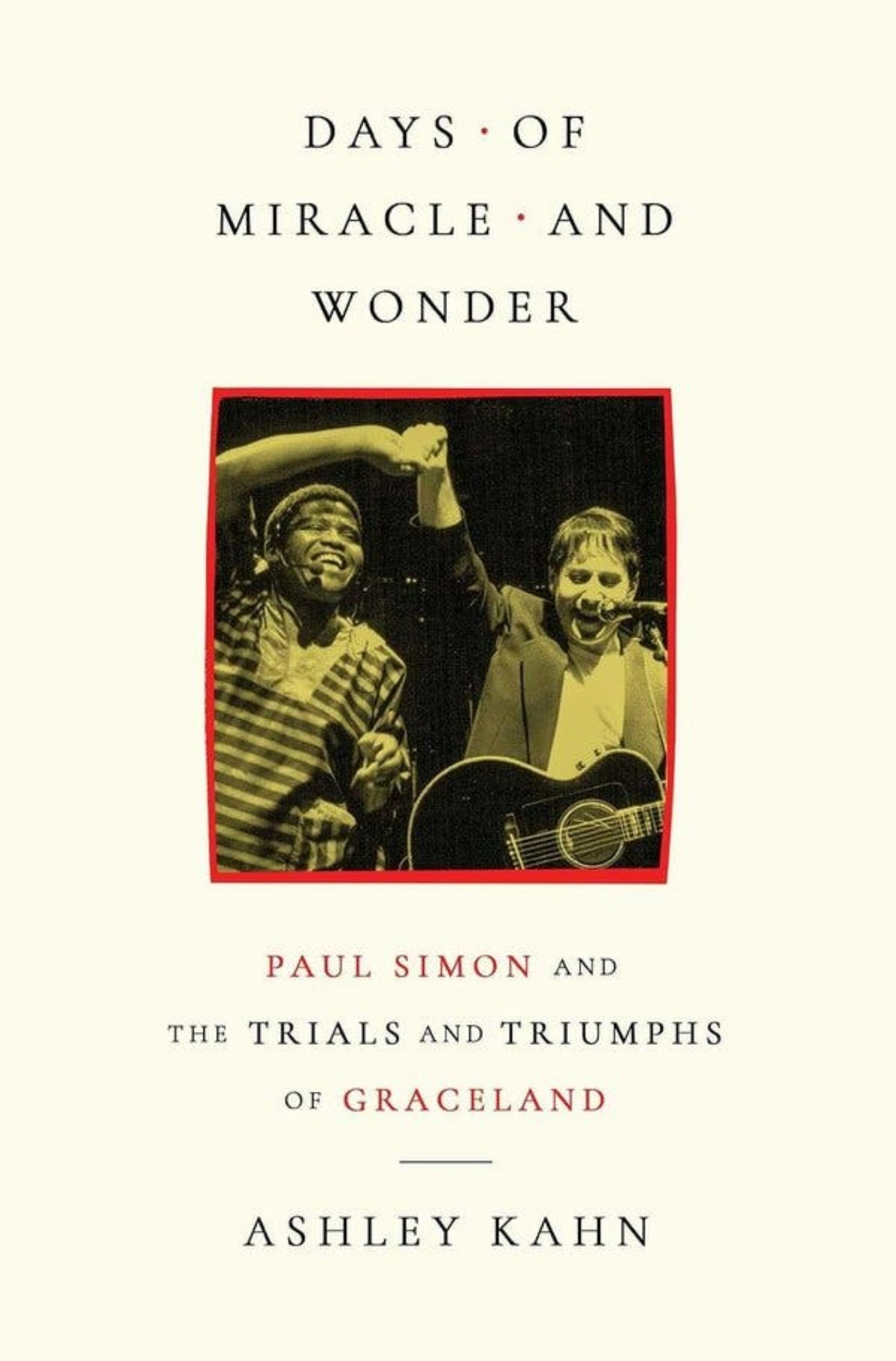
A conversation with Ashley Kahn
Earlier this month, Simon Schuster/Atria Books published Days of Miracle and Wonder by Ashley Kahn. It’s an exhaustive look at the making of Graceland.
I recently had the pleasure of speaking with Kahn, who is an author, historian, tour manager and teacher. Here are some excerpts from our conversation.
Before getting into the album — I know you were tour manager for Ladysmith Black Mambazo. You talk about that toward the end of the book. But I [wanted to] ask a little more about what it was like being on the road with Joseph [Shabalala] and the group.
My experience on the road with Ladysmith Black Mambazo, when Graceland was really at its height, was unlike anything I could have scripted for myself. It was something I fell into as the right person at the right time with the right experience. And that experience wasn’t much; I had to do a lot of learning. Part of the learning was learning how to speak Zulu. Part of the learning was learning how to think on my feet, day in day out, to make sure that by 8pm that day the band was onstage and everything was copacetic.
And then of course dealing with the money — dealing with the day to day aspects, you know? One of the members of the group, who really spoke minimal English, needed a root canal — in France! Suddenly my high school French is being used in ways I never would have imagined (laughs). So, you know, all of that was the personal context.
But then seeing how incredibly well oiled their stage show was? And that sound. Nothing like it! Seven bass singers and three altos onstage together, moving and singing in unison. You felt like you were sitting on an atomic bomb — but a good bomb. By the end of the show, no one [was] not feeling elevated.
And in this time period, Dave? You think about how open the borders were back then. How open people’s hearts and minds and ears were. I long for those days.
That’s actually a good segue into what I was gonna ask you next. You also write in the afterword, “It’s challenging to describe a time when the world seemed to be moving in sync toward a common good.” And some of the events you list are the ending of apartheid in South Africa [and] the fall of the Berlin wall. Now we’re 40 years later. Do the mid-80s feel even [better] in retrospect?
Of course. You know, when you think about it, the South African apartheid system was in the process of being dismantled. This is one of the other reasons I wrote the book: to try and define both the zeit and the geist — the time and the spirit of that moment. We were living with the absolute certainty that South Africa was a powder keg about to blow up.
And Paul went down there with this determination to take a risk. He [appeared] like the entitled rock star, taking advantage of this moment. [But] he did all he could, step by step, meticulously researching the right way of doing this. To this day, nobody will disagree — even his harshest critics. No one disagrees that he did a hell of a lot more good than harm.
My sense is that when he initially started Graceland, Paul wasn’t really thinking about a political angle; he was just digging the music. It sometimes felt like he didn’t entirely know what he was stepping into.
No, it was a total visceral reaction… Music hits on its own level first. And what Graceland became for Paul was a sort of return to roots project that, paradoxically, was not about America. Well, parts of it were. So the music of the South African townships and Western Louisiana zydeco and East LA Ortega rock — all got Paul to kind of respond in the same way he had [to] the beginnings of rock and roll. Jerry Lee Lewis, Little Richard, The Everly Brothers. Paul wanted to get back to his roots.
His previous album, Hearts and Bones, was so inward looking. Very different musically and lyrically to Graceland.
Yeah. It’s not nearly as rhythmically charged. There are some tunes [that are] like “Cars Are Cars.” [But] when I think of Hearts and Bones — which is an overlooked masterpiece in its own right — [I think of] “Rene and Georgette Magritte with Their Dog After the War,” “Train in the Distance” — tunes like that. That’s really where Paul was at.
Toward the end of the book, you offer an interesting quote from Joe Strummer. [He] said something like, “Adolescents make the best records — except for Paul Simon!” Tell me more about that.
Well, I think what happened — if I’m reading it right — the LA Times piece [came out in] ’88 [or] ’89. So Graceland’s been out for a few years. The Clash are not nearly as important as they once were — and yet Joe’s stature and his importance have not faded one bit. He’s putting together his solo career at that time. And here he is, discovered at the bar of this LA music enclave. The writer gets a chance to sit down with him; it doesn’t sound like a planned interview.
[Joe] is just talking and he’s sharing thoughts. And he says this very insightful thing that jibed with this other story I had that I didn’t have a home for in the book. That was the story of these junior high kids who have been given free tickets to a Madison Square Garden concert. And it happens to be the Graceland tour. And they’re doing what kids do — you know, messing with each other — until “You Can Call Me Al” hits. Suddenly, there’s this flash of recognition. The kids themselves were of a different generation with different pop heroes than Paul Simon. [But] they jump into the music! And they connect with the music in the same way that everyone else was.
There’s an interview with Paul where he makes this point of a generational connection in pop music. That the key is rhythm — if you can find that rhythmic charge that connects with all generations. I think it imbues this album with a certain timeless quality. So to have Joe Strummer put his finger right on that point, and then have this story ofp the junior high kids going crazy [for] “You Can Call Me Al” — it proved a final point for me, that great music transcends its time.
I’ve talked to people time and again that say, “You know, that was one of those albums that whenever we put it on in the house, my parents loved it and we loved it, too.” We connect with our parents through certain albums. And that album, to this day, serves that purpose.
What I wanted to share with you [which relates to that] — Graceland was also one of my dad’s favorite albums. Our musical tastes weren’t identical but there were certain [points] where we had a common ground. He loved Paul Simon — but particularly Graceland. I lost him about four months ago. But he would have loved that I’m talking to you and doing [this piece]. At his 80th birthday party, we played Graceland.
I love that. The intention that I had in writing this book — in fact with all my writing — is a very simple one: to return people to the music.

- Gumboots: Paul Simon’s ‘Graceland’ Turns 40 - August 27, 2026
- In Quintessence: Squeeze’s ‘East Side Story’ At 45 - May 15, 2026
- If the ‘Shoes’ Fit… - March 31, 2026
You May Also Like
-
 November 4, 2023
 -
 October 13, 2021
 -
 April 8, 2021
