
Off They Go: Pearl Jam’s ‘No Code’ at 30
Looking back on their most understated LP
Pearl Jam’s No Code was likely the first album where I was aware of the marketing.
In elementary school I began to peruse my dad’s CDs, which probably for the last time overlapped with the biggest albums in rock: Automatic for the People, Melon Collie and the Infinite Sadness, (What’s the Story) Morning Glory?, August and Everything After. I hadn’t fully found my way into Pearl Jam yet — to this day I couldn’t hum anything on Ten for you that didn’t storm rock radio — but he had all their albums and the packaging of Vitalogy and No Code (and later Yield) stood out to this fifth grader to say the least, as elaborate digipaks that functioned more like coffee table books. Vitalogy was designed to look like a miniature medical anthology that a typewriter-wielding anarchist scrawled lyrics over; no one else even in multiplatinum rock was imagining that in their art direction.
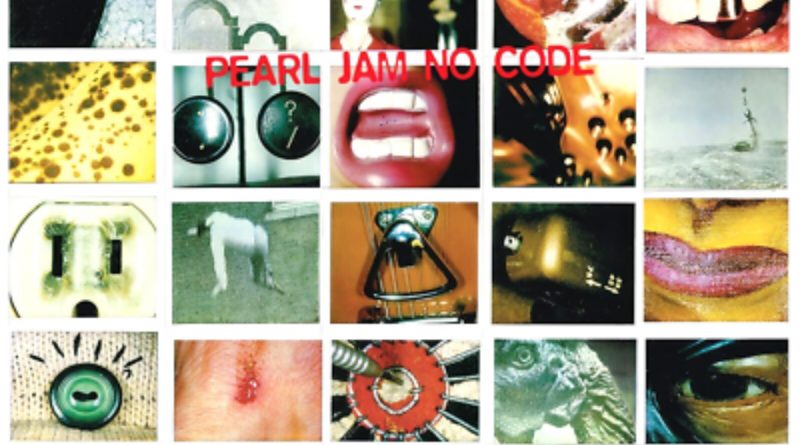
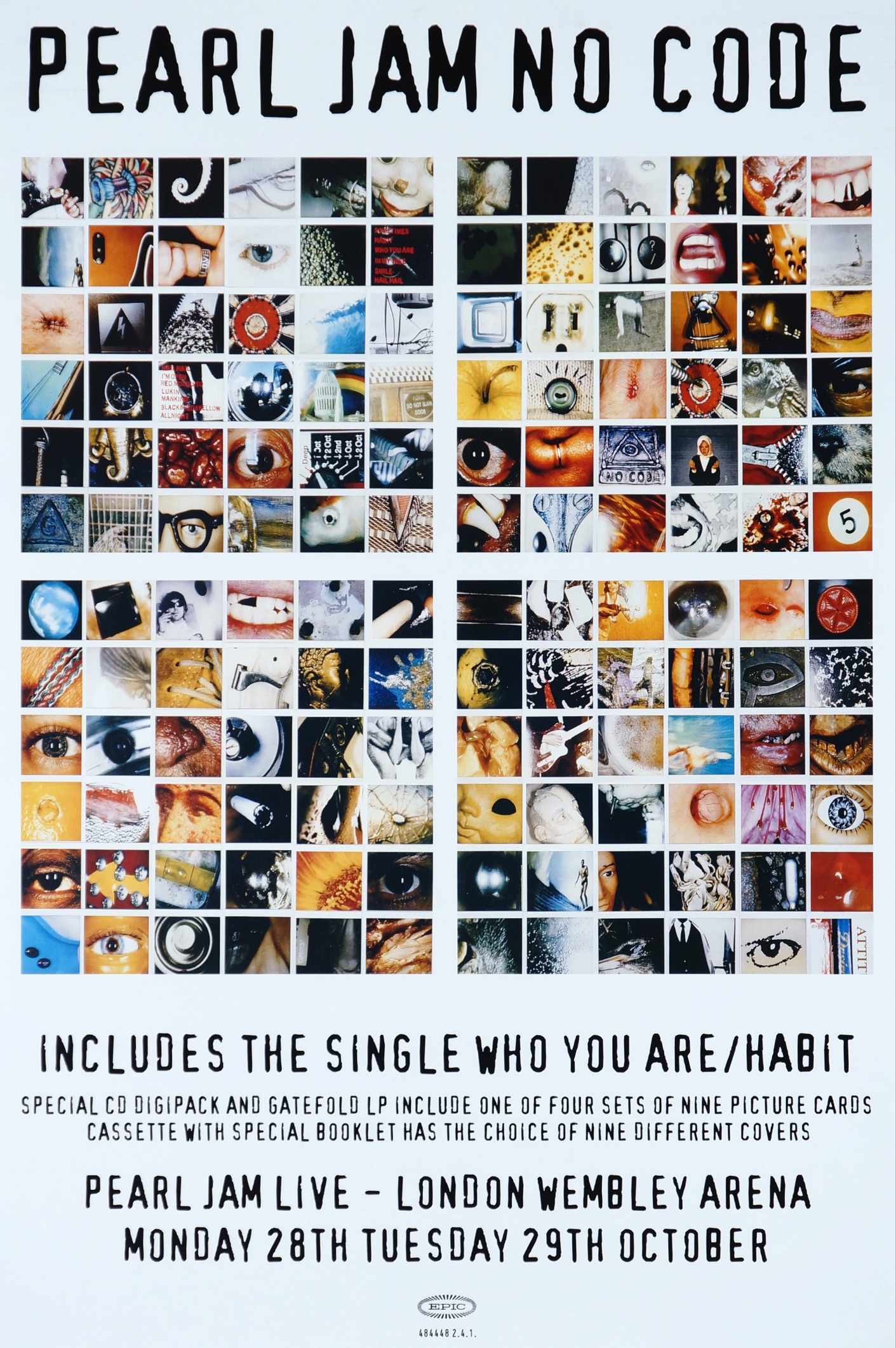
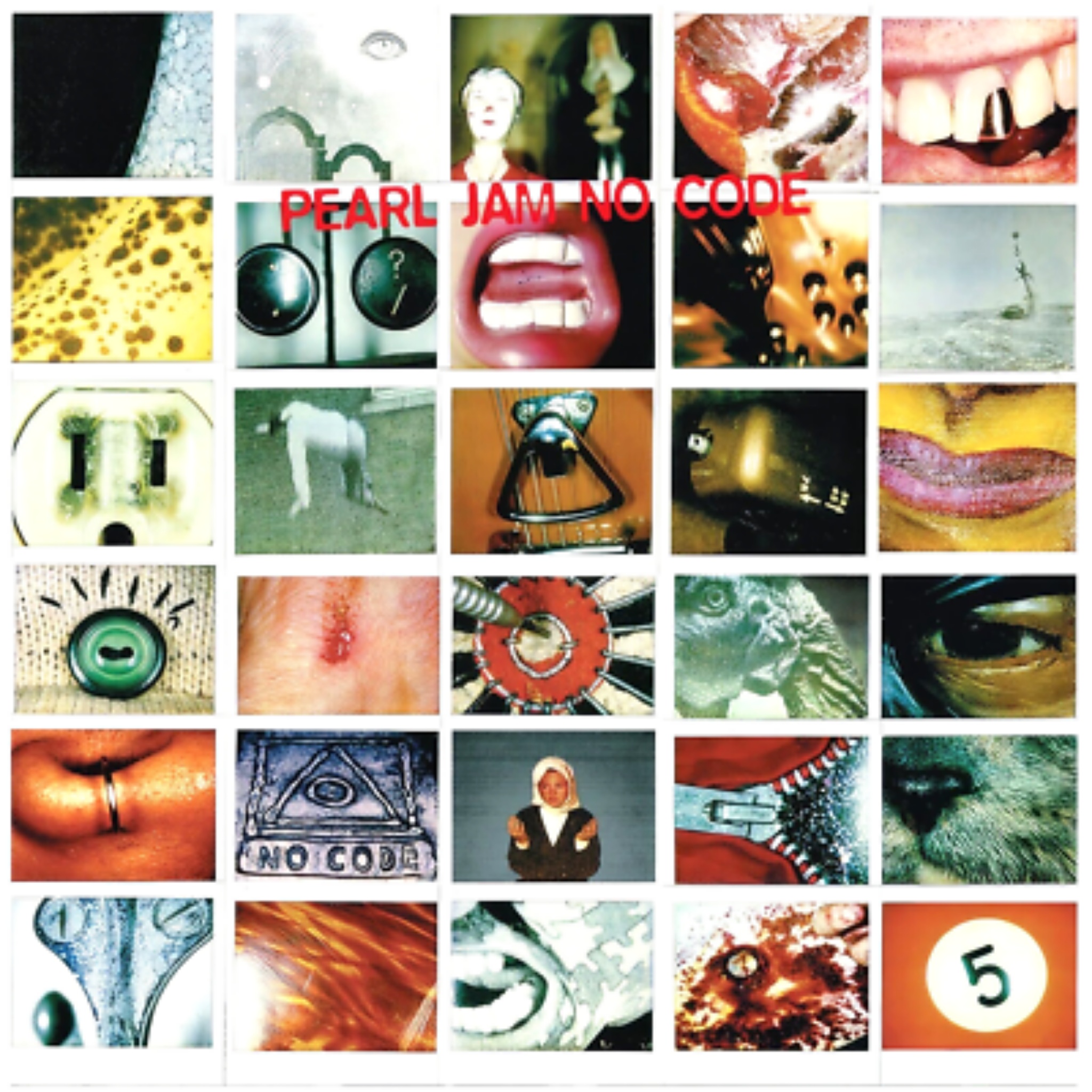
I wasn’t old enough to know yet that “no code” meant “do not resuscitate,” so I really looked for something in the 156 mysterious Polaroids that made up its four-panel foldout, which did in fact display an illuminati-cum-Harry Potter eye symbol across the mosaic. Each copy also came with nine replica Polaroids with lyrics on the back; one of ours was some kind of bloody hole that looked like a removed eye or navel and disgusted me. Even though I watch a lot of horror, to this day I don’t really feel like opening my copy to look at it with adult eyes. It might not even include that one; Polaroids for all 13 songs could only be obtained if you bought multiple copies of No Code, which maybe helped such an indifferently received album hit number one on the Billboard 200. No Code was not only their last hurrah as the most popular band on the planet but also what killed them.
Famously averse to making music videos after the Columbine-predicting “Jeremy” swept the VMAs, Pearl Jam actually ended up caving and hiring Spawn’s Todd McFarlane to animate a dystopian clip for the next album’s “Do the Evolution” — hard to forget the conveyor belt babies being stamped with UPC codes. Maybe that wasn’t commissioned directly because No Code flopped, but they certainly didn’t feel the need to film one for any singles on their three number-one albums during their imperial ‘90s run. (Only 2009’s Backspacer actually topped the charts again after that, and its great single “The Fixer” did stoop to a video, albeit a straight performance one shot by Cameron Crowe cross-promoted by Target; pretty sure the song itself did more to propel the record without it.) No Code’s promotional blitz was still extremely visual; I remember obtaining both a midnight blue tee with a Zodiac-oriented replica of the compact disc itself and a black one with painted interpretations of three Polaroids on the chest, of which I think they also manufactured more than one version.
These memories stick out to me because 1996 was the height of my listening to alternative and rock radio, which played Pearl Jam constantly, and under oath I can attest I never personally heard a single song from No Code on the air. Non-album favorites “I Got Shit” and “Yellow Ledbetter,” constantly; I had to actually find out what those songs were called. Yield’s singles “Given to Fly” and “Wishlist,” even the fantastic deep cut “In Hiding,” yes. But nothing from its predecessor, which probably made some Epic bigwig nickname it No Hits. Eddie Vedder sang as obsessively as Michael Jackson about privacy on Vitalogy, going as far as spelling out the word for a minute and titling the piece “Pry, To,” and No Code actually managed to succeed as somewhat of a private album, camouflaged in plain sight by its literally distracting visual presentation, perhaps their version of U2’s Zooropa: kaleidoscopic artwork indicating experimental record and discreetly concealing the music’s low probability for world domination.
I also remember reviews along party lines: David Fricke in Rolling Stone giving his dutiful four stars, David Browne in Entertainment Weekly deeming it an indulgent C. A very early Pitchfork review called it “almost all filler.” That’s sort of true and also why I love it. Pearl Jam’s two first and biggest albums have a good lot of tunes I don’t need because they’re simply retreads; who would choose the soundalike “Animal” over “Even Flow?” No Code was as flatly even-keeled and ripe for sussing out fan favorites as a good Neil Young LP, and easily their first album that bore his influence as a friend, north star, and tourmate. Experimental for grunge heroes maybe, but certainly less brattily than Vitalogy’s momentum-interrupting Tom Waits takeoff “Bugs” or “Hey Foxymophandlemama, That’s Me,” the Freudian “Revolution 9” that closed it. No Code’s two long ones are shorter than “Like a Hurricane” or “Cortez the Killer,” and they’re two of its most popular, straightforward, and grounding tunes.
One is “Off He Goes,” easily the band’s most Neil Young song, so beautiful and plainspoken that Epic gave it the six-minute ballad a shot as a single, and the other is the quiet psych-blues “Present Tense,” recently given new life as a needle drop on The Bear. I also hear a lot of Neil in the ragged glory of homesick highlight “Smile,” which even has harmonica, as well as the very ‘70s “Red Mosquito” and the quiet-loud juxtapositions of the sequencing, which were earthier than, say, Silverchair. The way Vedder’s gentle “Sometimes” floats in before “Hail, Hail” rips like a grizzly wasn’t necessarily new for the band — Vs. and Vitalogy showed increasing interest in starker contrast between punk tantrums and soothing ballads — but putting that side of themselves upfront was.
There’s also a brief flirtation with a percussive worldbeat so generic it’s probably for the best that we can’t hear any Youssou N’Dour in it or anything, though Vedder’s rendition of “Long Road” with late qawwali legend Nusrat Fateh Ali Khan was downright elegant on the Dead Man Walking soundtrack. We’re also fortunate those two consecutive songs are quite beautiful: the existence campfire singalong “Who You Are” with its ringing Peter Buck-style guitar, and the rolling burundi beat of “In My Tree,” which soars into U2 territory respectably. Other than that, though, No Code is simply a rad Pearl Jam album without hits. “Lukin” salutes Matt from Mudhoney and damns a stalker of Vedder’s inside of 62 thrashing seconds while “Around the Bend” lulls the record warmly to a close. The gauzy swirl of “I’m Open” against Vedder’s spoken word built up confidence for the more aggressive experiment “Push Me, Pull Me” on Yield, and for that matter, the Stone Gossard-sung rockalypse “Mankind” is a dry run for “Do the Evolution.” Only the generic “Habit” feels like a placeholder to keep the ratios of rockers to lilters kosher with old fans; any of the rest feel born to be the homespun fan-favorites and deep cuts that continue to elicit uniformly psyched responses at PJ shows.
VIDEO: Pearl Jam performs “Present Tense” on The Late Show with David Letterman
If it sounds like this more curious, rebellious phase of Pearl Jam’s career (Vitalogy, No Code, Yield) is my favorite, yup. It’s an especially remarkable trilogy emotionally, with Vitalogy the angriest and by all accounts most fraught to record at the height of the band’s fame. You can hear Vedder raging against the machine on that one, unhelped by both the grief of Kurt Cobain’s suicide and the pressure to fill a void that killed the man; no wonder he shitcanned David Abruzzese for enjoying himself too much. No Code may have expanded on it sonically, but it’s far more at peace with itself, making it a special kind of dick-move number-one album, one that isn’t actually a dick move at all.
New drummer Jack Irons by all reports encouraged better communication among band members, which is maybe how Gossard got to sing one and individuals’ compositions became recognized and trusted, especially Mike McCready’s “Present Tense” and Jeff Ament’s “Smile,” two tall-standing beauts in their entire catalog. Much as Soundgarden wows me, 25 years of longtime stalwart Matt Cameron behind the kit after Irons’ tenure on No Code and Yield failed to convince me his contributions were essential to this band.
But it makes much more sense to live in the present tense: Cameron departed the band last year. Could they put in a call to Irons again?

- Guess Who’s Coming: DJ Shadow’s ‘Endtroducing…..’ Turns 30 - September 16, 2026
- Where It Got Them: R.E.M.’s ‘New Adventures in Hi-Fi’ Turns 30 - September 10, 2026
- Off They Go: Pearl Jam’s ‘No Code’ at 30 - August 28, 2026
You May Also Like
-
 November 22, 2024
 -
 November 21, 2018
 -
 February 3, 2023
