
Someday Soon: Wilco’s ‘Being There’ Turns 30
Looking back on the Chicago band’s sophomore classic
By most estimates, Uncle Tupelo was a crucial thread that tied indie rock to the still-nascent growth of modern Americana.
But when that band split up due to creative differences between the group’s two principals, Jeff Tweedy and Jay Farrar, the onus remained on those two individuals to continue weaving together those seemingly divergent styles while coming up with that formative band’s designated successor. For Tweedy, it had him founding Wilco, which made its initial entry via the aptly dubbed A.M. in 1995.
In retrospect, that may have proved an auspicious introduction, but slow sales indicated early on that recognition and appreciation hadn’t fully taken hold. By comparison, Farrar’s new group, Son Volt, did far better with Trace, its album debut, thereby setting the stage for a fierce competitive showdown between the two budding bands.
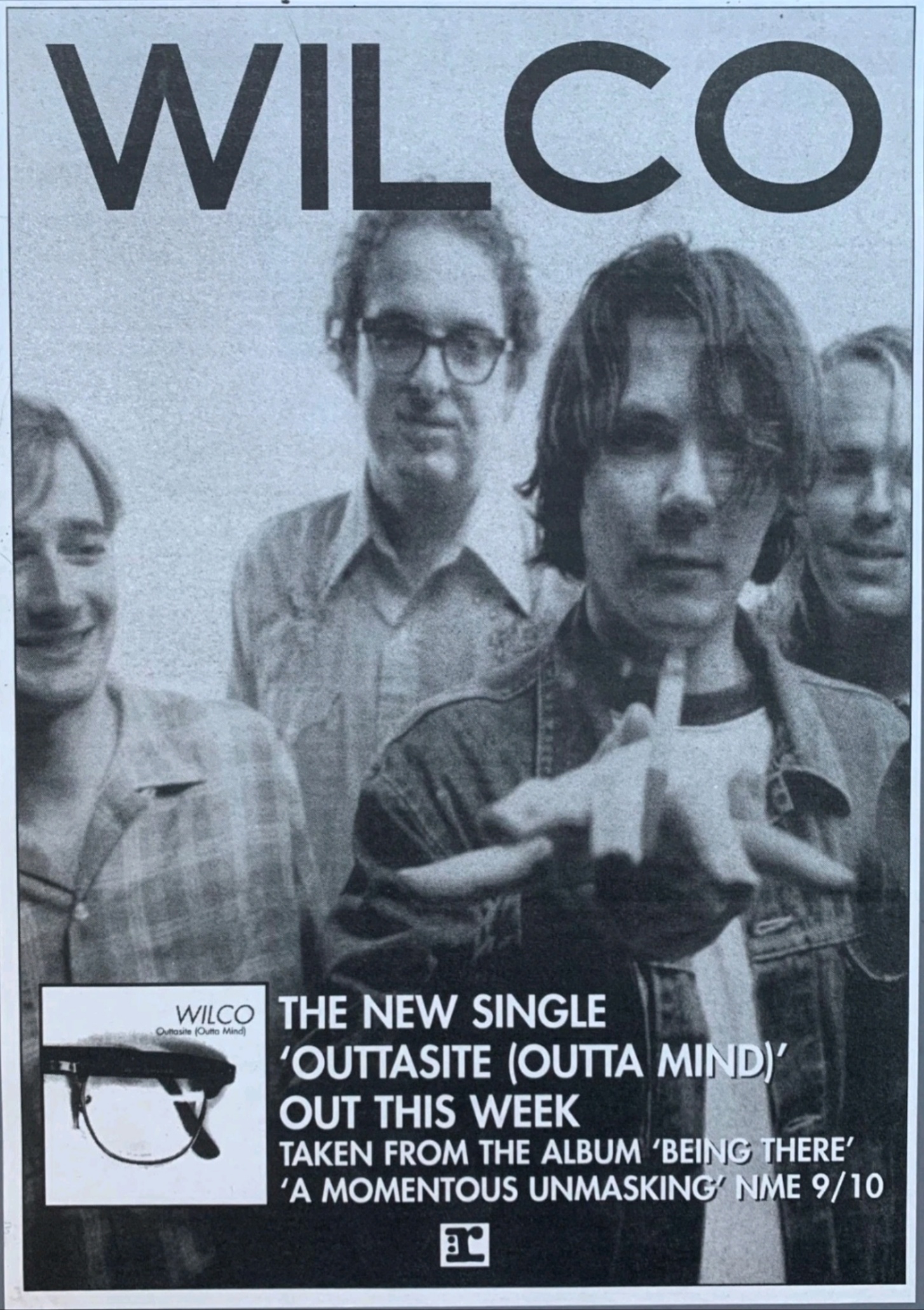
Clearly then, the stakes were raised considerably when Wilco released its sophomore set Being There on October 29, 1996. Hoping to further prompt some success, Tweedy and Wilco’s label, Reprise Records, agreed to offer it up as a double album with a sales price equivalent to that of a single disc. To compensate for any financial loss entailed by Reprise, Tweedy agreed to dramatically reduce the amount of royalties he was otherwise due. It was estimated that by 2003 alone, the compromise personally cost him nearly $600,000, but Tweedy insisted that they had made the right choice.
Named for the 1979 Peter Sellers movie of the same name which told the tale of a simple-minded gardener forced to explore the outside world after the death of his wealthy employer and then became mistaken for a brilliant political pundit, Being There paralleled in part the unassuming stance of the central character in that film. The album not only brought Wilco a decided degree of greater awareness, but also elevated the group’s overall sales potential at the same time. Most importantly, it brought a change to Tweedy’s musical palette through songs that were undeniably introspective, due in part to the birth of his first child as well as the fact he was trying to maintain his marriage, pay a mortgage and deal with personal pressures he was struggling with at the time.

“I was a later bloomer,” Tweedy would tell one journalist. “I was in my 30s before I even came to terms with the idea that I was making a living as a recording artist. I was in a punk band for a long time and thought it was my life. I was a bass player in a band making fifty dollars a night, paying eighty dollars a month in rent, making indie records and not getting paid for them, and having this naive sense of well-being that I would always do this and never have much more responsibility than that. I went from that to being a dad and a major-label recording artist who had the pressure of supporting a family and also making something I felt good about artistically.”
As a result, whether intentionally or not, the songs that evolved from that era of uncertainty found a compatible mix of Uncle Tupelo’s alternative country leanings and a steady surge of surrealism and psychedelia.
At the same time, Being There was a singular effort in several ways. It was the only Wilco album to feature pedal steel guitarist Bob Egan and the first effort to include multi-instrumentalist Jay Bennett, a former member of the otherwise obscure outfit Titanic Love Affair. Bennett was especially important at the time due to the fact that in addition to a variety of other instruments, he was also adept at playing keyboards, a skill set that was lacking as far as most of the other members of the band.
VIDEO: Wilco “Outtasite (Outta Mind)”
In addition to Bennett and Tweedy, who took on lead and backing vocals, bass and guitar, the group then consisted of John Stirratt on bass, piano, violin, and backing vocals, Ken Coomer on drums, percussion, guitars and backing vocals, and the soon-to-depart multi-instrumentalist Max Johnston, whose final contributions encompassed dobro, fiddle, mandolin, banjo, and backing vocals.
As the album evolved, Tweedy and Bennett adopted an experimental recording technique somewhat inspired by the classic pop production which characterized producer Shel Talmy’s early efforts with the Kinks and Brian Wilson’s ambitious approach to the Beach Boys. That meant utilizing multiple keyboards, considerable overdubs and a fair amount of studio spontaneity.
At the same time, Tweedy made it a point to incorporate his personal perspective as well. The tangled and tenacious “Misunderstood” focuses on a tortured artist and his relationship with his fans. Some of the lyrics were credited to Peter Laughner, an underground artist who died as the result of drug abuse at the age of 24. (“Take the guitar player for a ride/See, he ain’t never been satisfied/He thinks he owes some kind of debt/Be years before he gets over it.”)
The song also contains various references to the breakup of Uncle Tupelo, including added insults that Farrar tossed Tweedy’s way during that particularly tumultuous time. Tweedy, in turn, vents his fury on the listener even while summoning his own sense of self pity. The band, in turn, elevate the chaos by switching instruments in an ultimate display of sheer cacophony.
“I don’t care how pretentious it is, or how stupid any of this is,” Tweedy confided to another critic. “It’s pretentious to make a record. It’s pretentious to be in a rock band. You might as well revel in it.”
Tweedy’s self doubt inhabits other songs as well, particularly the mournful and melancholy “Sunken Treasure” which finds him sharing a desperate desire to return to his early pre-fame status. “Someone Else’s Song” purveys a sad and sobering mindset borne from futility and frustration. “(Was I) In Your Dreams” extends that wistful feeling through a vaguely hopeful attitude. So too, the quiet, contemplative “The Lonely I” finds Tweedy in a reclusive mood with post-show depression, just as “Far, Far Way” conveys a similar feeling of distance and distrust. Indeed, the titles alone — “Red-Eyed and Blue,” “Say You Miss Me” and “Misunderstood” — seems to say it all.
VIDEO: Wilco performs “Misunderstood” on KEXP
Nevertheless, the album did provide some upbeat offerings as well. The thoughtful “Someday Soon” rambles along at a perky pace, while “Outtasite (Outta Mind),” the album’s first single, scurries along cheerfully courtesy of an optimistic attitude. The robust rockers “Monday,” “Outasite (Outta Mind),” “I Got You (At the End Of the Century),” and “Dreamer In My Dreams” effectively energize the proceedings, while the steady stride of “Why Would You Wanna Live” and the country-tinged “Forget the Flowers” incorporate a down-home twang in the midst of their downtrodden demeanor.
Tweedy’s pessimism aside, Being There managed to win over the critics, placing it among the Wilco’s most storied accomplishments. A five CD boxset, released by Rhino/Warner Records in 2017, helped affirm that notion by including alternate versions of some of the songs, a Wilco concert that took place at the Troubadour nightclub in Los Angeles on Nov. 12, 1996, a smattering of Uncle Tupelo track remakes, and the four songs the band performed on radio station KCRW during a Nov. 13, 1996, broadcast.
Thirty years later, Being There remains true to its title, affirming the fact that Wilco were not only present, but were also profound.

- Someday Soon: Wilco’s ‘Being There’ Turns 30 - October 28, 2026
- High Voltage!: AC/DC’s ‘Dirty Deeds Done Dirt Cheap’ Turns 50 - September 21, 2026
- Remembering Dolly Parton - August 26, 2026
You May Also Like
-
 May 31, 2022
-
 March 29, 2023
-
 February 14, 2023
