
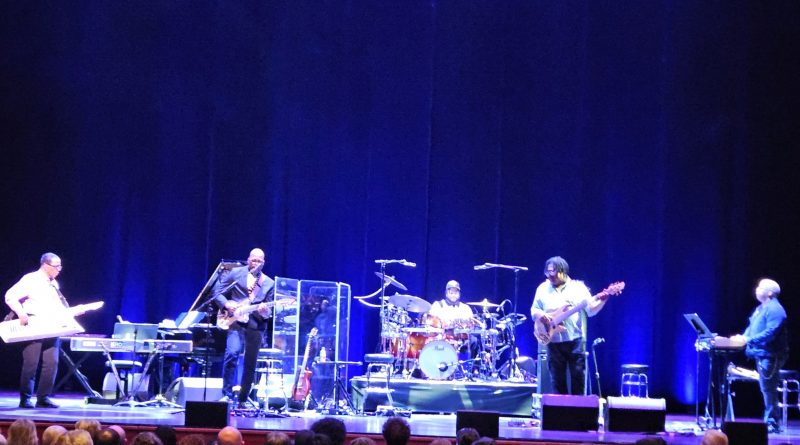
How Herbie Hancock Turned up the Heat in New Jersey
The jazz/funk/fusion legend left it all on the NJPAC stage
We’re fortunate enough to exist in a time when octogenarian musical giants who began their trailblazing careers before many of us were born are still making the rounds and strutting their stuff.
Bob Dylan, Paul Simon, Jon Anderson, Paul McCartney — artists who introduced entirely new worlds of music remain game enough to keep on giving it a go, earning plenty of praise from the faithful in the process.
But Herbie Hancock is an elder to all the aforementioned icons, has played the pioneer even more times than them, and can still come out swinging with jsut as much force if not more.
At Hancock’s July 31 show at the New Jersey Performing Arts Center in Newark, he reminded a packed house about a mere handful of his titanic accomplishments, but it was more than enough to electrify an audience that spanned just about every age group there is. Herbie introduced a batch of standards into our collective cultural consciousness, and after wryly noting that the tunes were older than many of the audience members, he started the show by sharing a couple of them.
Hancock kicked the evening off with a solo piano rendition of “Maiden Voyage,” from his 1965 album of the same name, leaning into its impressionism and subtly left-of-center harmonic turns while maintaining a reflective, almost meditative feel. The band joined in for a slowed down, funked up take on “Watermelon Man” from Herbie’s 1962 debut album, Takin’ Off. With the aid of a monstrous rhythm section (bassist James Genus and drummer Jaylen Petinaud), the beat was transmogrified into a mutant syncopation that was challenging to calculate but impossible to ignore.
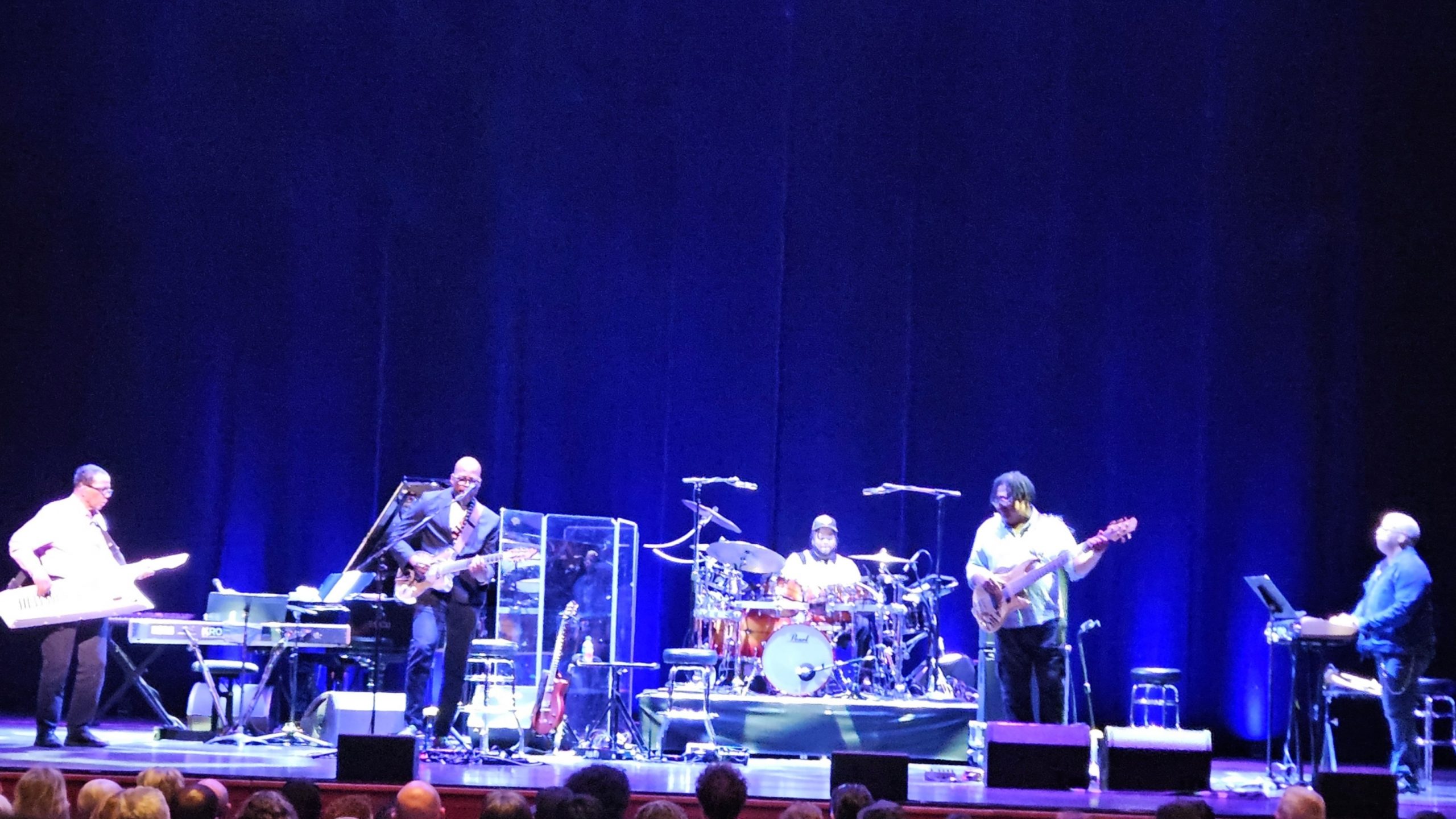
Moving beyond Hancock’s post-bop highlights, the band tore into a tune from his ‘70s fusion playbook: “Actual Proof,” from his 1974 Thrust album with his legendary Headhunters band. As the solo spotlights bounced around the stage, each player turned the tune’s sci-fi jazz funk into a vehicle for some intense explorations. Benin-born guitarist Lionel Loueke wrung some positively next-level sounds from his guitar synth, trumpet titan Terence Blanchard employed some electronic enhancements of his own to make his horn sound like a messenger from another galaxy, and Genus turned the tune’s funky underpinnings inside out. But the most memorable moment arrived when Hancock and Petinaud began bouncing riffs and rhythms off of each other in a very high-stakes musical tennis match.
By the time Hancock and company reached the last couple of pieces on the evening’s agenda, they’d traveled through everything from a Blanchard-arranged reimagining of Wayne Shorter’s “Footprints” (It should be noted that NJPAC sits on a street that’s been renamed Wayne Shorter Way in honor of the New Jersey native) to a relatively recent composition combining African flavors with a bit of a Milton Nascimento-tinged Brazilian vibe. But they saved the real roof-raisers for last.
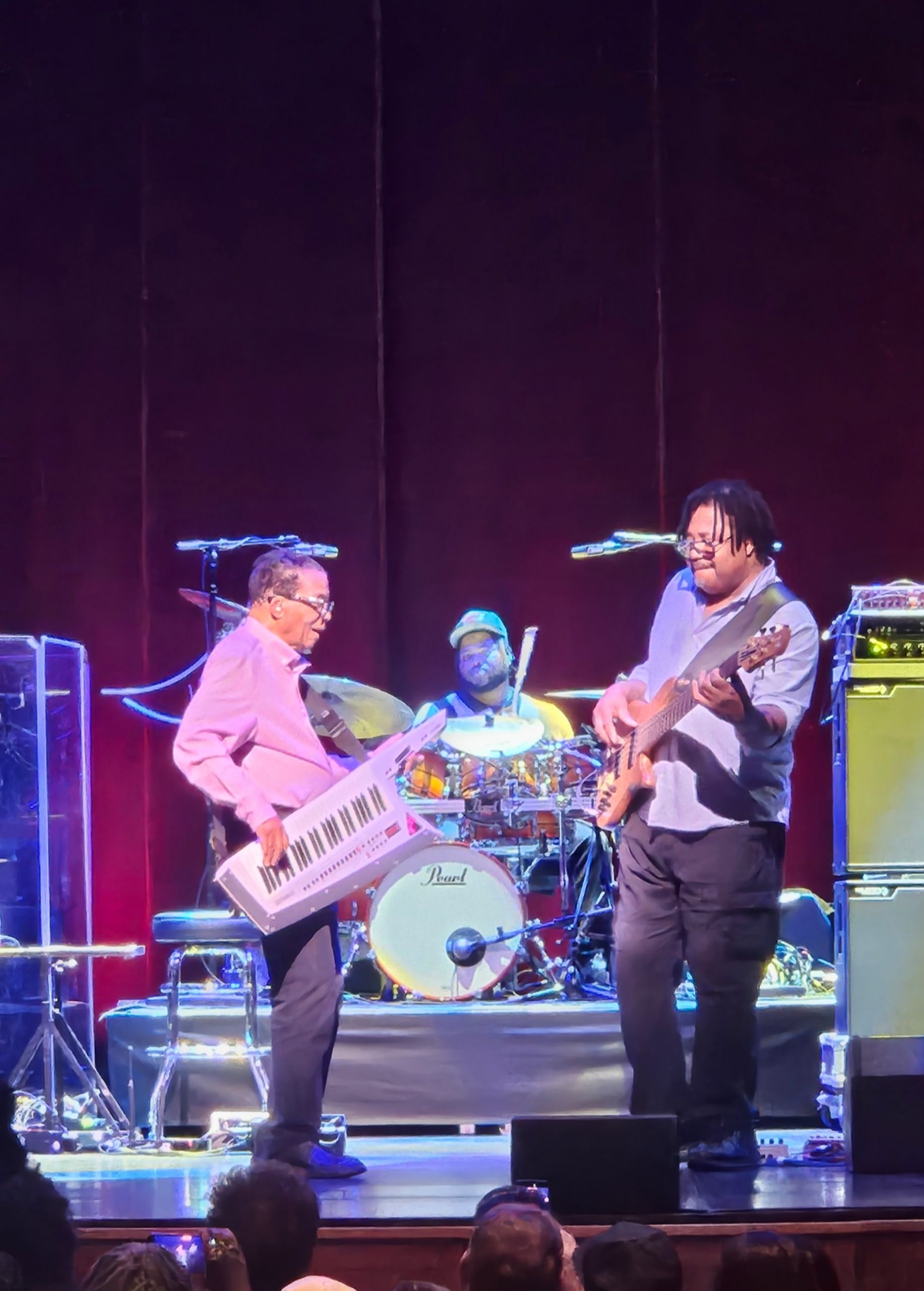
On a medley that combined a couple of Herbie’s mid ‘70s funky fusion blasters (“Spider” and “Hang Up Your Hang Ups”) with his game-changing 1983 hip-hop/synth-pop hit “Rockit,” Hancock busted out his keytar and stepped to the front of the stage for some fire-breathing synth licks. And then, just when it seemed as though the excitement in the room couldn’t get pumped up much higher, he used that same axe to bang out the immortal bass line that defines his Headhunters-era jazz-funk classic “Chameleon.” The energy the 86-year-old keyboardist poured into the tune after having already spent more than two hours onstage would have been impressive for a musician of any generation. And when he was done, he seemed almost as loathe to leave as the crowd was to let him go.

- ‘Night Moves’ at 50: How Bob Seger Burned His Name into History - October 26, 2026
- Tim Sommer Punches Up for the ‘Outsiders’ - August 11, 2026
- How Herbie Hancock Turned up the Heat in New Jersey - August 2, 2026
You May Also Like
-
 April 12, 2024
 -
 September 16, 2024
 -

