
Mitchell Cohen Sets the Story Straight
‘Wake Me, Shake Me’ reveals the secret history of New York’s music scene in the 1960s
In these last days of the age of man, this ash-spotted, pencil-lead grey moronoic, joyless dusk of the age of reason, oh, this time when we pine for the soaring hallelujah chords and unison strings of Wagner but instead get Kid Rock’s quacking dead-eyed boasts, oh dear, yes, no bloody doubt we all have a lot more bloody important things to think about than reading another fucking book about pop music.
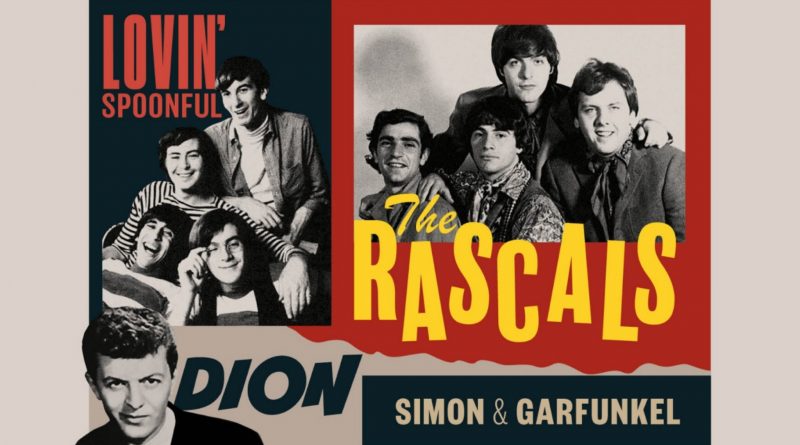
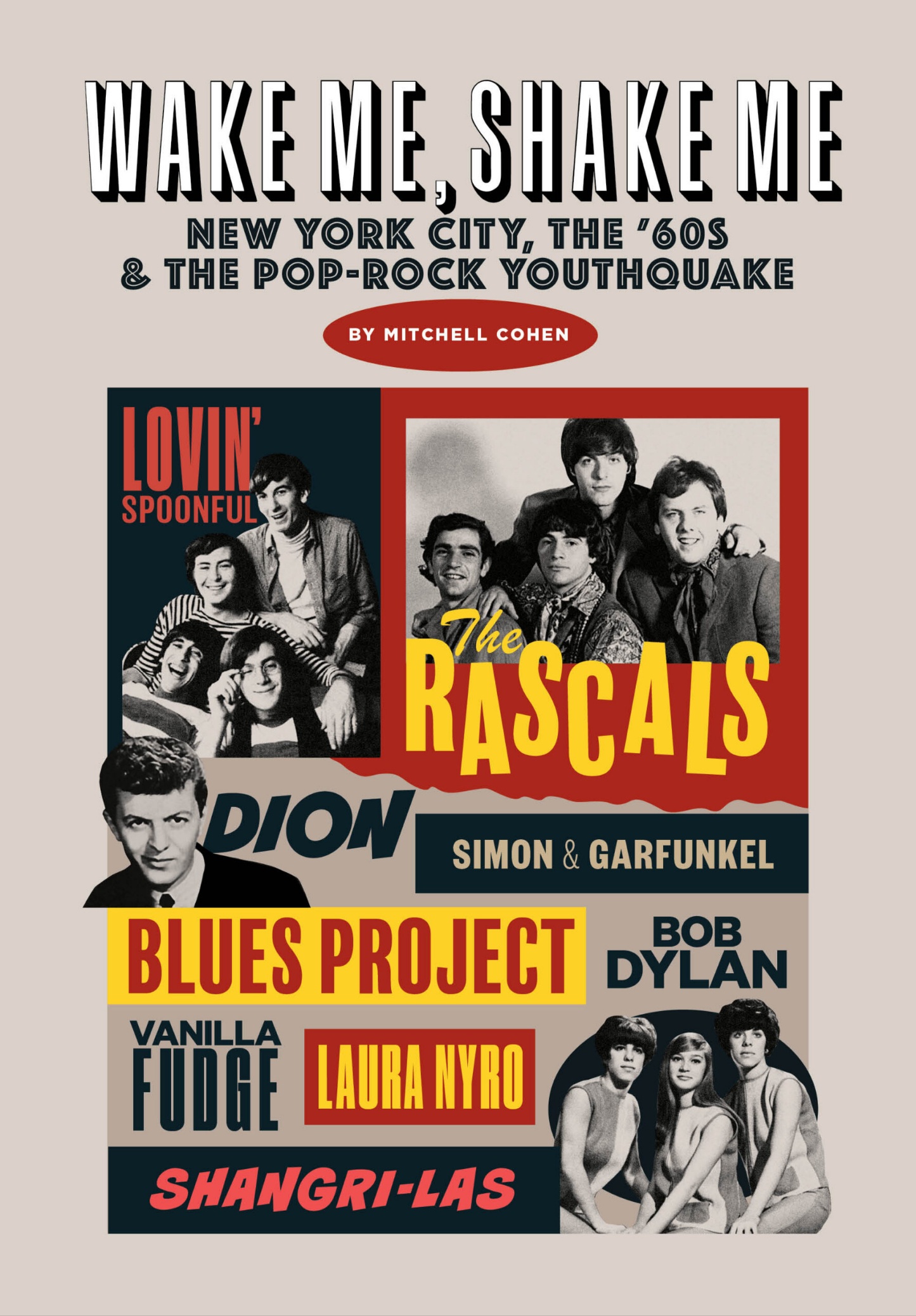
But then my world got rocked (I mean, within relative terms): Veteran music industry journalist and polymath Mitchell Cohen and Trouser Press Books recently published Wake Me, Shake Me: New York City, the ’60s & the Pop-Rock Youthquake…and knock me over with a caper and steal my Clamato if it isn’t quite fucking literally one of the best music books I’ve ever read. It actually tells a story I’ve never heard before, and a really goddamn important one: In Wake Me, Shake Me Mitchell Cohen makes a powerful, compelling, fast moving and fascinating case for New York City (and not just Manhattan, but the five boroughs, and Long Island, too) playing an extremely vital and central role in creating the youthquake of the 1960s, and permanently re-shaping and defining the pop rock landscape. See, we have grown up having it drilled in our heads that San Francisco, Los Angeles, London and Liverpool were the Jerusalem, Ur and Lascaux Caves where 1960s teenage paradise/wasteland was built…and NYC, well, yeh, there was Dylan and the Velvets and Simon and Garfunkel, and that was the ’60s, right? I mean, that’s the Jann effing Wenner School of Journalism, right there, pallie. (As Cohen points out, that bias was reflected in the fact that only one “name” band with NYC roots, Mountain, performed at Woodstock.)
But in Wake Me, Shake Me, Cohen alerts us to the profound fallacy of that notion. With fun and fascinating detail, research, first-hand knowledge, and a lot of convincing evidence Cohen draws a lot of exciting lines between the Brill building, streetcorner doo-wop in the Bronx, the Greenwich village folk explosion, the Shangri-Las, the Lovin’ Spoonful, the Blues Project, Dylan, Fred Neil, the the Fugs, Laura Nyro, the Left Banke, the Velvet Underground, Joey Dee and the Starliters, the Rascals, and many many more…not to mention the producers and session men who shaped so many of these careers, the remarkable and picturesque venues they played in, and the lesser and greater labels and managers that exploited it all. Full of great characters, geniuses, con men, pioneers and quick-buck entrepreneurs, Wake Me, Shake Me is one helluva story, and one of the most enlightening music books I’ve ever read. Seriously. Every page is a doorway to a discovery, a path to an utterly foundational aspect of the history of pop rock that you may have never known about or fully understood.
“Originally, it was going be just the mid ’60s, you know, from Dylan’s Bringing It All Back Home until the Youngbloods, or something like that,” Cohen notes, via Zoom. “But I soon realized there was a bigger story to tell about New York City in the ’60s and how everything was interacting and how this youthquake incorporated not just music, but off-Broadway and independent film and fashion and politics. So it just kept growing. And I tried to steer away from this happened and then that happened then this happened… I wanted to get away from that, because you can find all that sort of stuff out from Wikipedia. You can you can pick up Joel Whitburn’s chart book and see how many top 10 singles the Lovin’ Spoonful had.”
SOMMER: That sort of thing is not nearly as important as connecting the dots and putting it in context.
COHEN: Yeah. That’s what I feel. That’s what I felt all along. But how it relates to everything else that was going on at the time, that seemed to be a more important story.
It’s a story that connects the 1950s to the 1960s, and then by, by extension, the 1970s…you made everything make sense. As we both know, many people still labor under (what I call) “The day the music died” theory of music criticism. Oh, alas, it’s the dark ages after Elvis went into the army and Buddy Holly died, and here come The Beatles to save us! And Wake Me, Shake Me establishes that there was this vital and diverse and vastly creative a scene in New York that existed before, during, and after The Beatles. It was independent of The Beatles — true, it may have been buffeted by The Beatles in 1964, but it wasn’t created by The Beatles.
The first Beatles album, Please Please Me — or Introducing The Beatles here in the states — was a very New York album. I mean, it had two songs by the Shirelles. It had “Chains” by Goffin and King, that was done by The Cookies. It had “Twist and Shout” by Bert Berns. Everybody was listening to everybody, and a lot of that stuff was coming out of New York City. And those British bands, I mean Manfred Mann and the DC5 and Herman’s Hermits and the Animals, at the height of the British invasion they were singing covers of New York songs. To see the British Invasion as some sort of cultural salvation just seemed to me to be so simplistic and overlooked what was going on — for instance, how inventive the production of Lieber and Stoller was, or how exuberant and pertinent to the lives of teenage girls the girl groups were, or how democratic the doo wop scene was.
Why do you think people have forgotten this important role New York played?
Because it’s associated with the period when rock and roll was considered trivial and disposable. It was treated like, oh, a couple years ago was “The Twist,” and that lasted about a year, and now The Beatles will last about a year, and then we’ll move on to something else. Until ’65 or ’66 there wasn’t any recognition that the music was to be taken seriously culturally, that it was gonna be something that people would continue to listen to even after they were no longer teenagers. So artists like, you know, the Chantels or Dion or The Drifters, as great as they were, it just seemed to be part of a youth culture that didn’t matter very much.
In creating this book, how important do you think it was that you were a witness to so much of what’s in Wake Me, Shake Me?
Oh, I think it’s very important that I was exactly the right age at each moment. A lot of our personal rock history, the one we carry through our whole lives, is how old you were at a certain time in a certain place and what you and your friends were listening to. So the fact that I was ten when I first went to the Brooklyn Paramount and saw Dion and Del Shannon and Little Anthony and Jackie Wilson or everything else is very important, or the fact that I was exactly 13 when The Beatles came out — I mean, I bought Meet The Beatles on the day of my Bar Mitzvah, literally— and that I was 15, 16, and able to go to the Village with my friends in 1965, ‘66, ‘67, and go to the Cafe au Go Go, or that I was 18 years old at Woodstock. I lived that whole era that I write about. I’m not a character in the book, but it’s informed by what I remember, what I heard on the radio, what I was reading in Hit Parader or 16 Magazine, and then later in Crawdaddy magazine.
VIDEO: The Young Rascals perform “Good Lovin'” on The Ed Sullivan Show
One of the wonderful aspects to this book is all the things it taught me, the sense of discovery on every page. For instance, I knew nothing about the history or importance of WOR-FM.
In 1966, the FCC decreed that stations that owned both AM and FM radio stations could no longer broadcast the same content on both AM and FM bands. So, in the summer of ‘66, WOR, which had WOR-AM — which was primarily a talk station more than anything else — decided to turn WOR-FM into what was then called freeform radio, or progressive rock or alternative radio, whatever it was called then. And they were playing album cuts, not just singles, and album sides, which was all quite radical at that point. I mean, they supported the Vanilla Fudge when no one else was playing them. They played “Society’s Child” by Janice Ian when no one else was playing it. They championed The Doors way before “Light My Fire” broke — in fact, The Doors headlined their first anniversary concert. Blues Project were in constant rotation. Everyone I knew upgraded their stereos to get a receiver that brought in AM and FM.
WOR-FM were the prototype FM freeform radio station?
Yes, certainly on the East Coast. I don’t know what was going on in California, but certainly here. And it was getting really, really good ratings. And before long, the Blues Project and the Paul Butterfield Blues Band were the first bands that made the Billboard album charts without hit singles. They never got played on Top 40 Radio. It was the birth of the album underground where, you know, along with the Velvet Underground’s first album, along with the Fugs, along with the Mothers of Invention, record labels started to realize that there was a growing audience for rock albums that were not promoted with top 40 singles. Before that, in the pop rock world, that was unheard of.
When you see people at reading and so forth, or on social media, what has been the reception to Wake Me, Shake Me?
What I’ve gotten mostly is, “Oh my God, my friend told me about this book, told me I had to read it. I’m reading it and I feel like I’m reading about my life — this is what I went through.” I mean, people went to different clubs and people saw different bands, but it’s a shared thing that we have. We are so lucky, you know, that we were able to turn our fandom and our obsession with this stuff into the center of our professional lives.
(Note Bene: the author — that’s Tim Sommer, who many of you will never forgive for that Hootie thing WELL GET OVER IT — shares a publisher with Mitchell Cohen. In no way did this effect how impressed I was by Wake Me, Shake Me, and that really is the truth.)

- Mitchell Cohen Sets the Story Straight - October 21, 2026
- Girlschool Release 1981 Reading Set - October 5, 2026
- Bob Dylan Live 2026 - August 1, 2026
You May Also Like
-
 September 30, 2019
-
 November 10, 2020
-
 July 15, 2022