

Tim Sommer Punches Up for the ‘Outsiders’
A pundit of punk and pop tells tales about U2, The Clash and more in new book

Who are the residents of Tim Sommer’s Kingdom of Outsiders?
“We are the people who were walking around high school hallways where a lot of people were listening to Styx and ELP and Fleetwood Mac — not that there’s anything wrong with that — and we thought, ‘There’s something else for us out there.’”
So says polymath Sommer explaining the idea at the core of his new anthology. The pieces collected here, originally published in Trouser Press, New York Observer, The Rock & Roll Globe and elsewhere, vary wildly in subject, from an encounter with The Clash to a deep dive into the Frank Sinatra oeuvre, but most of them have two things in common. They’re centered on music (with a few exceptions) and they’re written to reach all those other outsiders in search of “something else.”
For Sommer that search started early. “At my high school in Long Island in 1977, 1978, there were three people who owned a Sex Pistols record, and I knew all three of them. You would see a kid wearing a David Bowie shirt, and you would just talk to them because they were wearing a David Bowie shirt. I wanted to communicate a little bit about that. I’m still writing about that feeling.”
Sommer has been (deep intake of breath) a journalist, a punk rocker, a radio DJ, a club DJ, a news writer, an MTV personality, a major-label A&R man, the godfather of slowcore and more. And at each turn, he’s worn his outsider badge with honor, even when he was sneakily burrowing from the underground up into the mainstream. A man of many moods and minds, the same guy who played in a hardcore band with a young Thurston Moore also helped define the sound of mid-90s radio by signing Hootie & The Blowfish to Atlantic (FYI, he’s got a book about that, too).
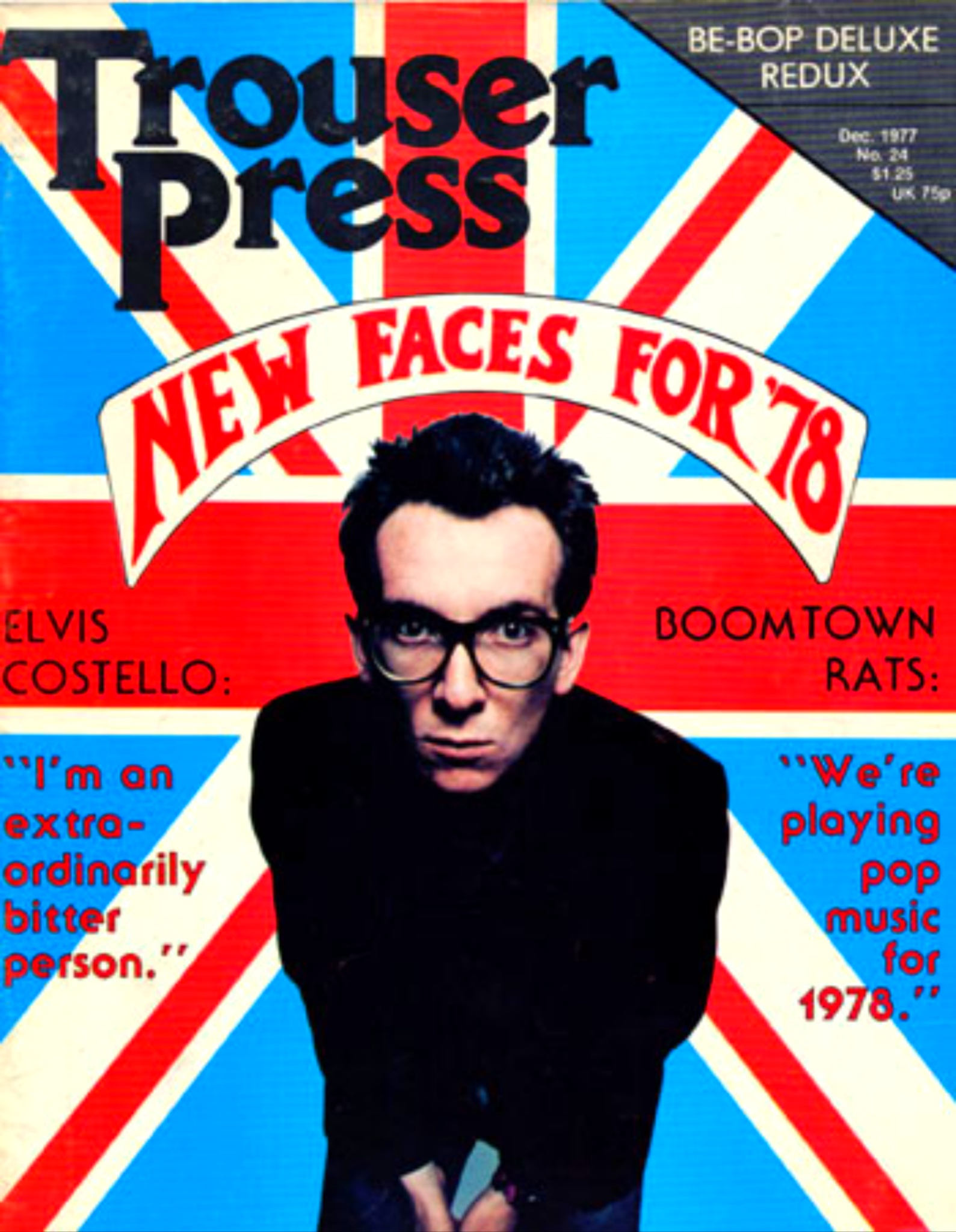
The earliest pieces collected here come from Sommer’s stint at NYC-based New Wave bible Trouser Press. Encouraged by TP editor Ira Robbins, the shockingly precocious teen conducted strikingly candid interviews with the likes of O.G. NY punks The Heartbreakers (not to be confused with Tom Petty’s gang) and literal new kids on the block U2, with whom Sommers palavered on their first day ever in New York City.
“I remember seeing Trouser Press on a newsstand,” says Sommer. “And I went, ‘Wait a minute, there’s an American magazine with a big article on Syd Barrett? Writing about bands like Cheap Trick and the Sex Pistols? That seemed like a miracle. The writing was smart and funny, and they would do really in-depth interviews with people. Trouser Press didn’t so much tap into a hipster culture as it tapped into what I’ll call the used record store culture… this whole magical world. Trouser Press’s writing style was very much formulated by the style of the English music weeklies, simultaneously really articulate and really obnoxious, really detailed and really flippant. That’s a writing style I inherited as well, from reading the English music weeklies and starting to work for Trouser Press when I was 16.”
During his time with the magazine, Sommer started his weekly hardcore program on WNYU, Noise the Show, which played a crucial role in the city’s hardcore scene (One essay here explains how it led to Sommer meeting the freshly formed punk-era Beastie Boys and getting them their first gig). “I wish I could scream from the mountaintops how important I think WNYU and specifically people like [DJ’s] Sal LoCurto, Evan Davies and Naomi Regelson and Mike Dugan were. Not just for forming my taste but the taste of a lot of people.” Fittingly, Sommer’s upcoming promotional appearance at Milburn, New Jersey’s The Book House on Aug. 13 will include the aforementioned Davies (renowned these days as a stalwart WFMU DJ) interviewing the author.
But even though Sommer started out at ground zero for New York’s punk and New Wave revolution, he has never shown fealty to rock mythology or cool cred. The guy who inspired Sonic Youth’s “Kill Yr. Idols” (the story’s in the book) is perfectly happy to poke at punk’s myths and slay its sacred cows.
“One of the most famous hardcore punk songs, ‘California Uber Alles’ by The Dead Kennedys, is protesting the fact that the governor of California is too liberal,” notes Sommer. “Is that really the most important thing that Jello Biafra or the hardcore generation has to say?”
Similarly, he has little time for the tropes trotted out about U.K. punk’s first hellraiser. “When I lived in Los Angeles in the 1990s, a fairly close friend of mine was John Lydon,” he says, “who I still rate as one of the nicest and smartest musicians I’ve ever met. An overwhelmingly kind and intelligent man. Sometimes people are not remotely like what you think they’re gonna be.”
There’s an entire chapter of the book devoted to Sommer’s serial challenges to Beatles mythology.
“I feel there’s virtually no truly critical thinking about The Beatles,” he says. “You can think critically about The Beatles without putting the Beatles down. We’ve abandoned critical thinking about them. I do believe the Beatles were an inevitability. The Beatles were a product of their culture; the culture was not a product of The Beatles. That’s what the culture was forming. The Beatles did not make England; England made The Beatles. I personally believe that if Eddie Cochran hadn’t died, he would have invented and evolved many of the same things that The Beatles did.”
Sommer spends some time sharpening his knives for the Woodstock Generation as well.
“I feel very strongly that Woodstock is a profoundly misinterpreted event,” he insists. “What did Woodstock really achieve? I think people are amazed that you could put a million young people in a field and they didn’t end up eating each other alive. It’s the point that American rock culture almost made a conscious decision to be meaningless. There’s no call to action at Woodstock. It’s the idea that growing your hair long and being with a million other people with long hair was enough, that those people didn’t actually have to then do anything to change the world. That to me is the Woodstock legacy. We’re in the mess we’re in today because a generation of people decided that symbolism like growing your hair long [was enough].”
One essay here memorably and convincingly makes a case for Sha Na Na’s performance as Woodstock’s most important moment.
Conversely, Sommer is proud to come out punching on behalf of artists he feels have gotten the short end of the sociocultural stick. From the many interviews he’s conducted, he chose only a few for the book, and one is with The Bay City Rollers’ Stuart Wood.
“The Bay City Rollers are fascinating to me,” says Sommer, “because I’m always interested in gateway drugs to a life of listening to and enjoying rock ‘n’ roll. There are a lot of teenagers, especially a lot of women, whose gateway drug to rock ‘n’ roll was bands like the Bay City Rollers. They were a legitimately interesting power pop band and glitter pop band who had never gotten their due, because people thought of them being this silly teenage phenomenon. The Bay City Rollers created a generation of music fans, and that’s worth talking about.”
One of the most important things revealed by Dispatches from the Kingdom of Outsiders is that, at its best, Sommer’s work transcends journalism and edges into the area of straight-up art, occasionally even poetry. A prime example is a 2025 piece about Bob Dylan and Barbra Streisand singing the standard “The Very Thought of You” together. The essay digs into the artifact itself, but it ends up being about a lot more as well.
“To me that song was so much more than just a song,” says Sommer. “It was two people who had emerged in New York City at almost exactly the same time, both from these European Jewish backgrounds, coming together in New York City, and then coming together again 60 years later. I thought that was a very interesting moment that hadn’t been written about.”
Ultimately, one comes away from Sommer’s book with a picture of a writer who has been bursting with passionate ideas about music his whole life, one who sported some freakily powerful literary chops straight out of the gate and only got better with age. And one whose crucial combo of instinct and good fortune kept putting him exactly where he needed to be.
“I was a better writer when I was 17 than I thought I was,” he allows. “Likewise, this weird luck of being in the right place and the right time. Plus that weird almost indescribable fearlessness and nerve that I think a lot of 16, 17-year-olds have, about walking into certain situations, talking with some of my favorite musicians.” Referencing the rather hilarious piece “A Weird Little Story About Tim and The Clash,” he confesses, “I still think to myself, ‘What kind of 17-year-old asshole walks up to The Clash with a picture of The Beatles and asks them to sign it?’ Who does that?”
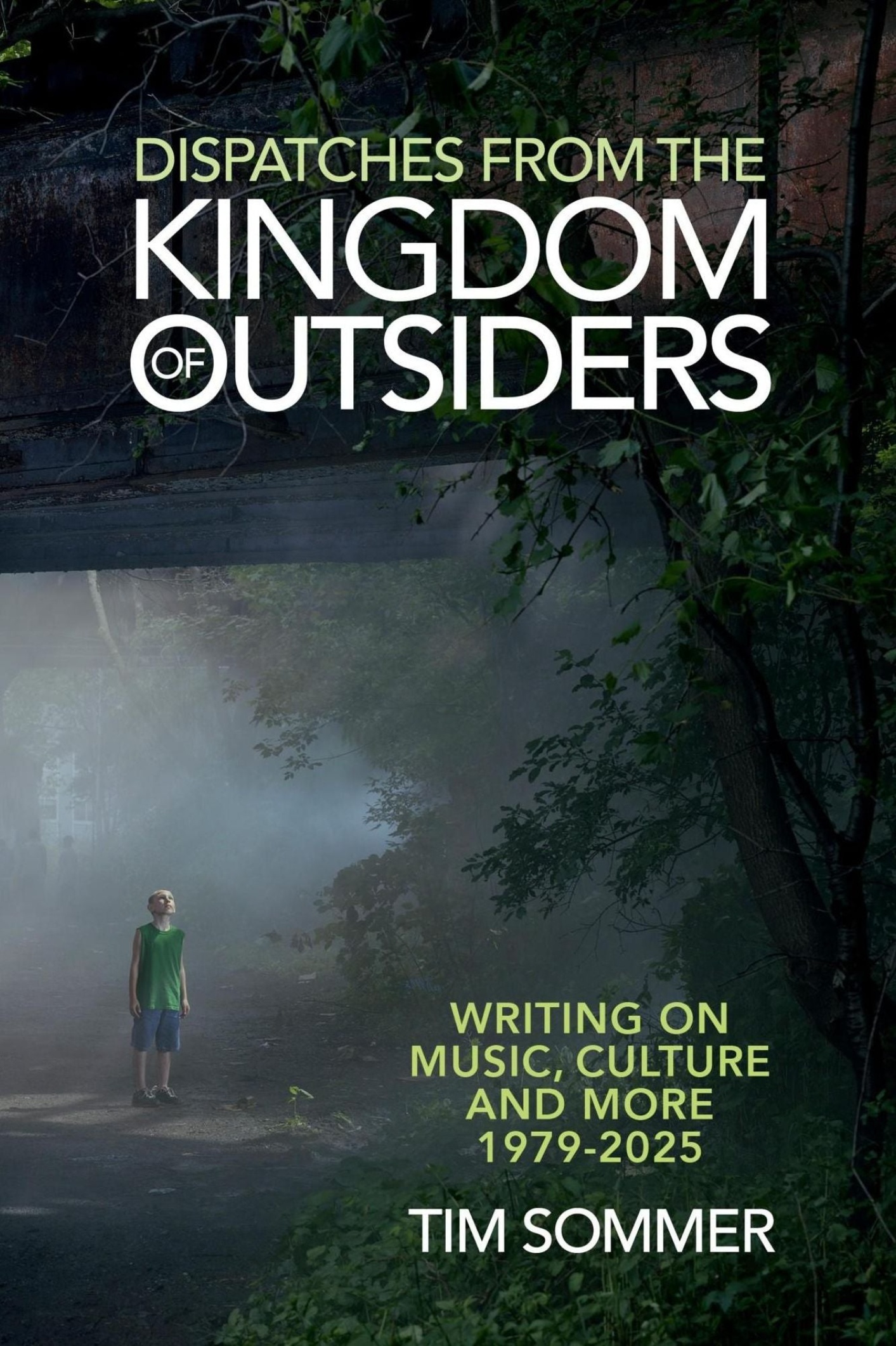
Dispatches from the Kingdom of Outsiders is available now from Trouser Press Books.
VIDEO: Tim Sommer at Word Brooklyn

- Tim Sommer Punches Up for the ‘Outsiders’ - August 11, 2026
- How Herbie Hancock Turned up the Heat in New Jersey - August 2, 2026
- Is ‘Invisible Touch’ the Best Worst or Worst Best ’80s Pop Album? - June 8, 2026
You May Also Like
-
 March 8, 2023
 -

-
 February 14, 2022
