
Antietam’s ‘Game’ Theory
Longtime Hoboken indie rock staple returns with their ‘winter album’
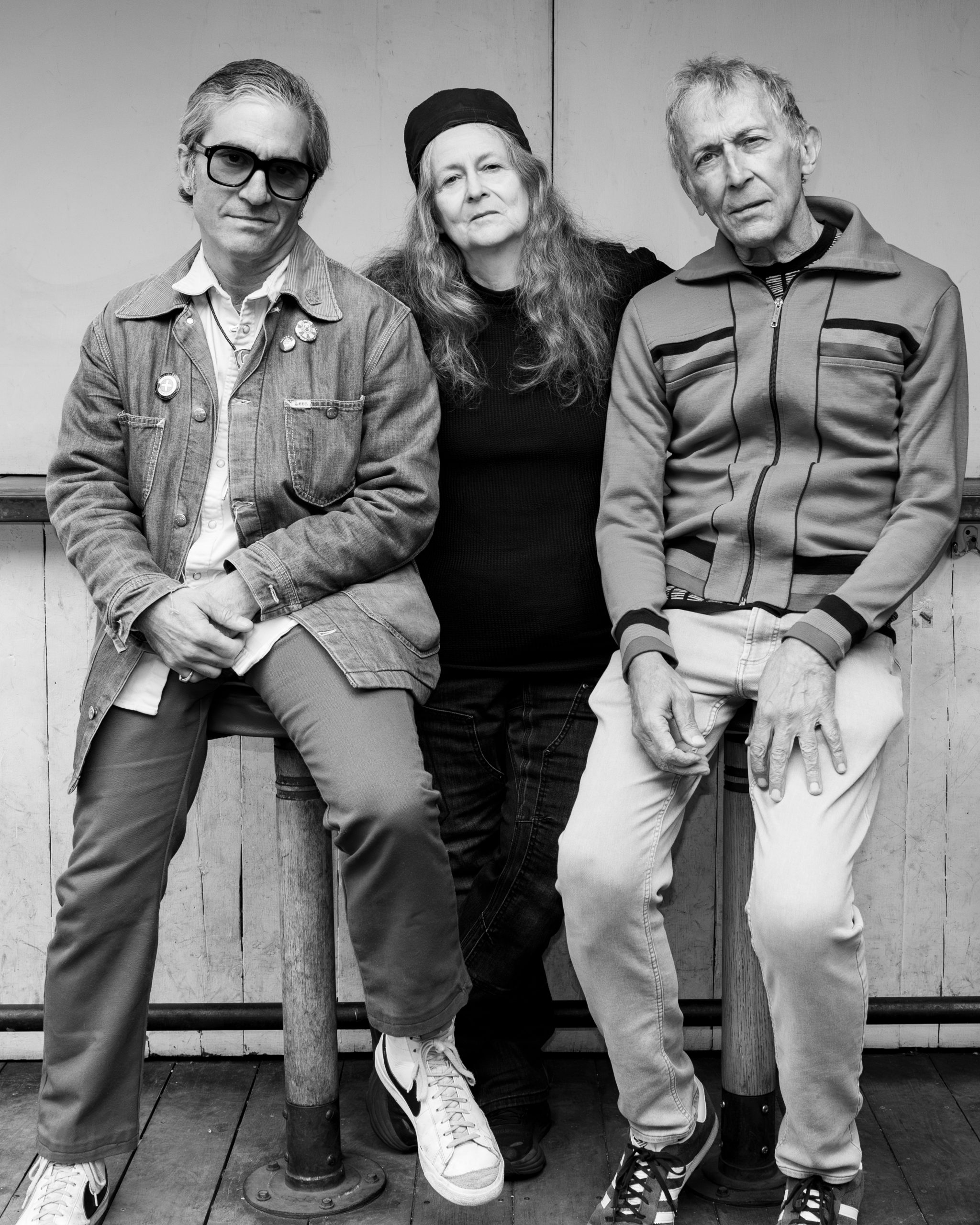
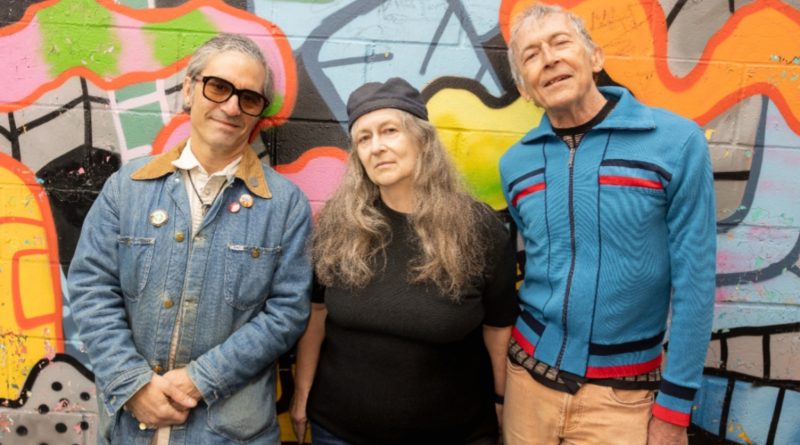
Tara Key and Tim Harris first came to Hoboken as The Babylon Dance Band, a Louisville, Kentucky, staple of the early 1980s.
The kids in Squirrel Bait learned how to be a band by watching Tara whip her hair and fire off mind-bending guitar solos. But Hoboken and New York City beckoned, so the duo moved east and reconfigured themselves as Antietam. They started building a following immediately; when Yo La Tengo played their first show at Maxwell’s, they opened for Antietam.
For over 40 years, Tim and Tara been creating music that’s varied in styles but always captures the heart of what Greil Marcus called “the old weird America.” Early on, the lineup shifted a bit, but since 1990, they’ve been a trio with former Other Music co-owner Josh Madell on drums. They are not a band, they are an institution, and when I heard their newest album, The Counting Game on Dromedary Records, I had some burning questions about it. We could have just had a conversation, but with this interview, I get to share the wisdom and perspective of two rock lifers I respect enormously and cherish as friends.
The Counting Game is available now from Dromedary Records.
In my review, I call this a winter album. It’s got his somber, gray-sky feel. Something I immediately noticed is that Tara doesn’t have any of her electrifying solos. Was that a decision before you started putting together the album or did it just work out that way?
TIM: Hey Jim, this is just like having a conversation while leaning on the jukebox in the front room of Maxwell’s circa 1984.
TARA: Holding a John Courage! Thanks for asking us to chat.
TARA: We did make a pandemic record, His Majesty’s Request, which was a tribute record dedicated to Wink O’Bannon, our Louisville guitar brother, when he passed in 2020. It involved many of our crew from LA to Chicago to KY to NY who were also friends of his, and we were all mailing tracks back and forth, not able to convene in person. But The Counting Game was not under construction until after the pandemic and three of the ten songs came from 1996, 1997, and 2009.
TIM: Tara was talking recently about the different colors made by her various pedals: one is mauve, another is cerulean, how she has a new one that’s lime green, and she’s trying to incorporate it into the palette.
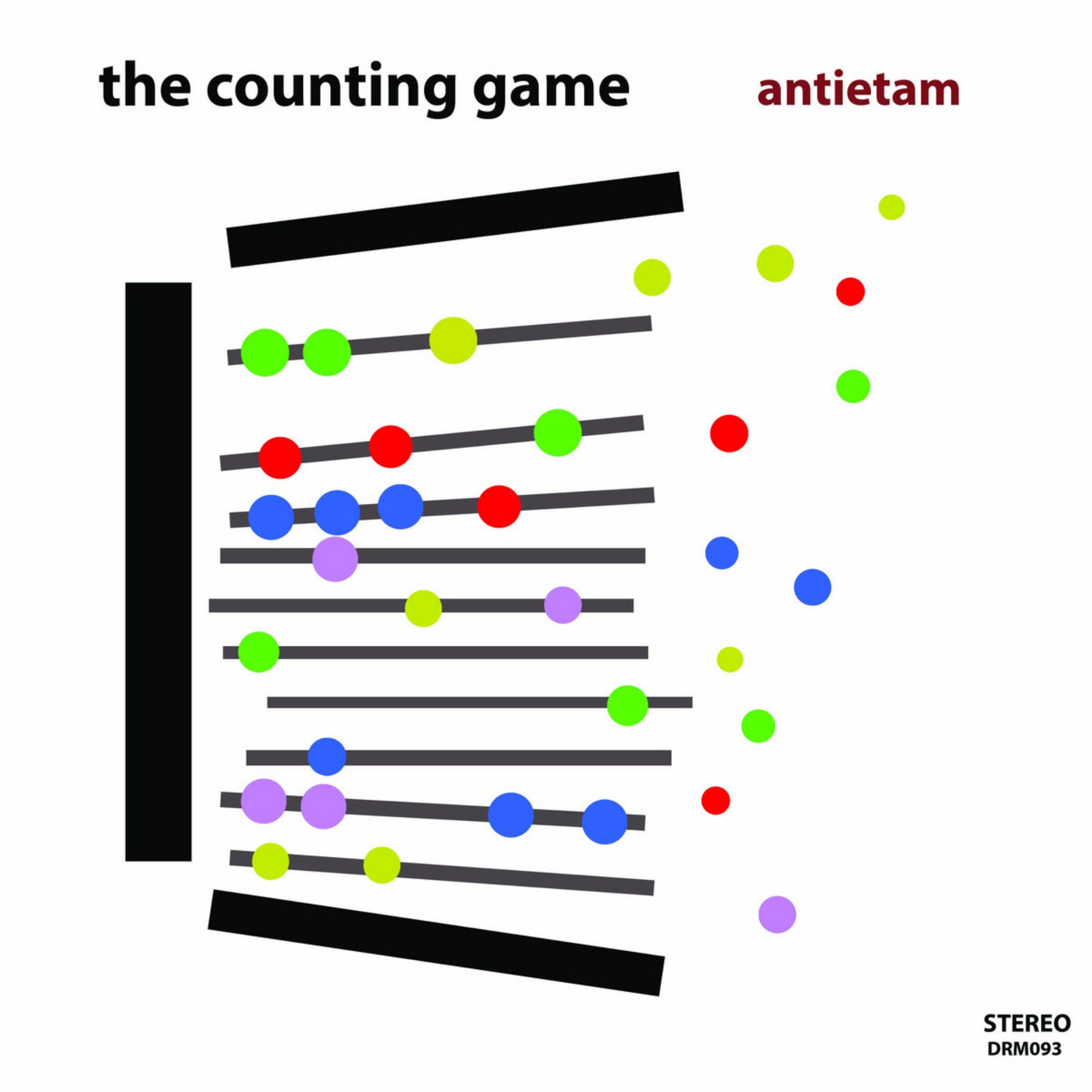
I think of The Counting Game as colorful, like the cover, variegated in different shades. The title comes from a phrase we use about marking time passing when we are on a trip. The idea is to not count time, to stay in the moment, to live the passing time, while ignoring the fact that we have been doing this for almost a half-century. It’s the counting device, the abacus, having gone awry, falling apart. But the beads are colored, not grayed out.
Part of addressing the moment does venture into current events, so we have songs touching on protest, on immigration, on dialoguing between sides. But we never, ever, decide in advance what a song is going to be about. In the way that T.S. Eliot talked about finding phrases that became his poems, recognizing their merit before shaping the other words around them, we start with something we do in a jam, usually a musical theme or riff, sometimes a verbal phrase, maybe some kind of noise.
Then, the hard work comes after the inspiration. In this process, we found a forgotten song on a live tape from the Nineties, a jam from the late Aughts, and the completed instrumental, “Coney Island,” from an unreleased album from the end of the century. All three grabbed us as of a piece with the seven new compositions.
For an OG like yourself, who has heard Antietam from our very beginnings, you are familiar with Wolf and me both on bass and Tara’s guitar blowing the back room of Maxwell’s across the Hudson. I don’t think we’ve left that territory psychically (and in fact, our next project may just as easily be psychedelic rock with long solos as far as we know), but, rather, we shaped ten songs to be a cohesive, yet varied album. Al (Crisafulli) at Dromedary Records, not quite as OG as you, me, and Tara, called The Counting Game a great guitar record, and I think he’s thinking of the solo on “Good Advice,” the hard riffs on “The Finest Line,” the swagger of the boardwalk on “Coney Island.”
Compared to some of our past work, the electric rock is held back just a bit, measured out. I think some people see that as a sign of maturity, and if it’s a sign of getting old, we just have to accept that. It’s still all fresh to us.
TARA: We don’t really start with a theme, His Majesty’s Request excluded. I almost always record our practices and we usually jam, then shape riffs or directions we like into something we can reproduce later. Some jams are specific to a certain day or mood, and when we try to recapture their vibe it can’t be caught. Sometimes we can jump right back on it and go deeper. More often, there is a transmogrification and something entirely new comes out when we try to recreate what we did, like a plant whose genetics get tweaked along the way. Sonics come first, then sounds suggest words to me. What I am singing about is often revealed to me, not designed by me.
I don’t see the whole record as being in the same season. When I was sequencing the record I felt there was an emotional movement through the songs, starting with the first three songs being an outward-looking commentary on our country circa late 2024. The next three songs turn inward, observing rather than acting, and, to be fair, that part of The Counting Game could be construed as a hibernation of a sort.
But the next two songs feel like spring and turn outward again. “The Counting Game” is a summation sermon. “Coney Island,” is included in honor of Jon Williams (Volcano Suns) who recorded it with us in 1996. He passed away in 2024 and it is a benediction for both him and the record.
Apropos of the guitar(s) on this record, there are plenty there. I’ve been doing this for almost a half-century, so I would hope my palette has expanded and that I am mixing with new colors, new sounds. I think if you asked Steve Silverstein about how many guitar tracks he wrestled with, he would cite my directive to him while mixing “Spy Vs. Spy” where there are 14 guitar tracks: “I want you to feel like you are walking through a forest of bamboo made of each of these tracks, spread so that the sun comes in but is not too bright.” What can I say—I play what I feel!
I would also note that that dialectic (Tara wild vs Tara tame) has followed us for decades and here’s the deal: When you see us live you see me playing and I think that adds to a certain perception of my style as madwoman. My playing is very physical and very kinetic when I am in your face. It is a thing, for sure. But I am interested in making records that may be different than our live show—works that are more intimate, that have hidden clues and touches that are revealed with repeated listens. I refuse to be a one-trick pony, have always respected the craft of making a record and aspire to make notable ones. I don’t consider Antietam to be one flavor and it should not be after the
three of us have played together for over 35 years. As we grow, the music grows, because the two are not able to be untangled. That has kept our commitment vital and viable. And, besides, I think I have some pretty damn good pithy focused guitar statements on here. Also, thanks David!
A few of the tracks really stand for me. On “Dorado Gold,” I love the banjo, where did that come from? I assume that’s Tim singing? Singing in his lower register adds a different dimension to the song. Was there an inspiration of that?
TIM: Our friend Steve Cooley in Kentucky is a master of the banjo, really any stringed instrument. He played in the Dillards for a couple of decades. His part really shaped this song, but the entire buildup of the structure evolved through different forms, from jamming on an early Stones-like three-chord riff with a Charlie snap, to adding Cooley’s banjo twang; from a chant probably Dylanesque in its say-what infancy, to the historical dips, to the Biblical choruses featuring Sue Garner’s alto; finally the blindside of the “Buffalo Stance” stop-and-swoops.
TARA: The thing I love about this song, other than the musicianship, is how Tim wrote a song about people who want to come to this country and are denied, using the tropes of Americana (banjo, gospel refrains, bottleneck slide by me) that actually trace back to Africa via people who came here against their will. That dichotomy makes the song even richer for me.
I also like the way his low voice makes a country preacher declaration as a counterpoint to his higher, more sweet, empathetic lament.
There are two instrumentals on the album. Were these always going to be instrumentals, or did you write the music and then decide they didn’t need lyrics? I had this conversation with Lyle Hysen who’s in an instrumental band — I liken the song titles in instrumentals to the titles that artists give to abstract art. Do you find that’s true, that the title provides a clue for the listener on how to interpret the track?
TARA: Sure. I do title songs with that in mind. Titling the song is often the act that makes the molecules of the song really jump.
Songs don’t ever start with the thought, “this is an instrumental.” It may become clear pretty early on, but all of the songs, as I said before, undergo repeated plays, maybe end up being radically changed or, sometimes, songs are even cannibalized and their best parts are combined with other best parts. At some point I decide my guitar is doing the talking and words seem superfluous. “Coney Island” careens about—it’s like being on the Cyclone—and I think “Winter Watch” is a look out the window waiting for the storm to come without knowing if it will hit or blow over.
Tell me about the violin and cello on “The Counting Game.” That track and some of the album remind me of Speed The Plough, or even the more pastoral Feelies. Was there a specific inspiration for the tone of this song?
TARA: In the course of this writing cycle for TCG, Tim and I got together to jam on cello and keys. I am interested in writing some more on piano. I write differently—I know this will sound odd, but writing on the piano feels more like riding rapids and writing on guitar feels more like surfing waves. The point is this— it’s a way to shake up the norm for composition and even if nothing concrete results from that, I think it is healthy to break patterns and see what comes of it. In this case, something very immediate and concrete did. I have heard several people refer to the piano and cello on “The Counting Game” as being reminiscent of a pendulum or the ticktock of a grandfather clock, and that is spot on. And, once again, the words were revealed to me—it was not difficult to write them.
Tim and Katie Gentile have blended so nicely for years, beginning when they played together in The Special Pillow and, then, on almost every Antietam release since the late ’90s.
I love the jaunty sound of “Coco Bella,” it’s unlike the rest of the album. Who’s playing the barrelhouse piano? It’s fascinating that despite the sort of bouncy feel, it’s — like the rest of the album — fairly somber, making for a unique juxtaposition. Any story to this one?
TARA: The story of “Coco Bella” is this: This rarely happens to me. I was sound asleep in Rome when, at 3 a.m., I was jolted awake with the finished lyrics of “Coco Bella,” apparently ordered by something or someone to take dictation. Seriously. I grabbed my phone and wrote it down. Not a word changed from that moment on. I went right back to sleep, and in the morning when I read the words, I marveled that some strange Western Union man had tapped out an urgent message to me. It’s a love song about longevity and commitment.
TIM: For “Coca Bella” Cheryl Kingan and Greg Peterson, on sax and piano, respectively, had rehearsed with our jam, and Greg’s rollicking part pulled us in the bayou-band direction. By the time we added some conga by Josh at the end, it felt like we could be spread out in the Bywater with seven or eight players falling off the stage in a toppling crescendo into every corner of the joint.
Greg came in to record and came up with a different piano part, and we said, NO WAY, MAN.
TARA: I seriously fell out in the studio when Greg did his swoop and holler glissando before the third verse. I arranged the entire end-song vamp and finally achieved my “Aladdin Sane”/“Young Americans” dream moment, with Greg as Garson, Cheryl as Bowie on sax, me as Alomar, Tim as Willie Weeks, and Josh as Pablo Rosario!
Tell all the people reading this about Al Crisafulli and Dromedary Records. How did you come to be on the label and how’s the experience been?
TARA: We have been blessed with some great relationships at labels through the years and we are happy to have landed on Dromedary with Al, who continues that run of working with kind and positive people. He first approached us to play a show around 2017 or so and our relationship grew through the years. I am happy to be a part of his chosen family, because that is what the label is.
First, his recognition of what all of us vets did, and even more important, ARE doing — that respect is sustenance. He has pulled some people back into making music and has shone a spotlight on those of us who never left. This past weekend when we played with so many great bands at Dromfest ’26, it hammered home how we have a rock ’n’ roll base and are not out on an indie rock island.
I would have thought it was a crazy fantasy if, five years ago, you told me that in 2026 I would: 1) be watching Beth Kaplan play and sing songs old and new, 2) be watching Scrawl be as Scrawl as ever, 3) see Hypnolovewheel return, a seemingly impossible feat since Peter Walsh left us (I felt him there on Sunday), 4) see Steve Michener jamming with Seth Tiven and Dumptruck, 5) see Come gaining power with the years, as if more power could even be possible, and 6) there are so, so many others I am not even naming.
Oh by the way, another vision from the soothsayer: In 2026, Antietam will back Barbara Manning on some of Tara’s favorite songs, with Sue Garner providing harmonies. Crazy!
Al makes these things happen. And he does it with compassion and empathy as a true communitarian. He got all of the Dromfest bands free healthcare through the O+ non-profit organization. He makes sizable donations each year from the festival to fight food insecurity in Greene County (where Dromfest is held) and to provide mental health and substance abuse counseling in the Hudson Valley. That is the way Al thinks. Those are the values of his label and his purpose goes way beyond selling records. It is a place I am proud to be.
Are you planning any shows to celebrate the album’s release? Let’s plug them. Do you get out much to see other bands, or do you feel pretty much outside whatever’s going on in Brooklyn and environs today?
TARA: I feel a lot less like an outsider than I did when I was young. I am always interested in seeing music and, frankly, I don’t need to fit into a scene to get value from observing it. Since clubs in Manhattan have pretty much disappeared, I find we almost always play Brooklyn and Queens.
Rarely does a show go by without a conversion moment — when someone younger than I am totally digs what we do and tells me excitedly, or, when someone closer to being a peer asks where we have been all their life. Those reinforcements are signs we are still on the right path.

Antietam represents an archetype for how to survive in a band for a very long time without compromising your ideals. The world has changed so much in the last 40 years that comparing your experiences to a band today is impossible, but what wisdom have you gleaned in your journey that you would share with young bands starting out today?
TARA: Play music with friends or make friends of the people you play music with. Try a version of a song using the suggestion someone in your band makes, even if your first response is annoyance—you might find a great place in the middle to meet. Make sure everyone in the band knows how valuable they are. Finally, no dictators.
You’ve lived in New York City now for longer than the time you spent in Louisville growing up, but do you feel like New Yorkers or is there still some Louisville left in you? And how does that manifest itself in both your music and your lives?
TARA: I am a New Yorker. I am a Louisvillian. My life is here, but my heart splits its residency. I still read the Courier-Journal most mornings, even the debased product that it has become since Gannett took it over. I still listen to Ryan Hall Ya’ll for hours on end whenever a severe weather outbreak occurs in the Ohio Valley, even though my mother is not here any longer for me to tell to go to the basement. (But I do tell my sister and her family to do so.) When you see a major, destructive tornado menacing you in the air from two miles away at age 16, no matter where you are, your heart still stops when there is a tornado warning: even if it is in Louisville, not New York.
I have been working on a book about vice in Gilded Age Louisville for close to a decade.
I still think about the Ohio River many days — the river I sat by on many, many occasions trying to figure out just what the hell to do with my life. The same river, on the banks of which I played in 2019 with Antietam as the sun sank behind the knobs, followed by a Babylon Dance Band set of songs played by Antietam with Chip once again leading our charge. And that was the last time I played with Wink O’Bannon, as he joined the BDB set on second guitar. He was gone from us a mere 11 months later. I have dear friends still in Louisville and I have family there. And I have noticed, upon hearing a couple of podcasts we did recently, that our twangs are still intact. I like that.

- Antietam’s ‘Game’ Theory - October 22, 2026
- On the ‘Beach’ with Bob Bert - June 15, 2026
- The Cucumbers: ‘Hello’ Again - February 16, 2026
You May Also Like
-

-
 April 25, 2020
-
 February 13, 2022
