
Stevie Wonder’s Declaration of Independence
How ‘Songs in the Key of Life’ ushered in a new creative era
Stevie Wonder’s bet on his own worth and skill that came after Marvin Gaye’s artistic gamble with What’s Going On succeeding, turned Wonder into one of the biggest stars in music.
His seizure of creative control had yielded a run of classic albums — 1972’s Music of My Mind and Talking Book, 1973’s Innervisions and 1974’s Fulfillingness’ First Finale — all where he turned the studio into a playground where his creativity was unrestrained by label demands.
All four albums were hits, with their singles resulting in five No. 1 R&B hits, three of which also topped the pop charts.
But what nobody knew yet was that, even with talk of Wonder walking away from the music industry after his most fertile creative period and all the success, his biggest album lay ahead.
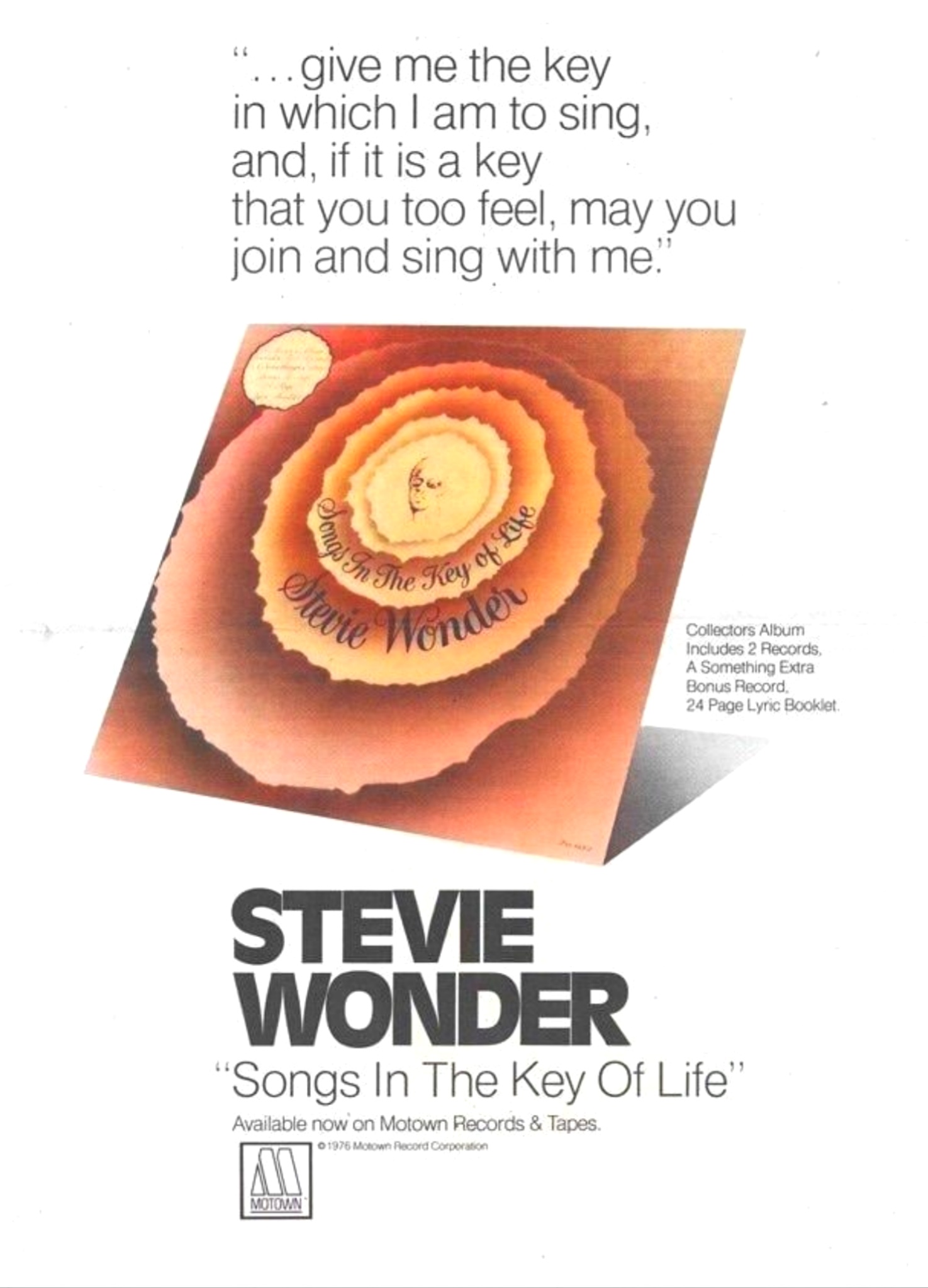
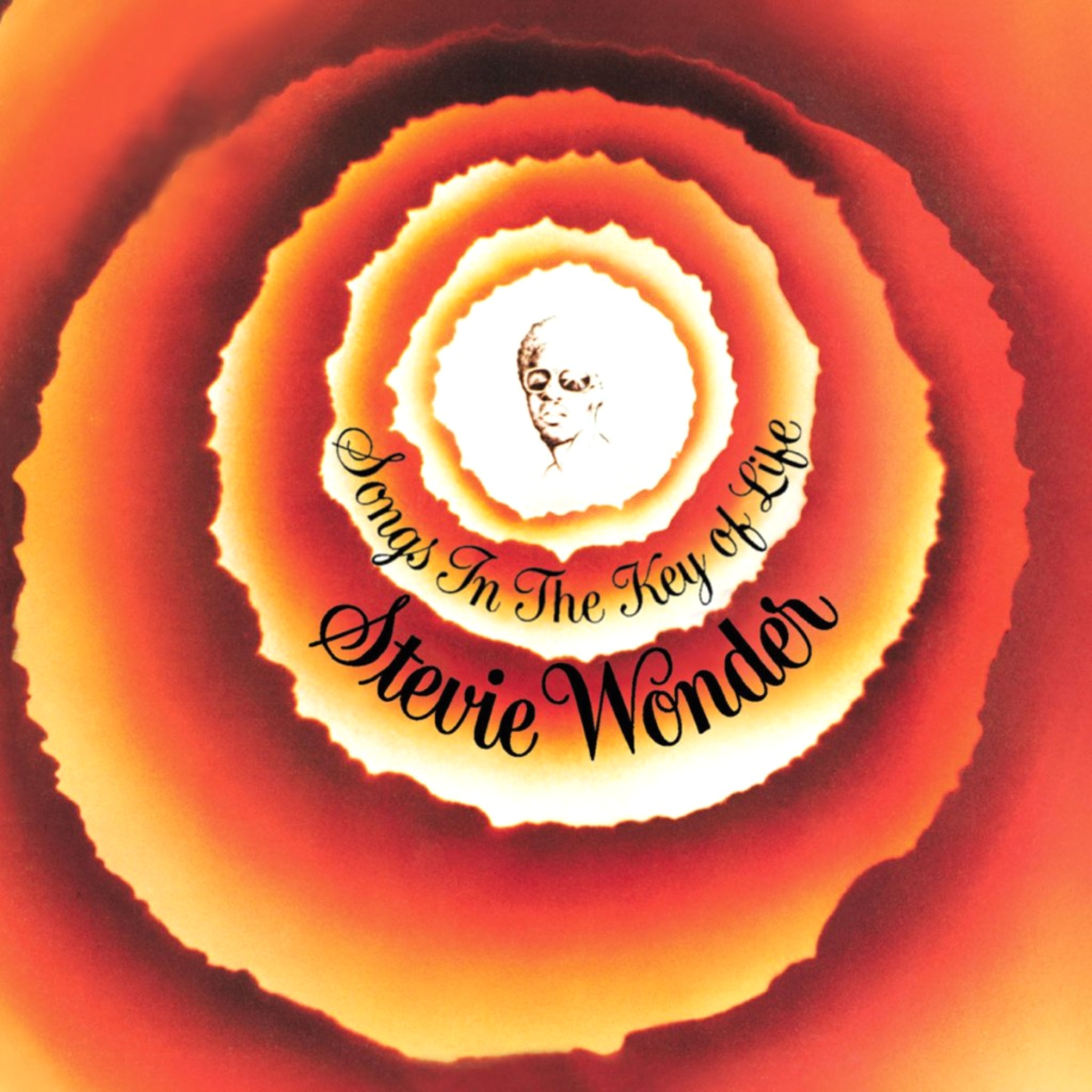
Not only would it be the capper to Wonder’s classic run, it would come in the form of a double album — Songs In The Key Of Life, which just turned 50.
Wonder wanted to focus on other things for a while. A 1973 car accident had him pondering retirement. He lived in Ghana for a brief time and wanted to focus on charity work there. There were preliminary plans for a farewell concert.
But Ghana wound up rejuvenating his spirit and he returned to the U.S.
By August of 1975, he’d re-upped with Motown, the richest recording contract in history to that point, one which afforded him even more artistic autonomy than his important 1971 deal had.
“I heard that was the unprecedented deal and it was the most that’s ever been paid. And it was in 1976 and I, I was like but I had to do it because there was no way that I was going to lose Stevie,” Motown head Berry Gordy said in the Classic Albums episode on Songs In The Key of Life.
The album took much longer than usual to complete, as Wonder’s perfectionism was running high. At one point, Crystal Sounds in Los Angeles, where most of the album was recorded, was unavailable due to a prior commitment with another artist. Wonder spent six weeks at the Hit Factory in New York, which yielded just one basic track.
Wonder had a vision about what he wanted the album to be, as difficult as that was. “When I came up with the title Songs in the Key of Life, to me, that was a challenge,” he said in February 1977 file footage on Classic Albums. “To actually do an album relating to life. Or saying a song is in the key of life, it’s impossible to cover all of what life is about.”
It was a challenging process, as Stevie worked on Stevie time. He was not an early riser, but would undertake long sessions, one of which at least going two days straight according to bassist Nathan Watts.
The process took long enough that Motown had T-shirts made saying “We’re Almost Finished.”
Sessions took place early two-and-a-half years, well into 1976. They finally yielded a finished album, with opening track “Love’s In Need of Love Today” the final one completed.
AUDIO: Stevie Wonder “Love’s In Need Of Love Today”
The first single was released just before Thanksgiving, as Wonder intended the album as a full listening experience at first.
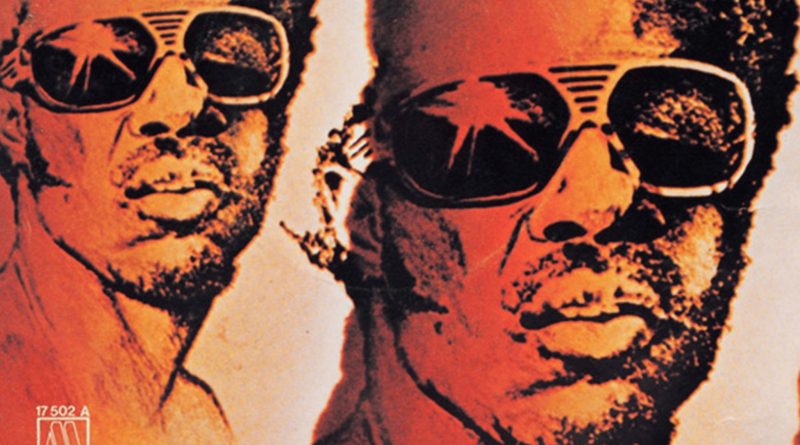
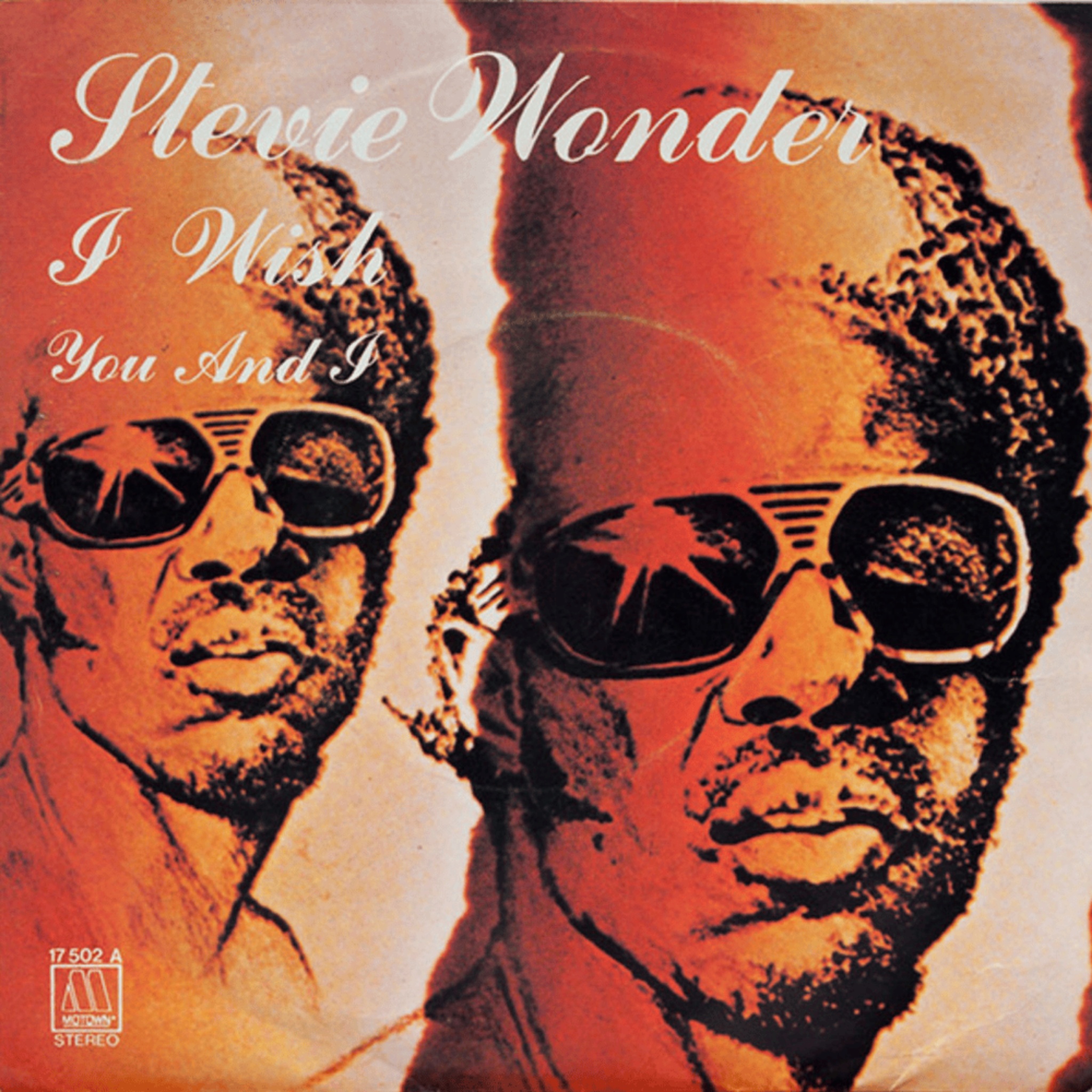
“I Wish” was an irresistibly funky earworm that radio latched on to as an obvious choice. It kicked off with a recognizable bass groove from Nathan Watts (recorded after he’d been called back after getting home ready to sleep after a marathon session) and Wonder on Rhodes and three separate synth parts, setting the tone immediately.
Wonder’s inspiration from the song came from a Motown staff picnic in the summer of ’76. Even with a toothache, he picked up on the vibe of the fun and games that day, sending him back to childhood.
The nostalgic fun of the song with its rose-colored glasses had a momentum of its own that Wonder couldn’t stop. He tried to, in his words, add “a lot of cosmic type stuff, spiritual stuff. But I couldn’t do that ’cause the music was too much fun — the words didn’t have the fun of the track.”
The chorus, “I wish those days [horns!] would [horns!] come back once more!” had a life of its own that survived efforts to add anything that might detract from it.
The second single wasn’t released as one in the U.S., but picked up airplay anyway.
“Isn’t She Lovely?” was written for his new daughter, Aisha. It’s her voice as a toddler heard on the outro, recorded as she interacted with Wonder and her mother Yolanda. Lyrically, it flirts with his more saccharine tendencies that would rear their head in ’80s songs like “I Just Called To Say I Love You.” But unlike that track, which always sounded more like a phone commercial than a love song, “Isn’t She Lovely?” never comes across as anything other than a sincere expression of joy and love, complete with a hook and one of Wonder’s memorable harmonica solos.
AUDIO: Stevie Wonder “Isn’t She Lovely”
The only reason it wasn’t a single was because Wonder refused to cut that solo down for a single edit.
The next proper single would be Wonder’s tribute to musicians who came before him — “Sir Duke,” which references not just the Duke Ellington in the title, but Ella Fitzgerald, Louis Armstrong, Count Basie and Glenn Miller.
Wonder had hoped to collaborate in the past with some of his influences, like Dinah Washington and Wes Montgomery, but they’d died before that could happen. Ellington’s death in 1974 spurred him further, as he felt there was a tendency to forget artists once they were gone.
The song was no dry history lesson, as what came through was the joy from the artists, indeed from music itself. Starting with those horns on the intro, the players were locked in with Stevie and the result was an utterly infectious hit that became the chart topper it sounded like to anyone the first time they listened to the album.
“Another Star” is Wonder going into smooth Latin territory, an extended jam that closed the original album and, in abridged form, peaked at No. 32 on the Billboard Hot 100. It works that time-honored formula of pairing happy music with sad subject matter. It’s difficult not to succumb to the temptation to dance to the music as the song plays, even as he’s singing about a breakup (“For you there might be another song/But in my heart your melody will stay with me”).
There’s even a perfect ’70s R&B flute solo from the great Bobbi Humphrey, one of well over 100 singers and musicians, anchored by the core session guys known as Wonderlove, to appear on the album
“As” was the final single, peaking at 36 on the U.S. singles chart, an example that, as with “Another Star,” chart performance is not indicative of quality.
It starts out with Wonder in smooth mode, in full mastery of his art of vocal phrasing. The chorus that makes an early appearance will become the main thrust of the song, repeating throughout especially in an extended outro. The lyrics are an expression of love, for someone else and, indeed, for humanity. Wonder lists all the impossible things that could happen (“trees and seas flying away,” “8X8X8=4”) and he will still love them.
It’s the sound of Stevie Wonder taking his audience to church, if the church were the entire planet.
Wonder’s tributes to other musicians weren’t just lyrical.
“If It’s Magic” was originally intended to be just Wonder on piano, but he thought jazz harpist Dorothy Ashby was underrated, so he invited her to play on it, a wise move. Ashby gives the love song, the album’s most understated moment, the beauty it deserves as a quiet moment before the album moves into its final stretch.
“Contusion” was the oldest song to make the final cut, as versions of it dated back to 1973. The instrumental, with fine lead guitar from Michael Sembello, clearly had Steely Dan taking notes.
“Pastime Paradise” would gain an audience in a different form years later when Coolio sampled it for the massive 1995 hit “Gangsta’s Paradise” from the Dangerous Minds soundtrack.
As much as Wonder was inspired by the best of humanity, he was all too aware of its flaws, as “Pastime Paradise” shows. A plea for people to do better, he kept the song spare by not adding drums with his work on the Yamaha GX-1 synthesizer setting the mood, augmented by touches like the idea Wonder had to bring in Hare Krishna devotees to come in to play their bells.
The GX-1 was basically a prototype for future synths. Less than ten were sold. Wonder bought two and liked how they could allow him to stack sounds on top of each other in one take.
It first appears on another song where Wonder’s concerns were beyond love, the pointed commentary of “Village Ghetto Land,” simulating strings.
Gary Byrd wrote the lyrics for it, finding out about Wonder’s artistic whim in the process. Byrd finished and called Wonder with what he wrote. He received a positive response, but then was told, basically, “Hey, I’d planned another verse. Can you write another one and call me back with it in 10 minutes?”
Wonder’s vision of human stories couldn’t ignore those in poverty, in bad situations. Byrd’s lyrics are a pointed counter to the synth strings that make it sound like an enticing introduction from a movie musical, a depiction of the have-nots being ignored by the haves.
Byrd’s other co-write, “Black Man” came from a POV that would be derided by the worst sort of people today as “woke.” Wonder’s intentions and specificity are one thing, but he marries them to one of the album’s funkiest grooves.
For all the multitude assembled elsewhere, the song’s as close as Wonder got to a one man band on the album, playing everything except the horns. The bassline, recorded live and not put together after the fact, drives the whole thing. Underscoring an eye on the future and sense of hope, the song’s closing call and response is from teachers and students from the Al Fann Theatrical Ensemble in Harlem.
If Wonder was challenged at times by trying to fit too much into one song, Songs In The Key Of Life’s length was a way around that.
“Love’s In Need Of Love Today,” the first thing listeners heard when they put the album on their turntables in 1976, set the tone, an exquisite soul ballad where Wonder wanted to dig deeper.
“The concept I had in mind was that for love to be effective, it has to be fed. Love by itself is hollow,” Wonder told the Wall Street Journal in 2015. “When I was finished [recording the song], I listened to the playback and realized the song was perfect to open the album, to set the entire tone. […] It’s still emotional for me. When I performed it in New York recently, I broke down. I’ve seen people come and go, and live and die, cry and laugh. It all came rushing back.”
The love in “Knocks Me Off My Feet” has definitely been fed. Wonder’s opening piano makes one feel fortunate to be sitting nearby as he plays in a bar with a tip jar. It’s an intimate, romantic gem where the man gets away with nicking a bit from his own “My Cherie Amour,” aided by clever writing (the keyboard “tumble” at the title line).
The spirituality kept out of “I Wish” is the message on “Have a Talk With God,” one of the album’s briefer moments, soulful and slinkily inviting in its groove, one of the songs where a young kid in Minnesota named Prince had to clearly be taking notes.
AUDIO: Stevie Wonder “Pastime Paradise”
“Summer Soft” is one of those ballads that Wonder could seemingly knock out in his sleep, aided here by the organ sounds from Ronnie Foster. If this is as fluffy as cotton candy, it’s the finest cotton candy you can get.
“Ordinary Pain” is another breakup song, but this time Wonder lets the woman have the last word. The first half of the song is a melodic ballad that sounds like him circa 1970 with backing vocals from Minnie Riperton, Mary Lee Whitney and his ex Syreeta Wright. Then the song turns into syncopated funk, with Shirley Brewer taking over the lead vocals, dishing it back out, singing lines like “You’re cryin’ big crocodile tears/Don’t match the ones I’ve cried for years.”
Wonder sings in Zulu, Spanish and English on “Ngiculela-Es Una Historia-I Am Singing,” which seems lovely, if slight, until he starts belting it out, as if we needed a reminder that his considerable talents extended to the power and range of his voice. It’s more than welcome.
“Joy Inside My Tears” is the moment where things get syrupy enough to threaten the listener’s blood sugar levels as the tempo drags. But even here, the synth backing is full and gorgeous and Wonder’s vocals are killer, saving the song from the muck.
Herbie Hancock, who played on “As,” said in Classic Albums, “I’m always intrigued by his orchestral use of synthesizers. It’s always interesting. He doesn’t fall into a certain trap that I’ve often fallen into. I very often try to duplicate acoustic sounds on the synthesizer, try to make the string sound like real strings, I try to make the brass parts sound like real brass and Stevie lets the synthesizers be what they are, something that’s not acoustic.”
As eagerly anticipated as it was, the album’s commercial performance exceeded expectations. Wonder became the first American artist to debut an album at No. 1 on the Billboard albums chart, joining Elton John, who did it twice in 1975, in accomplishing that feat. It spent 13 weeks at the top spot.
The sessions turned out to be an embarrassment of riches. A four-song EP, Something Extra, was later released containing four songs — “Saturn,” “Ebony Eyes,” “All Day Sucker” and “Easy Goin’ Evening (My Mama’s Call)” that weren’t included on the original album and were included as bonus tracks on later reissues.
“Saturn” is an unintended cosmic ballad created because co-writer Sembello misheard “Saginaw” as the ringed planet, a melodic gem that easily could have made the album.
“All Day Sucker,” the other highlight from the EP, is funkily memorable, driven by clavinet and the new toy Wonder and engineers John Fischbach and Gary Olazabal made use of — the Marshall Time Modulator (good for things like flange effects).
“Ebony Eyes” shows that Wonder and his cast of over 100 could have fun in the studio, but it’s silly enough that it’s easy to see why it didn’t make the cut.
Wonder himself surprised folks Monday by releasing a new EP with four more songs from the sessions — the bubbly “It’s Easier,” “My Life Story of Love,”(which practically invites mental images of shag carpeting in harvest gold in front of a fireplace), “I Can See The Sun Into December” and “I’m Into Livin.'”
The latter is the highlight of the bunch, another earworm, this time about a playa with the ladies who’s retired from the game for welcome domesticity.
Wonder took over three years to release the follow-up, which ended his hot streak. Stevie Wonder’s Journey Through “The Secret Life of Plants,” released in October 1979, was another double album. This time, though, Wonder’s gifts were subsumed by experimentation, obscuring the highlights like “Send One Your Love,” which came about because Gordy pushed for more songs with vocals.
Two million copies were initially planned for the first release, but was cut to one million and Gordy later said he should have only shipped out 100,000. In the end, it capped out at 500,000 copies sold, one-sixth of what Songs In The Key Of Life sold in its first year.
Wonder didn’t waste time rebounding. The critical and commercial success Hotter Than July was released at the end of September, 1980, reaching platinum status within four months.
In addition to a number of Songs In The Key of Life songs being live mainstays in the years since, Wonder himself has gone back to it in its entirety — first for a tour from November 2014 through “November 2015 and now a 50th anniversary tour with dates from October through December, mostly in the U.K., Ireland and Europe with dates in New York, Chicago, Washington D.C, Detroit and L.A. at the end.
Songs In The Key of Life belies its lengthy origins. Wonder’s run in the ’70s made it seem effortless, that he could create lasting music on autopilot. Even the lesser moments on Songs in The Key of Life are songs that a ton of other artists would have killed to write.
You could say that any of the preceding three albums Wonder released were his career highlight and you’d have a very legitimate case.
But Songs In The Key Of Life stands as Wonder’s definitive statement — two albums worth of him saying what he had to say in the unique way he was capable of saying it, unafraid to work a mood and let a groove play out. It’s a genre-crossing classic of soul, funk, pop and experimentation that remains as immersive and essential as it was 50 years ago.

- Stevie Wonder’s Declaration of Independence - September 30, 2026
- Tomorrow Never Knows: The Beatles’ Revolver Turns 60 - July 20, 2026
- Here Today: The Beach Boys’ ‘Pet Sounds’ at 60 - May 16, 2026
You May Also Like
-
 May 13, 2020
 -
 July 4, 2019
 -

