
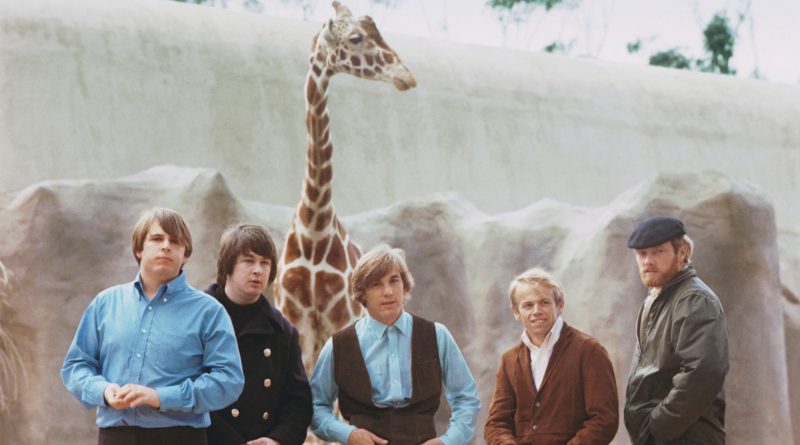
Here Today: The Beach Boys’ ‘Pet Sounds’ at 60
Looking back on Brian Wilson’s towering monument of melody
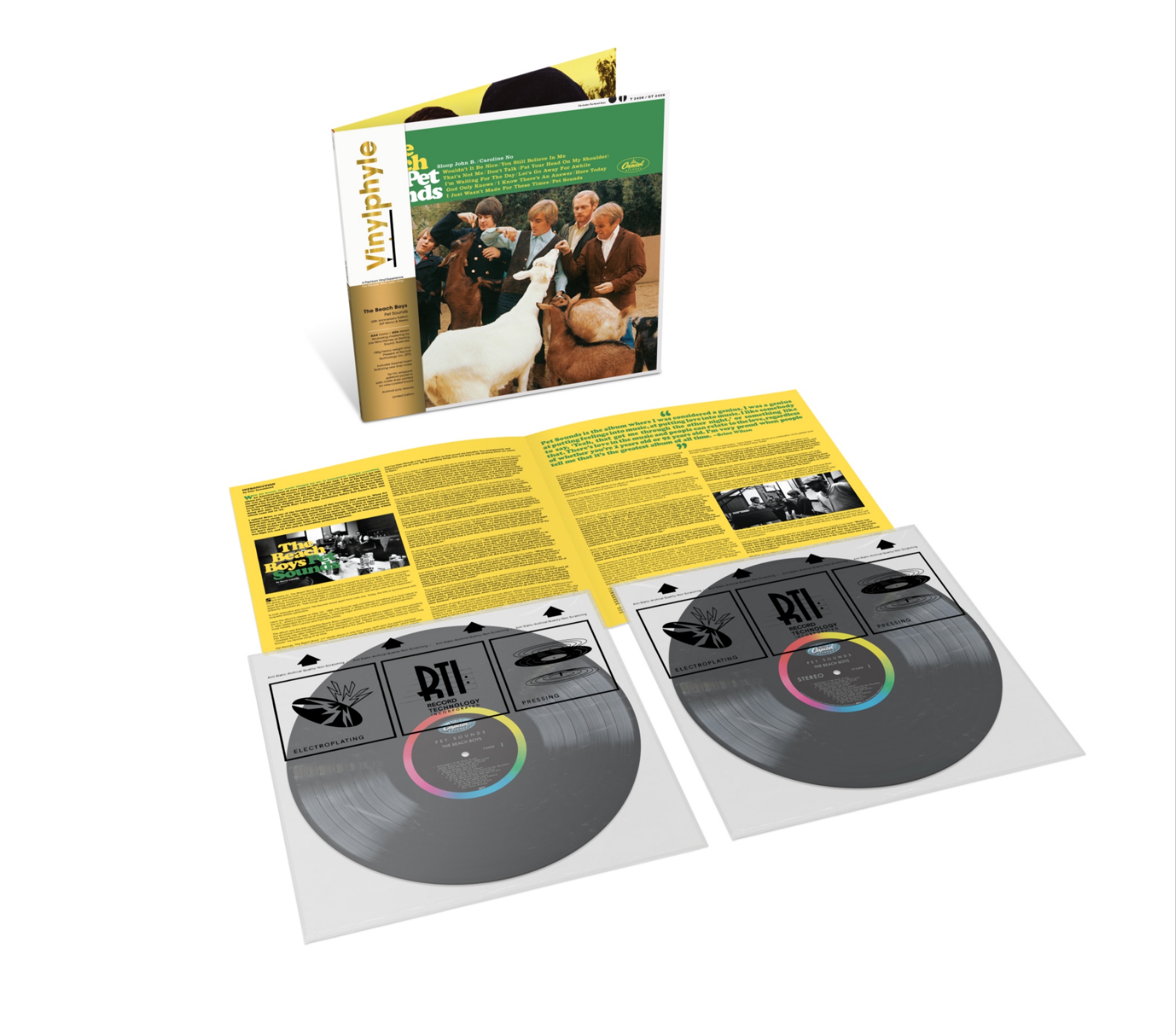
The Beach Boys’ classic Pet Sounds, which turns 60 today, remains one of pop music’s most beautiful and enduring classics, but it did not spring from the happiest place.
The album, which gets a new re-release on a number of vinyl and CD combinations this week, was the result of Brian Wilson trying to climb up from the end of his rope.
By 1965, Wilson was more interested in translating the music he heard in his head than he was in touring.
Wilson’s mind really wasn’t suited to the incessant grind of playing live while constantly churning out songs like an assembly line.
Throw in the stress of a new marriage, the trauma of an abusive childhood (the band had recently fired his father Murry as manager) and with increasing signs of mental illness and the result was a nervous breakdown in December, 1964.
Brian told the band he wasn’t going to tour anymore, focusing on writing and recording songs. Glen Campbell, then an unknown studio musician in the Wrecking Crew, replaced him for a few months before declining an invitation to join. In stepped Bruce Johnston, who’d go on to be a Beach Boy for the majority of the next 60 years.
Meanwhile, Brian’s life changed. He explored musical changes, wanting to go beyond happy surfing songs. He made new friends outside the family/band dynamic, the result of which turned out to be his immersing himself in drugs, first marijuana and then LSD.
Musically, the changes were apparent on Today!, the group’s first album that year, which showed a desire to write from a more mature, vulnerable view and to experiment with structure to create a full album. Songs like “When I Grow Up (To Be a Man)” and “Let Me Wonder” reflected that, showing a more conventional, proto-Pet Sounds.
The album didn’t sell as well, so Capitol quickly demanded something more commercial. Summer Days (And Summer Nights!!) was made to fit that demand, yielding two hit singles. “Help Me, Rhonda,” a reworked version of a Today! album cut, became a deserved hit. But the second single showed that Wilson’s wider artistic inclinations weren’t going anywhere.
The orchestral prelude to “California Girls” revealed that. Brian had music from Westerns in his head either during or shortly after his first acid. Think of the “bamba dee da” sound from Happy Trails. Throw in some killer harmonies and vocal swapping under the universal shoutout to girls everywhere and you had what’s still on the short list of the best-known Beach Boys songs.
Wilson started work on what would become Pet Sounds that year as well, starting with a cover of the Bahamian folk song under the title “Sloop John B,” introduced to him by Beach Boy Al Jardine, a Kingston Trio fan who knew their version as “The Wreck of the John B.”
VIDEO: The Beach Boys “Sloop John B”
Jardine tweaked the folk trio’s three-chord arrangement to make it a little more complex to pique Brian’s interest. Recording on it began that June.
It was shelved for a bit thanks to, who else, Capitol. The label wanted Christmas product, so the Beach Boys tossed off Beach Boys Party!, a faux “live” covers album which yielded a No. 2 hit in a version of the Regents’ 1961 doo-wop hit “Barbara Ann.”
The label was thrilled, but Brian wasn’t, knowing that it was a false teaser for where he and the band were going.
The final product was released as a single in March 1966, reaching No. 8 on the Billboard chart. It wasn’t initially considered for the album, but it was included on the album because, well, it was the single.
That said, even as the lone cover, it doesn’t sound out of place with its chiming guitar, vast sound and the harmonies, so many harmonies, especially on the impromptu break where the music drops out and all you hear is the voices.
As engineer Chuck Britz put it in later liner notes, “They could sing a capella and make tears come to your eyes.” And if you have your hands on the Pet Sounds box set with tracks that are just vocals, his observation is easily confirmed.
Before the year ended, “Sloop John B” was finished and a chunk of other material was just around the corner, thanks in part to a chance meeting at Western Recorders on Sunset Boulevard in Hollywood. Tony Asher was an advertising copywriter who worked on jingles. He met Brian Wilson there, which led to the main Beach Boy approaching him that December.
“I asked [Tony] what it was like writing commercials for an advertising company. It seemed like interesting work. I said, “You should be good with words if you can do that.” And, he said, “I’m pretty good with words.” Out of nowhere I said “Would you like to work with me on some songs and write some lyrics?” “I’ll give it a try.” Then, Pet Sounds, like that,” Wilson said in Peter Ames Carlin’s 2006 biography Catch a Wave: The Rise, Fall, and Redemption of the Beach Boys’ Brian Wilson.
The duo came up with eight of the 13 songs that would make up Pet Sounds over the course of three weeks in January, 1966, with Asher writing the bulk of the lyrics and acting as an occasional sounding board on the music. Two of those became the cornerstones of the classic.
“God Only Knows” was not the typical pop love song, mentioning God (something ultra-rare in pop at the time) while occupying a place of doubt. The first lyric is “I may not always love you” and pretty much the rest of the song imagines her breaking up with him and how devastating that would be.
VIDEO: The Beach Boys “God Only Knows”
Musically, Brian was inspired by Asher’s love of jazz standards, coming up with chords and changes atypical for pop music, throwing in classical touches and a kitchen sink of instruments — strings, sleigh bells and even future Derek and the Dominoes drummer Jim Gordon, whose own mental illness would take a much more horrific and violent turn years later, on small orange juice bottles that drummer Hal Blaine had cut up and taped together to use like a vibraphone..
It’s the singing that sells it — the counterpoints and rounds Brian came up with and Carl Wilson’s aching lead vocals.
“I was honored to be able to sing that one. It is so beautifully written, it sings itself,” Carl said later in Pet Sounds’ liner notes. “Brian said something like, ‘Don’t do anything with it. Just sing it real straight. No effort. Take in a breath. Let it go real easy’. I was really grateful to be the one to sing that song. I felt extremely lucky.”
“Wouldn’t It Be Nice?” took longer than any of the album’s songs to record, mainly due to the rest of the group trying repeatedly to get the vocals Brian wanted. In one instance, they took 30 takes on one short vocal passage.
“They say dogs can hear sounds that humans cannot and I swear Brian must have been part canine because he was reaching for something intangible, imperceptible to most, and all but impossible to execute,” Mike Love said in 1996.
But they did achieve it eventually, even with the unusual slowing down section.
The instrumentation likewise threw in a curveball. The opening that sounds like a calliope or bells was actually a 12-string electric guitar plugged straight into the studio console. Since that meant the other musicians couldn’t hear that guitar part, Blaine wore headphones and cued everyone else for their parts.
The lyrics were a hopeful counter to the melancholy in “God Only Knows.”
“It’s a song that people who are young and in love can appreciate and respond to, because it revolves around the things they’ve always wanted to do: live together, sleep together, wake up together — do everything together,” Asher said years later in Charles L. Granata’s 2003 book on the making of the album — Wouldn’t It Be Nice.
The first song Brian and Asher wrote together was “You Still Believe In Me,” which began as “In My Childhood,” a song the Beach Boy liked musically, but wanted new lyrics for. Conversations between the two led Asher down the path he chose, one where love and introspection are intertwined (especially considering Brian knew he was a challenging individual to be in a relationship with).
Its tone musically is set by a piano that Asher would get inside the piano to pluck (trying a variety of objects to get the sound right) while Brian held the keys down to get a harpsichord-like sound. There’s the bicycle horn and bell played by Blaine, a holdover from the song’s original concept.
As much as Brian was influenced by Phil Spector’s Wall of Sound production style (and you can easily hear it on Pet Sounds), “You Still Believe In Me” ultimately soars on its wall of harmonies.
The result pleased the lead Beach Boy enough that it worked as a successful de facto audition for Asher.
Asher, among others, said that Mike Love, who preferred the happy cars, girls and surfing material, forcefully wanted Brian to stick with that, telling him, “Don’t fuck with the formula.”
Love denies it to this day. So it may be apocryphal, though grounded in a degree of truth when how he (and Jardine to an extent) felt about Brian’s approach. They were concerned about the brand, especially being locked out of the production phase.
AUDIO: The Beach Boys “Hang On To Your Ego (Sessions)”
“I Know There’s An Answer” was one instance where Love put his foot down, because of the lyrical content.
The song, called “Hang On To Your Ego,” came from Brian’s acid experiences. “I was aware that Brian was beginning to experiment with LSD and other psychedelics,” Love said later. “The prevailing drug jargon at the time had it that doses of LSD would shatter your ego, as if that were a positive thing… I wasn’t interested in taking acid or getting rid of my ego.”
On early versions found on the box set later, one can hear Love’s contempt, as he mockingly adopts the vocal stylings of a lounge lizard playing a tri-state Holiday Inn.
Brian, not wanting a fight, eventually backed down and changed it into more about finding who you really are, although ironically, not changing the opening lyric made it sound more pro-drug than Love realized.
As far as the lyric change, Brian told Mojo in 2007 that he didn’t mind doing it, but added, “But you know what? The ego of the band was Mike. He was the ego guy.”
By Pet Sounds standards, “That’s Not Me” is smaller scale in its sound, hardly minimalist, but not throwing in the kitchen sink with nobody from the Wrecking Crew to be found.
“I think ‘That’s Not Me’ reveals a lot about myself, just the idea that you’re going to look at yourself and say, ‘Hey, now look, that’s not me, kind of square off with yourself and say ‘this is me, that’s not me,'” Wilson said in a 1976 radio interview.
“I’m Waiting For The Day” dated back to the songs Brian came up with for , but almost two years later, it found its proper place. Here, it’s a statement of comfort in jaunty trappings, consoling a woman hurt after a breakup with musical backing that suggests classical music at a carnival, complete with booming drums.
When it came to translating the musical ideas in his head, Brian would know the end result when he heard it, or likely not, even with working with well over a dozen musicians playing at once.
“One of the things that always amazed me about the sessions was when, during a take, if out of a whole studio full of musicians…a big rhythm section, horns, percussion, etc…there would be one little thing happening wrong in the arrangement, he would stop it immediately,” Carl said later. “‘So-and-so missed their entrance.’ Or they didn’t come down exactly the way he had told them. A lot of people said, ‘It sure sounded good to me.’ To us, it did sound incredible; it was easy to get lost in it. But if one of his ‘little children’ wasn’t in line, he heard it right away.”
“Here Today” goes big with its arrangements and inventiveness, even while the vocals backing Love on the chorus echo the surf song days. There’s the organ break that later inspired Al Kooper on Blood, Sweat and Tears’ 1969 hit “You Made Me So Very Happy” and Brian’s decision to have the bass up an octave to serve as a lead instrument.
“Don’t Talk (Put Your Head On My Shoulder)” is unabashedly romantic, distilling love down to just that one moment where you’re together. It’s also well crafted, as Brian sings “listen, listen” before drums kick in shortly thereafter.
AUDIO: The Beach Boys “Don’t Talk (Put Your Head On My Shoulder)”
It’s a reminder that non-hits can speak to future generations. “The six bar intro of ‘Don’t Talk (Put Your Head on My Shoulder)’ is worth a thousand books. I consider it to be one of the greatest chord changes ever written,” Cibo Matto’s Yuka Honda told Spin in 2016.
Wilson was 23 when he put together Pet Sounds. As much as he was working towards a more adult POV in his material, there’s no mistaking the very real vulnerability springing from a place where the troubled childhood wasn’t that far in the rearview mirror. There’s a palpable ache that cuts deep.
It’s most keenly felt on the album’s second half.
“I Just Wasn’t Made For These Times” feels lyrically like a sequel to the 1963 hit “In My Room,” where that room didn’t provide comfort as much as a harbor of self-deprecation and loneliness (“They say I got brains but they ain’t doing me no good/I wish they could”),
Brian’s experimental side reared its head again on the track when he brought in Paul Tanner, who invented the Electro-Theremin, to play a solo on his invention.
“That song reflects my life,” Brian said in 1976. ” It’s about a guy who was crying because he thought he was too advanced, and that he’d eventually have to leave people behind.”
Even though Asher wrote the lyrics about an old high school girlfriend of his, “Caroline No” was arguably the most personal song on the album. The working title was “Carol, I Know,” which Brian, who was 90% deaf in his right ear, misheard. The two liked what Brian heard better.
Brian, in his 1991 memoir, later said that song may have been inspired by a crush he’d had on a different Carol in high school, he was really thinking about how he and his wife Marilyn had changed, with less innocence than they’d had not long before.
The result is a lovely ballad, devoid of harmonies as Brian’s plaintive voice gets the pained wistfulness across.
“Let’s Go Away For Awhile” wasn’t originally intended as an instrumental, as Brian heard it as something in the style of Burt Bacharach. He changed his mind, leaving behind an orchestral break, as if from a soundtrack to a movie where one of the protagonists in the other songs is walking somewhere in quiet solitude at sunset.
The title track was originally called “Run James Run,” Brian’s idea of music for a Bond theme, but it became another instrumental which, if the least essential thing on the album, still contains endearing sonic touches, particularly the work of Ritchie Frost, who played drums, bongos (run through a Leslie speaker) and, at Brian’s direction, two empty Coke cans with sticks.
The album title came from, depending on the story, Carl, Brian or Mike.
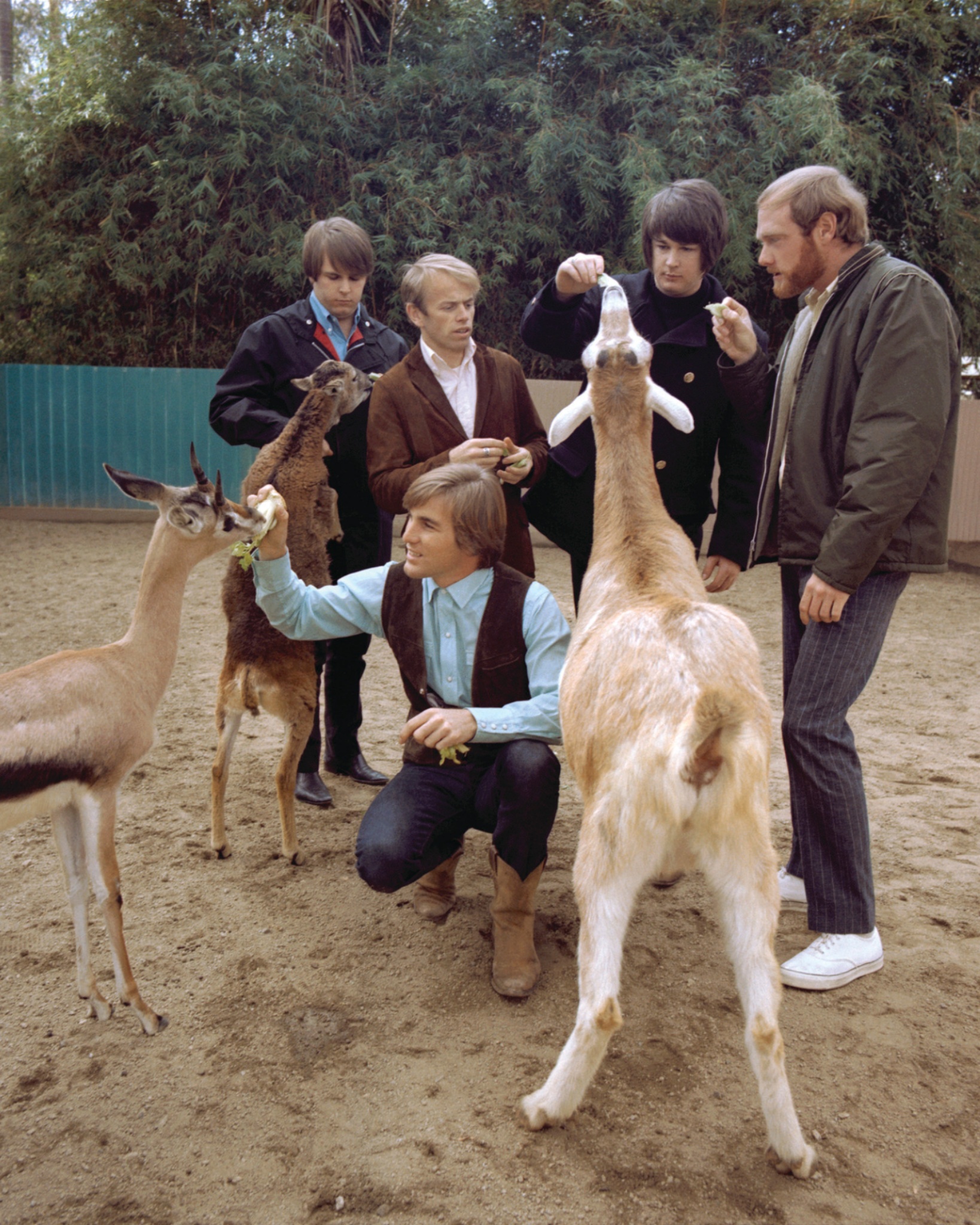
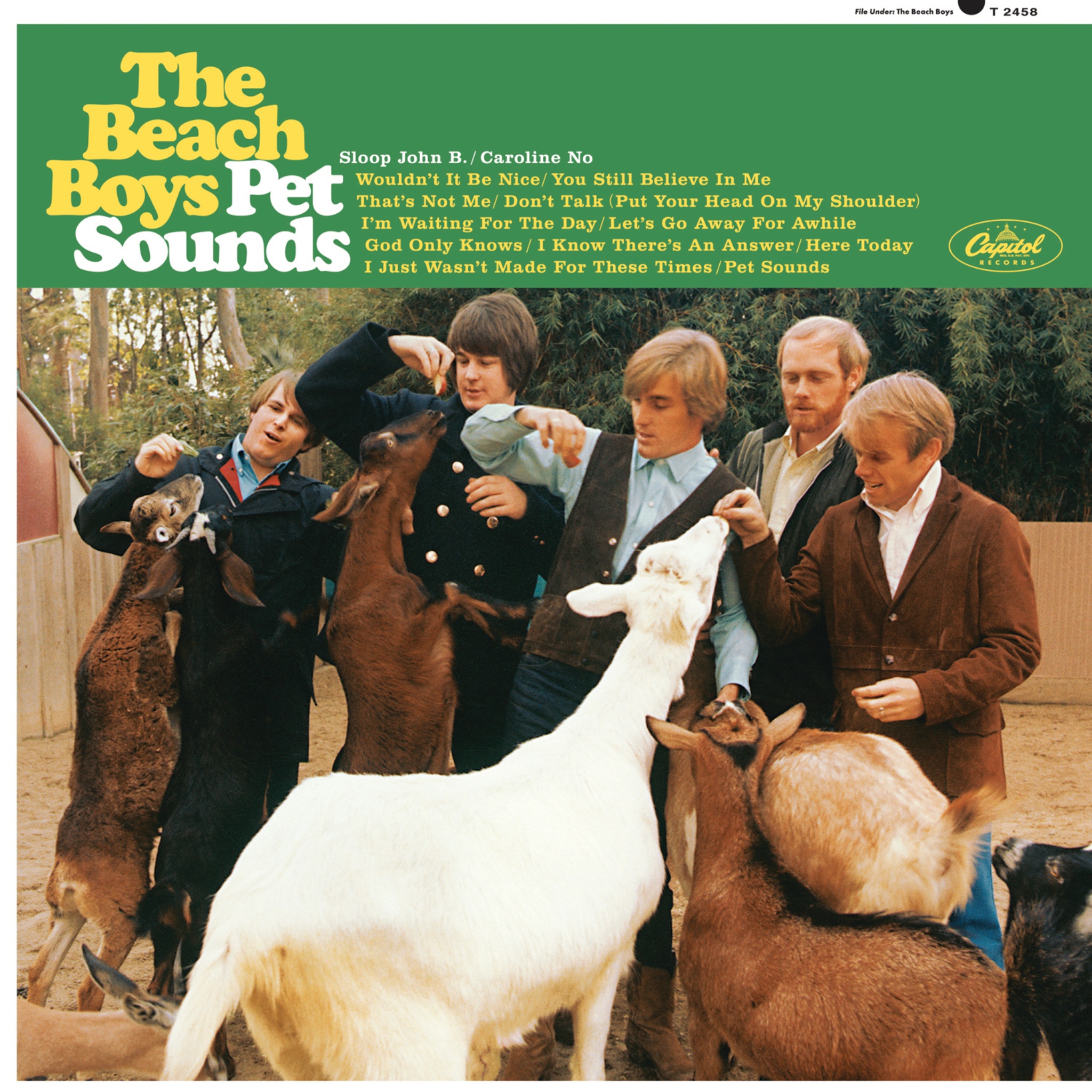
The cover was shot at the San Diego Zoo in the middle of recording with the overwhelming memory being that the goats were ill-tempered and unimpressed with Beach Boys.
When the album was finished, the band, not just Brian, knew they had something different and special
“It was certainly a groundbreaking album. At the time, it sure seemed like one,” Carl said years later. “It was just so much more than a record; that’s why it had such a spiritual quality. It wasn’t like going in and doing another top ten. It had so much more meaning than that.”
Most of the suits at Capitol, however, reacted like the zoo goats. They hated “different.”
“It was played at a sales meeting, and the marketing guys were really disappointed and down about the record, because it wasn’t the normal ‘Surfin’ U.S.A.,’ ‘Help Me, Rhonda,’ ‘Barbara Ann,’ kind of production,” Karl Engermann, who was a Capitol A&R rep at the time, told Rolling Stone in 2016.
First, the label put out “Caroline No” as a Brian Wilson solo single, then two weeks later released “Sloop John B” under the band’s name.
Then, they didn’t split up the album’s two best songs by releasing “God Only Knows” and “Wouldn’t It Be Nice” as one single.
By that time, Capitol undercut Pet Sounds by rushing out a hits compilation, a move that hurt Brian deeply.
“They turned their back on him by releasing Best of the Beach Boys,” Johnston said in 1996. “Why wouldn’t you allocate a massive budget to promote Pet Sounds? This album is timeless and forever, and the label turned it into an ignored stepchild.”
The album peaked at No. 10 as a result, giving the label a self-fulfilling prophecy on the “disappointing’ sales front. Of course, the quality of the music drew praise (McCartney and Lennon were two vocal fans from the start) and with time, it became the band’s biggest-selling studio album.
Brian wasn’t chastened. He was already further down the rabbit hole, working on what he envisioned would be the fruition of where he was going to that point — SMiLE, an album he began before Pet Sounds was released.
But the process grew even more laborious. “Good Vibrations” was on the original tracklist for Pet Sounds, but Wilson had more ambitious ideas for the song. It became a cornerstone of the planned album, took 20 sessions over seven months at four different studios to finish. It cost at least $50,000 (almost three-quarters of what it cost to make all of Pet Sounds. That’s the equivalent of a $500,000 single today.
In the end, it was jettisoned from the intended album because, even though it was destined to be regarded as not just one of the Beach Boys’ best ever, but an all-time pop classic, Wilson hated how it sounded.
Wilson had gone so far inside his own head that his mind became an unreliable narrator. His perfectionism and mental illness, along with other issues like Capitol’s desire for immediate, consumable product, left the vast majority of songs unfinished. Van Dyke Parks, his new collaborator, left.
The reality wasn’t just that Wilson had trouble translating the musical ideas in his mind, he was also fighting off the voices in his head. Years later, he’d be diagnosed with schizoaffective disorder, with symptoms in his case including auditory hallucinations.
“Well, for the past 40 years I’ve had auditory hallucinations in my head, all day every day, and I can’t get them out,” Brian told Ability in 2006. “Every few minutes the voices say something derogatory to me, which discourages me a little bit, but I have to be strong enough to say to them, ‘Hey, would you quit stalking me? Fuck off! Don’t talk to me — leave me alone!’ I have to say these types of things all day long. It’s like a fight.”
As obsessed with perfection as he was, Wilson was also in an impossible position to make it come together with his issues. His white whale came from several ideas for albums, so its failure to cohere was unsurprising.
The album was scrapped. Songs would be finished here and there — “Heroes and Villains” became the lead single for 1967’s Smiley Smile, peaking at No. 12 and almost immediately disappearing thereafter. “Surf’s Up” surfaced as the title track for a deservedly well-received 1971 album.
Decades later, Brian, with the help of his backing band, led by musical director Darian Sahanaja, was finally comfortable enough to once again approach what was his biggest musical source of pain and frustration. The result was 2004’s Brian Wilson Presents Smile, a well-received re-recorded version of what might have been.
Finally, in 2011, The Smile Sessions, put together from the original sessions, was released, its first 19 songs becoming as close to an official version of the album as we were going to get.
The period of Pet Sounds into SMiLE became Brian Wilson’s peak, one of pop’s all-time best, but it also marked the clear demarcation in the band’s history. Brian still had music left in him, but he was never going to be the force he was before, more of a guest and an apparition than the man driving the ship.
He eventually found a degree of peace after his family was finally able to extricate him from the clutches of a predatory therapist. If the years of damage left him a changed man, he was able to get love back from audiences, including an extended tour from 2016 into 2019 where he and his band performed Pet Sounds in its entirety.
Wilson retired in 2022, passing away two years later. The combination of dementia and health problems from long COVID finally silenced the music and the voices in his head.
Pet Sounds still stands as a towering monument to Brian Wilson’s ability to connect, creating timeless pop even as he experimented with chord changes and instrument choices. It captures that awkward period of young adulthood and youthful love while providing a window into a soul who’d already gone through more emotionally than most his age, both painfully adult and sadly childlike.
As painful as his life could be, as frustrated as he was in trying to make the music he felt inside, Pet Sounds is an instance where he knew what he’d created. And it’s his words years later that sum the album up as well as anyone could.
“I love the whole Pet Sounds record. I got a full vision out of it in the studio. After that, I said to myself that I had completed the greatest album I will ever produce. I knew it. It was a spiritual record. I wanted to grow musically, expand our horizons and do something that people would love, and I did it.”

- Here Today: The Beach Boys’ ‘Pet Sounds’ at 60 - May 16, 2026
- Manifest Density: Local H’s ‘As Good As Dead’ Turns 30 - April 30, 2026
- Nowhere Men: The Beatles’ Rubber Soul at 60 - December 6, 2025
You May Also Like
-
 June 2, 2023
 -
 July 4, 2022
 -
 March 26, 2024

Lovely write-up, although you took it way too easy on Mike Love. He’s a horse’s ass who always resented Brian’s genius. That’s on top of his need for control of the Beach Boys “brand,” and firing Brian and the others after their reunion a few years back. Throw in some alleged spousal abuse and his definite pro-MAGA sentiments, and I’ll repeat what many say: FUCK MIKE LOVE.
Side note, Al Kooper had left Blood, Sweat, & Tears by the time of their second album in late 1968/early 1969. He may have had a hand in a few of the early song arrangements on that album, but he wasn’t there for the recording of it. He’s not listed in the album’s credits.