
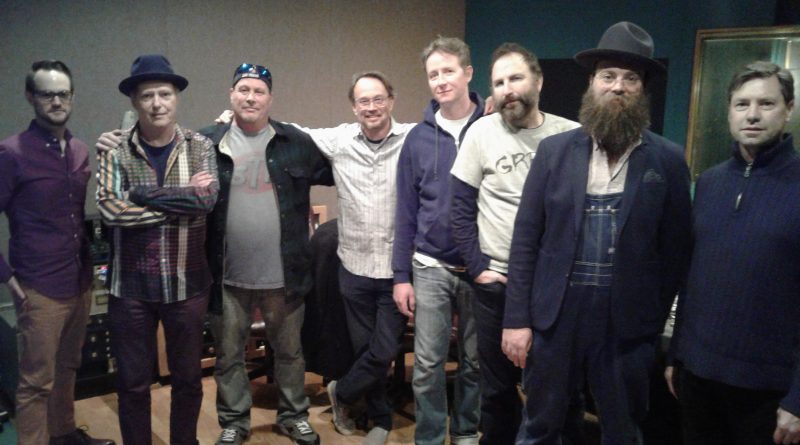
Richard Lloyd, Alchemical Guitarist, Has Died
Television innovator and Sweet player produced The Lilacs
A brilliant guitarist, coveted side man, lower east side historian, and mesmerizing storyteller, Richard Lloyd has died at 75. One can tell from the depth of emotion and the wide sourcing how large a shadow Lloyd cast over anyone who came of age at that very special time and place when Television was the house band at CBGB’s.
Press play to hear a narrated version of this story, presented by AudioHopper.
There are much better musical theorists than myself to do the important work of explaining why Richard’s strange blend of emotion and math created such compelling and original guitar playing. And if you don’t want to read an explanation or if the interplay between Richard and Tom Verlaine on that unforgettable intro of Marquee Moon doesn’t do it, take a look at the YouTube of Matthew Sweet‘s “Sick of Myself” on 120 Minutes – you’ll get it instantly.
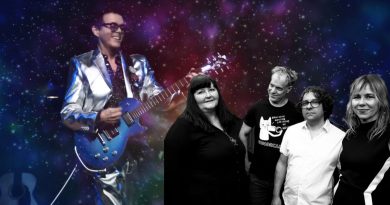
So the part I’ll share will be my own personal interactions with Richard and the impact he had in producing our band The Lilacs and helping create the nearest thing we ever had to a hit record.
I went to see Richard’s solo act at The Falcon in upstate New York in January 2019. I was blown away by how vital his playing remained. He’s not a great singer (it wouldn’t have hurt his feelings to read me say that), but he’s so damn musical that even standing alone on stage before fewer than 100 people, it was a totally compelling performance. We talked a little bit and I bought one of his paintings. I told him there had recently been renewed interest in my 90s band The Lilacs and of course he had been a hero to us back then. He asked what kind of music we play. I told him straightforward indie rock. Our hook to the degree we had one was sincerity and over the top emotion, not complexity or innovation in the way he had made his name. So he surprised me when he said send me some tapes of what you’re working on maybe I’ll think about producing.
I couldn’t believe it. I didn’t even think he was serious. The Lilacs had a decent enough time of it in the early 90s and got some looks from labels, but never made anything of lasting import or hit the charts. I was so stunned I didn’t even get his contact info. But I told Ira Robbins the story and asked him if he had Richard’s number. Of course he did. Ira told me Richard wouldn’t have said that if he wasn’t sincere.
I reached out to Richard. I sent our demos over – I had a live version of David Levinsky’s ballad Blue Spark, and a version of my song Monica not even recorded by us — it was recorded by another band The Returnables. Then Dave had a new song called Shadow of Doubt and sent me a demo and I thought it was so good that I did something I hadn’t done for 25 years—sat down and wrote a song. I had read somewhere that 120 bpm provided the best shot at a hit so I set my metronome to 120 and tried to write Jolene from a guy’s perspective.
I sent the songs to Richard and assumed he would hear how simple and derivative they were, so I was surprised when he got back to me and said if you guys are willing to work at this and take it seriously I’d like to produce it. Oh my God, that’s a dream, Mr. Lloyd, when can you be in New York?
That was my first blast of the famous Richard Lloyd counterpunch.
Slow your roll, Sonny boy. If I’m gonna do this, it’s gonna be in a place that I like to work with an engineer of my choosing and you’ll have to convince me that you’re practicing, taking this seriously, and not just doing it as a vanity project, or I’m not putting my name on it. He told me that people ask him to play on their records so they can put his name on it and he doesn’t do it unless he believes in the project. For the next couple weeks, he called me every Sunday and we’d run through vocal exercises. I didn’t think I could hit the high notes in Monica and thought we should move it from D to C but he wouldn’t hear of it. I told him I’m not 23 anymore, and Richard said that’s ridiculous. There’s absolutely no reason for someone to lose vocal range other than not practicing and not singing from their diaphragm. He gave me a bunch of physical exercises and would stay on the line while my iPhone was on speaker to listen to me singing these ridiculous-sounding warbles.
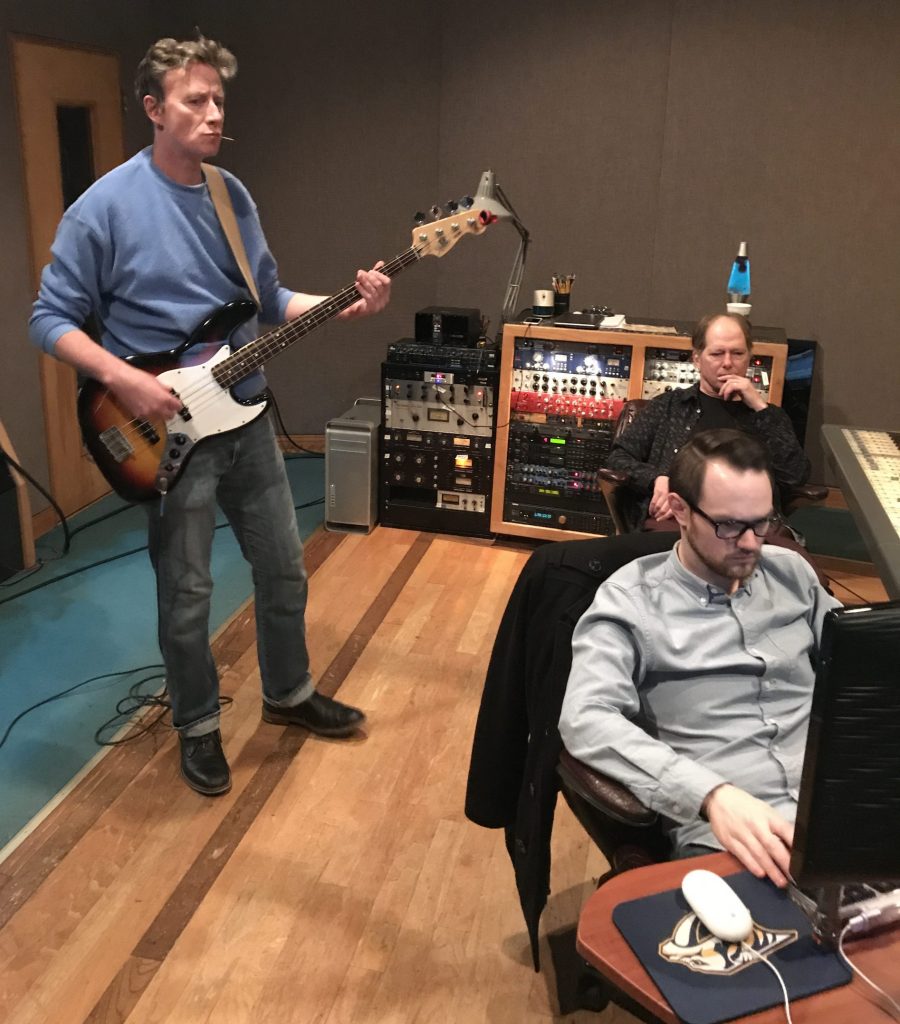
It was embarrassing and for someone more than 20 years past dreams of rock ‘n’ roll stardom, I couldn’t imagine there was much of a point, but oh my God that’s Richard Lloyd on the line. Richard decided we’d record at Studio 19 in Nashville and he hired Kyle Hershman to engineer.
By the time we got to Tennessee, I had been speaking to Richard once a week for several months and had already met him, but he was new to the rest of the guys. I was zero surprised when he and Levinsky formed an instantaneous mind meld. Both of them super interested in obscure spiritual philosophy, and they kept referring to things and remarking that the other was the first person in ages who had heard of it. It created a really nice dynamic in the room because it’s sometimes hard to be produced by a guy you look up to so much.
Some have said that what was supposed to be The Replacements breakout album on major label, Tim, was handicapped being produced by Tommy Ramone, and I get that. Richard imposing high expectations and practicing with me and then instantly locking in with Dave created a quick chemistry.
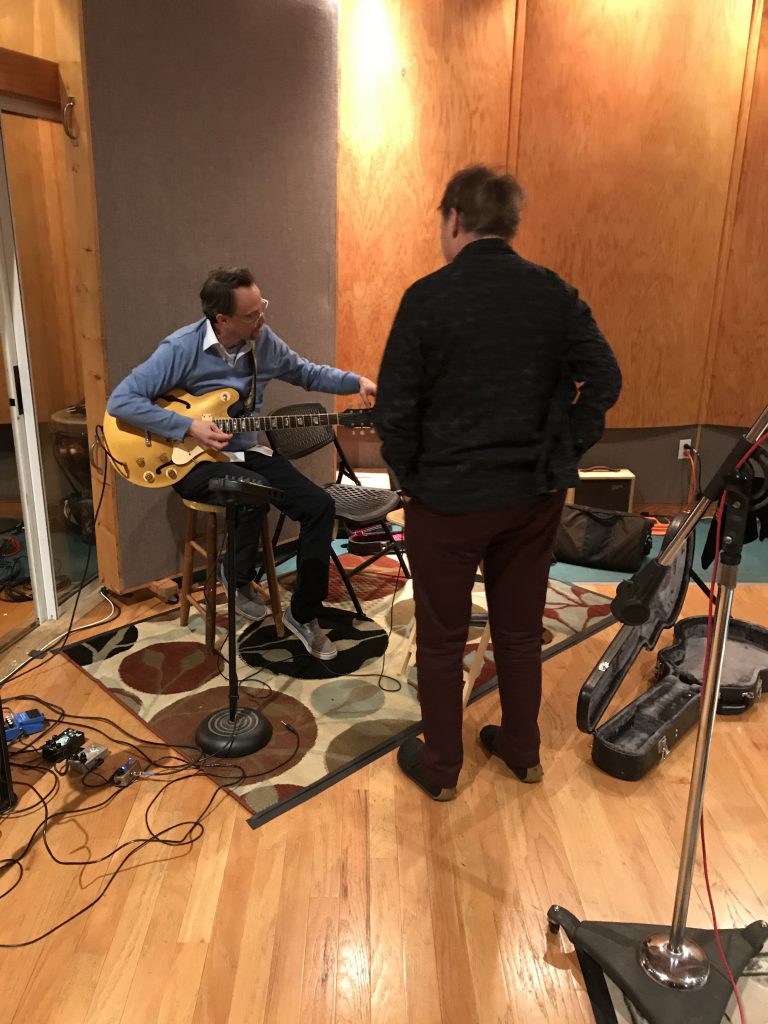
That was important to Richard. Even though he was already about 70 and not in great health, Richard insisted on coming out to dinner with us every night and hanging out and bonding so that over the four or five days of recording we could become a real unit. He put his back into it. Literally. Dave always used a very simple guitar set up and it’s a little bit of a signature sound—just a Les Paul signature hollowbody Goldtop through an old MXR distortion pedal. Richard loved it, but didn’t think we had the right amp. We went out to his car and he had like four old weird amps in there, like an Orange and a Vox and others. Maybe Dave will remember this part better than I do but there’s Richard reaching into the trunk of his car, which he had driven from Chattanooga for the sessions, and hauling out all the amps so we could try them and get just the right tone. As though that even matters in the age of ProTools and compression. But it does. When your producer puts that kind of effort in, it inspires the rest of you to try just as hard.
At the beginning of the session, Richard reminded me that if he wasn’t pleased with the results, he didn’t want us to use his name on it. He didn’t want to be exploited. Imagine my delight when he wrote on Facebook “Producing 4 tracks for The Lilacs at Studio 19 in Nashville. They sound great – real R&R.” He loved it.
Our bass player Tom Whalen was starting to suffer some health issues, so we hired our old friend from Paul K’s band, Steve Poulton, who had become an in-demand Nashville studio pro. He brought in an unbelievable talent on Keys named Jimmy Matt Rowland. Then we flew in Lilacs drummer John Valley from Las Vegas. The Freight Train hadn’t touched his kit in more than 10 years and yet remained, in Steve’s memorable phrase, “a monster on the tubs.” You can see some of the camaraderie we developed in the “shot in studio” video we made for Monica. Richard’s at the board with Kyle, serious but grooving.
I try hard to be democratic and group oriented in all band decisions, but one thing I insist on when I have any kind of say is the order of the songs, both in live sets and on recordings. I realize that doesn’t matter anymore in the Spotify era but it still matters to me. So I put my new song I Saw Her First last on the CD. I had a lot of confidence in it because not only did Richard like it, but Eric Carmen had told me he loved the demo of the song. As soon as we were done with the mix, we went out to our Kyle’s car to listen to all four tracks on a “real” stereo. When “I Saw Her First” played, Richard said there’s your hit.
And it kind of was.
Pravda Records put out The Lilacs Endure in November 2019 and suddenly we started appearing on high-profile podcasts. And then Little Steven’s channel on Sirius radio started playing it. Legendary DJ Rodney Bingenheimer started spinning it and then others played it. It made it onto a lot of college radio playlists and I still get royalties from it every single quarter.
Richard had grown up in Montclair, NJ, where I lived for many years. He told unbelievable stories about his high school days and and getting punched in the face by Jimi Hendrix and befriending Jimi’s only protege Velvert Turner.
In fact, the best way to celebrate Richard’s life might not even be to spin Marquee Moon or Adventure, but to read Everything Is Combustible, which is one of the greatest rock ‘n’ roll memoirs ever written. It’s totally him – the strange storytelling, the belief in the supernatural, the idea that excellent, unusual guitar playing comes both from study and divine inspiration.
Richard’s manager Ben Ewing told me after that recording how much Richard had enjoyed the process and he asked me if The Lilacs would be willing to go on tour with Richard as his backing band. What an honor and what an incredible opportunity. We just weren’t a working band and it wouldn’t have made sense with all our other life commitments – I’m basically canceled for my political adjacencies and Dave is a congregational Rabbi if you can believe that.
So being Richard’s backing band wasn’t in the cards and it’s a missed opportunity that I do not regret because it just wouldn’t have worked. But he did stay in our life. He was so pleased that the record succeeded and whenever someone would mention having heard it on the radio , he’d reach out to me and got a huge kick out of it, more than you’d expect from a founding father of indie rock.
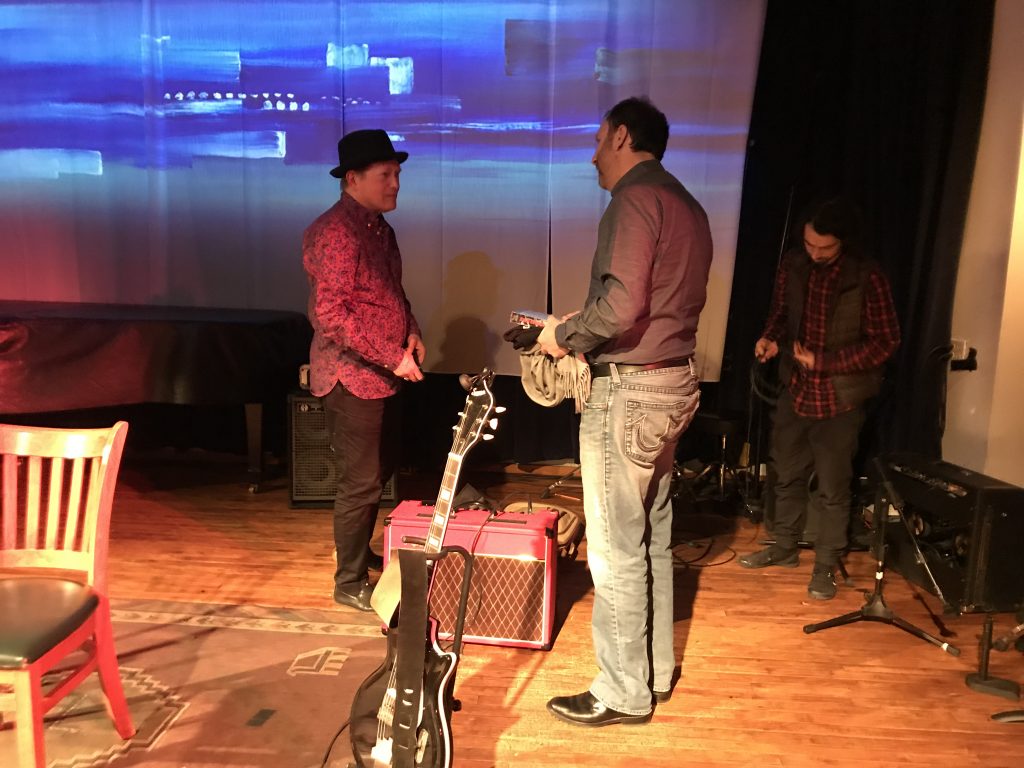
He stayed involved with us personally. I didn’t talk to Richard often but he and Dave seem to build on their strong initial connection. A couple years later when the record label was talking about a follow up to The Lilacs Endure, we called Richard and he was into it. But then, as though 30 years had not elapsed, we instantly started fighting and disagreeing, and that project evaporated. But Richard played a philosophical and meaningful role as the elder in coaching Dave and me put our differences aside in pursuit of the higher goal of creating together.
The world did not miss out on rock ‘n’ roll genius because we failed to get that follow-up record out.
I don’t want to go into the whole long chain, but here’s a chunk from one email Richard sent to David and me: “Much I didn’t know, so we’ll have to see how it goes. I think that Lilacs could have a successful future, but only if both of you let go of the inner considering that is taking place. Now I can speak to David and ask him as I have asked you. I hope we are able to record some more…. it’s too goood a project not to try. Best to you…” I didn’t know what “inner considering” means. Still don’t. I hope that extra o in good was for emphasis, not just a typo.
How lovely of Richard to give a shit and write us these encouraging letters, so contrary to his reputation as a harsh truth teller.
A couple months ago Dave sent me a text with a link to a GoFundMe for Richard as he was suffering from the bile duct cancer that felled him this weekend. The Lilacs contributed what we could and it was kind of amazing to see our donation listed next to Patti Smith and Lenny Kaye and other names from Bowery Mt. Rushmore. Dave wrote to me today when we got the news, “More than a musical guide, Richard was a spiritual guide to me.”
Ultimately, technical virtuosity is not really the life blood of indie rock and in some cases it’s the opposite. So it’s all the more amazing that Richard turned an abrasive personality and ferociously innovative guitar style into a record that lands at number 107 on Rolling Stone’s list of all-time greats.
Rest in peace, Richard Lloyd. Beautiful guitarist and beautiful man.

- Richard Lloyd, Alchemical Guitarist, Has Died - November 7, 2026
- Forever Crushing On Bryan Adams - November 13, 2025
- Tom Werman’s Memoir Chronicles ’80s Excess and Awesomeness - November 3, 2025
You May Also Like
-
 August 24, 2020
-
-
 June 14, 2023
