
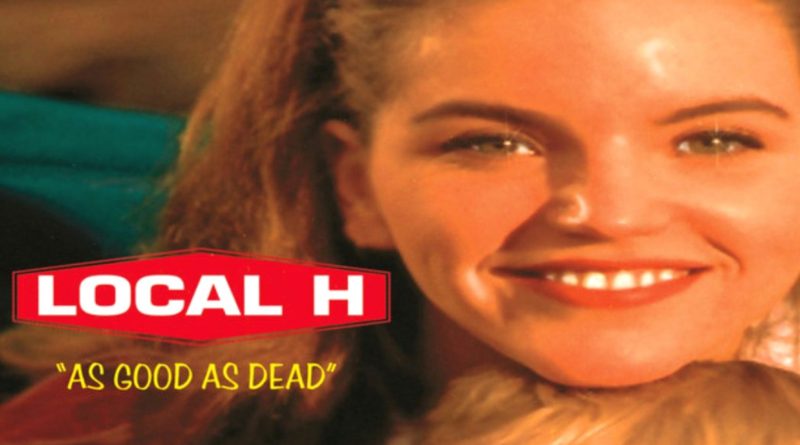
Manifest Density: Local H’s ‘As Good As Dead’ Turns 30
Looking back on the American power duo’s sophomore classic
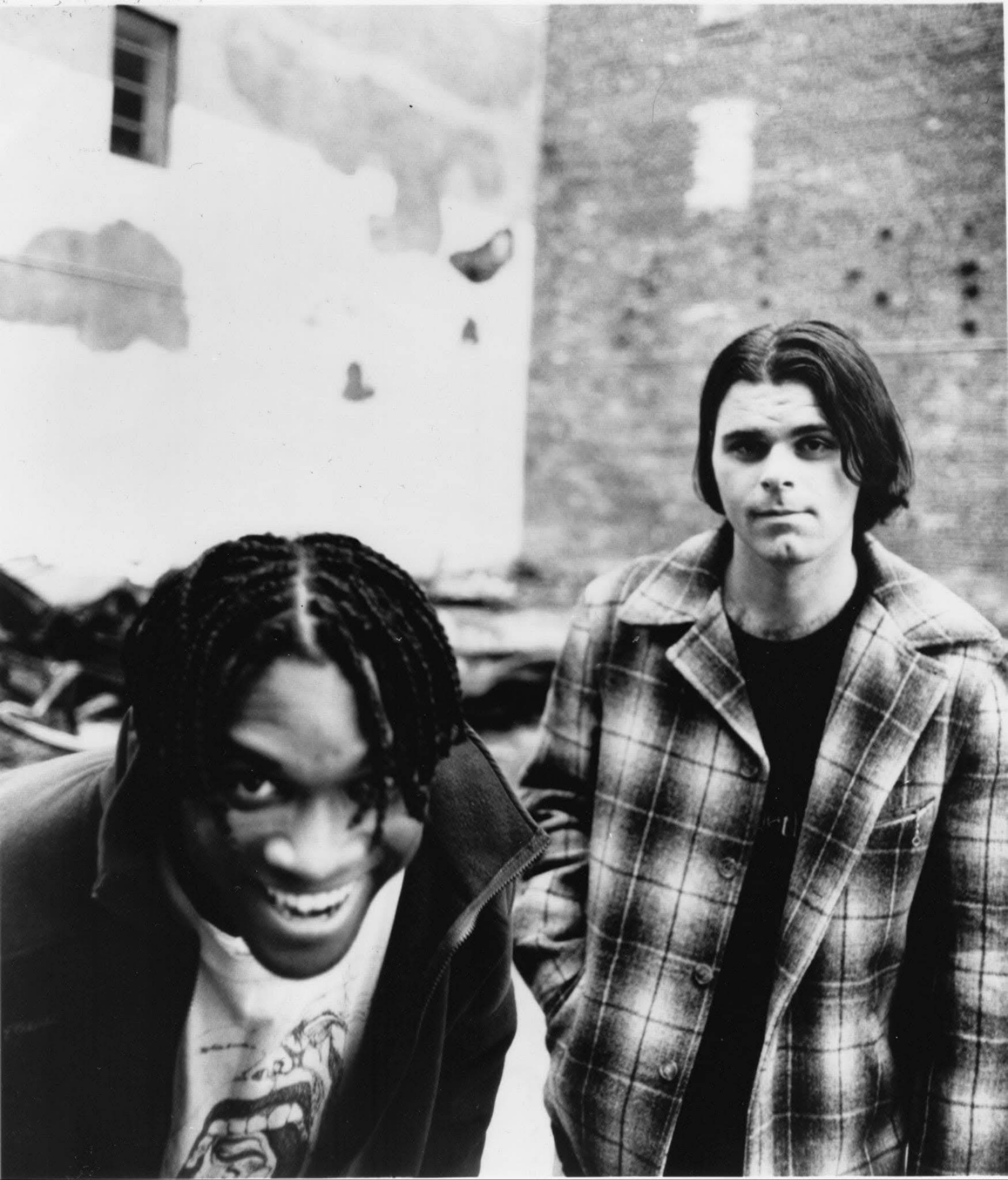
Local H had its back against the wall, but didn’t know just how much.
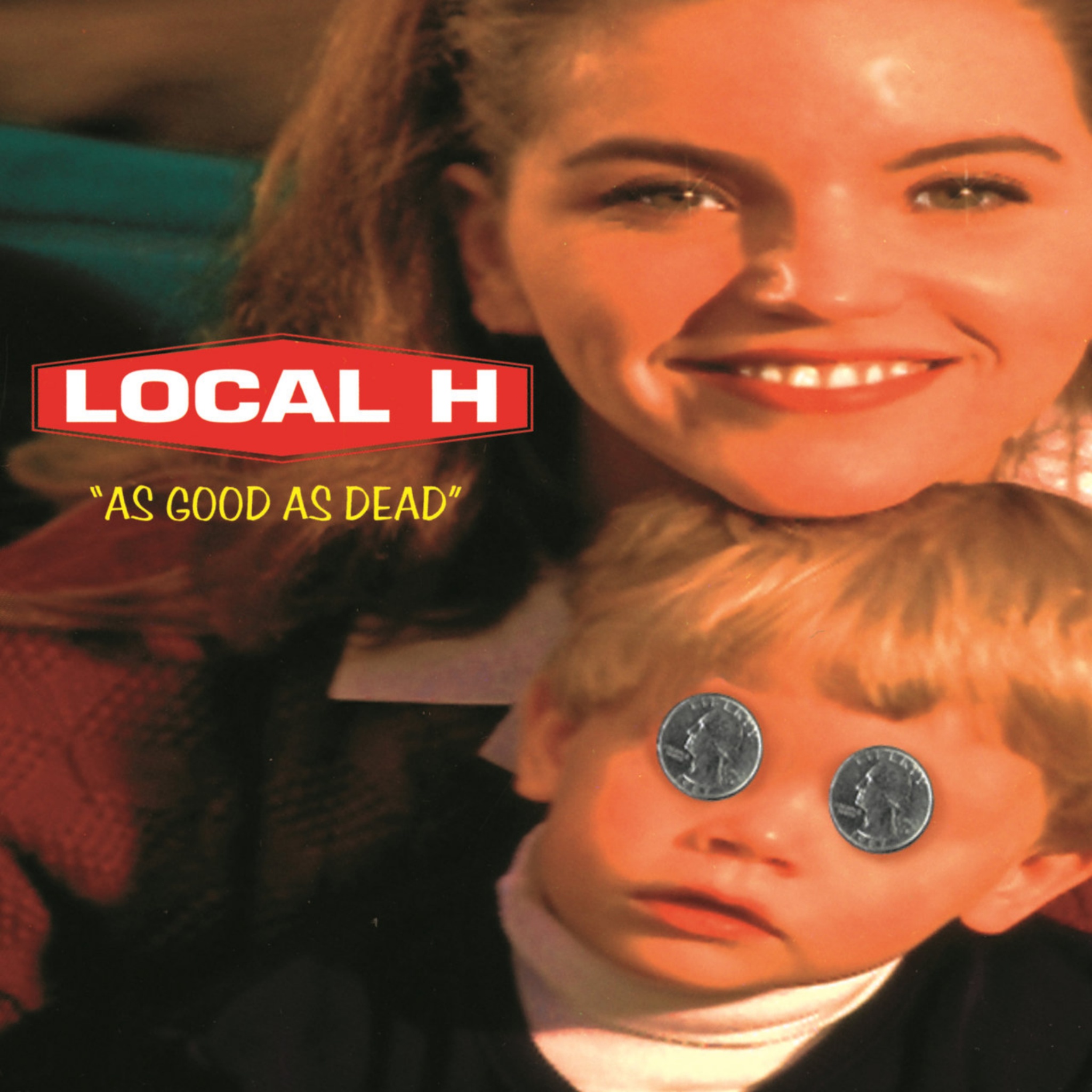
The result was As Good As Dead, the album that recently turned 30 and kept the band’s career going.
It’s also getting a limited edition reissue on vinyl this summer (pre-orders currently being taken) as a double album, with a bonus CD of album demos and lyric sheet included.
Following the familiar music biz trajectory of high school band that changed its name (in this case after the R.E.M. songs “Oddfellows Local 151” and “Swan Swan H”) and whittled it down to core members. Local H was a Chicago-adjacent duo of frontman Scott Lucas, who handled guitar duties and bass parts (with special guitar pickups) and drummer Joe Daniels. By 1994, they were eager to sign with a major, which happily coincided with the labels’ eagerness to find the next Nirvana/Pearl Jam/Stone Temple Pilots/Soundgarden, etc.
They signed to Island, with 1995’s Ham Fisted being the result. The album didn’t exactly shake the tag of derivative, especially of Nirvana. There were signs of things to come like “Cynic” and “Mayonnaise and Malaise” and the heavy “Strict-9” showed promise, that they were smarter and craftier than the carbon copy type Island probably thought it was getting.
AUDIO: Local H “Mayonnaise and Malaise”
“For the most part, we were trying to scream and bang our instruments as much as we could,” Lucas told Vulture in 2018. “That was our sound at the time, so it would have been almost impossible for us to make a record that would have sold a lot of copies, if Island had expected something like that.”
Lucas himself wasn’t particularly sold on the final result, either, telling Illinois Entertainer last year, “By the time we were done making that record, by the time we were mixing it, I was already like, we shouldn’t have done this. We should have changed this or that.”
Their A&R guy Joe Bosso quickly got them into the studio, not telling them at the time that the move was to hurry up and get an album out before Island could drop them.
“We’re lucky we got to that second record because nobody was into the first record and it kind of tanked,” Lucas said last year. “I think the only really good review we got was from Michael Harris in The Entertainer. But for the most part, people couldn’t see what we were up to. So, while that was happening, we got yanked off tour to go back to the studio before the second single even came out. And I was like, ‘Come on, you can’t do this.’ But I think our A&R guy was scrambling to get us back in the studio and make that second record before the people up top were ready to pull the plug. So, he was doing all this stuff, not letting us know, but making moves behind the scenes, thinking, let’s get these guys in for the second record, I know they can make.”
Of course, being on the road behind an album that’s not huge isn’t always conducive to coming up with new material. Lucas at one point won a karaoke machine at a work party for singing “House of the Rising Sun,” which he used to record a few demos, including an early version of “Fritz’s Corner” that was pretty similar to the finished cut and a take on “Eddie Vedder” that got lost.
Lucas was still living in Zion, Illinois, the city of around 20,000 halfway between Chicago and Milwaukee. He was bored of living there, unsurprisingly for a musician in his 20s at the time and he had a lot of company in people wanting a better existence, not just in his Midwestern confines, but throughout the country.
VIDEO: Local H “Bound For The Floor”
He tapped into that, prominently with one song that would become the album’s calling card — “Bound For The Floor.”
The song did not have grand origins. “I had a tiny apartment on the top floor of this house in Zion. I would hang out all day playing guitar and watching stolen cable on a cheater box,” Lucas told Songfacts in 2018. “I had come across stacked 5th chords from learning to play Police songs, and I was fucking around with this moving bass line thing that I was trying to perfect because of my guitar setup. I figured I’d mash them together. That basically took care of the riff.”
It was also a song people wouldn’t get the title of correctly, thanks to the repeated hook of “You just don’t get it/You keep it copacetic”
“I love words that nobody uses anymore. That crops up over and over in our songs,” Lucas told Songfacts. “Phrases and words that have been tossed on the scrap heap of linguistics. ‘Copacetic’ was a word I’d heard in war movies about Vietnam. Also, Velocity Girl had a record called Copacetic. So, it was a way to reintroduce a dead word and give a shout out to Velocity Girl. Plus, it rhymes with ‘pathetic.'”
Rather than being derivative, the song showed Lucas’ knowledge of what made the loud/quiet dynamic work, rocking hard enough to ensure the hook repeatedly landed without being annoying, a perfect slice of loud ’90s alt rock.
“High-Fiving MF” was inspired by the type of jock bros you’d see at shows, making the pits unpleasant, being rude to women or, as Lucas succinctly put it later — “assholes.”
Someone I know saw Superchunk interrupt one of its shows at the Cat’s Cradle years ago when Mac McCaughan saw one of these types being a jerk to a woman in the crowd and called him out, saying, “Look, she doesn’t want to dance with you, man.”
Everybody has seen That Guy at a show and Lucas took aim, singing in the first verse. “You’re just a walking billboard for all the latest brands/You’ve got no taste in music, and you really love our band/Your haircut is atrocious, it’s been the same since ’83/Your glory days are over, and so’s your stonewashed jeans.”
Opening with Daniels’ thumping drums, the song’s roar, more nimble than you’d think, matches the lyrical snark. It’s catchier than “Bound,” even if its title alone ensured zero airplay. The song would be a regular set closer for years.
In my numerous times seeing Local H, the high-fiving MFs generally knew better. In fact, Lucas himself became the source of comedy one night at a gig in Lincoln, Nebraska. In concert, the part before the raging finale where Lucas plays one chord repeatedly gets stretched out. This particular night, he was on his knees, leaning back, dutifully hitting that chord. At that moment, his microphone slips down the stand, effectively pinning him in the position he was in. As he kept playing, he spoke into the mic, ‘You guys see Spinal Tap? [Pause] That shit ain’t funny.”
Cue the roadie coming out to fix the mic and help free Lucas. No hijacking of the pit, just the ridiculous randomness of being a music lifer.
VIDEO: Local H “Eddie Vedder”
“Eddie Vedder” was hardly a swipe at the man named in the song, but a name convenient for rhyming with “better.” The song itself, a musical sibling to the first album’s “Scott Rock,” was full of bitterness, aimed inward as much as it projected outward at the scene. It’s catchy with a kick, its self-loathing bitterness catching in the throat.
“Fritz’s Corner” takes its name from a Zion dive bar that still exists. The song itself blasts out the alcoholic angst of being stuck in a bar in the same small town where life never changes, doing so in just under three minutes with Daniels’ propulsive drumming showing the life the protagonist seemingly lacks.
Those four songs are still live staples for Local H to this day. But while they form the core of the album, they’re far from all it has to offer.
“No Problem” steps away from the loud rage, revealing the sadness under the angst (Lucas used toothpaste on the guitar strings to deaden the sound). It stays acoustic and minor key for nearly its entire runtime (inspired by Red Red Meat’s “Braindead”), its loud guitars at the end more of the same (only louder) than offering any sense of catharsis.
Slamming the foot to the gas, “Back in the Day” swipes at someone for whom self-inflating nostalgia is the only currency they have left to trade in the hardcore scene.
A grunge era update of Joe Jackson’s “Happy Loving Couples,” the slick “Lovey Dovey” offers the only relief from ennui in the misery of others (“Dave and Heather/I see them fighting all the time/I kind of like that, I kind of need that”).
If the Bruce Springsteen of 21 years earlier threw in heavy romanticism over young adults wanting to get out of a stifling New Jersey town, Lucas’ lacerating rocker “Nothing Special” casts an honest eye on their current Midwestern equivalents who aren’t going to get out while they’re young, or ever (“We’ve got a life of scratching tickets/At the local Gas and stop/So suck another whip-it/And hear the brain cells pop”).
Inspired by touring with Corrosion of Conformity and a couple of prior band songs, “I Saw What You Did And I Know Who You Are” kicks up a lot of dust, even if it’s arguably the song on the album least likely to beat the “Boy, these guys sure like Nirvana a lot” allegations.
The title of “Freeze-Dried (F) Lies” came from dead flies on the windowsill of Lucas’ little Zion apartment. If it doesn’t blast through the speakers like other songs on the album, its lyrics betray a self-awareness in being stuck in that metaphorical one-stoplight town, that maybe it’s not the completely the fault of the surroundings
For a band that called its first album Ham Fisted, Local H had plenty of dexterity. For all his powerhouse moves elsewhere, Daniels keeps things perfectly subtle on the quieter parts of the tear-filled post-breakup landscape of “O.K.”
The brief “Manifest Density (Part 1),” inspired by Lucas waking up on Daniels floor after one of those kind of nights, sets the album’s tone in under a minute (“You’re on to something good/But I can’t believe it’s all/That matters to you/A fool”).
Lucas comes back to the theme on “Manifest Density, Pt. 2,” the title “typo” a reference to George McFly stumbling verbally in Back To The Future. This time, he distills it to repeating “You’re on to something good/But it can’t be all that matters” over and over before he and Daniels bring out the squall before the drummer pulls back and the guitar racket is left to fade out and be phased on its own.
The band had something pretty good on its hands and knew it.
Shortly before As Good As Dead’s release, Lucas finally got a picture of the stakes. “That was the first time somebody [at Island] told me, ‘You’ve got to sell 100,000 copies or else you’re gone,” he told Vulture.
The album didn’t go platinum, but it sold well above Island’s 100K or Else with “Bound For The Floor” being a hit on the modern rock charts. This gave Local H some wiggle room.
The band was in a good position to follow up As Good As Dead. This time, they had a clearer vision and more songs ready for what would become a concept album — 1998’s Pack Up The Cats. The result, produced by Roy Thomas Baker, who had names like Queen, The Cars and Foreigner in his list of credits, was the band’s best album to that point.
Lucas wanted to make an album his teen self would have loved and he succeeded, but unfortunately, it never reached the audience it should have.
There was a brief moment that didn’t look like that would be the case. As Lucas put it, “The wind was at our back and everybody at Island was marshaling the troops.”
Not long after the album’s release, Polygram, which owned Island, was sold to Universal Music Group. In short order, everyone the band knew at the label was fired or had quit, leaving them no champions, nobody who knew them and nobody with a vested interest in anything other than chucking them aside like garbage and making sure that resources went to keeping U2 from leaving the label. Goodbye promotion. Goodbye tour support. Goodbye, major labels.
Perhaps the album might not have clicked anyway, the era of the high-fiving motherfuckers in Nu Metal drag was dawning. The droogs in stonewashed jeans’ hatred of personal boundaries was set to manifest in Woodstock 99 the following year.But it remains a damn good album that deserved a lot more than a label focused on keeping a band who would spend most of the 21st century being most well known for an album regarded by fans as malware.
In 1996, Lucas said, “Well, I did notice that when I lived in Chicago for a couple years I was writing a lot as a sort of political vent. In the city, there seem to be a lot of political faction groups. That doesn’t really interest me. I don’t want to tie any of our songs to a particular movement that’s soon going to be out-dated.”
The statement didn’t hold, as Lucas wouldn’t just expand into relationship drama (the 12 Angry Months album), and turn his sharp eye to politics. 2003’s “President Forever” proved to be relevant as it presaged the ignorance and malignant narcissistic sociopathy festering under the surface in the Dubya era and the Hallelujah, I’m a Bum album definitely didn’t shy away from politics.
Once the relationship between Local H and their major label fell apart, Daniels would leave the same year. Lucas kept going.
Local H still exists, having released six more albums with plenty of quality material that would have killed back in its days on a major. The period that gave us 2003’s No Fun EP and 2004’s Whatever Happened To P.J. Soles? is a highlight, Frankly, when arguably the weakest album in that bunch, 2001’s Here Comes the Zoo also had what might be the band’s best songs, “Hands On The Bible,” and keiller rocker “Half-Life”, it’s clear label machinations and just plain shitty luck were more of a problem for Local H than quality control.
As Good As Dead was the first shot across the bow, a tight two-man unit making a holy racket with a deft touch, making music perfect for its era with enough honesty and wit to make it relatable then and now, even if a lot of modern music seems afraid or tired of the guitar.
If it didn’t portend massive success (which is our loss), it deserves credit not just for its own merits, but for kicking the door open enough for all of what Local H has done since.

- Tomorrow Never Knows: The Beatles’ Revolver Turns 60 - July 20, 2026
- Here Today: The Beach Boys’ ‘Pet Sounds’ at 60 - May 16, 2026
- Manifest Density: Local H’s ‘As Good As Dead’ Turns 30 - April 30, 2026
You May Also Like
-
 February 22, 2022
 -

-
 November 23, 2020
