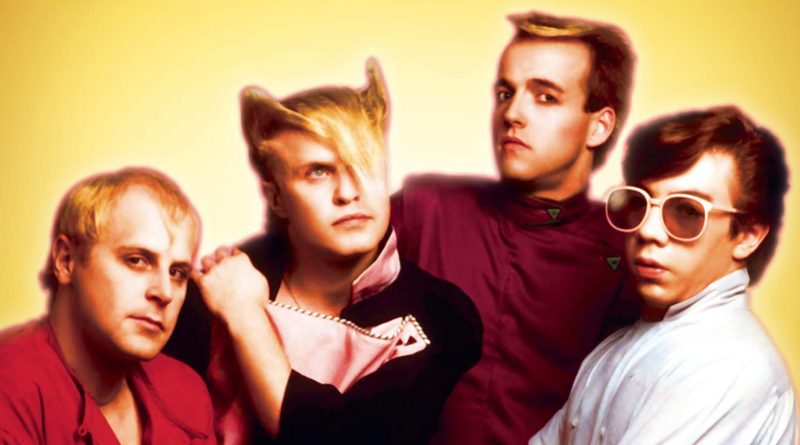
Mike Score Talks About A Flock Of Seagulls’ Enduring Legacy
The New Wave legends are part of the Totally Tubular tour
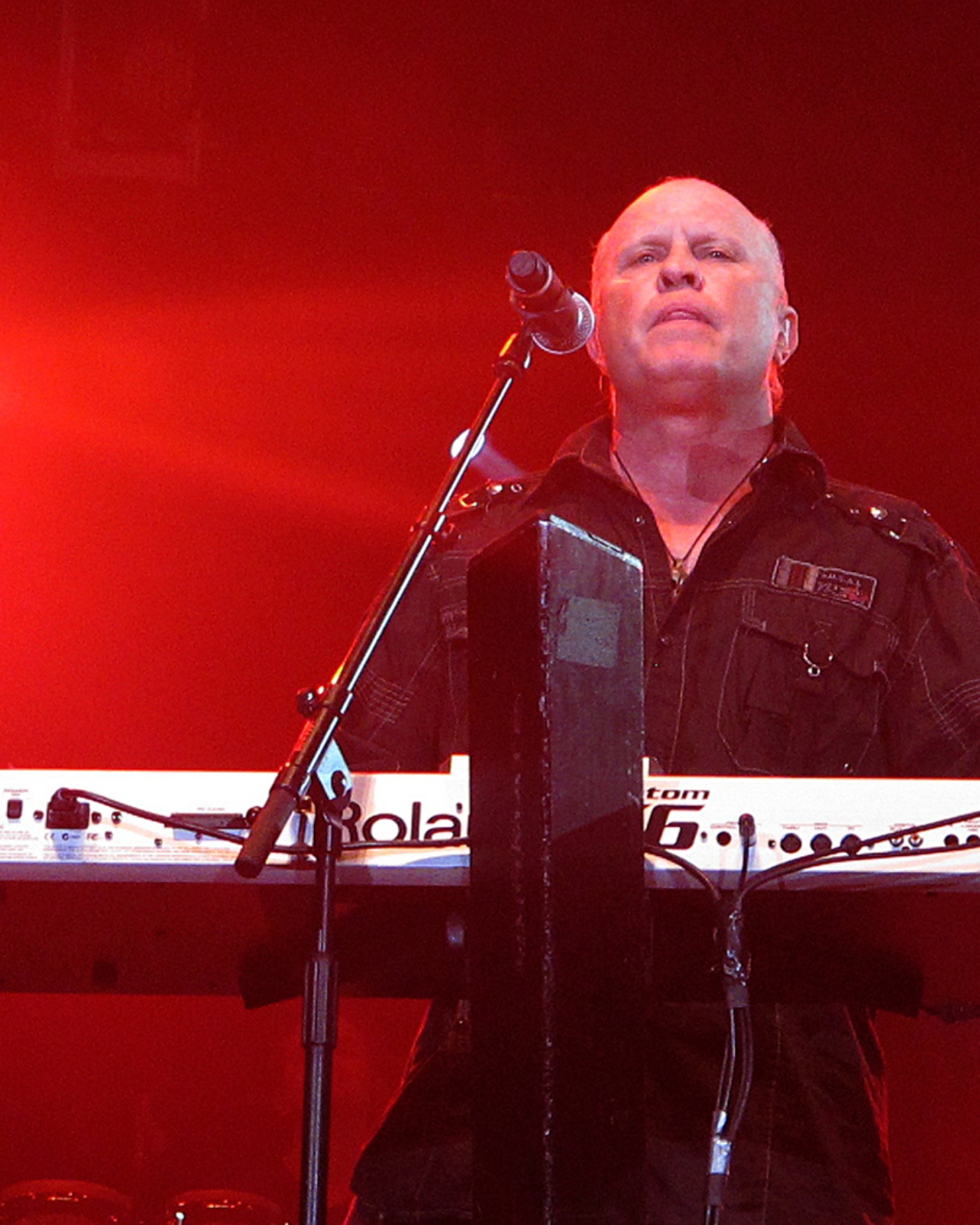
Grammy Award-winning New Wave rockers A Flock of Seagulls made a splash in the early 1980s with the hits “I Ran (So Far Way),” “Space Age Love Song,” and “Wishing (If I Had A Photograph).”
During the first half of that decade they created an indelible, synth-driven rock sound that still stands out from their peers. But there is more to their artistry than their hits, as evidenced by the diversity over their six studio albums.
That includes the 2024 release Some Dreams, which is the darkest, moodiest album of their career. While the title track starts off in radiant Seagulls fashion, it moves into more introspective and angsty territory with tracks like “Him,” “You’re A Fool” and “We Want It Back Again.” A signature Score lyric on the new album? “I’d put your name on a planet, just so you can have it, just to get to you.”
When frontman/keyboardist Mike Score sits down for a Zoom chat with Rock & Roll Globe, he is at the start of a new festival tour. During our conversation we go into deep cuts, concept albums, and the different inspirations that have fueled him and the band over the years. The original lineup of Score, guitarist Paul Reynolds, bassist Frank Maudsley and drummer Ali Score made three striking albums, although the rapid rise to fame of those musical neophytes from Liverpool was overwhelming and eventually fracturing. Through subsequent band incarnations led by Mike Score, their musical legacy has both endured and, frankly, been underappreciated by a vast number of people. The current lineup including guitarist Gord Deppe, bassist Pando and drummer Kevin Rankin keeps their history alive.
A Flock of Seagulls is currently on the Totally Tubular tour with Thomas Dolby, The Producers, Bow Wow Wow and other ’80s artists. The tour runs through August 17, including this Sunday at New York’s Pier 17, so check their site for the remaining itinerary.
The new album Some Dreams is your third album that is somewhat of a concept record. I feel like it chronicles the end of a big relationship.
In a way. It’s based not on just a relationship but my relationships through the years — what I’ve learned from relationships as they’re working, as they break down. Even if you go back to [1984’s] “The More You Live…,” I had a breakup then, and my mum literally said, “Don’t worry, the more you live, the more you love.” That, to me, was a great line for a song. So, over the last 40 years, I’ve gathered all these thoughts and turned them into songs. I’ve tried to incorporate what’s going on in music, the change in synthesis, the change in recording, and keep abreast of the times, as well as putting my own emotions into it.
This is a definitely a moodier, darker record than your others. Was this a therapeutic album to make? Was that the reason you decided to do a new album after all this time?
Not really. I mean, I did a [solo] album [Zeebratta] five or six years ago.
Right.
That could have been a Seagulls album, I just decided it would be a solo album. But really I get to a point where I’ve got enough songs that would make a decent album, so I go and make an album. A lot of this one was recorded at my home studio in England during the COVID thing, then I didn’t get round to mixing it till a couple of months before it came out.
There’s a thematic thread that runs through the album. The very last song, “Perfect,” feels like it could be the first song before things start to go wrong. I assume you wanted to end the album on a positive note, but I viewed it like it gets darker and darker, and then all of a sudden at the end is this a new relationship. Or is this just trying to remember the old times and just get through what you’re dealing with now?
“Perfect” was based on an old relationship that until about five years after it ended, I realized that when I looked at her I thought she’s perfect. I had the idea for that song just locked away, and then when I pulled it out one day, I went, “This is really good this song, I’ve got to finish it.” I went into the studio and said, “Stop everything! We’re going to do this one.” We did it in a day, I think. It came about nicely, and it’s actually one of my favorites of the albums. It’s just a pop song, but it’s perfect.
VIDEO: A Flock Of Seagulls “I Ran”
There’s a dark strain that runs through your catalog like “You Can Run,” “Nightmares,” “Suicide Day,” even the way “I Ran” opens with the original moody intro and not the single version. People probably think it’s peppy and poppy, but underneath there’s a bit of a goth undercurrent.
I think “[I Ran]” can draw a lot of people in because the intro introduces you to what’s coming next, and I think if it’s got a little darkness in it, people go, “Oh, what’s going to happen now?” By the time they work it out, they’re halfway into the song.
Another thing to me was, if a band was playing in Liverpool within, say, a week, I would be there to see it, and there was no lag between catching the band and catching the record. I think it helped me get more into bands that I liked. I liked a lot of the gothic stuff, but I didn’t want to be a gothic style writer.
VIDEO: A Flock Of Seagulls “Nightmares”
“Nightmares” is definitely your goth song and video.
Yeah.
You’ve recorded a number of instrumental tracks over the years, including “D.N.A.” which won you a Grammy Award for Best Rock Instrumental Performance in 1983. Have you ever thought about doing a film score, or have you ever been approached to do one?
I’ve been approached to do a couple of sci-fi movies, but as far as I can tell, music is the last thing that they think of. Therefore, the budget ends up being cut down and cut down and cut down, and eventually, instead of getting original music a lot of them just go to whatever standard. If you want a flying saucer sound or something, they just go and find it on the library somewhere. Although I’ve been asked to do a couple, it’s never worked out.
Sci-fi has been an influence on your work, notably the band’s debut album. What specific books or movies influenced you back then?
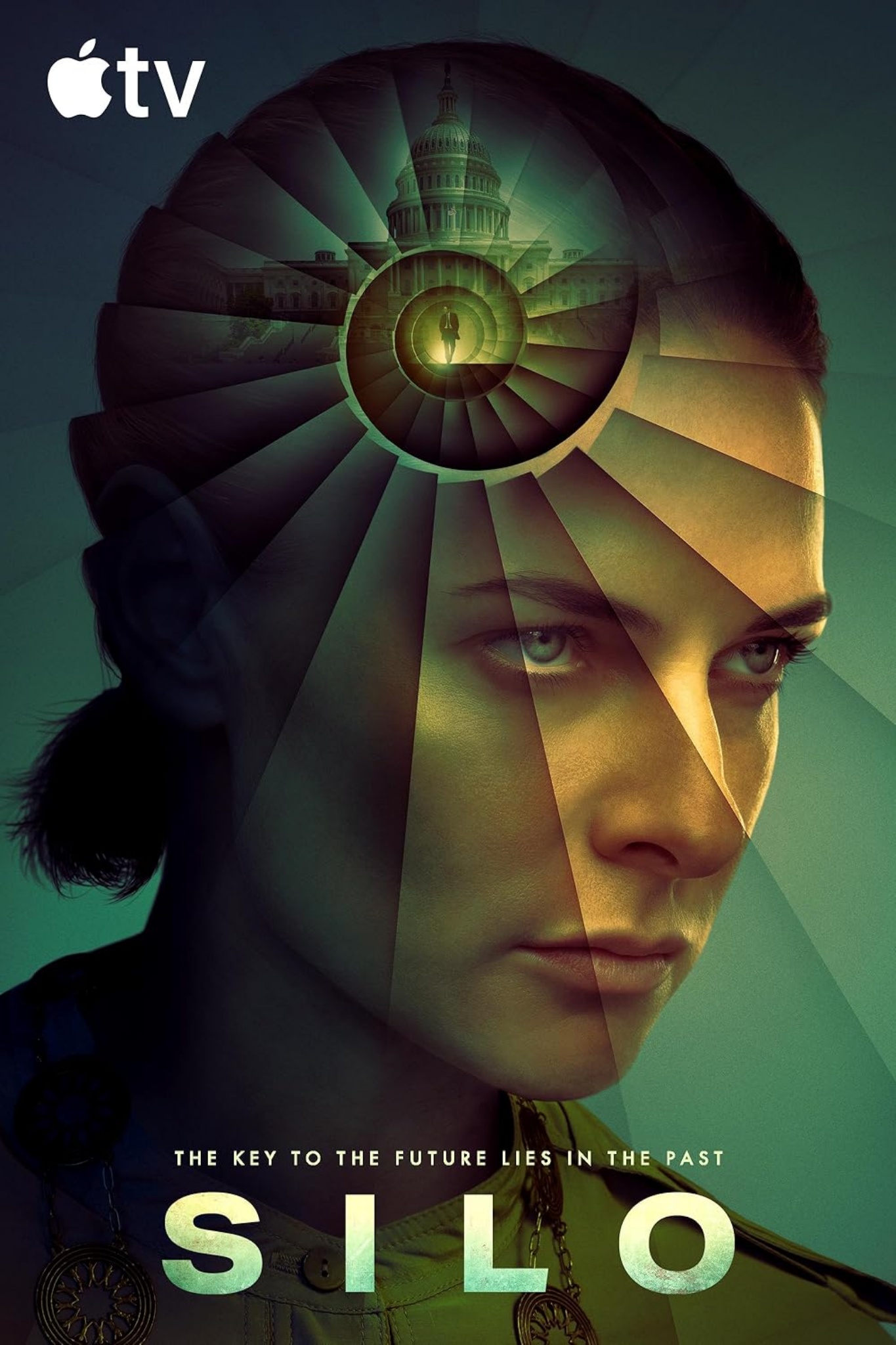
There was a magazine called Omni. I was religious onto that magazine. Movies like the first Alien and Close Encounters were coming out. Did you ever read a book [from 1959] called Level Seven? The story of that is they build a silo into the ground, and there’s seven cities, one on top of the other. Gradually over time each city basically dies, and you’re left at level seven. Those people know what have happened to 6, 5, 4, 3, 2, and 1, and they’re like, “How do we get out of here? It’s really dark sci-fi, and it’s written by a guy called Mordecai Roshwald. I think he’s Ukrainian. Have you seen Silo?
No, but I’ve heard of it.
Silo‘s brilliant, and I think it’s based on Level Seven. It’s on Apple. That’s a really good series. [Editor’s Note: Silo is based on a recent book with a similar premise.]
You’ve spoken about how, when you did Light At The End Of The World in 1995, New Wave wasn’t in the zeitgeist anymore. You were very much swimming upstream. I feel like the 21st century has been one massive ’80s revival. When did that really kick in for you, when did you see more people wanting you to come out, and did you notice any other bands being influenced by you?
Yeah, I started to hear things. I don’t really listen to the radio much, but people would call me up and say, “Hey, have you heard this? It’s a bunch of girls from Leeds, and they sound just like you guys.” I would listen to that stuff and became almost enamored of bands that sounded like us. Then I went, if they’re out on the road sounding like us, we should be out on the road, basically leading the back. Maybe that was about six or seven years ago, when suddenly playing live to me became the fun of it all.
I really started digging into Story Of A Young Heart a few years ago.
That was the big concept album because that album was about my best friend at school who killed himself. When I look back at all the things that led up to that, I almost understood why he did it. The night before he did it, we’d had a long conversation, then the next day he was dead. I was like, “Not one thing here showed me that he was going to do that.” It must have been an on-the-spot impulse, and he just went with it. But it made me remember a lot of conversations we’d had, then I tried to incorporate that into the story, into his young heart kind of thing. So to me that was a concept.
The first album was a very loose concept of falling in love with a space chick, and then after that I felt a bit constricted by music. It was maybe five or six years ago that I just suddenly went, I’m not constricted anymore. I can do anything I like. I don’t have a big record company. I don’t care if people don’t listen to it. I’d like them to, but it doesn’t matter. All that matters is that I like what I’m doing.
Was it hard for you to be that vulnerable on that album, given that the more sci-fi oriented material you had done before? There are a lot of very personal lyrics on there.
Yeah, I really felt the loss. That was the first time in my life I’d ever lost somebody that was close to me, so I wanted to write about it. Steve Lovell, who was the producer, egged me on. Every day I’d write a new song. I’d get up in the morning, write a new song, take it to Steve, and he’d go, “We’re going to work on this one all day until we get it right.” And [with] the other guys in the band, although they would come in and play the song, it was like we’ll get it done with you or without you. This was my personal way of grieving.
Do you think that attitude created some tension in the band?
Up to a point. There was always tension between me and my brother. Brothers in bands, it’s a tough one. I think the rest of the guys had their own problems. My problem was losing my best buddy, and their problems were not in line with that. I just had to do what I had to do. Frank, who was my best buddy in the band, he was with me all the way. He would just go, “If this one doesn’t work, write another one tomorrow.” I think he knew that I was just trying to clear it out of myself, musically. My brother just wanted to repeat the first album, and Paul, the guitar player, had problems that we couldn’t relate to at all. He had drug problems. He had family problems. It was tough for him. But to me, that album had to be that way, and if it wasn’t a Seagulls album I would have put it out as a solo album.
The song “Living in Heaven” is one of the bonus tracks from Story Of A Young Heart. Why wasn’t that one included on the album?
I’m not really sure, but the thinking was something like, “What if heaven doesn’t exist? You can’t be living in heaven.” But it’s just a song. When we came to compile that album, it just kept being the one to get pushed back. Eventually, it just became an extra track.
By the next album Dream Come True in 1986, your sound had gotten more overtly dancey and poppy which seemed uncharacteristic of the band.
Our struggle was, they say, musical differences. A lot of that was musical differences where I wanted to go one way, and the rest of the band basically wanted to stay A Flock Of Seagulls, 1982. The bands that I like, including the Beatles, constantly changed. They wrote songs that, as my wife puts it, [were like] a chocolate box. Every chocolate is different. Every song is different. I didn’t want to repeat myself. Jive Records constantly said, “Can you write ‘I Ran’ again?” And I went, “You can’t write it again. It’s already written. If you want a boring band like that, you should sign AC/DC because they continue to just basically play the same song with different lyrics.”
A Flock of Seagulls song is not complex. It’s more of a ride the vibe kind of a thing. Some Dreams is good for late-night drives.
I think it’s more about the atmospheres of the songs. My lyrics are simple. The chord changes are basically simple. I just try to create an atmosphere and the lyrics to go with that atmosphere. I don’t try to get very complicated at all, because if I get complicated then I end up falling off the stool, if you know what I mean. It’s like, I’ve got to stop now and really think about this. Whereas I just go, forget that and go onto this [next] bit.
Your original guitarist Paul Reynolds was very innovative — all the different tones and styles he brought in. You attracted the attention of Bill Nelson who is a progressive, experimental guitar player. Was he a mentor to you early on? He did some demo work with you and produced a couple of album tracks, correct?
We took the demos to him simply because he’d written a song called “Sister Seagull” and we were the Seagulls. We’re like, “Seagull, Seagulls, it’s going to work somehow.” We did things without thinking, and for some reason they worked out. Meeting Bill was partly because a guy that was going to manage us knew him. We went to meet him. He’s a great guy, brilliant guy, produced us, and I still know him to this day. I don’t speak to him very often, but it was like this was supposed to happen. Of course, [Nelson’s band] Red Noise inspired us because there was some crazy playing on that. We were like, if we could get 10% of that we’re on our way. So stuff like that, and then other stuff like Pink Floyd. We’d try to get Floyd-y atmospheres but because we couldn’t play we couldn’t quite work it out. It worked out in a different way. Here’s a sound that you can play guitar over — let’s work it out.
VIDEO: Be Bop Deluxe “Ships In The Night” (Live on the Old Grey Whistle Test)
Did Bill have any influence on you when you were working with him? Did he offer you some good advice?
His best advice was don’t get too big because it’ll put so much pressure on you. That’s the pressure he had with Red Noise and then Be Bop Deluxe. The record companies just want more and more and more and more, so he said whatever they want, make sure it’s what you want. He was really great with us. We were good at putting jigsaws together, like bits of music, and that’s all we could do. But he was really experienced. He’d been on the road, been around the world, had big hits, and he spoke to us like that’s what we were going to be. I think he saw it before it ever became anything. He literally said to us, “In my experience, this has happened. Look out for that as you as you get bigger and bigger.”
For one B-side on the second album, you worked with Connie Plank of Cluster and Krautrock fame.
I loved Connie Plank. He was brilliant.
What was that collaboration like?
This was a strange deal. The other three guys in the band, the roadies, and the manager had all gone out that day, and I stayed in bed. I don’t know why. I probably drank a beer too many or something. Connie came into the house and he said, “Oh, my Emulator [keyboard] has just arrived. Come and let’s play with it.” So we went over to his studio, and we just started messing with it. He goes, “We have to record this.” So we got the engineer in, and by the end of the day me and him had conjured up “Rosemontag” just using his Emulator. We just fell about laughing because we had a few drinks. It was called “Rosemontag” because that was the [same] day of a festival in Germany called the Rosemontag Festival.
While the Seagulls weren’t musically experienced, I always got the vibe that Frank knew something about music, just the way he played bass. Did he or any of you ever play an instrument before then?
No. Frank played bass because I started out as a bass player and I showed him one or two things. By then I’d bought a synthesizer and Frank seemed to really take to the bass. He had some nice, complicated, atmospheric bass lines. His timing on bass was brilliant. He would play stuff in places where you just wouldn’t think of it. He’d put some little thing in. He was really good at building the atmosphere from the low end up.
You have said you don’t consider yourself a singer as much as a vocalist. You said you aspired to be a singer, but then you’ve stayed a vocalist. But your vocals on Light at the End of the World were a little different. You stretched a bit more on that record.
Yeah, I was trying to do a bit better, but recently I’ve realized that my voice is my voice. I’m not trained to sing in any way, so I just give it all I can. I don’t know particularly how to breathe or anything, and all that stuff makes you sing a certain way. Then all of a sudden I was happy with the way I was singing. If I can’t reach a note high, I’ll reach for it low, and stuff like that. I think my singing has improved since the first album. Even this late on, it’s still small steps. Sometimes I hit something that I’ve never done before, and I go, “Wow, I’m really moving on now.”
Did that change at all when you did the two releases (Ascension and String Theory) with strings and orchestra? It was interesting to hear stuff like “D.N.A.,” “Electrics” and “Hearts On Fire” open up in a different way.
When you’re singing along with drums, bass, guitar, there’s a different space for you to sing in. When you open up and there’s orchestral stuff in there, it has different tones and it has different air qualities. You just try and make it fit in as best you can. It doesn’t have to be exactly like the original, and although it’s still the song it’s whatever you want to make of it. It’s more like live – one night you’re listening to the guitar more, so you sing along with the guitar. Another night, it’s more to do with the keyboards, so you sing along with the keyboards. When you’re singing with an orchestra, that’s where you are. What’s the orchestra doing? That’s what I can hear. That’s what I’m going to tune my vocal to.
VIDEO: A Flock Of Seagulls “Him”
Have you ever thought about bringing “D.N.A.” back into the set? I think it’d be kind of fun to say, “By the way, we won a Grammy for this song.”
I have thought of that a few times, or tagging it onto the end of another song. But for some reason, it’s just never made it. We’ve got an idea of what our crowd wants to hear, what we want them to hear. We want to introduce them to newer songs as well as the hits, so that they can go, “Wow, ‘Him’ was just as good as ‘I Ran’. Where is that song? Where can I get it?” Once we have the set as a set, it’s much easier not to think about it and just to play it. That way, less mistakes, more fluidity. I think it makes the band sound more professional if you can just flow through your set and it’s all working. I think that’s when people walk away and go, “Wow, what a great band!”
How do you feel about the synergy of the current lineup and how it’s all working together?
I think the current lineup is the best lineup since the original band. We’re all good friends. We all work together. We understand each other, and there’s not that tension that there was in the first band because the band’s already made it. In the first band, it was like, “God, don’t do that! That’ll be bad for publicity!” And stuff like that. So, it’s the best version of the band since the ’80s version.
- Mike Score Talks About A Flock Of Seagulls’ Enduring Legacy - August 8, 2026
You May Also Like
-
 April 18, 2023
 -
 June 8, 2026
 -
 May 8, 2026