
Haitian Divorce: Steely Dan’s ‘The Royal Scam’ at 50
Their smooth music and ugly tales refracted through movies, books and rap lyrics

Singer/keyboardist Donald Fagen and guitarist/bassist Walter Becker were christened as “Starkweather and Manson” by fellow bandmates but the comparison is unfair — the songwriting pair were much closer in spirit to clown-turned-killer John Wayne Gacy, who also combined frothy entertainment and horrible impulses.
No matter what famous psychopath you latch the pair of melodic misanthropes to, their musical sketches weren’t just breath-taking (sometimes in the worst manner) but also in their own sneaky way, as ground-breaking and extraordinary as the Velvet Underground.
Undoubtedly the mostly unlikely rock stars of the ’70s, Fagen and Becker were a pair of self-described nerds and jazz snobs with a love of the Beats, sci-fi and biting satire (Tom Lehrer, Frank Zappa were heroes), naming themselves after a deadly dildo via William S. Burroughs.
Beneath the facade of bright songs and Fagen’s soulful croon, they fooled the public into loving their breezy, hateful songs, ironically pioneering the “yacht rock” craze though they went for cynicism while their peers were steeped in sentimentality. The parade of weirdos and losers that populated their songs were much more comparable to Lou Reed’s or Tom Waits’ scenarios and seedy character studies than the upbeat, straight-forward tales of romance from Loggins & Messina or Doobie Brothers. Take a moment to consider how strange Steely Dan’s sour-candy songs were if you flip the script of mis-matched music and lyrics, say with screaming punk tunes that were sweetly romantic (Buzzcocks’ “Ever Fallen In Love”, The Undertones’ “Teenage Kicks,” Descendents’ “Silly Girl”) or grinding metal songs going for the heart-strings (Killswitch Engage’s “Rose of Sharyn,” Insomnium’s “While We Sleep,” My Dying Bride’s “A Kiss To Remember”).
After a run of three brilliant albums (1972’s Can’t Buy A Thrill, 1973’s Countdown to Ecstasy, 1974’s Pretzel Logic), what little joy their songs possessed evaporated. After racking up platinum albums and hit singles (“Reelin’ In the Years,” “Do It Again,” “Rikki Don’t Lose That Number”), they swore off touring and became studio rats, closing themselves further off from the world by avoiding press/interviews. Like fellow L.A. studio rats Brian Wilson and Phil Spector, their sonic obsessions coincided with their own mania, feeding their already-edgy tales, sometimes resembling characters who could be Spector himself. By Katy Lied (1975), which had them dispense with the band facade, Fagen/Becker alone turned to more explicit, ugly character studies of perverts, hustlers and junkies hitched to more precise, jazzier tones, hired out to session pros. And though the jazz-fusion they loved was on the way out, the duo still immersed themselves in the style. Theirs was a world on the edge, which was collapsing, and was, truth be known, a much more honest assessment than all the rah-rah patriotism happening then otherwise.
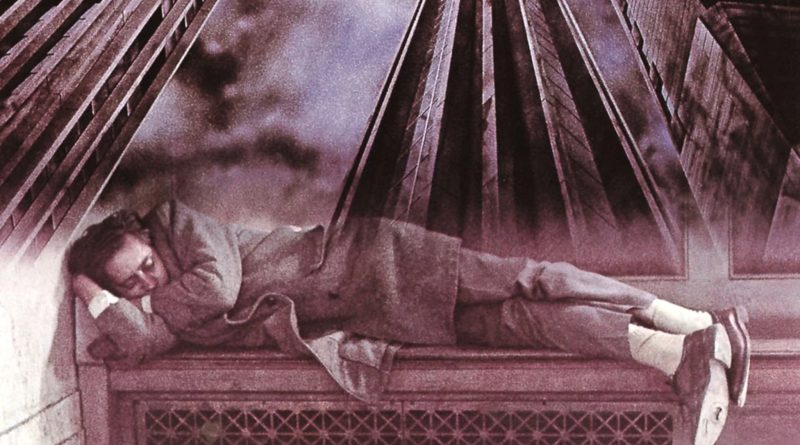
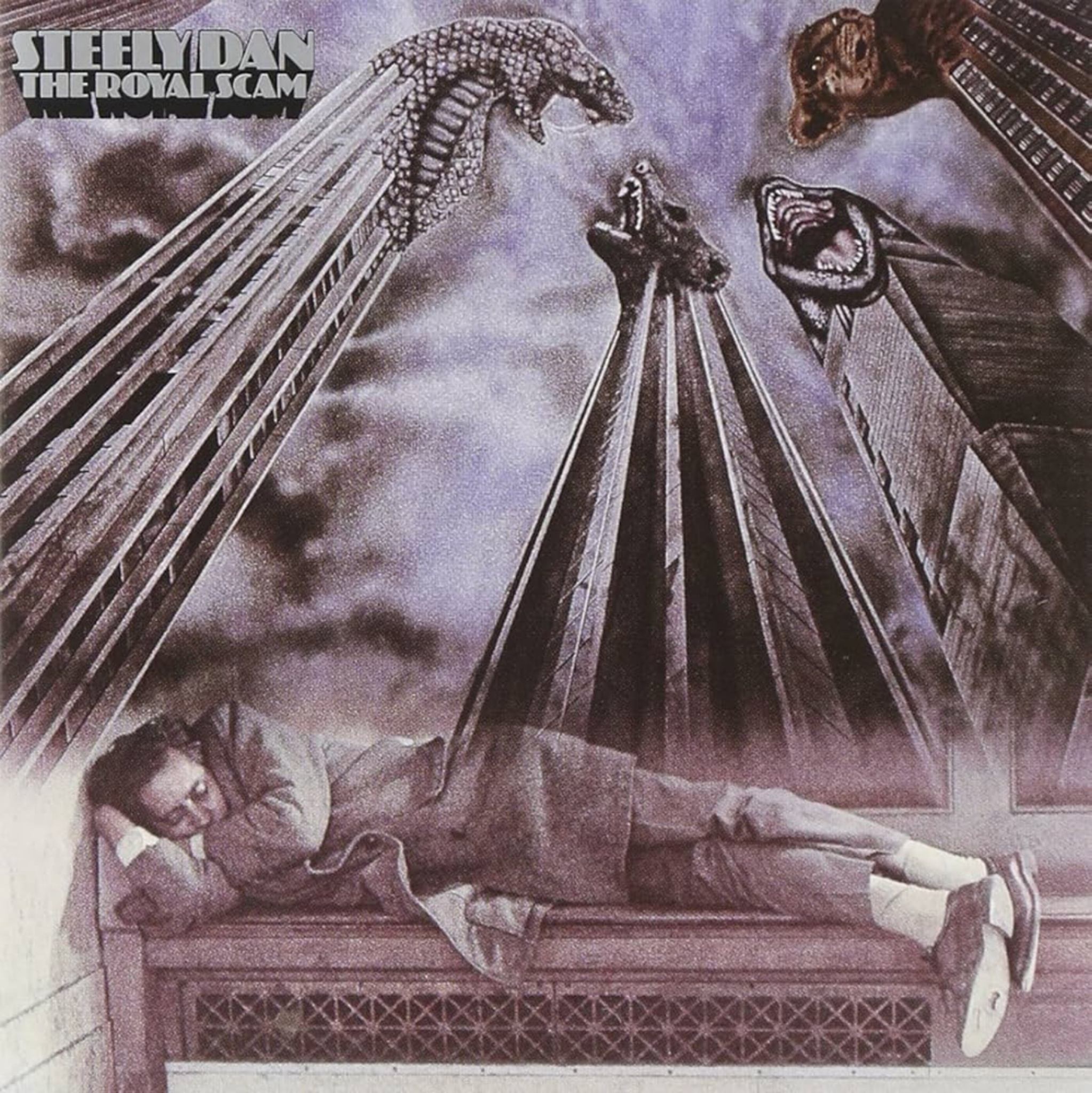
As for The Royal Scam (whose 50th anniversary is here), you’re not going to see a regular album review here. Stay with me a minute though. Even though it is technically an LP, Fagen/Becker also made it out to be a just as much of an anthology of losers and low-lives as if we were thumbing through a short story collection or watching a film anthology so we’re going to pick it apart as such, but not forget we’ve also got an album on our hands. And beyond De La Soul sampling them, we’ll see that Dan were proto-rap trailblazers in other ways too, arguably a big influence on Hova himself.
Scene One: “Kid Charlamagne.” Fat Freddie died long before a car ran him over — his boss threatened to have his wife pimped out and forced into robbery and treachery, and these were all just horrifying diversions from his regular day job of dealing dope. The story of Freddie (portrayed by Charles McGregor) isn’t even really heard in Curtis Mayfield’s historic soundtrack for Gordon Park Jr.’s classic 1972 blaxploitation movie Superfly — it’s only a repeated instrumental snippet there, though “Freddy’s Dead” became a hit for Mayfield when he added the poignant lyrics. Similarly, Dan’s antihero protagonist here is also a doomed narcotics man, modeled after fabled LSD designer Oswald Stanley, detailing again the drug scene gone sour. This deceptively soulful tale, which is full of remorse and hurt, is framed by some great in-the-pocket drumming from Bernard Purdie (one of their fave session guys) and noted string-bender Larry Carlton, a fellow jazz-fusion traveler who provides a tasty Santana-like solo, buoyed by a tight groove and punchy horns. A later day adaptation of the vibe here would be heard on Jay-Z’s “Empire State of Mind” (tales of success, hustle, myth-making but without the downfall).
Scene Two: “The Caves of Altamira.” An elegant, elderly actress saunters around a decaying mansion, waited on by an obedient, stern servant and admired and pitied by a writer who wanders in and recognizes her as once being a big movie star. Ever the performer, she dramatically insists, “I am big, it’s the pictures that got small!” Gloria Swanson was actually only 51 when she starred in Billy Wilder’s chilling 1950 masterpiece Sunset Boulevard as fallen actress Norma Desmond, but by Tinseltown standards, even today, that’s over the hill. This Dan song (like the opening track) is also a remorseful look at the past and supposedly better days in soft rock mode with a bright, sunny groove and layered arrangements. Like Desmond’s character, the song’s narrator rails against the emptiness of Hollywood, while pining for archeology. Plenty of books-turned-films moon over a glorified past (The Great Gatsby, Gone with the Wind, The Age of Innocence) but nothing could match the coldness of the Wilder film. Latter day versions for the song’s theme would be heard in Common “I Used To Love H.E.R.” (reminiscing about old school rap as better than gangsta rap) and Nas’ even more pointed take on the same subject, “Hip Hop Is Dead.” Or maybe Blur was right when they said Modern Life Is Rubbish.
Scene Three: “Don’t Take Me Alive.” A desperate, confused bank robber finds his courage and steps out onto the streets to face a line of policemen and a cheering crowd, ready to go out in a blaze of glory. 1975’s Dog Day Afternoon (with Al Pacino as Sonny Wortzik) mirrors the story of a criminal in a high-stakes stand-off in this song and Larry Carlton’s screaming solo at the beginning seems to mimic Sonny’s taunting public blast of bravado. The claustrophobic groove of the song matches the subject, with its heavy bass, stuttering keys and the desperate but triumphant chorus — it stands as something of another companion piece to the opening track, about another criminal on the run. Much later, a similar story was heard in the DMX’s “Crime Story” about another frantic fugitive on the lam, albeit with a surprise ending. The Eagles’ “Life In the Fast Lane” (from the same year as the Dan song) treads some similar ground with characters on the edge of a breakdown and also with a gritty bluesy guitar lick. And don’t worry- there’s gonna be another, much more in-your-face famous tit-for-tat Eagles connection later too, just you wait…
Scene Four: “Sign In Stranger.” TV correspondent David Locke is stuck in a Central Africa hotel. Finding out that another guest croaked, he decides that he’ll take up his life instead. Things get messy though when Locke’s wife seeks him out and he finds out that the guy whose life he took up is an arms dealer. Jack Nicholson’s role here in Michelangelo Antonioni’s The Passenger (1975) shadows the theme of the Dan song, which is filled with sci-fi type escape and dread about how you can’t outrun your own shadow. Over a bouncy Meters-like groove which ends with Elliott Randall’s tasty guitar trading off licks with the horns at the end, the offer of a “new and shiny life” to anyone who wants to disappear is the crux of the Dan tune. The idea of “winding up on a different planet” and “exchanging your soul for a new name” is Phillip K. Dick territory too, where the author also honed in on identity shifts, a dark bureaucracy to accommodate you and a price-tag that comes along with trying to skedaddle. The same theme’s heard much later in Nas’ “Street Dreams” as well, also dealing with identity change and the idea that a new life is just a different type of trap.
Scene 5: “The Fez.” Bored housewife Oedipa Maas finds out that an ex-lover died and through his estate, she’s tied up into conspiracy theories and a long-time multi-company feud. The secret societies and nonsense catch-phrases that surround her in Thomas Pynchon’s The Crying of Lot 49 (1966) could parallel the mysterious ritual of ‘the holy man’ here in the Dan song. Guitar and keyboards lock in for a stripped-down, almost-disco groove and a sweet synth melody where keyboardist Paul Griffin gets a song credit ‘cause the songwriting duo loved his playing but were scared that it originated somewhere else and that they’d get nailed for that (sweet thoughtful guys that they were). But when Fagen keeps singing “never gonna do it without the fez,” what the hell is the “it” that he won’t do? You could also line it up too with the Spinners’ “Rubberband Man,” another mysterious figure, detailed over a lush arrangement. Or maybe the song’s just about putting on a condom. And it’s their simplest lyric, appropriate enough for getting straight to the point so you can get your freak on. Want something even darker in the same mode? Try Immortal Technique’s creepy criminal-minded “Dance With the Devil,” where he manages to out-Dan Fagen/Becker, making their own ritualistic tale even more depraved.
Scene 6: “Green Earrings.” Ice-cold hitman Jef Costello is on a mission, likened to an elite Japanese warrior. On a rainy day in Paris, a policeman walks by and then a beautiful Citroën DS-19 car pulls up and the driver gets out. Costello slyly slips in moments later with a huge rack of keys. He looks around cautiously as he tries one after another until the fifth key is the charm. He effortlessly drives off and lights up a cigarette, as if it was his car all along. Instead of François de Roubaix’s Bach-themed organ music for this scene with actor Alain Delon in Jean-Pierre Melville’s French noir classic Le Samourai (1967), the music score could have just as easily been this unsentimental high tension Dan song of theft and obsession. You can imagine the same scene with Perdie’s driving beat, Chuck Rainey’s bubbling bassline, the stabbing, sharp horn lines and the double guitar thrust of Elliott Randall and Denny Dias (a Dan co-founder, now reduced to a session man). The smooth criminal/operator would later resurface with Michael Jackson and Sade, while the elegant distant mood of the song would be reheard in Roxy Music’s late ‘70s/early ‘80s albums, transitioning to Bryan Ferry’s solo career afterwards. Two decades later, Busta Rhymes’ “The Heist” would take up the cloak of a meticulously planned score, again honing in on elegant jewelry and a similarly emotional-less and business-minded feel. As a bonus, Rhymes’ song leaves off with a scary moment of awareness of how it can all fall through, much like the uneasy vibe of Dias’ solo on the Dan song.
Scene 7: “Haitian Divorce.” A group of literally no-name Yanks (Mr. Brown, Major Jones, Mr. Smith) get thrown into a trouble right away on a Caribbean trip, tied up in a suicide, arrest and a three-way romance, climaxing with government troops breaking into a funeral to steal the corpse. Graham Greene’s novel The Comedians (1965) follows a typical path for the author: Westerners in exotic locations getting into trouble, here also set in Haiti. And like the narrator of the song, each Greene character is a “tourist in search of a quick fix.” The Comedians’ lack of first names highlights their detachment from their foreign locale and mirrors the cold way that Fagen/Becker would later treat their characters. Mix in some appropriately Caribbean grooves, laid-back rhythms and relaxed tempo and you have the darkly comic and cynical Dan song, albeit one where it seems the woman runs off to have an affair and comes back to the States with a mixed-race baby. Another quickie romance turned disastrous would be heard later on Mos Def’s “Ms. Fat Booty” where the guy loses the girl and a comparable pregnancy with another guy punctuates the end of the relationship. Even Dean Parks’ mocking “talkbox” guitar on the Dan song is mirrored with the haunting high-pitched Aretha sample on the Def tune, also seeming to comment on the failure of the man there.
AUDIO: Steely Dan “Haitian Divorce”
Scene 8: “Everything You Did.” Jim and Irene Walcott are as painfully average a couple as they come until hubby hauls home a new radio, which in between charming classic music interludes mysteriously picks up the conversations of their neighbors. They voyeuristically tune in to hear tales of “carnal love, abysmal vanity, faith, and despair.” Irene laps it up until she has an awful realization— the two of them can probably be heard too. She tries to put a happy public face on their marriage until Jim explodes with details of the horrible things she’s done, shredding their superficial domestic harmony. Think of John Cheever’s short story “The Enormous Radio” (1947) as almost this song in reverse. The tale of a collapsing marriage is told through a mid-argument snapshot with the mid-tempo tension punctuated by Larry Carlton’s bluesy solo adding to the domestic drama.
But then there’s the cake icing and the reversal from the Cheever tale, as Fagen chimes in “Turn up the Eagles, the neighbors are listening.” Think about that hilarious, biting line- you’re self-conscious about your fighting so you drown it out with the relaxing sound of the Eagles. It’s even more startling than the song’s empty threat about shooting down the other lover. Of course, not long after that, Don Henley and the boys would have their revenge, slyly calling out Dan in “Hotel California” later that same year. Not quite Lynyrd Skynyrd answering Neil Young but still a juicy little rivalry capped by Fagen-as-Dan as opening act recently for what’s left of the Eagles. The whole idea of an argument with “come clean!” demands would later be heard in Lauryn Hill’s similarly mid-tempo song “Ex-Factor” (also with a bluesy guitar solo) where she keeps asking “how can I explain myself?” while demanding an explanation from her partner and in Jay-Z’s “4:44” (also searching for honesty in a domestic fight to clear the air).
Scene 9: “The Royal Scam.” A brooding young man sits silently on the edge of Lake Tahoe at his family’s stylish, secluded compound, staring into the distance. He fulfilled his immigrant family’s dream of coming from the Old Country to America and making it to the top of the heap, via blood and betrayal, but now he finds himself alone. Al Pacino’s controlled, masterful performance as Michael Corleone (almost the polar opposite of his Dog Day Afternoon role) in Francis Ford Coppola’s 1974 epic The Godfather Part II sets the tone for the title track of this album, heard as a funeral march detailing the betrayal of the American dream, similarly tied into NYC as the main locale. The tight, bouncy sound of the rest of the record flames out here at the end, framed by the haunting horns, pounding drums, ironic soaring backing vocals and Rainey’s punctuating bass. The theme is also echoed decades later in Jay-Z’s triumphant yet weary “American Dreaming,” where the glory achieved feels hollow and there’s the sunken feeling of being stuck with “a dream that’s bigger than life” and a promised land that’s only a mirage. And you can’t help but feel that the gloomy message of the original song was effectively Dan’s middle-finger salute to the Bicentennial year that the album came out.
***
The next year would see the dyspeptic Dan duo roar back onto the radio in a big way with Aja, taking a less acerbic route with the lyrics and then they crashed-and-burned amid their biggest sales with 1980’s yacht-rock template Gaucho, leading to a dozen year hiatus for the band. They reunited for a ‘93 tour and followed up eventually with the surprising critical/commercial comeback of 2000’s Two Against Nature, proving that a boomer audience still loved the cynical pair’s exacting studio craft, melodicism and now their gripes about old age. After the similarly themed Everything Must Go in 2003, the pair rode out the nostalgia touring circuit up until Becker’s death in 2017, though Fagen then toured for several years with his own band as Steely Dan before calling it quits with shows this past April.
After not surprisingly getting input from Fagen himself, I thought I’d turn to others who were overly familiar with the Dan catalog. One of the foremost Dan tribute bands out there is Hey Nineteen, led by Dale DeJoy, who’s been at it for 14 years, racking up a few hundred shows by now. As he sees it, The Royal Scam is “the bend in the binding of the book, where jazz is inserted to a greater degree and the turn in the road where they went all-out snarky.” The 14-piece Steely Dane from Dane County Wisconsin (get it?) has been covering their almost-namesakes across the Midwest for 16 years now. On the album in question, saxophonist Al Falaschi calls it “the best of the bridge albums between those two eras of Steely Dan… the band albums, and the studio cats albums.” Keyboardist and co-leader David Stoler noted strong crowd reactions on several of the album’s songs: “When we played ‘The Royal Scam’ earlier this year in Minneapolis, it got a very positive response, due to the timely nature of the song’s content… and for ‘Kid Charlamagne,’ the audience yelled ‘Is there gas in the car? Yes there’s gas in the car’ and everyone was cheering the dealer on to get away.” He even noted that the crowds wear fez hats in honor of that particular Scam song, too.
VIDEO: Steely Dane perform “Kid Charlemagne”
As for the sinister lyrics hiding in plain sight behind the elegant tunes, DeJoy saw The Royal Scam as the album when he understood what was going on with them: “I realized it was just a huge laugh. And it was what lit them up really when they were writing — it was just a goof on the public.” When he actually met the Dan pair themselves, “they told me that they liked to laugh when they wrote.” But do the audience at the shows also get the joke? DeJoy throws in crafty comments in some stage intro’s and occasionally, he’ll see a look of revelation in the crowd’s eyes but he doesn’t mull it over with them: “A lot of the people there are in their 70s who just love the music and don’t really know what it’s about and I don’t want to poison the water for some of them.” Stoller sees it a similar way: “I’ve come to the conclusion that some care a lot about lyrics, and some don’t even hear them. Luckily, Donald and Walter were also very, very good at crafting great harmonic structure, which satisfies the people who don’t know or care about the lyrics. It’s a multi-pronged attack…and it is incredibly effective.”
And so another royal scam is perpetrated continually: the Dan songs live on as soothing bliss despite their ugly, pointed barbs, ensuring that Fagen and Becker would always have the last laugh.

- The ‘Soul’ of Gregg Allman - June 17, 2026
- Haitian Divorce: Steely Dan’s ‘The Royal Scam’ at 50 - May 28, 2026
- Twinkle, Twinkle Uncle Floyd - January 29, 2026
You May Also Like
-
 March 2, 2024
 -

-
 August 8, 2023
