
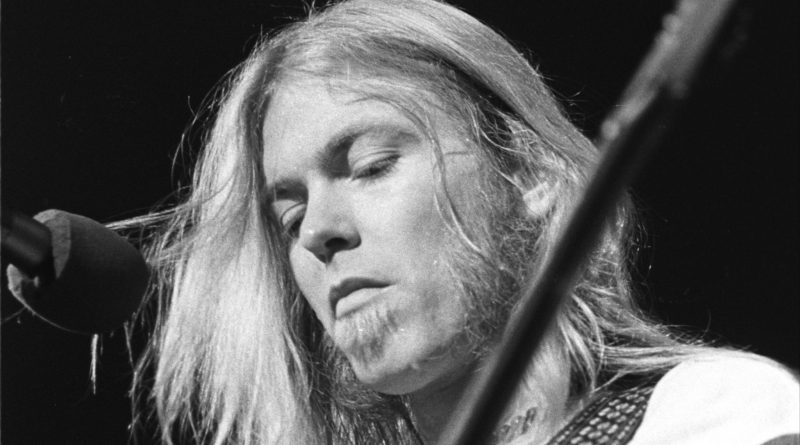
The ‘Soul’ of Gregg Allman
A new documentary reveals the life of a reluctant rock star
On a bus ride home to visit my folks, I heard a father give some of the best cautionary advice you could imagine to his son — “don’t ever let your life turn into a country song,” he warned, throwing himself out as an example.
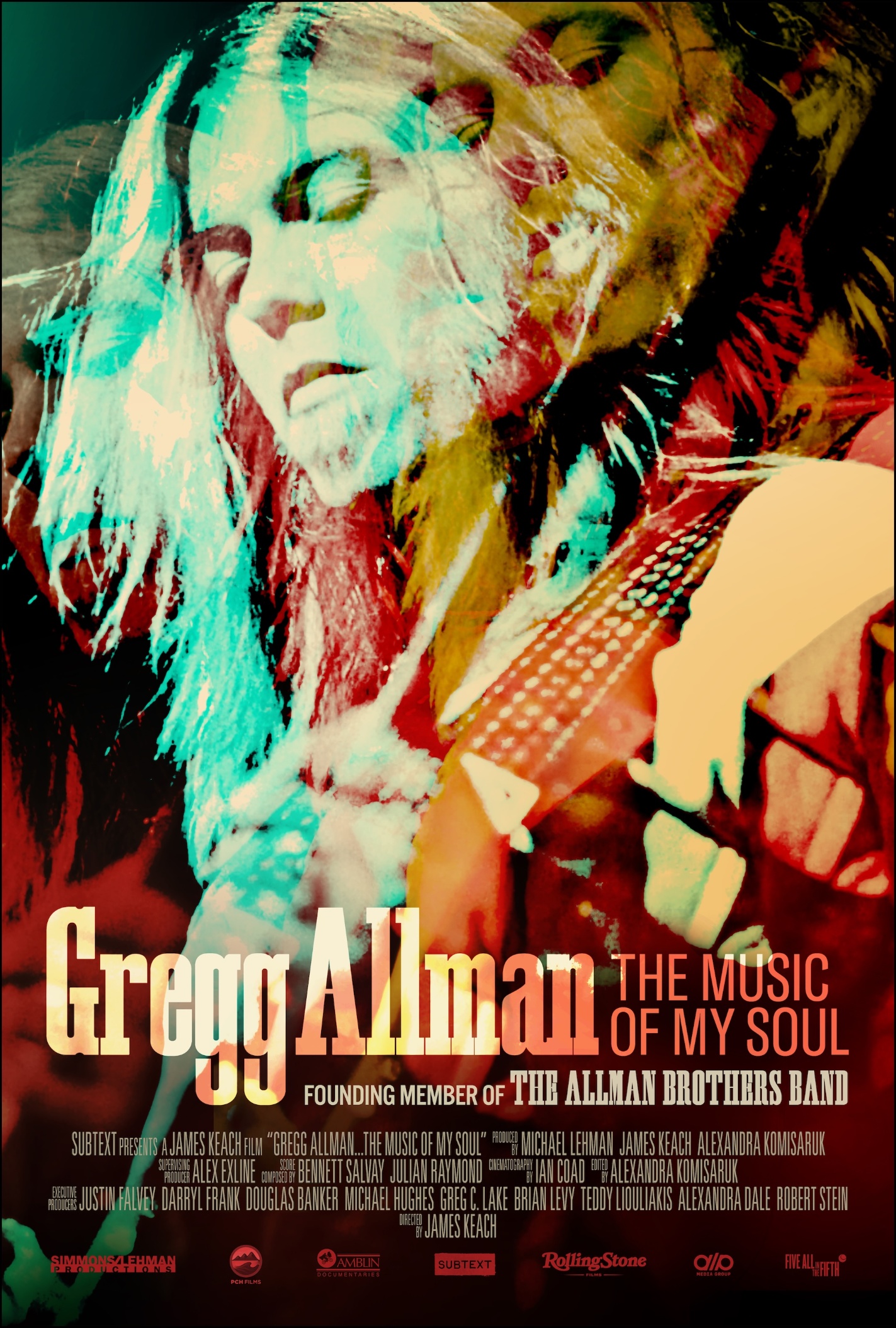
I wondered if someone like the late singer/songwriter/keyboardist Gregg Allman could have benefited from such wisdom. His raucous lifestyle became as (in)famous as his decades-long role as a reluctant rock star in the Allman Brothers Band, who started out in the late ’60s and laid the template for southern rock, supercharging blues into extended musical dramas for arena-sized crowds.
Much as I loved the early magic from the original 1969 band, including Gregg plus his brother Duane’s blazing slide, Dickey Betts’ jazzy leads, Berry Oakley’s growling bass and the double-drum duo of Butch Trucks and Jaimoe (which made them a rare interracial band then), I was skeptical of their latter day magic. Then I went to one of their legendary Beacon Theatre runs in 2006 and was wowed enough to return several more times, including one of their final stints in 2014 before they called it quits for good. I even attended an impressive post-Gregg 50th anniversary tribute show for the group (which I wrote up for this publication) that the rest of the latter-day band did in March 2020, just before COVID turned our lives upside down.
With this later-day conversion, I was drawn to see the new documentary Gregg Allman: The Music of My Soul. Director James Keach (known for producing the bio-pic Walk the Line and directing the documentary Glen Campbell: I’ll Be Me) had a fascinating, though mostly private, subject to cover. But could Gregg’s rollercoaster of a life be humanized? If Butthole Surfers could scrape up some sympathy in a recent documentary (also detailed in this publication), why not him, too?
For the flick’s world premiere at Gramercy Theater June 9, the packed house was an AARP crowd with a good mix of guys and gals to witness an extended tribute to Gregg. To start things off, the film’s producer (who was also Gregg’s long-time manager) Michael Lehman and Keach came up to thank everyone, with Leman calling his old client “a storyteller, survivor,” and that the film was “about redemption and truth.” Keach admitted that he actually didn’t know Gregg’s story before he got called in but his wife told him that he HAD to do the movie. He called the end result “one of the deepest, most personal stories I’ve ever told.”
Next up was a short unplugged set was singer/guitarist Devon Allman (one of Gregg’s sons) and singer/guitar Duane Betts (Dickey’s son & named after another Allman), both of whom had played with their dads and were the spitting images of their fathers too. Devon and Duane had been also playing together as The Allman Betts Band and have been honorably covering ABB material for years. Devon started by saying “thank you for supporting our family’s music all these years” as he and Duane launched into ABB favorite and the gorgeous Gregg-original “Melissa.” Duane did the leads and fills, raising his boot for emphasis sometimes.At the end of the song, Devon sweetly said, “I’m so grateful that I was also blessed with a brother Duane.” With that, Duane sang his father’s lovely “Blue Sky,” with Devon harmonizing. After Duane’s extended solo, which got applause, by the last chorus, the crowd was singing along. For their last number, another ABB live fave was trotted out — Sonny Boy Williamson’s “One Way Out.” The two started with a heated guitar exchange and Duane got the crowd clapping as each of them took turnings soloing. Just as Gregg would let the crowd sing the end of a line by themselves — “no they won’t be talking that stuff that they don’t know” — so did Devon dramatically for this show. As they ended, the crowd begged for more but they waved goodbye and hugged as they left the stage. It was a very touching display of kinship — you gotta believe that their fathers would have been proud.
AUDIO: The Allman Brothers Band “Blue Sky”
And after that brief, wonderful performance, we still had the movie to see. Starting out with Cher introducing Gregg for a show (and who would be an important part of the story), the Gramercy crowd was getting hyped up by seeing a clip of the original Allmans band, especially Duane wailing away. Interview subjects for the movie included Don Was (who produced Gregg’s last album), ABB member Chuck Leavell, Jackson Browne (a close friend of Gregg), Jaimoe (the only surviving member of the original band) plus audio recordings of Duane Allman, lots of archival footage of Dickey, Phil Walden (who signed the band to his label, Capricorn) and of course Gregg, most importantly heard in a little-known later day interview that provided a lot of helpful context.
The story that’s laid out is full of head-spinning ups and downs and inevitably tied to the Allmans as that was a huge part of Gregg’s life. Starting out in Nashville, Gregg’s dad was murdered by a hitchhiker and he and brother Duane were raised by their mom. Greggot a guitar first and looked up to his brother who eventually got a guitar too. Propelled by soul and Motown performers, the siblings started the Allman Joys, a garage band in the mid 60’s but didn’t go anywhere with that. They morphed into Hour Glass and moved to the West Coast, laying out the template for ABB with twin guitars and similar blues covers but Duane got restless and headed to Muscle Shoals to become a noted session man for Wilson Pickett, Aretha Franklin and others. He assembled ABB himself in 1969 and then got Gregg to come back to join; he wrote furiously at first, cranking out many classic songs and took to playing the Hammond organ for the first time. Living out their band name, they all lived together like a family and practiced like demons.
Their label pushed them early on, as the band clocked in around 300 shows a year in 1970. In Macon, Georgia, (which became the band’s new home), they were outcasts who couldn’t play in most clubs- almost no owner wanted a bunch of long-haired hippies with a black guy in the band. Luckily, Bill Graham took a shine to them and was a big supporter who helped them get an audience. Indeed, their concert album at one of his most famous venues, 1971’s At Fillmore East, helped catapult their career. But just a few days after it went gold, Duane died in a motorcycle accident at age 24. Gregg admitted that he was angry at him at first for leaving him and spent weeks in bed. Fortunately, the band decided to pull together as therapy for all of them. Sadly, Berry Oakley (who also took Duane’s death very badly) also died in a motorcycle accident less than a year later. The band managed to reach new heights regardless, having a huge hit with Dickey’s “Rambin’ Man” and the 1973 Brothers and Sisters album was a big seller and then a ginormous Watkins Glen show with the Grateful Dead and The Band outdrew even Woodstock.
And then things got messy again. Angry that the band couldn’t get behind some of his mellower songs, Gregg set out on his own with the 1973 appropriately named Laid Back album (which did well). After two previous short-term marriages, Gregg tried his luck a third time with Cher in 1975, but between becoming tabloid fodder and her inability to change him, the union fell apart also. Various friends related how, despite his rock star status, Gregg was actually a shy guy who hated to be alone. Latter-day ABB member Warren Haynes theorized that’s why he got married so often. Meanwhile, the band became big boosters of Jimmy Carter, giving him ample assistance to make it to the White House. Sadly by then, the group fell apart, dragged down in part from a drug bust and trial of an associate that made Gregg look bad and distanced him from the rest of the band.
Drawn together by a love of music (and perhaps need of money), the band briefly reformed in the late ’70s but that also collapsed after a few poorly received albums. After Gregg had a surprise mid 80s solo hit with “I’m No Angel,” the band reformed again in 1989 for their 20th anniversary but there were still some bumps in the road to overcome. When the group was inducted into the Rock & Roll Hall of Fame in 1995, Gregg was so strung out that he could barely give his speech. He was so embarrassed by the episode that he finally successfully kicked drugs and alcohol after over a dozen previous tries, thanks in part to his sixth wife, Stacey Fountain, who’s also heard from in the film. This period also saw the start of their legendary yearly residence at the Beacon Theater and their best later-day line-up, which solidified at the turn of the millennium. Gregg was happy to get into a constant touring cycle — as Fountain relates, Gregg was kind of lost when he wasn’t touring, as “it kind of gave him strength.”
Sadly though, the years of abuse finally caught up with Gregg, leading to a liver transplant, hepatitis and cancer. The 2014 Atlanta mega-concert “All My Friends” was a tribute show for him featuring the Allmans, Dr. John, Eric Church, John Hiatt, Keb’ Mo’, Robert Randolph, Taj Mahal, Vince Gill, Zac Brown and his son Devon. When you see the assembled doing “Will The Circle Be Unbroken,” you can feel that the end is near — indeed, the Allmans would do their last show several months later and Gregg was gone in 2017. Before that, he decided to do one last album — the admirable Southern Blood, produced by Don Was, consisting of mostly covers, plus a song with and by Jackson Browne and with a tribute to brother Duane. As the film winds down, Gregg relates his one regret is booze and hopes that he’ll be an inspiration for other people to give it up. When asked what song he’d like playing at the end for him, the tireless artist says “THE NEXT ONE!” The film ends with Gregg and Jackson doing the latter’s “These Days” Originally sung as a lovely ballad by Nico, Gregg sang it on his first solo album, transforming it into a bluesy elegy that stuns Browne. Thinking back about it years later, Jackson recalls “no one could have done what he did.” Just before the closing credits roll, we’re told that Gregg is buried near Duane and bandmates Butch (who killed himself shortly before Gregg died) and Berry.
As exhaustive and touching as the film is, there’s a couple of quibbles that I gotta address. Rock docs typically offer up the ‘commodication of pain’ factor (addiction, self-destruction), relatable older/wiser musicians looking back on their wild years and archival footage, which you all see here and that’s not necessarily a bad thing.These movies can also be a little selective about the facts though it’s not shy about Gregg’s alcohol/drug problems. Still, the band’s mid-70s break-up is glossed over quickly and the band’s resurgence in later years (in the 2000’s) doesn’t get a lot of chatter either — no mention of stellar guitarist Derek Trucks (Butch’s nephew) is here and though Warren Haynes has some poignant things to say about Gregg, we never hear how/when the guitarist joined the group. And there’s not a word about Dickey being ousted from the band in 2000 (which was a big deal). Also, while the new interviews give context, there’s a lot of material that’s been online for a while, most notably Dan Rather’s AXS chats with Gregg and with Dickey here, here and here, plus an extended 1984 interview with Dickie and Butch via Rock Influence. Also, after watching, listening to decades of their history, you realize that even most of their later-day concert material came from their first three albums — granted, they’re stellar and still hold up just fine but nothing is addressed about this lack of later day songs as live staples. These are quibbles though, like I said.
After the film ended, the night still wasn’t over. A panel assembled onstage with Devon and Keach alongside author Alan Light (who co-wrote Gregg’s memoir, 2012’s My Cross to Bear), Galadrielle Allman (Duane’s daughter, who wrote the heart-breaking book Please Be With Me about her dad) and Allmans booking agent and Gregg’s close friend Jonny Podell, who was also in the movie. All of them provided plenty of touching and illuminating moments. For Gregg’s final album (which came out a few months after he died), Galadrielle and Devon would hear the demos he brought home and were impressed with how hard he worked on it. Devon could only listen to the album once though— “he didn’t have to make another record but he did- he left a parting gift for sure.”
Podell had some great and tear-jerking stories. For the former, he told how he wrestled with Gregg during a Japanese tour at a bar on a train to keep the drinks away from him. He also admitted that early on, he signed ABB thinking that he was getting the Osmond Brothers instead of the Allman Brothers (which got lots of laughs from the crowd). When ABB signed to Capricorn, Phil Walden demanded that Johnny would make them work every day and eventually the band bought him a motorcycle after the first year as a sign of friendship— “we grew together,” he recalled. He also got emotional a few times about Gregg, recalling, “when we weren’t that high, he had such an intimate, personal trusting relationship.” He also related that Gregg changed for the better. “He really did grow up… He understood at the end, his life. Gregg had time to reflect.”
Keach meanwhile explained that his job “was going through all the interviews and connecting the dots but you guys (the rest of panel) filled in all the blanks.” Part of the challenge too was that he made the film after Gregg died but he watched every interview he could find about him and used the book Gregg did with Light as sources. By the end, he felt like Gregg was there with him and also said that the best review he got was from the other people there on the panel (the family and Podell).
“I knew the legend of Gregg but I didn’t know the depth of his trauma, the despair of when he lost his brother and the effect of not having a father. To see this man, after 15 rehabs, to hit his bottom and come back.. For me, it was really a 12 step call and that’s what made me really wanna make the movie… And when he got sober in the movie, there was applause in the audience and I thought ‘ah, we connected and Gregg connected!’… I think at the end of the day, his music is phenomenal but his story is phenomenal, too.”
Devon talked about how he forgave Gregg for being an absent dad and started bonding with him later in life. “My whole childhood I spent wanting a dad and then to see him on the cover of magazines, looking back, that to me was impossible, it was so painful. But when my son was born, any of that anger, resentment was replaced. Like, ‘You missed the coolest thing in the world, just being a parent.’ And it broke my heart for him. He had a night off on tour and I said ‘let me take YOU to dinner’ and my son had just been born. So we were driving back and he looked so solemn and my son was in the car seat. And I said ‘Dad, what’s wrong?’ And he said, ‘Man, I missed out on all that.’ So I said, ‘it’s alright — you got another chance, he’s right here.’ And it really hits you…my son is 27 now. And he gets a hall pass — he was Gregg Allman! He was 22 years old and he had all this money and all this talent and who else could navigate that and be a parent and go to PTA meetings (laughs).” Summing his dad up later, he said “he was a sweet man. He was a tender man with depth. Everybody thought he was bad-ass and he kind of was… The music will live forever but this (film) is a component of him that will live forever.” When Light asked him if Gregg ever apologized to him, Devon said “e lived a lifetime of ‘I’m sorry’s.’”
Galadrielle was no less heart-wrenching in sharing her memories. She was happy that Gregg’s voice was the through-line of the movie, capturing “his humor and his approach, Southern sayings and a light touch and humbleness and his honesty about his addiction and his desire to help other people with their struggles… It feels raw and real but it also feels respectful. I know that he would be very proud of it (the movie).” As for the legendary Beacon shows, she felt like they were a family reunion — they would all get together for that. But even after the run of ABB shows there, he was ready to do solo shows again, and always had to be on the road. She also tearfully recalled how Gregg loved her but was spooked by her as she looked like her dad and that he didn’t know how to be a father himself.
VIDEO: The Allman Brothers Band performs “Dreams” at New York’s Beacon Theatre in March 2003.
To finish the conversation, Light added that when he worked with Gregg on his memoir, he wasn’t sure he was going to be able to get a shy guy like Gregg to do it at first, though he did open up later. Even though some of the panel mirrored what the panel people said in the movie, a future DVD version with the panel (and the performance) would be a really nice watch.
After the extensive evening, the movie made its way to longtime Allmans headquarters Macon, Georgia, for a sold-out screening with a Q&A from the film-makers and performance from Leavell (which should also be a DVD extra) before it opens nationwide today.
It’s a heartfelt project, a good portrait and a great view for ABB fans, along with classic rock and Southern rock boosters. Late last year, Keach claimed that Gregg wanted to be a cautionary example. Maybe it’s questionable whether his life will be a Scared Straight tale but his doc entertains without pandering and tells a hell of a story too. A lifelong performer like Gregg would surely appreciate that.
VIDEO: Gregg Allman: The Music of My Soul trailer

- The ‘Soul’ of Gregg Allman - June 17, 2026
- Haitian Divorce: Steely Dan’s ‘The Royal Scam’ at 50 - May 28, 2026
- Twinkle, Twinkle Uncle Floyd - January 29, 2026
You May Also Like
-
 April 27, 2020
 -
 May 27, 2022
 -

Some of your criticisms are valid, but remember this film is about Gregg, not an ABB documentary. There needs to be that covers all the things you mentioned. ABB is a huge part of Gregg’s story of course. But some of this can and should be part of comprehensive ABB doc.