
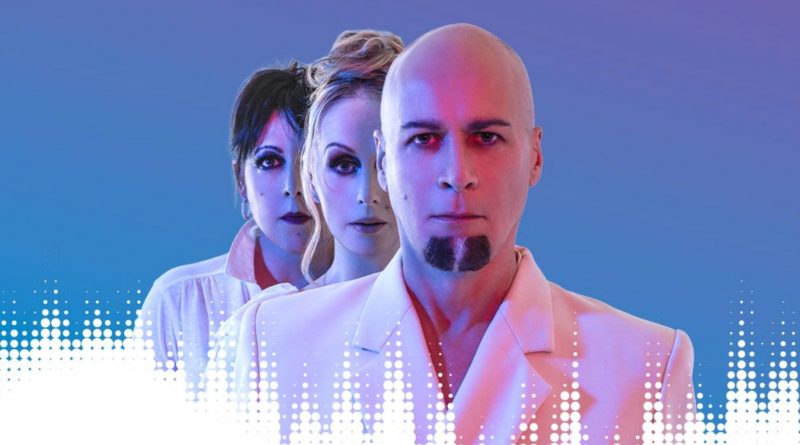
The Human League Spans ‘Generations’
Philip Oakey talks about the new wave legends’ tour with Soft Cell and Alison Moyet
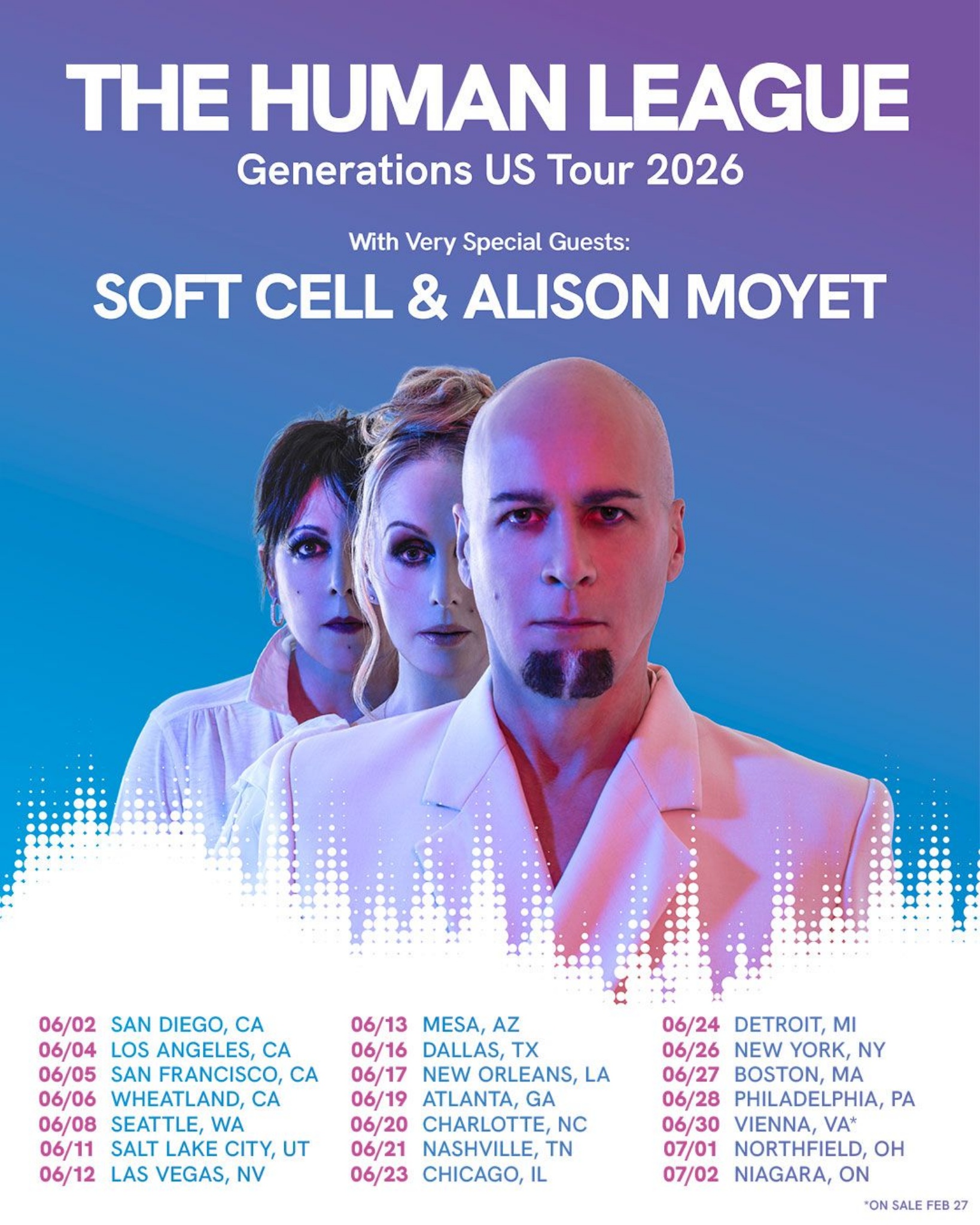
As a vocalist, keyboardist, and songwriter for the synth pop band The Human League, Philip Oakey has helped create some of the defining songs of the 1980s, including “Don’t You Want Me,” “(Keep Feeling) Fascination,” “Human” and more.
It’s been a very long time since The Human League’s fans in North America have had much of a chance to see the band playing their hits in concert, though — it’s been more than 10 years, in fact, since their last tour here, with only sporadic festival appearances since then. Fortunately, this problem will soon be rectified: Human League, along with Soft Cell and Alison Moyet, are set to kick off an extensive tour of this continent on June 2. (You can see the full list of dates here.)
“We’re looking forward to coming back!” says Oakey about the tour, during a recent phone call from his home in Sheffield, in northern England. “The lineup is really good. We occasionally play with Soft Cell in festivals through Europe, and we love Marc [Almond, their frontman]. He’s been a very, very big deal to us since the first Soft Cell album, which we just loved. And we’ve never played with Alison, but I’ve loved her for so long. She’s one of the great voices of our generation. It’s just perfect.”
And, of course, he and his bandmates (co-vocalists Joanne Catherall and Susan Ann Sulley) are looking forward to entertaining their fans with songs drawn from their entire catalogue. “We’re going to dredge up the past, really! That’s sort of what we do now: we try to show the things that we’ve done in different times.”
He admits that it’s strange, in a way, that Human League’s songs have endured for four decades and counting, because he and his bandmates became professional musicians almost by accident.
VIDEO: The The Human League”Don’t You Want Me”
At first, music helped Oakey form his identity. “Music meant so much to me when I was growing up; I loved and lived for pop music,” he says. “When I was an adolescent, I really didn’t know what I was going to be. I’m straight, but I’m not a big-shouldered macho guy. And in Britain, a thing came along which was the great glam revolution—David Bowie, Roxy Music, people like that. And suddenly, that gave us something to be.”
In 1977, Oakey became a vocalist and synthesizer player for the band Future, which was later renamed Human League, because “I didn’t have anything else to do, really. I was an educational failure, and I was working in hospitals and bookshops and things—places that were lovely to work in, but I didn’t really see any path to bettering myself through that. And I just got this opportunity to work with a couple of guys who were already in a group, and I grabbed it.”
In the beginning, The Human Leaguehad what Oakey calls a “proggy synth” sound, which is evident on their 1979 debut album, Reproduction. Their second album, Travelogue, came out in 1980. Neither made an impact on the charts, in their native England or elsewhere.
At this point, Oakey realized he felt pulled more toward making pop-leaning music that would appeal to a wider audience. Disagreements about the band’s direction induced other bandmates to depart (they would go on to form the group Heaven 17).
Out of necessity, Oakey and the other remaining The Human Leaguemember, keyboardist Adrian Wright, scrambled to find new bandmates. “We had a tour booked, and myself and Adrian agreed that we would do it. We would take on the name, and we would take on the debt which we had to the record label at the time.”
When they held auditions, teenagers Joanne Catherall and Susan Ann Sulley showed up, and Oakey and Wright immediately knew they were the perfect match for the band — but not necessarily because of their singing abilities. “They were a best friends, and we thought, ‘It won’t be one girl, having to put up with a load of idiot men on the bus somewhere. Those two girls will make sure each other are all right. The whole atmosphere will be nicer, actually, if it’s more evenly spread between male and female.’”
It turned out that Catherall and Sulley could both sing quite well, and the tour was successful. With this new lineup, The Human Leaguereleased a string of albums that charted worldwide: Dare (1981), Hysteria (1984) and Crash (1986). They won a prestigious Brit Award in 1982, for “British Breakthrough Act,” and received numerous nominations for other accolades (including a Grammy nomination in 1983 in the “Best New Artist” category).
Through the years, the band have continued putting out new music periodically; their latest release, Credo, came out in 2011. Six of their nine studio albums have attained gold or platinum sales status.
VIDEO: The The Human League”Human”
Though the lineup has shifted through the years (including Adrian Wright’s departure in 1986), Oakey, Catherall, and Sulley have all remained as constant members — a fact that leaves Oakey in awe. “I look back on it nearly 50 years later, and the fact that the three of us who were never musicians really only fell into it. But somehow, we formed a little triangle against the world, and it kept us going.”
He is grateful that fans have been so loyal to The Human Leaguethrough the decades, as well. “We’ve been so lucky,” he says. “I often think that we were almost the last wave of very readable pop, so that has helped us a lot.”
And now, he adds, he’s feeling extra fortunate as this next tour draws nearer. “We are so much looking forward to coming and properly trekking across America — I’ve always loved being over there!”

- The Human League Spans ‘Generations’ - May 30, 2026
- Roland Gift Steps Into Christmas - December 14, 2025
- 38 Special Hits A ‘Milestone’ - October 8, 2025
You May Also Like
-
 April 12, 2022
 -
 December 16, 2023
 -
 February 11, 2022
