

David Garland: ‘Spark’ Life
An interview with a New York Renaissance man
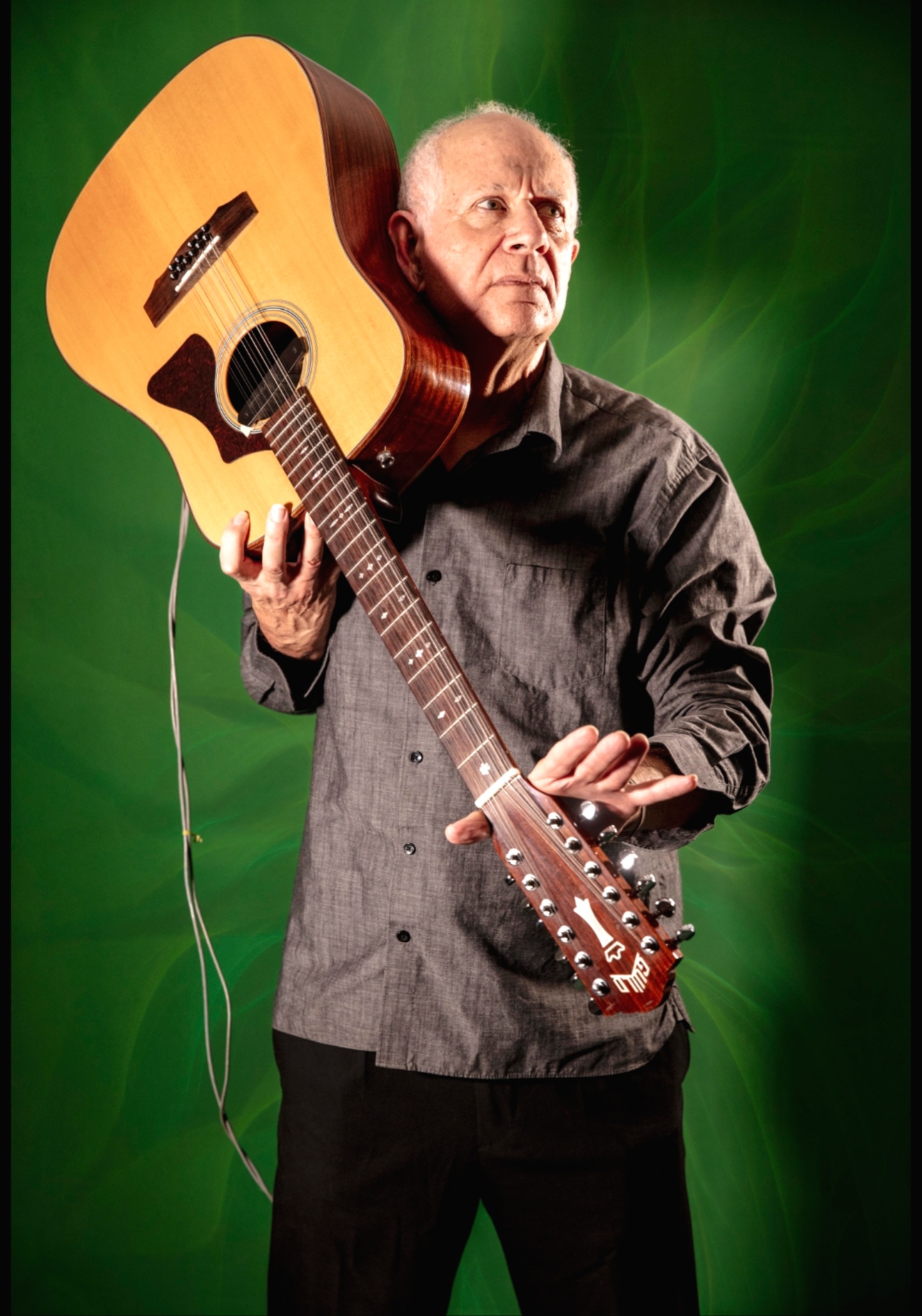
For nearly 45 years, David Garland has been a key presence in the arts and music communities of New York City.
As a composer, multi-instrumentalist and singer, Garland has collaborated with a wildly diverse range of musicians, including Christian Marclay, John Zorn, Ikue Mori, Sufjan Stevens, Sean Ono Lennon, Guy Klucevsek, Vashti Bunyan, Meredith Monk, Iva Bittova and others. It’s a list that prominently displays the dynamic range and versatility that keeps him a vital source of creativity at 70.
David is a visual artist as well. Since 2022, his photographs of reflected sunlight have been seen in four one-person gallery shows, and daily on Instagram. He has also found success as an professional illustrator and graphic designer.
What’s more, Garland produced and hosted his own radio program on New York Public Radio WNYC where he spun music and conducted interviews with a gaggle of great artists, even when it continued on as a respected podcast.
Garland is also an accomplished music journalist, serving as editor, writer and co-art director for new music monthly EAR Magazine from 1979 to 1982. He also wrote a cover story on Philip Glass for the December 1983 issue of DownBeat, and crafted the liner notes to Rhino’s brilliant 2000 box set Brain in a Box: The Science Fiction Collection.
And during this entire time he managed to release over a dozen albums of his own, not to mention the music he creates with his son Kenji under the handle Garlands.
“Like many great songwriters before him, Garland pushes the limits of acceptable harmony and dissonance, yet never at the expense of beauty,” proclaims Sean Ono Lennon on Garland’s Bandcamp page. “If it’s not possible for popular music to reach the heights of the great classical masters, it seems no one has told David Garland.”
The Spark is Garland’s latest album, one he composed while processing the loss of his wife Anne, who passed away from cancer in 2019. Recorded in Red Hook New York, at Garland’s home, the music was created largely by David himself on an array of instruments — including 12-string guitar, clarinet, bass clarinet, flute and piano to name a few — with rhythmic accompaniment by Julian Lampert on double bass and drummer Otto Hauser.
“The songs are generally about navigating my life as a widower at age 70, but also I feel they’re in a continuum with the songs I’ve been writing since I was in my 20s,” he explains.
It’s a very New York album from the Hal Wilner school of thought. Elements of Arto Lindsay, Lou Reed, even Stephen Sondheim play aural roles in the material here, augmented by the warmth, melody and lyrical honesty Garland displays across these nine songs.
Rock & Roll Globe had the honor of catching up with Mr. Garland for a deeper discussion about his new album, overcoming loss and the spirit of radio.
The Spark is available now on Bandcamp.
What is the story behind calling the album The Spark?
One of my songs on the album, “Clean Up the Room,” refers, at one point, to the start of my current photography practice by recommending (mainly to myself, but also to anyone else, too) observation as a coping and adapting process. “Remember to look for the spark”: the thing/event/perception (maybe even person) that surprises, and might help open a door to a new understanding.
I’m very sorry to hear about your wife. How did creating this album help you process your grief?
Thank you. Processing my wife Anne’s death from cancer in 2019 has been an all-encompassing effort for me in recent years, from the physical and financial practicalities of moving into the future, to coping and expressing myself emotionally through the languages I speak: English, music and visual art. The day after Anne died, my son Kenji and I (we have a duo called Garlands, and have so far released eight albums) recorded music that we issued as Vulneraries Vol. 3 Mortality. I don’t think I (and maybe Kenji, though he may have more to say on this) could musically address our loss more directly. So if you’re curious to hear the music of grief, you can find it there. But that was six years ago now. At this point I’m working on imagining and building a new life, and the new album is mainly about that. For example, I’ve been dating, and that’s been sometimes wonderful as well as sometimes extremely challenging. Several songs on The Spark address that, so it’s not really an album about grief, but rather it’s about moving past loss into a new unknown.

What inspired the sonic direction of The Spark? Was there a particular album or format that informed you in particular?
Sonically — the texture and character of sound is very important to me! — I continued what I’ve been doing. I’m 70 years old now, and younger readers might be interested to know that my musical experience has been a continuum. My life circumstances have changed, sometimes drastically, but in the aesthetic realm the continuity is uninterrupted. My first album, Control Songs, was released in 1986, and it’s interesting and valuable to me to know and feel that I’m still adding to that story — my personal take on the possibilities of words and music, and how they might illuminate life.
Tell me more about the modified 12-string guitar that you used for this album. How was it modified? What informed your decision to use hand-played instruments for this album?
It was my son Kenji Garland, who modified my 12-string guitar so that the strings sustain. By feeding the strings’ vibrations into the body of the guitar (via a pickup and transducers), vibrations are reenforced and expanded. The sense that the instrument is activated and alive is very exciting and inspiring to me. In this way the guitar isn’t just an instrument I’m playing, but one I’m interacting with and responding to. I love tactility, and the way it contributes to expressivity. The tricky, challenging, rewarding task of metamorphosing your thoughts and feelings into sound through the difficult job of interfacing your intention with the physicality of your instrument is really valuable, and that’s how I want to do it. Computers can reduce or eliminate that challenge. Some see that as a gain. I see it as a loss. Difficulty is positive.
How does The Spark differ from your prior works, on your estimation?
The way I think of it, all my albums have expanded on one another. By the time I made my first album, Control Songs, I’d already synthesized my inspirations, inclinations, and influences. Ever since, I’ve been articulating the same attitude, hopefully adding new perceptions.
I’d love to hear about your early days in New York City. What drew you to what emerged as the downtown music scene?
I went to New York City after I graduated from Rhode Island School of Design in 1976. For me, the life-changing thing I learned at RISD was to take it a step further — “it” being whatever you were inclined to do or explore, creatively. There’s always further to go or to push. I didn’t understand it at first, but by the time I graduated I did, and I sensed that New York was where people pushed “it” and themselves the most. Then, now, and in retrospect I appreciate that so much: have you found a way? Go all the way your way can take you!
NYC has changed so much since you first moved to the area. But I’d love to hear about what has remained for you all these years in regards to the city? What still reminds you of the NYC of your youth.
Last week I went to the city to meet with a recent friend, and attend a concert together. Having a history in a place like NYC is an intense thing. Inevitably, places/experiences become layered. I met my friend near where my son went to high school, which is not far from where I lived with my now-deceased wife… The primacy of geography has changed since I was moved to move to NYC, but still, places are places! I think NYC is still where you go to push things as far as you can. I hope so.
How is the Hudson Valley treating you? I see some of The Spark was recorded in Rosendale. I grew up around there so I’m always curious about other people’s experiences and what drew them to the area.
Yes, there was the lovely experience of recording drummer Otto Hauser in Rosendale, but most of the recording was done at my home in the town of Red Hook, NY (not the same as the Brooklyn neighborhood of Red Hook). Rural Red Hook now is not so different from Lexington, Massachusetts, was when I grew up there, so I feel I’ve been fortunate to be able to feel I’ve returned to my roots, at least environmentally. It was the initiative of my late wife Anne that moved us from midtown Manhattan to the Hudson Valley at the end of 2010, and I’ve been very grateful every day ever since.
How does your work in photography and graphic design inform your music or vice versa?
For a long time my visual and sonic work seemed like quite separate things. I resisted the “multi-media” effort, because it didn’t feel essential. Now, as my work has developed, there’s a new kind of compatibility, because I feel the sound and visuals spring from a similar source.
What inspired the Ed Askew cover? What was your connection to Ed?
Ed Askew was the sort of songwriter I admire most of all: someone who connected with and expressed himSELF. In the wonderful world of song it often happens that when you express yourself most specifically and characteristically, you magically tap into something universal. For me, Ed did that. The song I covered, “Mr. Dream,” was on Ed’s first (and for a long time, only) album, issued in 1968. He died in early 2025. Although I was avidly listening to all the new new music I could get my ears on in 1968, I didn’t hear Ed at that time. I produced and presented a wide-ranging radio show, Spinning On Air on WNYC, New York Public Radio, for nearly 30 years. At some point, Ed, who was evidently a listener, sensing I’d be receptive, started sending me cassettes of his music. I was in fact very receptive to his wonderfully personal songwriting, and championed and interviewed him on air. As I understand it, “Mr. Dream” is in some way his response to the assassination of president John Kennedy. I was just a kid in 1964, but I remember the event and its ramifications pretty clearly. Maybe Ed’s gorgeous jumble of repeated references to those autumnal months, and the shift of time, resonate for me deeply. I felt it had a perspective I wouldn’t or couldn’t access on my own, and so wanted to tap into it, and participate with it, in my own way. And I felt there was room for me to respond, musically.
Do you miss radio? What do you think of the state of radio in 2025?
When I was a kid (in the mid 1960s) I had a radio near my bed, and I kept a written list of the distant radio stations I could receive late at night — the further away the better! I used to ride my bike to the local record store to pick up the printed list of that week’s WBZ “Top 30.” For me, radio was a very special way to connect to a bigger world of deeper concerns and more intense vitality. I got into radio actively in the 1980s, first as a volunteer at Columbia University’s WKCR, and then professionally at WNYC, New York Public Radio, all because of my love of music, and because, courtesy of my parents, I somehow had a “good” voice for radio, back when that mattered. In those old days of “broadcasting” (a term that comes from farming, and the spreading or casting of seeds) I loved the chance to send unusual music out into the ether. I liked participating in the dynamic that had nourished me: music shared one-on-one, and communally, at the same time: the DJ presents, the listener receives, and both understand that that sharing is compounded by lots of other people at the same time. These days I can access nearly any music I can think of online, but then when I listen, I know I’m listening alone in isolation. We absorb and understand that isolation in the same way radio listeners used to absorb, understand, and feel their connectedness. That’s a big, sad difference.

- R.E.M. fetes 25 years of ‘Reveal’ - October 4, 2026
- Ween Unveils ‘Boognish Provides’ - October 1, 2026
- Artists Praise ‘Songs in the Key of Life’ for its 50th Anniversary - September 28, 2026
You May Also Like
-
 December 26, 2023
 -
 February 10, 2025
 -
 January 21, 2020
