
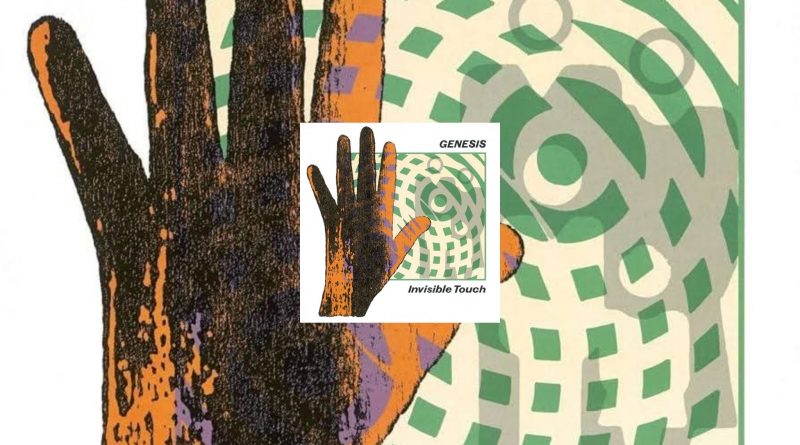
Is ‘Invisible Touch’ the Best Worst or Worst Best ’80s Pop Album?
At 40, how has the polarizing Genesis blockbuster aged?
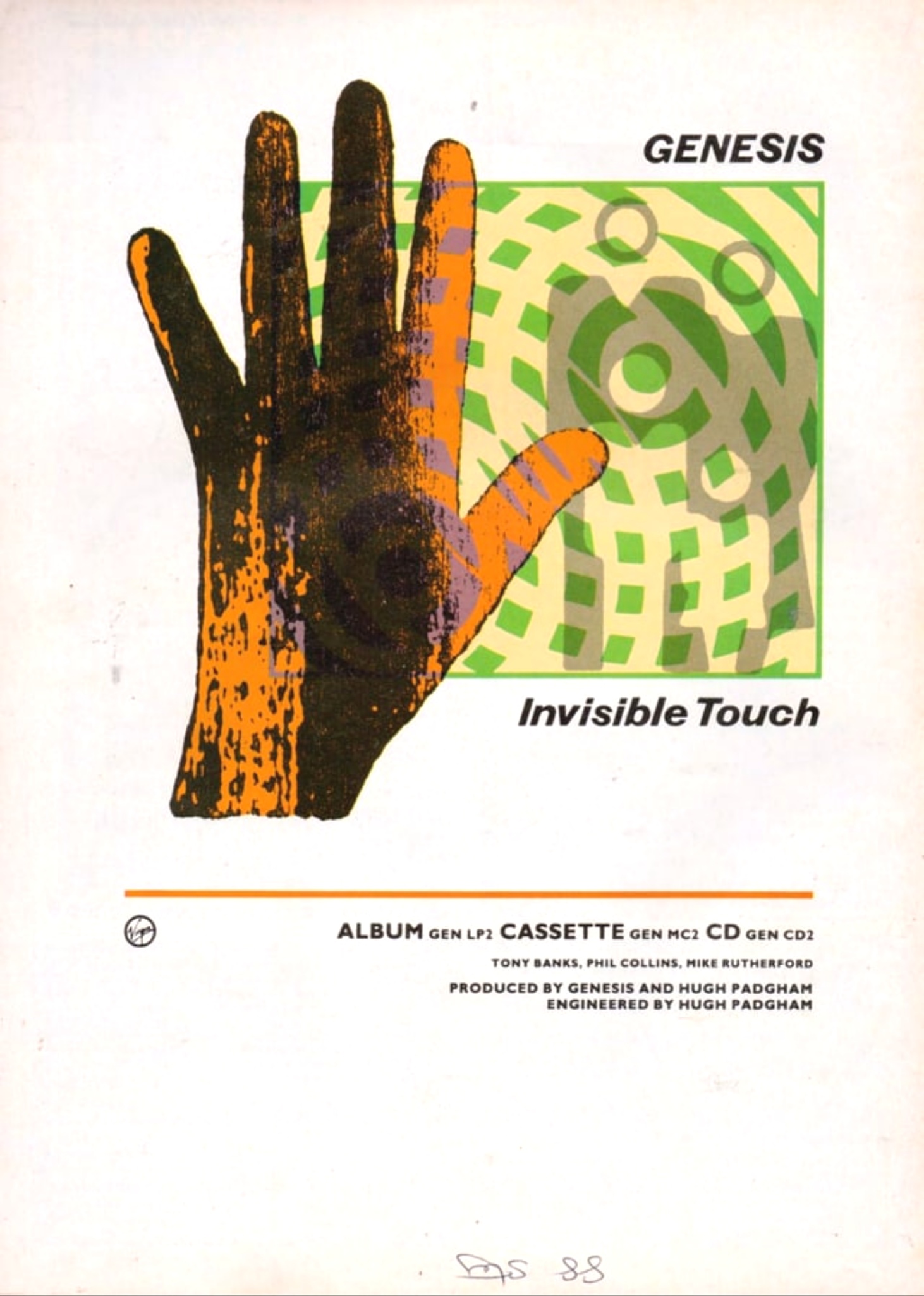
Love it or loathe it, you couldn’t escape it.
If you were even semi-conscious at any point in the second half of the ’80s, your brain was bombarded by Genesis’s biggest-ever album, the sound heard around the world.
Even in the Big ’80s, Invisible Touch was the blockbuster to end all blockbusters, selling over six million records in the U.S. alone and sending five singles into the Top 5, a feat matched at the time only by the King of Pop with Thriller. It turned Genesis into one of the world’s most successful acts, but the band that made it was a drastically different one than it had been a decade earlier.
VIDEO: Genesis “Throwing It All Away”
In the 1970s, Genesis was shoulder to shoulder with the likes of Yes and ELP as standard-bearers of prog rock, crafting outsized tours de force loaded with tricky time signatures, knuckle-busting licks, upscale chord changes and a fulsome flow of complex lyrical imagery. And time tends to make casual onlookers forget that all of the above remained true for quite a while even after Peter Gabriel left the band following 1974’s conceptual prog milestone The Lamb Lies Down on Broadway.
From that point up through the early ’80s, Genesis and Gabriel continued down progressive paths, even if their overall accessibility increased. But by 1986, each camp was ready to fully make its peace with pop. For Gabriel, that meant the megalithic So and radio-friendly smashes like “Sledgehammer,” “Big Time” and “In Your Eyes.” Less than a month later, the assault of British proggers-turned-popsters on the American charts continued apace with Invisible Touch.
VIDEO: Genesis “Invisible Touch”
Gabriel has always been given exponentially more slack for his popstar turn than Genesis has for theirs. Is it fair? Depends on where you’re coming from. Admirers of ’80s pop who care not a fig for the artists’ proggy pasts might find the difference between, say, “Big Time” and “Tonight, Tonight, Tonight” negligible (other than the former employing the word “tonight” several hundred times less).
Rockists, however, tend to give Gabriel a pass partly because of the perceived ironic distance he maintains on So’s biggest hits. In a manner not unlike what somebody like Beck would manage during the following decade, a case could be more Gabriel playing at being a pop star on So — giving the audience a broad wink while self-consciously donning a populist mask.
From a totally objective POV, you might say that Gabriel was trying to have his cake and eat it too, and succeeding pretty damn well at it. He managed to keep his cred while raking in the bucks. Meanwhile, Genesis made no such pretense about what they were doing. They fully embraced the pop star mantle, taking what could be considered a more honest stance in their move toward the mainstream.
VIDEO: Genesis “Tonight, Tonight, Tonight”
Does that mean Invisible Touch is better or more authentic than So? No, it just means it’s well past time to reconsider the perceived disparity between Gabriel and his old bandmates circa ’86 and let the latter off the hook a little. To a great extent, where you come down on the album will have a lot to do with how you feel about Phil Collins’ solo career. Is that because he had taken over the band by that point? Far from it. Invisible Touch is very much a collective effort, with Collins, Tony Banks and Mike Rutherford all sharing production, arrangement, and songwriting duties pretty equally.
It’s just that the impact of Collins’ tremendously successful early solo albums can’t help but have influenced the band’s direction. Who knows? If the solo debuts by Banks and Rutherford (1979’s A Curious Feeling and 1980’s Smallcreep’s Day, respectively) had gotten a tenth of the attention afforded to Face Value, Hello, I Must Be Going and No Jacket Required, Genesis might have evolved rather differently.
VIDEO: Genesis “In Too Deep”
But as it stands, the through lines between, say, “Against All Odds” and “In Too Deep” or “Take Me Home” and “Throwing It All Away” aren’t too tough to follow, even though the Invisible Touch tunes were collaborative efforts. Conversely, there are some revisionists (band members included) who will try to tell you that there isn’t such a great distance between the 1986 megaplatinum album and earlier, artier Genesis efforts. Be advised that they may also have some lovely real estate deals on the dark side of the moon to offer you.

The majority of the band’s prog-era admirers have a hard stop in their Genesis collections following the self-titled 1983 album. But diehard apologists will go on about how “Domino” and “The Brazilian” (i.e. two of the only three tracks that never got on the radio) are really prog tunes dressed up in ’80s pop costumes. In actuality, the Simmons drums, sequencers, and digital synths bathing the songs aren’t Trojan horsing a bloody thing. The 10 and a half minute “Domino” simply sounds like three or four of the other songs stuck together and takes a lot longer to make its point, while the all-instrumental “The Brazilian” sounds like it was hijacked from a truck bound for Jan Hammer’s Miami Vice soundtrack sessions.
If you want to mount a case for Invisible Touch with those who are tough to win over, it’s better to trumpet the achievements that have nothing (or at least very little) to do with the sound of ‘70s Genesis. “Throwing It All Away,” for instance, is a breezy pop confection that ought to attract anybody who ever swayed to the summery, car-top-down strains of Tears for Fears’ 1985 banger “Everybody Wants to Rule the World.” And the dark but danceable “Land of Confusion” does at least as well a job of dealing with the apocalyptic angst of mid-Reagan-era America as Frankie Goes to Hollywood’s “Two Tribes.”
VIDEO: Genesis “Land of Confusion”
But whether you want to mainline “Tonight, Tonight, Tonight” and the album’s relentlessly perky title track straight into your veins or you’d rather be bludgeoned with a croquet mallet than ever have to hear them again, even the greatest hater has to admit that Invisible Touch was as major a pop moment as existed in the ’80s. And as such, it has as much of a claim on history as the biggest albums by any ’80s pop superstar you care to name.
For some, it’s the absolute nadir of a band they love. For at least as many more, it’s one of the few things they’ll even listen to by a band they otherwise ignore. So, is it the best of the worst ‘80s pop had to offer? Is the opposite true? The answer, my friends, is blowing in the band’s Swiss bank accounts.

- Tim Sommer Punches Up for the ‘Outsiders’ - August 11, 2026
- How Herbie Hancock Turned up the Heat in New Jersey - August 2, 2026
- Is ‘Invisible Touch’ the Best Worst or Worst Best ’80s Pop Album? - June 8, 2026
You May Also Like
-
 February 10, 2023
 -
 July 5, 2022
 -
 April 7, 2024
