
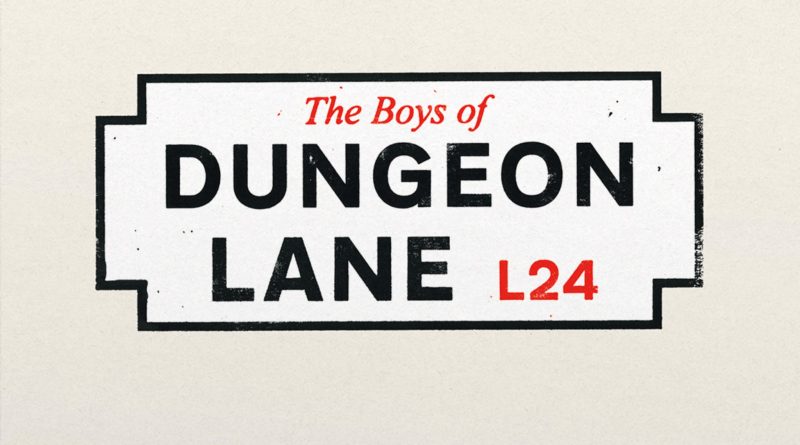
Inside Macca’s ‘The Boys of Dungeon Lane’
Paul McCartney’s new album is full of the highest highs and the middle-est middles

Half of The Boys of Dungeon Lane, Paul McCartney’s first studio release in six years, is very, very good; in fact, it’s within striking distance of essential.
The other half is so thoroughly mediocre that it’s presence alongside the superior half is utterly confounding.
Paul McCartney makes very good records. Oh, you don’t need old me to tell you that. My god, have you listened to 2018’s Egypt Station recently? Or McCartney III? You probably haven’t, and that’s a shame, because both are pretty much as good as any album anybody not named Paul McCartney ever released. And let’s not even discuss the creamy glittering weirdness of the Fireman records. Right? (Though boy do I want to because those are great albums.) It is a profound skill to have an entire catalog full of everyone else’s best record.
But let’s talk about the peculiar conundrum of The Boys of Dungeon Lane.

There truly are two records here: Almost exactly one half of The Boys of Dungeon Lane is a wondrous Paul McCartney album, full of grace, heart, empathy, easy and lovely melody, and so emotionally effective that it’s almost shocking in its’ ability to feel new and old at the same time. And the other half? Well, the other half will make you go, “Oh, that’s okay, I mean, I guess it’s okay, yeh, but when I reach for a McCartney record, will I listen to this? No, probably not. It certainly doesn’t suck, but on the Macca flow chart, I have, like, literally 600 songs I will listen to before these.” Frankly, half of Dungeon Lane is depressingly average; by that, I mean that usually, even lesser McCartney stuff has some sparks and speedbumps in the production and performance that makes it interesting, but the dull half of Dungeon Lane is just, well, weak tea.
And what makes it so goddamn weird is that these two albums co-exist alongside each other. Can McCartney not tell the difference? It would be one thing if we were talking about one or two really good songs alongside one or two really bad ones (otherwise known as “Almost Every Lou Reed album Syndrome”); but not only are we talking about a pretty straight half/half division between the thoroughly average and the utterly wonderful, it’s actually a fairly concrete split in the sequencing: The entire middle of Dungeon Lane — tracks 5 through 10 (with the exception of track 6, the lovely, bouncy and charming “Down South”) — are forgettable or worse, and rock without sparking (though I do like the tempered sheen of Andrew Watt’s production, which reminds me a bit of Dave Edmunds’ 1970s Rockfield stuff). This dull middle is certainly not “bad” work, but it’s so very, very far from distinct or exceptional; true, if we were considering an entire album of the sort of material on (what I will refer to as) Dungeon Lane’s “dull middle” perhaps I could find some other kind of context for it, or some other vein might emerge that would help me see this stuff through rosier glasses. But held against the strength, vulnerability, and even courage of the six supremely good tracks on Dungeon Lane, this “dull middle” makes almost no sense at all. Certainly, even the most avid McCartney fan will likely never consider listening to the almost apoplectically and atypically average “Come Inside” or “Never Know” a year from now. This dissonance between the two opposite spirits of Dungeon Lane reaches its’ peak on “Home to Us”, the much-touted duet with Ringo, which is so mawkish, uninspired and full of lazy, obligatory Beatle-isms that it makes George’s “All Those Years Ago” seem like “Penny Lane.”
VIDEO: Paul McCartney feat. Ringo Starr “Home to Us”
So, accepting this schizophrenia, this split album, as a sad but curious reality, I’d strongly suggest re-sequencing The Boys of Dungeon Lane as follows (and in this order):
“Down South”
“Days We Left Behind”
“Life Can be Hard”
“First Star of the Night”
“Salesman Saint”
“Momma Gets By”
…because that’s a great album. This revised ideation of The Boys of Dungeon Lane is impactful, moving and courageous in concept and execution; it will stick in your heart and your mind as we listen to octogenarian McCartney (perhaps for the first time willing to sound his age) turn over the brittle leaves of a yellowed photo album, and wander through crumbling halls of memory with grace and tempered passion. See, the constant theme of the album (even on the lesser songs) is memory — sensory, romantic, historical — with the most attention-getting tracks addressing the pre-history of the most famous band of all time; but the Fab-centric numbers seem slightly superficial, and not remotely as powerful as when Paul reflects on his mother and father (in the monstrously good final two tracks of the collection), or, on “First Star of the Night,” a love that could be last week or last century; “First Star of the Night” is a subtle, heart-squeezing ballad banger, reaching a kind of simple, direct, almost child-like emotional truth nearly devoid of all that cleverness we usually associate with McCartney. And as noted, those last two tracks on Dungeon Lane are flat-out stunning: the moving memory-waltz of “Salesman Saint,“ and the chiming, vaguely “Let It Be”-ish pulse of “Momma Gets By” are raw, gorgeous and powerful tributes to his parents. “Momma Gets By” is, simply put, a track that belongs on any Paul greatest hits collection; and how wonderful is it that we can say that about someone who has been making history-changing music for over 60 years?
VIDEO: Paul McCartney “The Days We Left Behind”
Oh, and a lot has been made of McCartney’s aging voice, yet its consistently effective on Dungeon Lane (even on the lesser tracks), largely because McCartney has become aware of the utility of having an intimate relationship with the microphone, and not the back row…and Paul’s (nearly) 84-year-old voice is perfect for that. When he performs live, McCartney can’t resist singing OUT to the audience and OVER the band, creating a dissonance between what he wishes his voice was capable of and what it actually is capable of; but on The Boys of Dungeon Lane, he has become aware of the power of sharing his heart and his stories with the electronic ear two and a half inches from his lips.
Regardless of my belief that roughly half of The Boys of Dungeon Lane is better off forgotten (and almost certainly will be), the bottom line is that there are six songs here full of beauty, empathy and wisdom, spontaneity and a sweet and sad reconciliation with mortality and memory, and you will want to spend time with them, again and again.

- Mitchell Cohen Sets the Story Straight - October 21, 2026
- Girlschool Release 1981 Reading Set - October 5, 2026
- Bob Dylan Live 2026 - August 1, 2026
You May Also Like
-
 March 26, 2026
 -
 May 22, 2026
 -
 March 26, 2024