
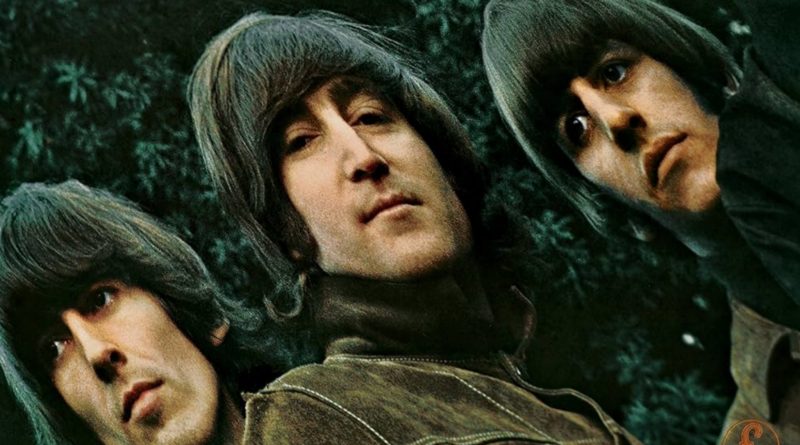
Nowhere Men: The Beatles’ Rubber Soul at 60
Looking back on the Fabs’ transitional classic
Can a band be at the crossroads without knowing it?
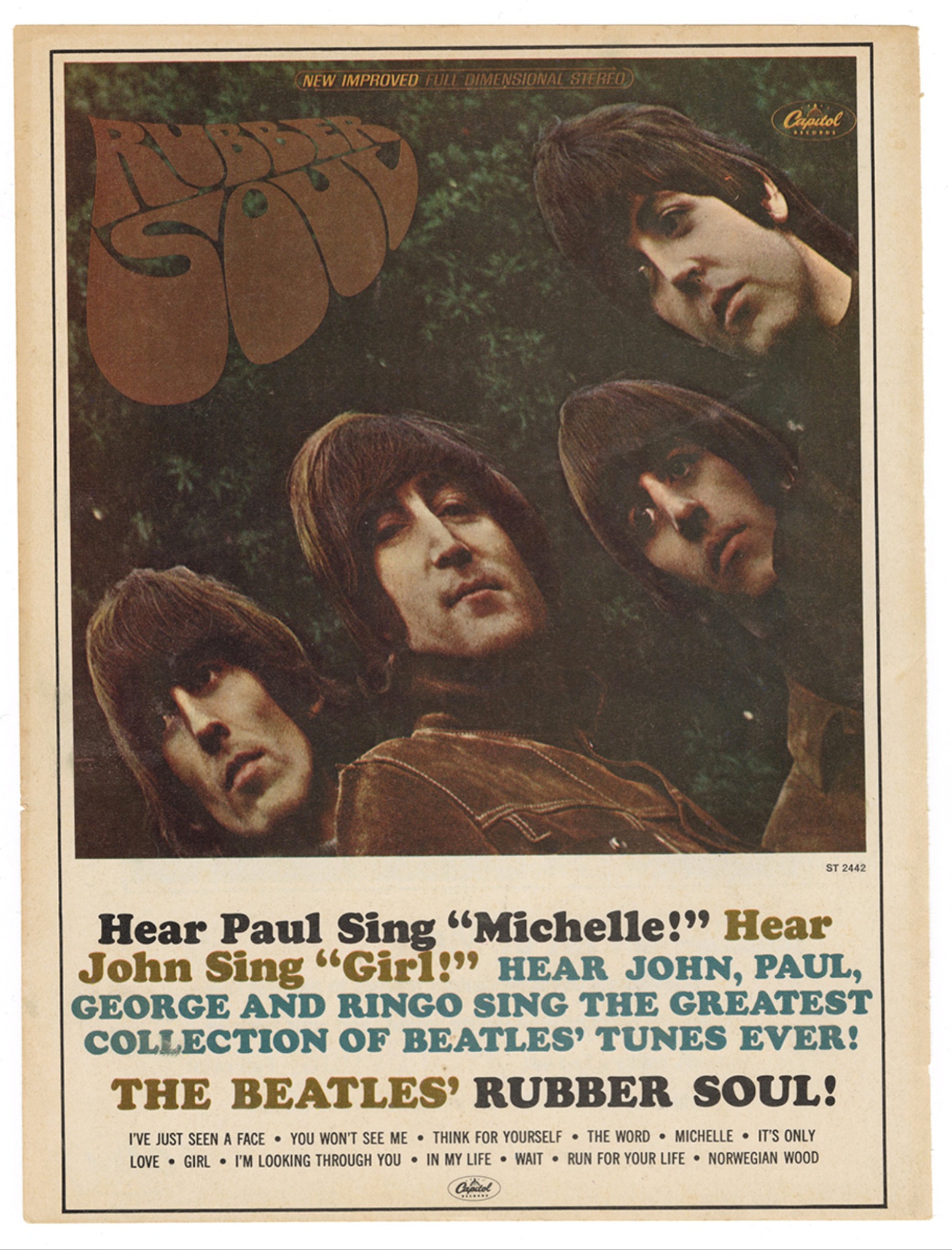
The answer was undoubtedly “Yes” for The Beatles when they stepped into the studio to record Rubber Soul, which just turned 60 today (at least here in the U.S.).
The band was in the middle of a constant churn of touring, cranking out albums, filming movies and whatever other public appearances that came their way, a cycle seemingly designed to induce burnout. Indeed, they’d quit touring less than a year later, tired of not being able to hear themselves play and wanting to focus on their craft in the studio.
Rubber Soul lies in the middle. The lads were definitely under pressure to crank out product, as their label wanted a new album in the stores for Christmas. On the other hand, they didn’t have anything else major on their plate, as they’d already done about a month’s worth of shows in Europe and the U.S. in the summer of 1965.
Thus, The Beatles were under a time crunch, but they had the opportunity to focus solely on what they were doing in the studio.
This was also the point where Bob Dylan’s influence was being felt in more than one way. To be sure, there were the lyrics. John in particular had become more introspective during a period where he wasn’t in a good headspace. Dylan was both an inspiration and a competitor, as Lennon took from the American, who clearly noticed.
AUDIO: Bob Dylan “Fourth Time Around”
It was easy to hear Help’s “You’ve Got To Hide Your Love Away” as Lennon nicking Dylan’s style. Later, Dylan paid him back with Blonde on Blonde’s “Fourth Time Around,” which could quite easily be heard as him mocking Rubber Soul’s “Norwegian Wood (This Bird Has Flown}.” Lennon thought so when the man himself played it for him.
So, as much as there was respect, there were also egos. “Both of us were always uptight, you know. Of course, I wouldn’t know whether he was uptight because I was so uptight, and then when he wasn’t uptight, I was,” Lennon told Rolling Stone in 1968.
Then there was the more, ahem, aromatic and chemical influence. Dylan reintroduced The Beatles to pot during one of their American visits the previous year. There had been some dabbling in their Hamburg days, but by the time of Rubber Soul, the Fabs were enthusiasts, definitely impacting their creative approach.
Although with a new album to finish and lots of long days, it’s not as if the group could indulge in the studio itself. “When we did take too many substances, the music was shit, absolute shit,” Ringo said years later. “At the time we’d think it was great, but when we came to record the next day we’d all look at each other and say, ‘We’ll have to do that again.’”
They put the album together over four weeks of recording, having expanded their instrumental and tuning palette and, to a greater degree than before, wanting to make an album as a whole, rather than just cobbling a bunch of songs together as singles and filler.
To that end, they were putting cover versions in the past. Beatles For Sale, released almost a year to the day prior, had six covers. Help was down to one — Ringo’s turn on Buck Owens’ “Act Naturally.”
The oddity is that the album, given The Beatles’ historical track record, didn’t have a single. That is to say that the American version had no official single releases.
People here had Capitol’s Dave Dexter Jr., a man with a track record of being wrong, to thank for that.
Dexter Jr. was the gatekeeper for EMI’s signings. a position that a man who hated rock music had no business being in. Thus, Capitol missed out on successes from the likes of the Hollies, the Animals, the Yardbirds, the Dave Clark Five and Herman’s Hermits and only got The Beatles because he was forced into it by seeing the reaction to them in England firsthand.
Capitol’s move was to chop up the proper albums, removing songs to put on to bastardized compilation albums, a cash grab move. Dexter also messed around with the mixes, a move that infuriated the band. The practice didn’t stop until The Beatles’ next deal with EMI ended it, starting with Sgt. Pepper’s release in 1967.
AUDIO: The Beatles “Day Tripper”
Only three songs from the Rubber Soul sessions made it to singles. “Day Tripper,” a Lennon rocker about a dilettanteish woman (or perhaps McCartney’s reluctance to drop acid yet) with a riff inspired by Bobby Parker’s “Watch Your Step” was paired as a B-side with McCartney’s “We Can Work It Out,” about his relationship with Jane Asher, which was given punch by the Lennon-penned bridge.
The two were cut from the album, standard practice at that point, as “Paperback Writer” and “Rain” didn’t make Revolver and “Strawberry Fields” and “Penny Lane” were sacrificed from Sgt. Pepper.
That leaves Lennon’s “Nowhere Man” as the only song from any version of Rubber Soul (and not in the version here) to be released as a single.
As much as the song could be read as the band’s spin on Dylan’s social commentary, it actually sprang from writer’s block and self-doubt. Lennon, unable to come up with anything one day, lay down on the studio floor. His inner thoughts of “what am I doing here?” led to the lyrics coming out. If the Walrus was Paul, John was the Nowhere Man.
AUDIO: The Beatles “Nowhere Man” (First Version, Take 2)
On the U.K. version of the album, which is canon and the one I’m writing about here, even though it was released three days earlier than the bastardized North American version, it’s a showcase for Lennon’s songwriting roll at that point, adding their lovely harmonies as a spin on Byrds-doing-Dylan pop.
It reached No. 2 on the Billboard charts, being consigned to the compilation Yesterday and Today, an album whose original and notorious cover featuring The Beatles surrounded by raw meat and dismembered baby dolls could certainly be viewed as a commentary on Capitol’s album release tactics.
Lennon had no block when it came to “Norwegian Wood (This Bird Has Flown),” a song he began writing the prior January about an extramarital affair he’d been having, a not uncommon occurrence for him. He thought he was disguising it from his wife, Cynthia, although he was not as good at hiding his cheating as he thought over the years.
The song itself details an encounter with a more worldly woman, its opening line “I once had a girl, or should I say, she once had me,’ casting her in that role while deflecting his responsibility. It’s lovely and ambiguous at the same time, certainly sharper than Dylan’s later parody.
Indeed, if you paid attention to the lyrics, the protagonist, unlike Lennon himself, clearly didn’t consummate anything, sleeping in the bath and commenting on the then-oft used cheap pine paneling (which is what “Norwegian wood” really was).
AUDIO: The Beatles “Norwegian Wood (This Bird Has Flown)”
George Harrison’s interest in Indian music had picked up that year. He’d taken a liking to sitar after encountering it during the filming of an Indian restaurant scene in Help.
Lennon asked him to play it on the song. The riff, possibly the first use of sitar on a Western pop song, gave it a much more distinctive feel.
The Beatles were clearly adding more to their love songs, tossing in more complications, like affairs or, in the case of Lennon’s “Girl,” weariness and resignation. The woman herself gets no voice in the song, instead remaining the object of deepest desire and utter scorn.
Lennon’s protagonist is in stasis, unable or unwilling to do his part to change the circumstances, down to the exaggerated deep breath before the chorus.
The whole thing is still lovely sounding, between the harmonies and the Greek music break, although it is worth noting that the lads weren’t singing “dit-dit-dit” in there, but “tit-tit-tit.”
The worst of Lennon’s outlook towards women resulted in Rubber Soul’s one outright clinker — “Run For Your Life,” which shows he was better off not even trying to write a murder ballad let alone this. Given his own admission of his past abusive behavior in his later years, it just doesn’t work.
Also, if you’re pretty much a serial adulterer, a line like “I’d rather see you dead, little girl/Than to be with another man” rings pretty hollow. Not even a nifty guitar part from George could save it.
The better angels of Lennon’s nature thankfully show up on “In My Life,” full of wistful maturity unusual for a 25-year-old songwriter in 1965. He was clearly taking a step forward as a writer, resulting in something deeply personal, yet utterly inviting.
AUDIO: The Beatles “In My Life” (Take 1)
His harmonies with McCartney were fantastic here and, speaking of new-to-the-Beatles instrumentation, the well-chosen harpsichord solo comes from producer George Martin.
Speaking of stepping up as a writer, George Harrison was in his usual “You get two songs, that’s it” slot, but as someone who hadn’t started writing as early or intensely, he was becoming a quick study.
“Think For Yourself,” boosted by Paul’s fuzzy bass. The lyrics are a bit Social Commentary Lite, but it’s a catchy enough walk over turf he’d cover better in the future.
His best contribution to the band at that point would be the gorgeously Byrdsy “If I Needed Someone.” This was only fitting, given that Harrison’s use of 12-string Rickenbacker guitar had impacted Roger McGuinn and David Crosby. So if George nicked “The Bells of Rhymney,” so be it. Turnabout was fair play.
In fact, Harrison started writing it after a couple of meetings with the Byrds in L.A. earlier that year, using a new Rickenbacker gifted to him by a Minneapolis music store during the band’s summer tour.
With one of Rubber Soul’s themes seeming to be “love is complicated,” the woman is clearly not the problem in these lyrics, which is nice for a change.
The Paul-led album opener “Drive My Car” is a wittier romp through such complications. The unseen lady is clearly not dependent on a man, a woman with agency, albeit with a twist. At the end, she surprises the would-be chauffeur with the lines “I got no car and it’s breaking my heart/But I found a driver and that’s a start.”
Playful and unafraid of innuendo (sometimes a car isn’t a car), its humor is enhanced by its increasing musical sophistication.
One of the things that could be easily lost in the loveable moptops in the year of the Help movie was the changes in tones, tempo, keys and sometimes not playing their usual instruments, even in an album full of short pop tunes.
“Drive My Car” is a great example, going from simple verses to more chords in the chorus. Then they shift to that “beep beep yeah” finish with the stinging guitar as it fades.
The album title’s roots were explained by McCartney in 2000’s Anthology book. He said, “I’d just about an old bloke in the States who said, ‘Mick Jagger, man. Well, you know, they’re good, but it’s plastic soul.’”
The phrase stuck. Paul can be heard saying “Plastic soul, man. Plastic soul” after the take of “I’m Down,” recorded that June, which appeared on Anthology 2. The randy Scouse wits later turned it into a pun.
McCartney’s love of Motown made its way into “You Won’t See Me,” a musical nod to the Four Tops’ hit “Same Old Song” The meta layer to McCartney lifting a bit from Holland-Dozier-Holland was that they were lifting from themselves, the title coming from the fact that they knew it was very similar musically ai “I Can’t Help Myself.”
In Paul’s hands, it became a bouncy, unabashed pop song, albeit one that twisted what had then been the group’s musical formula. To that point, the Lennon-led songs about love were the ones where things could get thornier.
This time, listeners got the juxtaposition of Rubber Soul’s sunniest melodies with lyrics about communication problems, inspired by McCartney’s life. Dating actor Jane Asher at the time, he was frustrated that she took a stage acting gig while he was working on the album, missing her and unable to get hold of her.
In a record full of great harmonies, the song has some of its best, offering delicious counterpoints. It seems odd that the song was never released as a single. Its hit potential was later realized by Canadian Anne Murray, whose cover of it became a Top 10 hit in the summer of 1974.
McCartney’s frustration with Asher wanting her own career wasn’t limited to one song, as it was also all over “I’m Looking Through You.” Again, the complaint is set to pleasingly happy pop, albeit rougher around the edges as Paul’s vocals go into the rawer upper register at the end and there’s that semi-garagey organ.
“Wait” is a bit of an outlier in a band discography not loaded with songs in minor key. The song, the most 50/50 Lennon/McCartney collaboration on Rubber Soul, was recorded that June for Help, but didn’t make the cut. The band added some overdubs on a marathon final day of recording in order to have it fit sonically with what they’d been doing the previous month.
If it doesn’t have the big hook to land the way other songs on Rubber Soul did, it still has some interesting touches in George’s guitar pedal work, Ringo’s use of tambourine. At this point, though, Beatles album filler could have been a high point for a lot of bands.
Going farther back was the Side Two opener, once again taken by Ringo. Lennon had “What Goes On” kicking around since 1963, though it had never been recorded. Dusting it off, he and McCartney crafted it into a rockabilly song in the drummer’s wheelhouse.
Paul recorded a demo version. Starr used it to learn the song and threw in some of his own ideas for the middle eight, making it the only Beatles song credited to John, Paul and Ringo.
VIDEO: Ringo Starr & His All Starr Band performs “What Goes On” in 2009
It accomplished what it set out to do, which is fill the slot Ringo’s Buck Owens cover did on Help. It’s not as great as that country classic, but it’s amiable enough and George’s rockabilly chops suit it perfectly.
“Michelle” went even farther back, although it didn’t exist as such.
Back in John’s days at Liverpool College of Art in the late ’50s, one of his tutors used to throw parties. Paul would attend them, hoping for a beverage or two and to find a little female companionship.
One night, Paul saw a stereotypical Guy With a Guitar at a Party, a hipster singing in French.
This led to McCartney doing a parody version as a joke more than once . Fast forward to the Rubber Soul sessions.
“John said, ‘D’you remember that French thing you used to do at Mitchell’s parties?’ I said yes,” McCartney said in his 2018 book Many Years From Now. “He said, ‘Well, that’s a good tune. You should do something with that.’ We were always looking for tunes, because we were making lots of albums by then and every album you did needed fourteen songs, and then there were singles in between, so you needed a lot of material.”
Say goodbye to its humorous origins.
Instead of doubt, threats or complaint, this was purely romantic longing. The least “rock” moment on the album, but one of the ones most likely to stick. Its deceptive simplicity. The way the middle eight, from Lennon, plays with McCartney’s rest of the song. If not for Capitol’s desire to move on to the next non-canon album, it should have been a single.
“The Word” is, well, as Lennon himself sings in it, “Love.” So, here we have the hippy-dippy sentiments that led to “All You Need is Love” and singing “love is the answer” in “Mind Games.” But it’s not in sunshine pop trappings, but rather in an almost-but-not-quite-funky groove. If not an essential moment, it certainly points the way for superior Lennon traversals over the subject matter and showcases a willingness to not stick fully to formula.
The album, completely unsurprisingly, was another hit, topping the U.K. charts for two months and going platinum in the U.S. in a week.
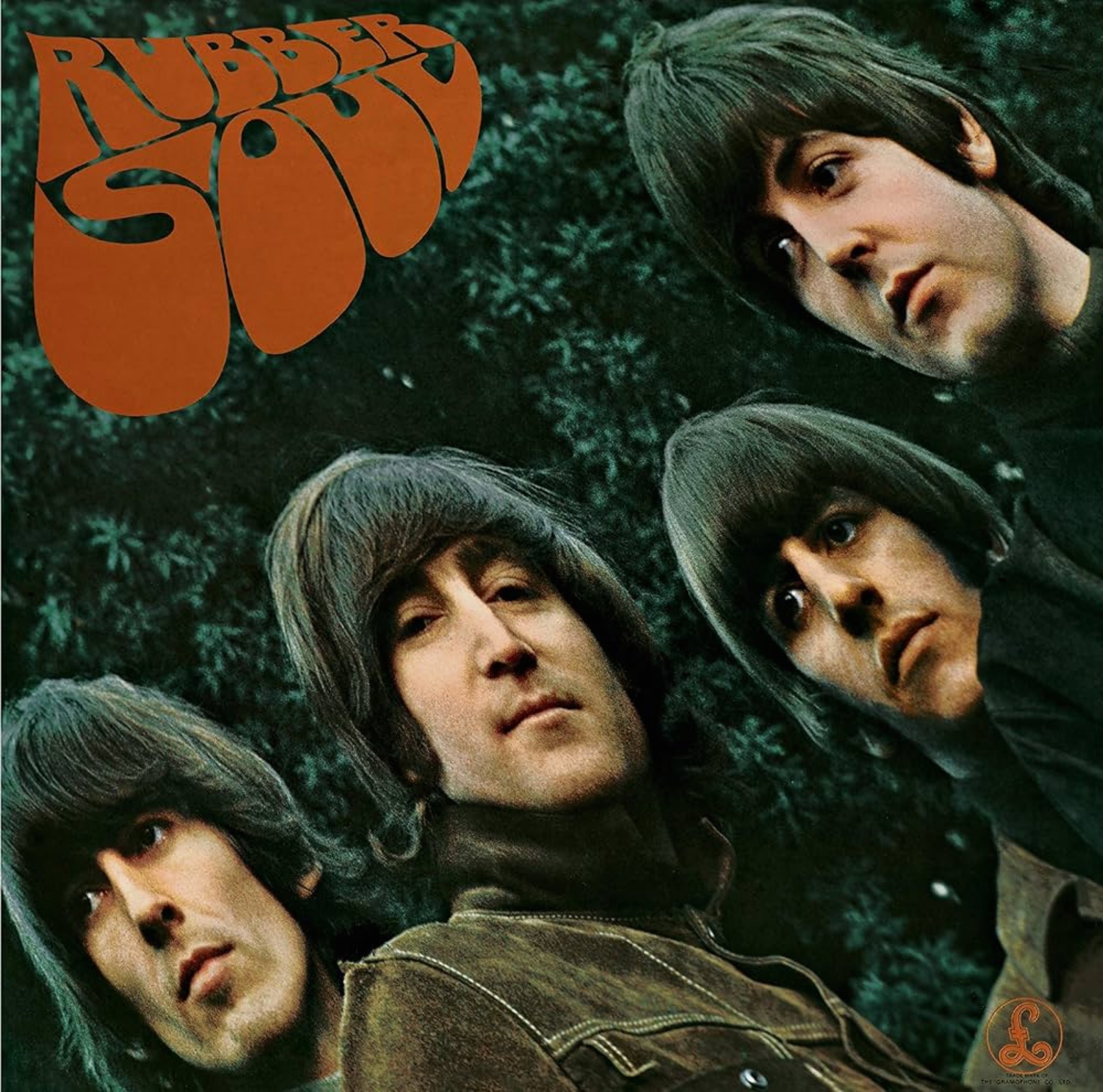
In retrospect, Rubber Soul is The Beatles’ bridge album, between the seemingly happy-go-lucky lads debuting on Ed Sullivan and the amazingly creative studio hermits they’d soon become.
Rubber Soul, which threw folk rock into the stew in a big way, featured hints of where the band would go in some ways. But just the creativity for its own sake would lead to directions audiences at the end of 1965, and perhaps the four themselves, weren’t imagining.
It’s full of memorable melodies and killer harmonies, where even the filler had something to recommend it, except for “Run For Your Life,’ which was easily made skippable by being the last song on it.
This was the point where The Beatles turned their focus to making albums that had singles, rather than just build around a couple intended hits.
They’d taken that turn at the crossroads, into the most fertile period of their career. Revolver was just eight months away. They might not know what awaited around the turns, but they knew there was only one way to go.
Forward.

- Nowhere Men: The Beatles’ Rubber Soul at 60 - December 6, 2025
- Good Company: Queen’s A Night at the Opera Turns 50 - November 28, 2025
- Wings for Wheels: Born to Run at 50 - August 27, 2025
You May Also Like
-
 December 19, 2020
 -
 January 16, 2019
 -
 January 20, 2024
