
Best Music Journalism 2025
Two dozen articles and plenty of blogs to keep the faith in an AI world
While music scribing has almost always been a mostly unloved type of work that’s not well paid or gets most anyone any kind of respect outside of the music circles, it’s what we live for.
And while our work, like that of journalism in general, is constantly being squashed by the online world, just for some perspective, at least we’re not meeting the same fate of frontline journalists, over 120 of whom were murdered this past year.
As for the big picture view in the journo world, younger people don’t trust news media, which might not be a huge surprise since they mostly get the news via social media and amateur sources. According to a study via Mashable/Graphite, the majority of online articles are now AI generated and that’s not likely to change. Not too surprising either that a much more promising platform for media now is YouTube, where companies are pouring money and resources. Unfortunately, media is also getting squeezed elsewhere online as Facebook seems to be threatening brands with a two link per month limit unless they pay up, which of course would hit musicians and labels, too. Worst of all for the online/tech world’s intersection with media is that Google is pushing its AI results in search results, spitting out (sometimes incomplete) answers and discouraging users from digging deeper to the source/media sites — this problem of drying up traffic and revenue for media is known as “Google Zero” and its impact for publishers could be disastrous.
Or to put it another way: “Traditional music criticism and coverage continue to adapt under significant pressure from digital disruption, changing audience habits and technological upheaval. Longstanding outlets and independent magazines have seen staff cuts, mergers and shifting editorial strategies as they grapple with fragmented audiences and the economics of online media, prompting some veteran writers to lament a loss of critical edge in reviews and a pull-toward more positive or promotional content.” That gives you a taste of the AI world as this is what ChatGPT spits out about the same topics, cribbing in part from The New Yorker.
And how are music publications taking in this changing media landscape? Surprisingly well, in some cases. Stereogum is switching to a subscription model and as founder/editor-in-chief Scott Lapatine explained to me, “The initial response is promising…The site remains free to read, but like many other magazines, there is now a limit to the number of articles someone can access before they’re asked to pay. We will experiment with how many, but believe the concept is fair. Since introducing the updated site last month we’ve seen a meaningful bump in subscribers.” Meanwhile, The Wire put an SOS call earlier this year but a few weeks later, an editor there told me that they “received an overwhelmingly positive response, which moved us all incredibly.” Hearing Things, founded last year by former Pitchfork editors, has put out some excellent work already and is now proudly worker owned, which is really heartening. The same can’t be said for their old stomping ground, which made the boneheaded decision to add a comment section for the old reviews, which will no doubt open up the writers to even more derision and menace than before. I’ve already heard from Pitchfork writers and editors who have been threatened and stalked, plus see the comments section in the Instagram link there for more tales of woe and ugliness.
Meanwhile, a little publication called Rolling Stone saw Gus Wenner step away from his CEO job after three years and Shirley Halperin became their very first female editor-in-chief, which is about freakin’ time, but whose job will be shared with Sean Woods.
And of course, this being the age of media cut-backs, they were rampant again even if it might not be as much as previous years (though that might be because so much has been cut already). First was Rubin Institute for Music Criticism lost its funding earlier this year. This was followed by Penske Media, which laid off a lot of Billboard, Rolling Stone and Variety writers– this has to be a pretty troubling sign for the industry when so many mainstream people are cut, though it’s bad obviously when any writers are let go.
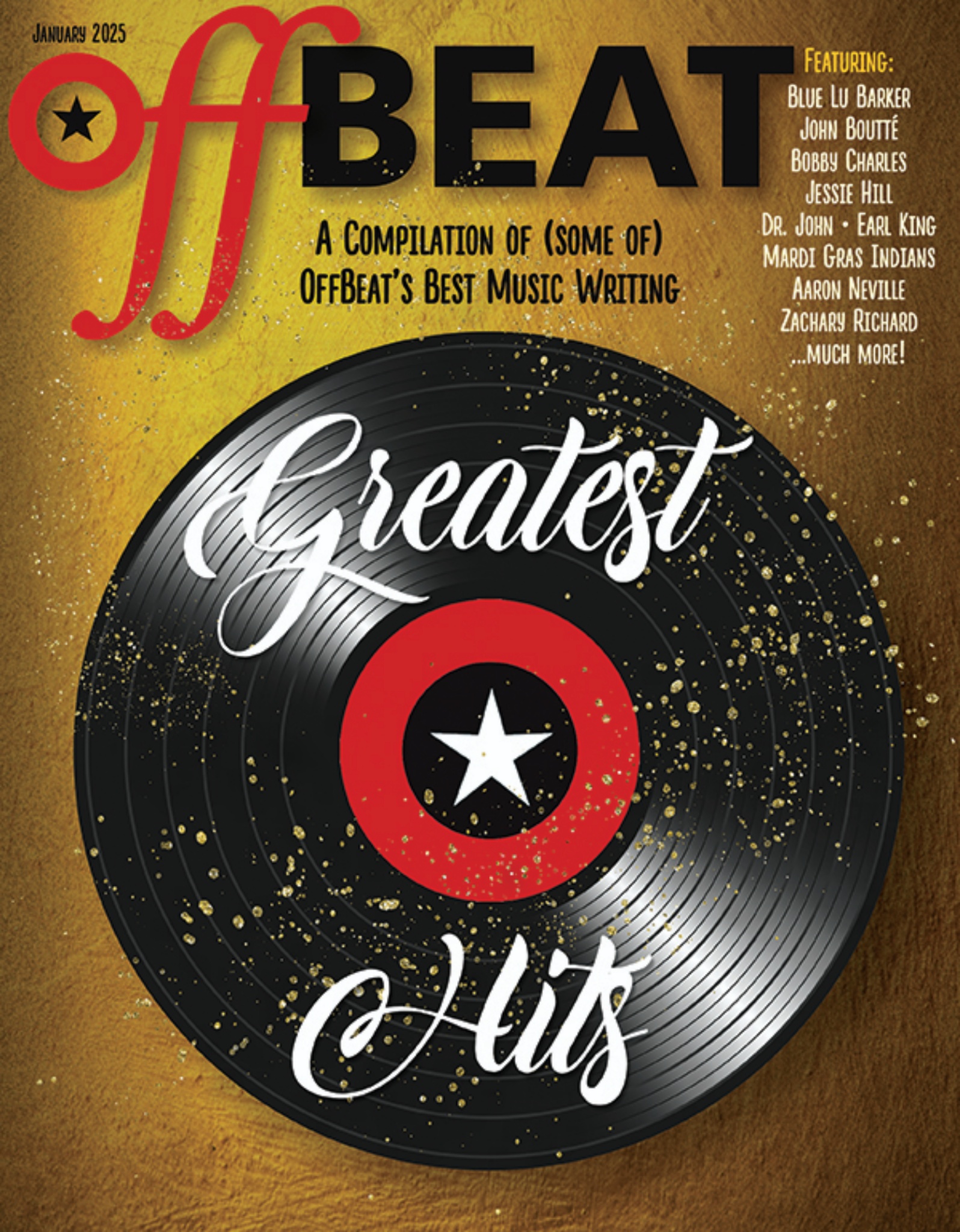
Also painful are all the goodbyes in 2025 for music journalism. New Orleans mainstay Offbeat Magazine signed off, and we lost some important and influential scribes, including Francis Davis, Art Fein and Sacha Jenkins, plus Stanley Booth late last year.
Some uplifting news is that there is still great writing being done out there, as evidenced by the two dozen articles noted below. Notice that many of them come from Substack blogs that encourage readers to financially boost the writers, which in some cases lead to pay-outs bigger than what they were earning when they were on publication payrolls. In addition to the writers in the round-up below, I’d also encourage you to check out the other Substack music blogs, including many scribes you probably already know and still do great work there and some you may not know yet but should, including Aisha, Jay Babcock, Brianna Bartelt, Cathy Ben-Ameh, John Buxton, Judy Cantos-Navas, Ben Cardew, Carmelia, Nate Chinen, Robert Christgau, Lori Christian, Jacqui Devaney, Chuck Eddy, Kate Ellen, Ted Gioia, Will Hermes, Mimi Itseli, David Katznelson, Amaya Lim, Jess Malker, Greil Marcus, Amy McGrath, Tim Riley, Philip Sherburne and Jani Smith. I subscribe to all of them and you should, too. I also have my own Substack in case you’re interested.
Another promising trend is that in terms of “hard news,” American Press Institute is finding that local community sources are filling in the gaps as more noted publications cut back and disappear. This seems in line with the trend of sites like Substack filling in the gaps as the remaining major pubs keep slashing their arts coverage.
And as always, I encourage you to reach out and contact any writer, editor or publication that you love and tell ‘em so and support ‘em financially if you can, through subscriptions to publications and the blogs I mentioned here. As I’ve said, they definitely do not get enough love and they really appreciate any kind of kindness you can share. Happy holidaze, y’all.
Ian Courtney “Trump Guts The Kennedy Center’s Leadership, Appoints Himself Chair” (Celebrity Access, Feb. 2, 2025) Appropriately enough, the word ‘dictator’ appears in the first sentence here and ‘absurd’ shows up later. The piece ends with this warning: “Throughout history, cultural institutions have often been the first to fall under the control of leaders seeking to consolidate power. The performing arts, once a space for independent expression, can quickly become a tool for reinforcing political narratives when placed in the hands of loyalists. When artistic leadership is reshaped to reflect ideological purity rather than creative merit, the result is rarely a flourishing of culture, but rather its subjugation to the interests of those in power.” As a post-script, the takeover of the once-venerable institution kicked off with ticket sales plummeting. Doesn’t sound like the Center’s mailings are going well either. Also, not a surprise that a corruption investigation is going on at the Center now. And the recent renaming of the Center (which was not actually approved unanimously) follows a trend that the new ‘owner’ destroys everything that he puts his name on.
Rev. Keith A. Gordon “Remembering Todd Snider” (That Devil Music, Nov. 16, 2025) A remarkable and tragic life story that, as Gordon notes, could have been fodder for several songs, and were sometimes, though not even Snider himself could come up with a dismaying story to match his own end, including jail, hospitalization and pneumonia. Via Portland, then San Antonio then Memphis, Snider had varying patrons including Capitol Records, Jimmy Buffett. Universal Music, Don Was, John Prine, late night talk shows, Tom Jones and more before he settled on his own indie label. Though usually thought of as a great novelty songwriter, Snider could also be “brutally sincere.” Gordon has no qualms about pegging him as a Gen X version of Dylan and though that might be a stretch, it’s not totally off the mark.
Wren Graves “TikTok Is a Shitty Music Discovery Platform and We Can Stop Pretending Otherwise: Why a ban won’t be so bad for the music industry” (Consequence of Sound, January 2025) Noting Cory Doctorow’s “enshitification” theory, this COS editor shows that TikTok was already on the wane, not really helping out new artists anymore and gamed to connect with certain people/emotions/styles and boost older acts taking advantage of their already-established fanbase. Plus, there’s the pay-offs from big labels for back catalogs and how other services like YouTube actually benefit more artists. TikTok may not disappear though as they’ve recently said that they’re selling off their U.S. component to certain administration-connected interests.
Margaret Guzman and Emily Christian “Why concert tickets are so expensive — and who’s to blame” (Business Insider, Dec. 15, 2025) An old question that keeps getting rehauled but is definitely worth visiting. Tickets prices have gone up 400% since ‘96, way outplacing inflation (about 94% during that time). Asking the schlubs from Live Nation/Ticketmaster (whose consolidation spelled doom for reasonably priced tickets) and StubHub (aka legalized scalping) who’s to blame is like asking burglars for their thoughts on home invasions. They only point the finger at each other, leaving the authors to say that “everyone blames everyone else.” Couldn’t the writers just conclude that they’re ALL to blame? Best voice here: Dean Budnick at Relix, who provides some much-needed, clear headed perspective.
Eric Harvey “Everything Looks Perfect From Far Away” (Pits and Landing, Oct. 27, 2025) In a blog post that’s the size of a novella, a review of Chris DeVille’s Such Great Heights book that tackles the tale of “peak indie” in the early 2000’s where it intersected with mainstream pop, making the former much more wide-ranging and the later much more hip– the whole idea of “indie” was stretched until it was almost unrecognizable but also meant that the world of it was no longer insular, and this extended to the world of music journalism covering it, too. The main force of course was Pitchfork, which rode the wave of its popular rating system and festivals to spread its brand. While admiring the book, Harvey dings DeVille for not digging into more analysis, repping rap’s hipster crossover stars and not seeing a sense of community being built up. One answer for community-corralling nowadays that Harvey comes up with is Stereogum, where Harvey happens to be a managing editor.
Craig Havighurst “Raul Malo, The Mighty Voice Of The Mavericks, Silenced At 60” (WMOT, Dec. 9, 2025) A tribute to an alt-country maverick who fused his Cuban roots with Americana music, going through the up’s-and-down’s of his beloved band breaking up and reforming before hitting a high point pre-COVID and then a brick wall when he had a cancer diagnosis. A big tribute at the Ryman Auditorium was going to honor him, with Malo as the guest of honor until his illness made that impossible, though he was able to hear the show while hospitalized not long before his death.
Corbie Hill “‘Pain Puts Us In Our Bodies’: A Music Journalist Investigates How Cancer Changes Musicians’ Lives (And His Own)” (No Depression, Nov. 15, 2025) It’s one thing to report on the unimaginable horror of cancer but another thing to share your own story and commiserate with musicians going through the same trauma, misery and uncertainty. The fortitude of Hill, his wife and the Americana musicians he chronicles — Kamara Thomas, Joshua Ray Walker, Nat Myers — is inspiring but also heartbreaking. They go through treatments that sap all their strength and may save them or kill them, plus they endure misdiagnoses, endless surgeries and having stretches of their guts and bowels taken out. And through it all, they find the courage to persist, using their music as an inspiration. As Hill relates, “I know what it feels like to teeter between life and death and realize, almost clinically, that I might not see the sun rise again. I’ve waited out weeks of unremitting, indescribable pain. If we make it to the other side, we come out altered.”
Santi Elijah Holley “Alice Coltrane’s Lost Ashram” (Alta Online, Feb. 1, 2025) Both touching and unfortunate. A jazz legend set up a spiritual center, which was later destroyed by fire. Luckily, Coltrane’s retreat fed souls for years before the tragedy and has an impressive legacy. One of the attendees was Dojo Cat, not to mention ‘Trane family members like Ravi Coltrane and Flying Lotus.
Yannise Jean “How The Golden Era of Black Media Made R&B Mainstream” (okayplayer, Nov. 10, 2025) While radio was once a major way to promote acts and later music videos, something curious happened in the ‘90s. TV and movies were the prime movers to help drive the careers of Brandy, Mary J. Blige, TLC, Boyz II Men and many others, including a singer named Whitney. Makes me want to watch Martin again.
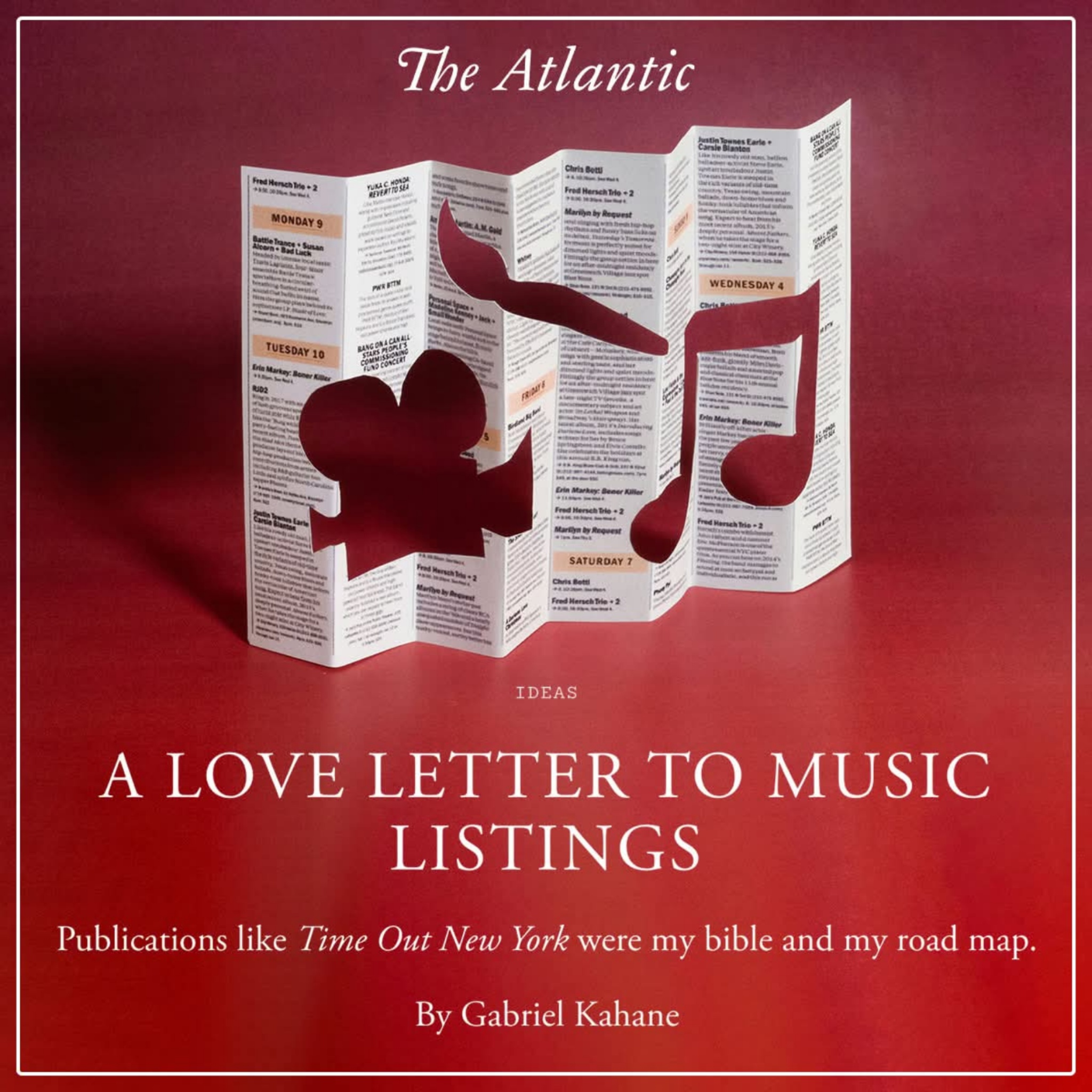
Gabriel Kahane “A Love Letter To Music Listings” (The Atlantic, July 27, 2025) The noted composer laments major publications giving up or cutting down to the bone the number of music (and arts) listings. Now, it’s much harder to find interesting, variety choices through the noted sources, even in a huge market like NYC and it’s not helping the artists or the fans. Some of the great sources of listings from long ago were Steve Smith at Time Out and Robert Christgau at The Village Voice — admittedly, I did listing write-ups for them both back in the day, so this is personal too. The solution now is to sign up to dozens of local venues mailing lists or with the dreaded darklords of Ticketmaster or Live Nation. I’d also recommend sources like Oh My Rockness and a familiar source— Smith is still on the case, doing NYC listings for his Night After Night Substack blog.
Ryan Kailath “An East Village record store had the vinyl find of a lifetime — on an island in Maine” (Gothamist, Dec. 18, 2025) A guy walks into an NYC record store and notices something interesting — one of the three records that he released on his tiny label decades ago is sitting there in a bin. The 1982 album by folkie Kath Bloom and polymath guitarist Loren Mazzacane Connors (Sing the Children Over) barely registered back then, with hundreds of copies crowding up the guy’s New England basement. After the guy introduces himself, the store owner’s jaw drops and tells the guy that he’ll take any other copies he has. The records arrived wrapped but the shop guy had a “dewarping machine” to flatten ‘em out. After an Instagram post and a haul to a record fair, he sold off just about all of the copies, holding onto a few for later sales. Can I suggest that other small label owners who have their records sitting in their basement also visit other small shops and have the same happy ending?
Bob Mehr “22 Years After His Death, Warren Zevon Is Getting His Due” (New York Times, Oct. 27, 2025) At an L.A. tribute concert organized by his son and his old buddy/backer Jackson Browne, proceeding a Rock & Roll Hall of Fame induction, Zevon’s work was feted for over four hours by Marshall Crenshaw, Dwight Yoakum and members of the Beach Boys and Dream Syndicate– who the hell else could cover such ground? Zevon’s wild life was easily a match for his wild stories in his songs and we hear some poignant thoughts from the organizers. Browne suggests that his old friend “never dumbed down for anybody” while Jordan Zevon sees that his dad actually planned out his long goodbye, including his last album and somehow its subsequent Grammy Award.
Marcus J. Moore “Stevie Wonder’s Vision of Black Life in Motion” (Active Listening, Nov. 11, 2025) From the author of the great De La Soul book (High and Rising), that the band sadly and unfairly dissed, comes this deep dive into “Living For the City.” Giving us some useful historical context, we also hear about the sound-effects interlude, the subtle intro and the song’s legacy, including how rap picked up on it, giving us plenty of food for thought. As a bonus, do a search for the incredible live version that Stevie did with Ray Charles, including Brother Ray’s desperate mid-song poverty rant.
Jack Newsham and Katherine Long “How rich musicians billed American taxpayers for luxury hotels, shopping sprees, and million-dollar bonuses” (Business Insider, Dec 18, 2024) A late entry from last year but very vital and worth reading. Good intentions sometimes breed corruption, especially when millions of dollars are involved. Lil Wayne, Marshmello, Steve Aoki, members of Alice in Chains and Chris Brown reaped piles of money from the feds for supposed COVID relief but the dough actually went to party-related items (“hookahs, bottle service, ‘nitrogen ice cream,’ and damages involving burn holes to rented couches”) and into their bank accounts. The people in the government agency involved are frustrated too but they have little/no incentive to stop it or question it. And how did Weezy respond to the charges? He made “a sexually explicit overture to a reporter.” Seems kind of cool and badass until you realize that you or I would go to jail for ripping off the Feds for a fraction of what he did.
Liz Pelly “The Ghosts in the Machine” (Harpers, January 2025) Taken as an excerpt from Mood Machine, one of the most important books of the year, and subtitled “Spotify’s plot against musicians.” Pelly lays out how her digging around led her to the Perfect Fit Program. PFC, as it’s called, is where anonymous musicians come up with mood music to order for playlists, while getting no recognition, little control over their work and a relative pittance in compensation while Spotify rakes in the vast majority of the money from unsuspecting listeners. The artists they hire don’t feel great about this and the playlist editors who weren’t onboard were soon replaced. But not to worry as Spotify head Daniel Ek (who happily throws money into weapon systems) reassured his company that AI would soon be creating musical content. By now, it surely has, and then some. Hell, they even temporarily had their own King Gizzard clones after the band pulled its music from the service (but soon yanked it after Paste it rubbed their face in it).
Amanda Petrusich “Finding a Home Among the Punks” (New Yorker, Feb. 8, 2025) Punk/indie photographer Gail Butensky doesn’t just deserve to be in the same sentence with fellow female paparazzo Lynn Goldsmith, Roberta Bayley — she deserves to be in the same grouping with any noted music photographer, including Bob Gruen and Henry Diltz. Along with starting the late, lamented Matter magazine, where she worked with writers/musicians like Steve Albini and Ira Kaplan, she snapped some stunning photos of noted bands in action on stage — here we see Butthole Surfers, Pavement, Bikini Kill, the Birthday Party, the Fall, The Mekons, Hüsker Dü and Minutemen, all in B&W and all in stunning action. Her story deserves to be told, which makes this such a valuable article (plus you can get her recent photo book). Also important here is that we don’t just see the stars of the scene but also mostly-forgotten groups like Naked Raygun and Dog Faced Hermans. Who says that reissue producers are the only ones who excavate worthwhile lost bands?
Scott Ray “James McMurtry Won’t Play His Famous Populist Anthem Anymore” (Texas Monthly, June 18, 2025) Not unheard of for performers to not play their biggest song– the Allmans didn’t play “Rambin’ Man” post-Dickie, Radiohead ain’t fans of “Creep” and Cheap Trick wisely gave up on the soppy “The Flame” for a while. But here, the revered singer-songwriter has something else in mind. “We Can’t Make It Here” would seem to fit in perfectly in these harsh economic times but McMurtry won’t bite ‘cause he thinks that the song would be taken the wrong way by the ‘America First’ crowd. “These people that want to bring back manufacturing to the States, they don’t want to bring back the good-paying union jobs that gave us the middle class of the fifties. They want to bring back indentured servitude. They’re thinking of another generation. They want to go back to 1890s industrialism.” Undeterred, he still tours regularly and does a now-famous bi-weekly gig at Continental Club, Austin, where he has a long-standing following.
Jaspreet Singh “Are you listening to bots? Survey shows AI music is virtually undetectable” (Reuters, November 11, 2025) While Disney snuggles up to AI and songwriters fret about the technology killing off their craft and Spotify happily lets AI slop fill playlists, none of the debate may matter after a while ‘cause we don’t know what’s real or not. Science and testing proves it too– the technology not only makes hit songs but we also mostly don’t know what’s AI and what’s human-made in music now. Sorry to be so cynical, but most music fans may not even care — they just want a good tune and only the hardcore fans will wanna support artists. Plus, how do you think the major music companies will feel about paying less to bot technicians than actual artists? Brave new world it ain’t.
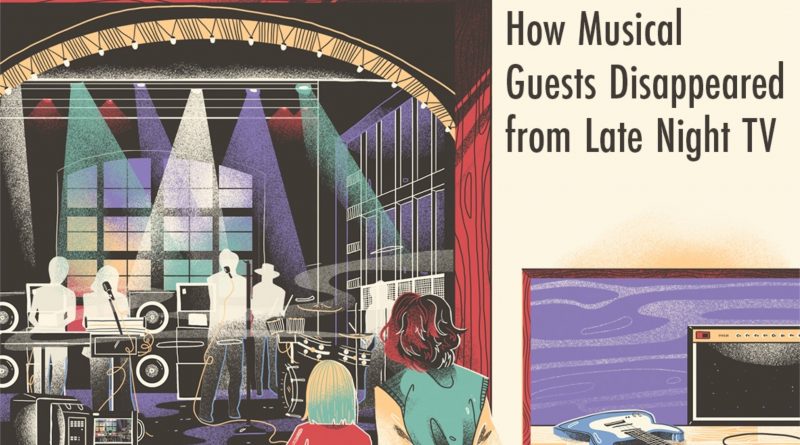
Mary Siroky “How Musical Guests Disappeared from Late Night TV” (Consequence of Sound, April 10, 2025) You probably didn’t know this but 2011-2013 was a golden age of late night TV music acts. Now the trend is in a sad downward spiral with a fraction of the musical bookings (about a quarter) from the peak. As of April, when this article came out, the late night landscape was already collapsing as several shows went off the air without getting replaced and some that remained (i.e. Seth Myers) had to kill off their music component altogether. Acts like the Strokes and Future Islands were once launched from this platform and more recently Chappell Roan and Doechii benefited, but now there’s much less opportunity, thanks in part to Gen Alpha ditching network TV. What’s worse is that in the ensuing months after this article, CBS has been turned into Fox New Lite, cutting the cord with Stephen Colbert, while Jimmy Kimmel was temporarily bounced off the air for poking the MAGA bear. Who knows how long the whole late night landscape might last, especially with the current FCC commissioner acting like a bootlicker who’ll gladly bounce out anyone who irks President Don Snoreleone.

Ian Temple “Where is All the Halloween Music?” (Soundfly, Oct. 31, 2025) Appropriately coming out on the very day of everyone’s favorite non-holiday, some theories get floated around about why the spookiest day of the year doesn’t generate tunes. Maybe ‘cause it’s not as pop-friendly as Xmas and doesn’t have the straight lineage of that holiday either. It’s also better suited to movies than songs, with a recent resurgence of horror films proving the point. And maybe we just don’t appreciate the bits of Halloween music that are already out there via goth, industrial, “Don’t Fear the Reaper” and “Thriller.” Temple believes that Prince is actually the ultimate Halloween artist and you may not agree, but it’s an interesting theory at least.
Darius Van Arman “The struggle for independence in the modern age: our shared fight against market concentration and for art, culture and access” (Stereogum, Nov. 20, 2025) The founder of indie label Jagjaguwar tells the unlikely tale of his early success in the ’90s and why it would seem unlikely today in the world of label consolidations, shrinking ad revenues destroying indie publications and internet algorithms killing off any off-kilter music. Nowadays, his once-beloved releases are demonetized by streaming services since they don’t get enough traffic. His prescription, via a Dutch bartender/philosopher: be subversive and embrace weirdness. The stakes are dire, too: “Get busy fighting for new art and new voice, or get busy dying.”
Simon Warner “Paperback Reader: Tracking Dylan’s Road trip” (Rock and the Beat Generation, April 6, 2025) I know — why do we need even more Dylan digging when there’s a bookshelf worth of writing about the guy out there? Warner does some good sleuthing though about Bob’s early obsession with the Beats and specifically Jack Kerouac’s On the Road, which Dylan cited a few times as an early influence. But was it really that influential for him, and did he pick up on it when he said that he did, in 1959? Warner has some good sources that doubt that and traces all of their steps. Also, it may very well be that the Kerouac book that was his real favorite was Mexico City Blues and even that was supplanted by Woody Guthrie’s Bound For Glory. Along with his interesting insights into Dylan’s ‘66 and ‘74 tours, the story ends up in Lowell Massachusetts in the mid-’70s, with Dylan squatting with Allen Ginsberg at Kerouac’s gravesite, paying their respects.
Carl Wilson “Criticism’s Biggest Straw Man” (Slate, Sept. 25, 2025) Subtitle: “What was ‘poptimism,’ and why are people still saying terrible things about it?” One of our greatest mainstream writers (as in major publication, not music style per se) dives into the decades-old debate that he’s been front and center of, for over 6500 words no less. Sure, he has a vested interest and as someone who was skeptical of the whole music war that pitted ‘poptimists’ against ‘rockists,’ I’m admitted not entirely convinced by his arguments of what poptimism achieved. But you have to be impressed by how he goes out of his way to define the debate, the terminology, the misconceptions, the history, the stakes, some of the outcome and how the digital age wiped out any achievements of making pop worthy of being taken seriously.
Jeremy Young “When Live Music Happens in the Dark: Autechre’s Polemical 2025 Performances” (Hypebot, Dec. 12, 2025) To quote the line from the Springsteen hit, what happens at a concert where you’re literally dancing in the dark? The Brit techno duo decided to find out the answer by plunging their audiences into the void for their recent shows. In a digital/streaming age where nothing seems to happen unless it’s visually documented, how would the crowds react? Young decided to find out and got mixed responses from audience members — some loved the experience while others were pissed off by the lack of (visual) spectacle. Your mileage might vary about such a concept but play the video embedded in the article (which is all dark of course) and hear how innovative and mind-wrapping the act could be, even with nothing to see.
VIDEO: Autechre Live in Ogden Theatre 2025

- The ‘Soul’ of Gregg Allman - June 17, 2026
- Haitian Divorce: Steely Dan’s ‘The Royal Scam’ at 50 - May 28, 2026
- Twinkle, Twinkle Uncle Floyd - January 29, 2026
You May Also Like
-
 May 12, 2021
 -
 March 25, 2021
 -
 March 18, 2025
