
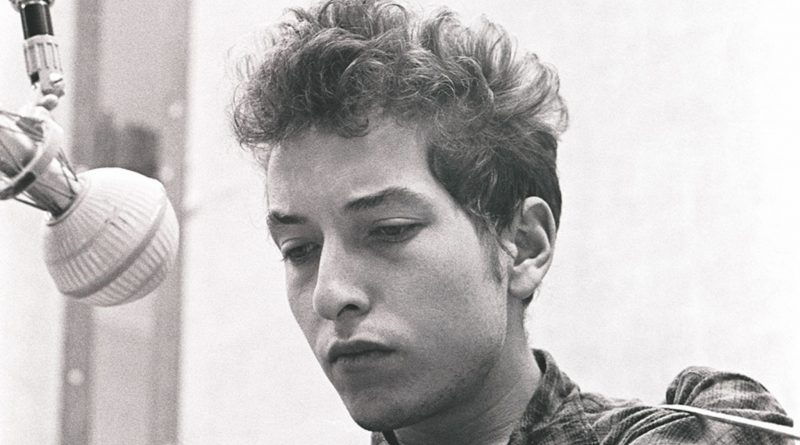
Bob Dylan’s 18th Bootleg Dream
Through The Open Window isn’t a footnote, but an essential part of the Bard’s story

I don’t need another reason to fall in love with Bob Dylan.
But if I did, Through The Open Window: The Bootleg Series Vol. 18 1956 – 1963 provides plenty of reason to do so.
Through The Open Window is not merely a collection of odds and ends, or stuff for the Dylan academic or trainspotter. It shouldn’t be thought of as an addendum, or something (just) for the hardcore Dylan fan. It is, in fact, a fantastic album, in and of itself; even if it existed totally in isolation, it would be one of Dylan’s very best records. It tells a story of a great American artist. Does it reveal Dylan inventing himself? I don’t think so, because I believe with all my heart Dylan was always all there (if you’ve seen any of Dylan’s shows for the last 15 or 20 years, you’ve seen someone scratching the same mossy cypress knees with the same bicycle chains he was investigating in a garage 70 years ago, most of which are on display here).
Through The Open Window is the story of a young artist discovering and claiming and exploring and expanding the identities that were already in his soul in 1956 or 1958 or 1960. Through The Open Window traces that discovery of identity (not invention or acquisition of identity, discovery!). And far more importantly, unlike virtually every comparable historical and/or odds’n’sods anthology and/or copyright dump, Through The Open Window is a great effing record, one of the essential albums Dylan has ever released.
Perhaps more than any other Dylan album — archival collection or otherwise — Through The Open Window exposes the absolute meaningless of authenticity, at least as we apply it to Bob Dylan. See…
Authenticity is a quality of fact and execution, not of birth. Good Art = Fact. Fact = Whatever You Don’t Fake. What you don’t Fake = Expression Devoid of Irony.
Good music is in touch with the primeval tarry, dusty ores, threshed wheat, and broken skin of rock ‘n’ roll’s holy and sinful origin/original sin (Sinful: Slavery, America’s original sin. Holy: The rhythm of joy and tears created tom relieve its’ unrelievable onus). Dylan, like, say, Dexter Romweber or Lux Interior or the Trenier Twins or Collins Kids or Mark E. Smith (Dylan’s only conceivable equal, but that is another goddamn story entirely), has always been in touch with the purest medicine show and hardrock spirits of rock ‘n’ roll, no matter what voyages he took us on (note bene: “Hardrock” in the coal miner sense, not, like the, uh, rock and/or roll sense). This has always been the hawk on Dylan’s shoulder, as this collection makes clear. Dylan’s adoption of masks was done out of the need for the artist to reach his own soul, not out of a desire to put on a mask.
Surely, in my inauthentic mind, I am aware that prior to Dylan there must have been people bred in the cauldron of the early Brillo-chewed screams of greaseball and Hadacol garage rock who blended the blue balls of Big Joe Turner with the picket line heart of Woody Guthrie with the bruised fingertips and broken soul of Robert Johnson; there must have been, yes? But rather goddamn convincingly, Through The Open Window makes the serious fucking case that Bob Dylan was one of the first (and best) to envision that a Cold War-scarred sensitive student AND a Cochran-loving 11th grade horndog AND a proto-whiteman in Hammersmith Palais engorged by the mystery of the blues could, would and should be the same hepcat.
VIDEO: Through The Open Window ad
This must be noted: I understand that Pink Floyd copyright dumps and the largely trivial, (mostly) aesthetically useless, and historically marginal Beatles Dullthologys are all well and good. They serve a purpose, I guess, though I could give a shit about something that I don’t want to actively LISTEN to, on a sensory/sensual level. But see, what happens when you call something “Bootleg Volume 18” is that people think it somehow belongs in the same basket as that kind of nonsense. And that’s not remotely the case with Through The Open Window. Here’s an extraordinary thing about Through The Open Window: I have long believed that an artist — any artist, from legend to bedroom/laptop creator, and everything in between — should have the following attitude: Every time you release something, you have to imagine it will be the ONLY release of yours someone might hear. Everything you release must have the potential to awe and fascinate, maybe even make a fan for life (for instance, I would contend that Dylan’s Rough and Rowdy Ways could make someone a Dylan fan for life, even if that was the only Dylan album they had ever heard; I feel the same about loads of Dylan’s albums, by the way, from Self Portrait to Desire to the vastly underrated Triplicate). Point being: Through The Open Window is a phenomenal album, not just a fantastic historical document. (High standards are common to the Bootleg Series: I would contend that 2013’s Another Self Portrait — Vol. 10 in the series — is one of Dylan’s ten best albums, possibly even top, uh, eight).
But back to authenticity, revelations, etcetera: one of the magical things about Through The Open Window is that it reveals that Dylan was always Dylan. Maybe that’s what draws the blood red line between sincerity and affectation: Bob Dylan never swapped hearts, just hats. When you see Bob Dylan in that light, when you hear what was already there between 1956 and 1963 (as evidenced on the well-delineated arc of Through The Open Window’s 165 tracks), you find that his allegedly chameleon-like career arc has featured few surprises: success and longevity has not so much allowed him to experiment as much as it has allowed him to stay utterly true to himself; and what we hear today (and over the past 65 years) are just different versions — evolved, devolved, polished, scuffed, scattered, smothered and covered — of what he’s always been. Through The Open Window utterly buries the myth of the Inauthentic Dylan, an understandable error since he (essentially) began his career with a fake name and a fake backstory; but again and again, the 165 tracks of this collection reveal someone finding the right sized boots, not trying to jam their toes into the wrong sized slippers. For example (and there are a lot of these we could choose from), 1960’s recording of Jesse Fuller’s “San Francisco Bay Blues” would fit in very damn well on the Western swing of 2012’s Tempest; another 1960 recording, “K.C. Moan,” could slip effortlessly into the raw, rollicking saloon rock of his current live sets; the eight remarkable tracks from the November 1961 performance at Carnegie Chapter Hall reveal a sensitive singer of American and Irish folk songs, rendered in a clear, pure, agile voice similar to the vocal timbre used in his Nashville Skyline/New Morning/Self Portrait era. In fact, the eight Carnegie Chapter Hall tracks may be the most aesthetically satisfying — as in NO EXPLANATION IS NECESSARY — of the entire collection; they show as man in love with the power of American music, rollicking sometimes to the point of dissonance, sensitive to the point of beauty, aching with feeling even as they burst with pride …in other words, this performance from 64 years ago has the same effect as Dylan’s current live shows (or, for that matter, his appearance on Johnny Cash’s TV show in the spring of 1969). See, Dylan never “changed” voices or characters; they were always all him, all there. Likewise, six songs taped at a friend’s home in Minneapolis in December 1962 are an aesthetic treasure, showcasing Dylan’s skills as a true folk singer and interpreter of American folk and blues; apparently, someone had a tape recorder in the room at this exact moment he was at the peak of this skill as interpreter, something very shortly to be eclipsed his rapidly emerging skill as a songwriter.
Again and again, we are stunned, not just for the historical value (I mean, honestly, that’s lagniappe), but as a listener: listen to the scorching, darker, droning, take on “House of the Rising Sun,” taped at a friends’ house in April 1963; it features a revised, black-hearted melody, partially repurposed from “In the Pines” (a song which is represented elsewhere in the collection, in a version recorded at Carnegie Chapter Hall in November of 1961). Like so much on Through The Open Window, this shiver-dark “House of the Rising Sun” is worth the price of the whole collection. Yeh, seriously. (Oh, and there’s the goose-pimple effect of hearing the first-ever performance of the incomplete, not-yet-recorded “Blowin’ in the Wind” at Gerdes Folk City on April 16, 1962). And how utterly fascinating is it to hear Dylan’s first, John Hammond-suggested attempt at going electric, two songs recorded in early November 1962, with a full (albeit Memphis-leaning) electric band. This was a fascinating and inventive attempt to try to shoehorn Dylan’s midwestern-tinged hillbilly blues into the loose, raw funky rock of the early Sun sound (though the model may have been Elvis, it sounds more like the tobacco spit and coal-stained finger rock of, say, Sonny Burgess and Warren Smith).

Consistently, I am struck by how much the ’56 – ’63 Dylan showcased on Through The Open Window resembles the Dylan of today (which, in general yet accurate terms, is the Dylan of many, many pasts). For instance, the frantic yet rhythmically-firm “Baby Please Don’t Go” (a Freewheelin’ outtake from April of ‘62) is a preview of the raw, sizzling Dylan of the Hard Rain/Rolling Thunder era, while at the same time foreshadowing the un-sanded barroom sob and swing familiar to anyone who’s seen him live in the last twenty years. This sort of fascinating threading of Dylan’s life and work – it’s like one of those suspect boards you see on a TV crime show – happens again and again; and as exciting as it is, all that “oh my, isn’t that interesting!” stuff shouldn’t eclipse this: THROUGH THE OPEN WINDOW, ALL 165 TRACKS OF IT, IS A GREAT FUCKING ALBUM. So hand me a sharpie, so I can underline this again: unless you’re a musical trainspotter/stamp collector, albums like this are fucking worthless unless they’re a) worth fucking listening to, and b) worth listening to as much (or more) than any of the “formal” albums in the artists catalog. (Try applying that criteria to the legacy-shrug “huh?” of trivia and fakery that is The Beatles’ Anthology 4! Sorry to bring that up again, and please understand I am NOT picking on the Poor Fabs, but rather, on the Powers That Be who think we really need to spend time with stuff that adds nothing but noise to what had been a nearly perfect story). Perhaps the fact that Bob Dylan’s story is literally and truly ON GOING allows him to assemble archival collections that don’t just add noise or footnotes to the picture but are a real and valuable part of the picture itself?!?
Through The Open Window isn’t footnotes, it’s the story.
Yes, uh-huh, a not inconsiderable number of these 165 tracks have been available here and there on all sorts of copyright collections and random compilations…BUT HERE IT IS ALL TOGETHER IN ONE PLACE. And the packaging is brilliant and engaging: The 122-page book by Sean Willentz that accompanies the collection is fascinating, deeply informative, eminently readable and richly illustrated (Willentz also co-produced the collection, with Steve Berkowitz). Every single song, spoken intro, and additional musician will be explained and placed in context, with grace and without indulgence. The mastering and audio restoration (by Michael Placentini, Steve Addabbo and Damian Rodriguez) is so seamless that you never have to think about it, which should be the goal in projects like this; likewise, the graphic support and layout of both the book and the package, by the amazing Geoff Gans, is creative, gorgeous, and seamless. On archival collections like this (especially of such scope), you don’t want to have to “hear” the mastering or be distracted by the limitations of the original sources, and nor do you want to encounter liner notes or a design that wants to make a point larger than the point made by the music and the artist itself. Through The Open Window achieves all of that.
In freaking conclusion, Through The Open Window isn’t just an essential archival collection, but an essential fucking Bob Dylan record. It does not require explanation, and it does not need historical value as an excuse to spend time with it; it’s just a fucking great album. True, the historical value of this stuff is extraordinary, but I am far less interested in history than I am in the ability of music, recorded/performed/documented, to move us, entertain us, and give us yet even more reasons to bask in the idea that we are so fortunate to have lived in this man’s time.
True, the “document” that is Through An Open Window is extraordinary: Virtually a complete review of what Bob Dylan was creating, thinking, inventing, borrowing, and exploring from 1956 to 1963. But fuck that. History is history is history is history…but this stuff moves me. It isn’t merely insight into one of our greatests artists; its sight, it’s sound, it’s joy, it may be the only “early” Bob Dylan album you need to own.

- Girlschool Release 1981 Reading Set - October 5, 2026
- Bob Dylan Live 2026 - August 1, 2026
- Inside Macca’s ‘The Boys of Dungeon Lane’ - June 6, 2026
You May Also Like
-
 May 24, 2019
 -
 January 11, 2023
 -
 August 26, 2018