
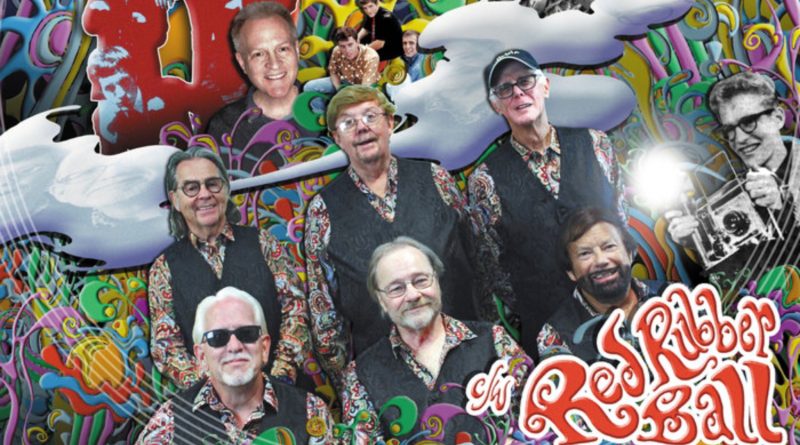
The Cyrkle’s Fab Days
An exclusive chat with Don Dannemann about opening for The Beatles and ‘Red Rubber Ball’ at 60

Popular music, specifically rock ‘n’ roll, is a fickle business.
Whether it’s an artist or a band, the lifespan lingers only as long as the hits keep coming. Never mind the fact that The Beatles, the Stones, the Dead and a precious few others defied that notion… second chances are decidedly few and far between.
They are in fact, reliably rare.
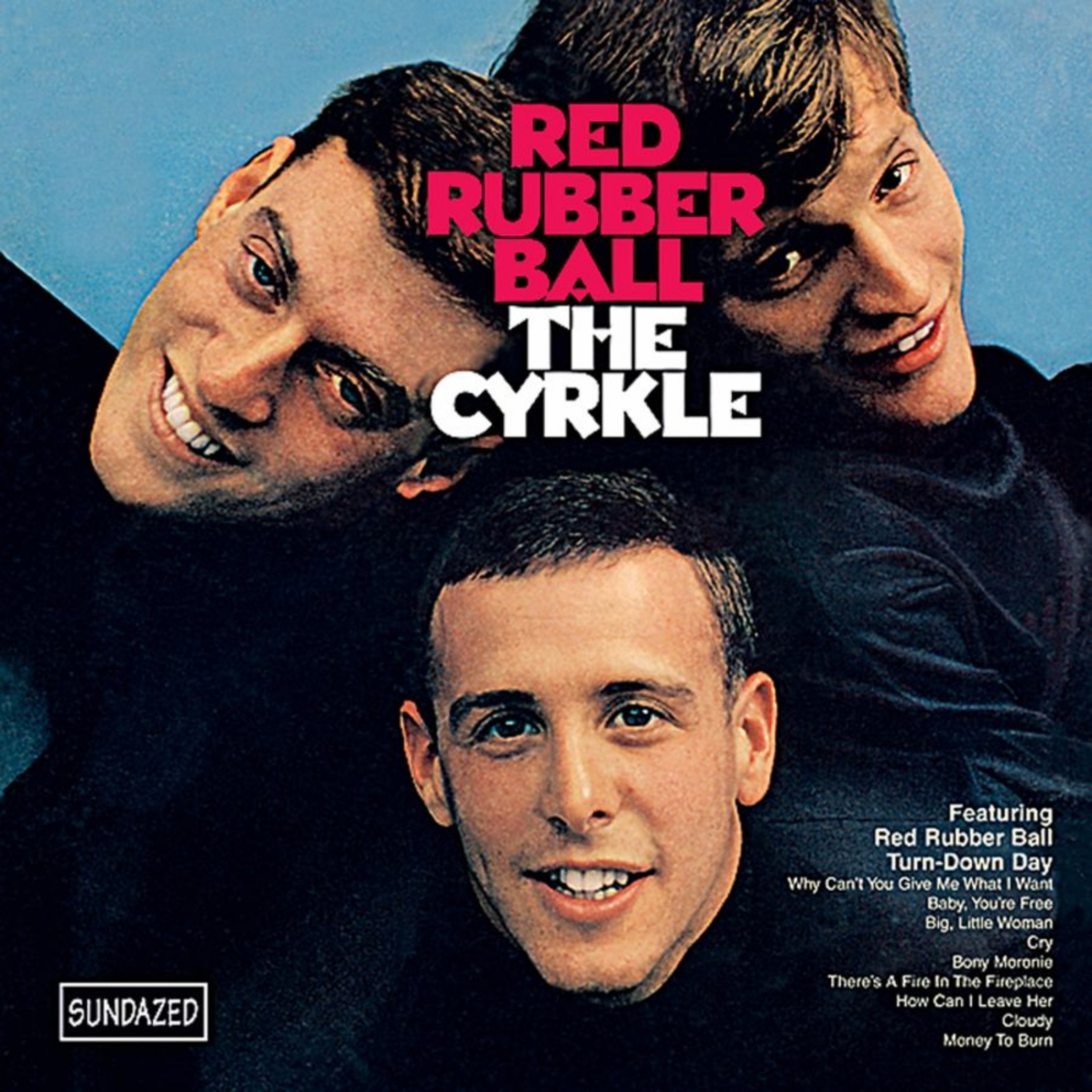
With that being the case, credit The Cyrkle with accomplishing a comeback that few, if any — especially the band members themselves — ever thought possible. Yet, here they are in 2026 making a credible comeback some 60 years after their two initial hits — “Red Rubber Ball” (famously co-written by Paul Simon, pre Simon and Garfunkel) and “Turn Down Day” first found them soaring to stardom.
In addition to having topped the charts early on, The Cyrkle earned the distinction of becoming the first American band to be managed by The Beatles very own Svengali, Brian Epstein. That, of course, gave them certain perks, namely the opportunity to open for the Fans during what turned out to be their final American tour in 1966. Discovered by sheer chance when one of Epstein’s associates, New York attorney Nat Weiss, happened to see them perform in Atlantic City, they had the distinct honor of being brought to the attention of Epstein himself.
Don Dannemann still remembers the circumstance that led to that initial encounter with Weiss all those years ago.
“In the summer of ’65, we were playing at the Alibi Bar in Atlantic City,” he explains. “We played there for the entire summer, and right at the end of the summer, a gentleman walks in and introduces himself, saying ‘My name is Nat Weiss, and I’m a divorce lawyer, but I’m also a good friend of, and partner with, Beatles manager Brian Epstein. We’re starting a management company here in the States, and I think you guys are really good. Let’s stay in touch.’ At the time, we were basically ready to split up and go our separate ways, and besides, we thought he was bullshitting us. So anyway, the guys went their separate ways. I was living at home in East Chester, New York, working for my dad in the sheet metal factory. I still had Nat’s card, so one day I started thinking, I got this guy’s card, let me call him, because maybe he’s for real. So I called him, and he answered the phone. I introduced myself, and he remembered me immediately. I was very surprised. He immediately knew who I was. He said to me,’Why don’t you come down to the city, and I’ll introduce you to Brian.”
Dannemann took him up on his offer and drove to the city with a buddy. What happened next seems surreal to him even now. “We were told to go to one of those small buildings on a side street on the Upper East Side. We parked the car, went to the address, walked one floor up, and there was a party going on. So we walked in, and kind of stood around acting rather shy. Nat finally comes in and I go up to him, and we shake hands. He says, ‘Oh, Don, so good to see you. Follow me.’ So I followed him downstairs, and there was a limo parked on the street. Then, in a very dramatic gesture, Nat opened the door, and beckoned me into the limo. He sat me down, and suddenly I’m looking straight into the eyes of Brian Epstein. Oh my God, I’m thinking to myself, are you kidding me? I’m desperately trying to be really cool. Nat introduces me, and says, ‘Brian Epstein, I would like you to meet Don Dannemann, one of the finest musicians I know.’ That’s an actual dead on quote.”

The encounter became even more intriguing after that.
“Anyway, I shook hands with Brian,” Dannemann continues. “Brian was an absolutely soft-spoken gentleman throughout all of the relationships that we had with him, starting right from that moment on. He looked at me and said, ‘Oh, yes, Don, it’s very nice to meet you. Nat has spoken very highly of you, and yes, perhaps we can get something going.’ There was a little bit of banter back and forth, and of course, I told him what big Beatles fans we were, and it would be so cool to be involved with them. Then Nat dramatically opened the door and beckoned me out of the limo. I still remember this because it’s like a videotape playing in my head, but in this case, the camera is behind me, looking up the block, and you see me behind it, silhouetted as the limousine slowly drives up the block. It just kind of goes off and disappears. Fade to black.”
Later, after Dannemann called his bandmates, they made a demo tape that they were able to play for Weiss.
“I remember his eyes kind of opened wide and he looked up to the ceiling as if in awe,” Dannemann says. “The bottom line is that Nat got excited after hearing these recordings, and that started the whole thing rolling. He got us club dates in New York, and we got a Columbia Records contract because of the fact that we were associated with Brian Epstein. That got us in.We had a young producer named John Simon, and we started working with him. We had a Columbia Records contract, a signing with Brian Epstein and things were sort of starting to move. Anyway, we’re in Columbia Studios one evening when Brian was in town, and he came up to me in the studio and says, ‘Don, take a look at this,’ and I look at he hands me, it looks like a business card, and naturally it has Brian’s name on the front. It’s a regular business card, and so I turned it over and noticed some scribbling on the back of the card. I said. ‘I’m sorry, Brian, I don’t get it. What am I reading?’ And he replied, ‘Uh, Don, that is your new name.’ It was a circle with the funny spelling ‘c y r k l e’. He said, ‘When I was back in Britain, I asked the boys, as the Beatles were lovingly referred to, ‘Who has an idea for the name of our new American group? And wouldn’t you know, it was John that came up with the name. With his great mind, this is how he thinks.’ The sad thing is that I am terrible at keeping memorabilia. That card was in the trash the next day.”
That’s not to say, he took that suggestion in stride. Not by a long shot. “I was almost a bystander to the whole thing,” Donnemann insists. “That was the way my head worked, like, ‘all right, guys, you’re going to do this, go there, you have a recording session, go there.’ I would sort of almost watch it from another perspective. On one hand, I would do it, but on the other, I would, in a sense, watch it from above.It was a weird mindset.”
So too, like anyone that found themselves inextricably immersed within those remarkable events, he has any number of anecdotes that describe what it was like not only like to tour with John, Paul, George and Ringo (“Very ordinary guys,” Dannemann recalls), but also open for them on tour and perform at that famously final concert at San Francisco’s Candlestick Park. It was then and there that The Beatles decided to opt out of live concerts, a decision that Dannemann says he was the first to know about after George Harrison confided in him and noted that the band had decided to call it quits in the aftermath of that particular performance.
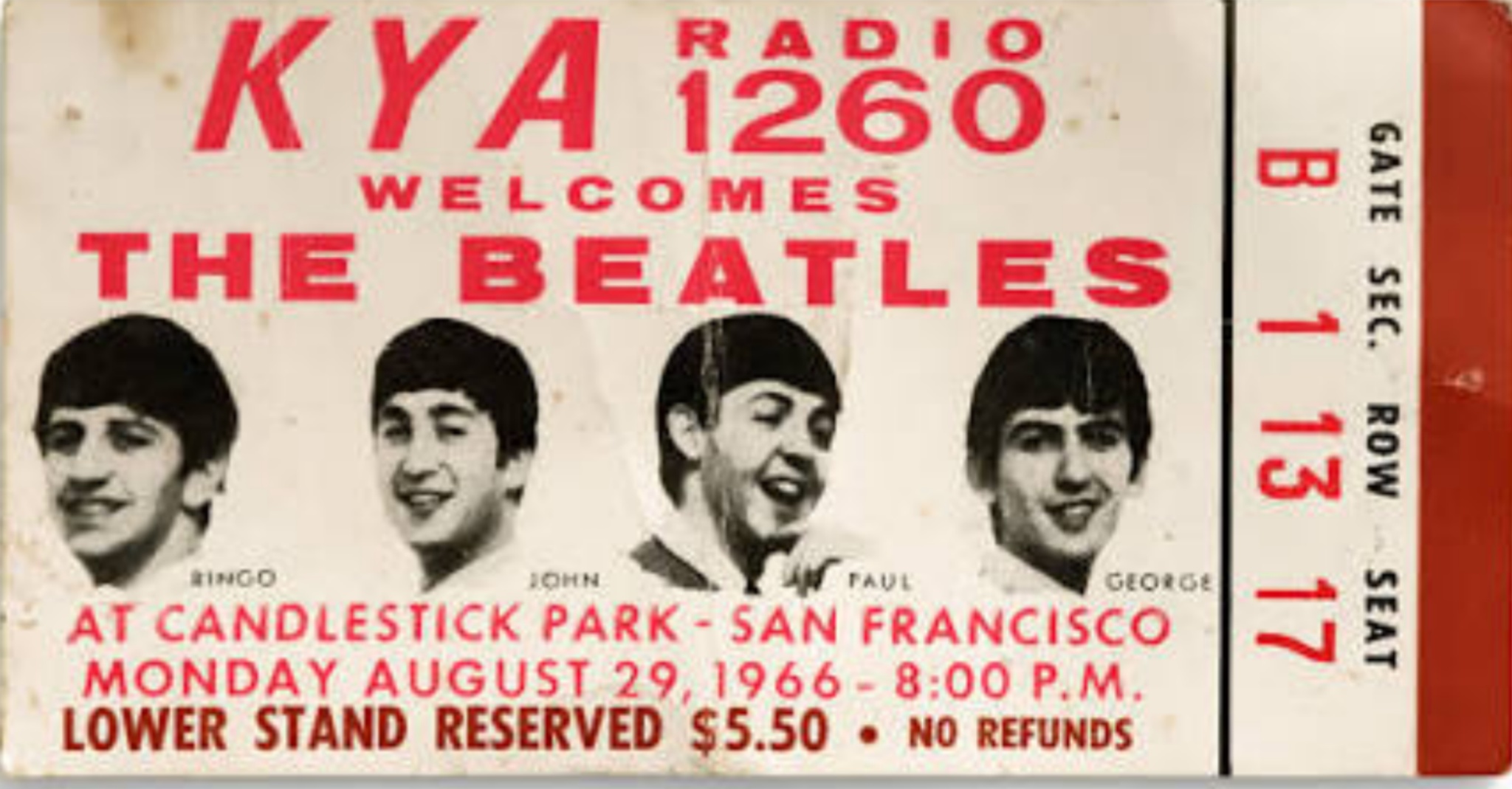
In fact, he specifically remembers George telling him, “I think we’re getting tired of doing these kind of shows. You can’t hear anything, and plus, we’re thinking of doing stuff that might not be so easy to reproduce. So we may not play anymore in person.”
“Nobody knew that at the time, so in a sense, I am very proud to say I am one of the few people that knew that it would be the Beatles last show.”
Despite their place in history, The Cyrkle’s lifespan amounted to the mere blink of an eye. They only released two actual albums during their initial tenure together — Red Rubber Ball and their sophomore set, Neon, both of which hit the record racks in 1966. A subsequent soundtrack, The Minx, was slated for release the following year, but didn’t see the light until 1970. A series of singles followed, but with the death of Brian Epstein in August 1967, the band’s fate seemed sealed and they disbanded a year later.
Nevertheless, Dannemann and cofounder/singer/bassist Tom Dawes went on to enjoy fruitful careers in the advertising arena by penning several successful commercial jungles (among them, the original 7-Up “Uncola” theme and Alka-Seltzer’s catchy “plop plop fizz fizz” slogan, respectively.) Dawes still retained his ties to the music biz by producing a pair of albums for Foghat, 1973’s Rock & Roll and its follow-up, Energized, released the following year.
Still, the most fortuitous move by any former Cyrkle member mauve occurred when keyboard player Mike Losekamp joined a Columbus, Ohio-based band called The Gas Pump Jockeys, a regionally popular classic rock combo that also consisted of Pat McLoughlin (guitar/vocals), Scott Langley (drummer) and Don White (lead guitarist). Not surprisingly, the band decided to incorporate the Cyrkle’s two chart-toppers, “Red Rubber Ball” and “Turn Down Day,” into their show with Losekamp on lead vocals. The songs were so well received that McLoughlin made it his mission to reform The Cyrkle for a proposed 50th anniversary tour and then taking it upon himself to initiate some massive detective work in hopes of locating the band’s original members.
AUDIO: The Cyrkle “The Visit (She Was Here)”
For his part, Losekamp hadn’t had contact with any of his fellow musicians since the band broke up. Its a result, it became apparent that this daunting task would fall to McLoughlin alone.
Nevertheless, his efforts paid off, leading to the first conversation Dannemann and Losekamp shared between them in 50 years.
As it turned out, Dannemann was still hesitant to commit. “I actually had no interest in doing it,” he admits. “I was skeptical, but I was open to the possibility. Pat turned out to be just a really neat guy, and I give him all the credit for getting us back together. However, at the time, I thought there was no money in it, so why waste time? Still, everybody else really wanted to do it, which made me think, ‘Well, all right, if you guys want to do it, then sure, let’s record an album.’ The first things that we recorded were updated versions of ‘Red Rubber Ball’ and ‘Turn Down Day.’ We decided to try to keep them sounding like the originals, and just update the technology. I had a bunch of songs that I had recorded personally, and Losekamp had some songs, so there was a combination of recordings coming from various sources.
Once Dannemann agreed to the reboot, the former Gas Pump Jockeys rechristened themselves as a new incarnation of The Cyrkle. The group currently consists of Dannemann, Losekamp, McLoughlin (vocals, guitar, percussion), Don White (guitar), Scott Langley (drums, percussion, vocals), and a relatively new recruit, Dean Kastran (bass, vocals), a founding member of The Ohio Express who joined in June 2021.
Since the reformation, The newly-rechristened Cyrkle have been making up for lost time. They performed for a live audience for the first time in November 2016 and turned that performance into a live album, appropriately titled Full Cyrkle. They followed that release with an independent album, Center Of the World.
However once they were signed to their present label, Big Stir Records, several of those earlier tracks were recycled for their first album for Big Stir, the aptly dubbed Revival. Certain songs — “We Thought We Could Fly” and “We Were There” in particular — document the band’s fabled history, while a cover of “59th Street Bridge Song (Feeinl’ Groovy)” rekindles their ties to Paul Simon. The entire album shares a decidedly ’60s shimmer, with songs such as “Goin’ Steady With You,” “Dance With Me Tonight” and “It’s Alright It’s Okay” capturing the innocence and idealism that defined that earlier era.
“It was the whole idea of ‘We Were There’ originated with the fact that we were right in the middle of the whole ‘60s music revolution,” Dannemann maintains. “We had a small part in it, but it’s very cool, We also had a relationship with the Beatles, and we actually toured with them. So I just thought to myself, holy cow, we were there, hence the name of the song.”

Originally released in 2024, Revival has itself been revived on vinyl to mark the 60th anniversary of the release of “Red Rubber Ball.”
Looking back, Dannemann shares the backstory about how The Cyrkle came to claim that song. “We met a guy named Barry Kornfield,” he rexplains. “He had a publishing company that represented Paul Simon. We first heard ‘Red Rubber Ball’ on a scratchy 45 demo record, and we all thought, ‘okay, yeah, that’s a cute song. Let’s try recording it,’ and that’s where that idea came from.”
Of course, it’s the band’s time with The Beatles which proves especially illuminating. Dannemann admits he still gets caught up in frequents waves of nostalgia and delights in sharing stories with the band’s audiences. Asked about their personal relationship with the band, he tells what transpired the first time the two groups were formerly introduced.
“Mal Evans, their roadie, showed us back to where they were,” he recalls. “It right before the show is getting ready to start. They were all just regular guys lounging around, but it was just an amazing moment to walk in, and there they are, and we’re now going to meet them. ‘Don, meet Ringo Starr, shake hands. Don, meet Paul McCartney, shake hands. Don, meet John Lennon, shake hands.’ I actually ended up in front of George, so I was able to get into a conversation with him. He was very warm and welcoming. We could look at each other in the eyes and have a just conversation along the lines of ‘who are you, tell me about yourself,’ that sort of thing. He actually asked me to give him a little bit of the history about our band. ‘That’s really cool,’ he told me. ‘You’ve got a couple of hit records now.’ And then he shared with me the fact that he was still blown away by their success. ‘It’s only a couple of years ago we were a bar band in Liverpool, and here we are,’ he said. It was just an amazing moment, and the feeling I got from George was that he was just a wonderful, warm guy.”
Then there was the time when The Cyrkle actually closed a Beatles concert and went on after The Beatles.
“There had been threatening weather St. Louis,” Dannemann recalls. “We were about to go onstage, and as we were walking out, they pulled us back and telling us, ‘Guys, come back. It looks like it’s gonna rain. We’ve got to get The Beatles on!’ That was a bummer of course, but we understood. So, okay, the Beatles went on and they finished, and now we’re getting ready to get on the bus to go back to the hotel. But then they pulled us back, and said, ‘Guys, it’s not raining, you guys go on. You’re gonna follow The Beatles.’ A great percentage of the audience was slowly filtering out as we played, but tat least a third of the crowd was still there. They didn’t leave. It was somewhere between 10 and 20,000 people that we played for that were willing to stay, having already seen the Beatles. So it was kind of cool.”
It was likely the only time a band other than The Beatles closed a show.
Still, the inevitable question remains. Did the Cyrkle ever induce the same sort of hysteria that the Beatles inspired at the time?
Dannemann answers matter of factly. “No, we didn’t,” he admits. “We didn’t get screaming girls the way The Beatles did, but we did have girls occasionally approach us. I would say it was sort of minimal, but I did have some level of success with girls on the road.”

- High Voltage!: AC/DC’s ‘Dirty Deeds Done Dirt Cheap’ Turns 50 - September 21, 2026
- Remembering Dolly Parton - August 26, 2026
- More Than A Feeling: ‘Boston’ Turns 50 - August 25, 2026
You May Also Like
-
 November 10, 2020
 -
 August 11, 2025
 -
 June 29, 2023
