
More Than A Feeling: ‘Boston’ Turns 50
Looking back on an American rock radio staple
As improbable as it may have seemed at the time, the eponymous debut album by the band Boston — released on Aug. 25, 1976 — was a pivotal moment in rock’s ongoing trajectory.
While it found a comfortable niche within the realms of AOR radio, its anthemic sound, built on soaring, sweeping guitars, billowing harmonies and fluid, multi-textured keyboards, added a decided depth and texture that was well beyond the formula-fueled sounds dominating the format in its initial trajectory.
It was, after all, America’s 200th birthday, and the times were ripe for the forward-thinking innovation that this particular album ushered in.
Given frontman Tom Scholz’s pedigree as a multi-instrumentalist, engineer, MIT graduate and longtime veteran of the band’s namesake city’s scene, the imagination that fueled his vision could be considered anything but a surprise. What was surprising however, was the fact that the initial demos Scholz recorded with vocalist Brad Delp was initially met with absolute indifference after being shopped around to various record labels. Eventually, however, Epic Records execs decided that they liked what they heard and subsequently opted to sign the group to their label.
Scholz’s personal input still had to overcome the company’s added demands, given that the creative team insisted that the album had to be recorded in a formal studio situation which would give them oversight. Instead, Scholz chose instead to work with producers John Boylan and tap into his home recordings. As a result, the material was spawned from the original demos, songs that were written and arranged in seminal form several years prior. With one exception, the musicians that played on the album — Scholz, Delp, guitarist Barry Goudreau, bassist Fran Sheehan and drummer Sib Hashian — went on to become the core incarnation of Boston following the album’s release.
The origins of the band evolved out of a local Boston band called Mother’s Milk, a group that included Godreau, later Scholz and Masdea and eventually, Delp as well. Scholz and Masdea had previously built a small studio of their own where they fastidiously put their ideas down on tape in order to capture the concept they had in mind. Those demos earned them their way into Mother’s Milk.
VIDEO: Boston “More Than A Feeling”
“I started around 1969,” Scholz told writer/musician Ken Sharp. “That was when I wrote my first song, which was’ Foreplay.’ It was an instrumental piece. It’s ironic that the first piece I ever wrote appeared on a best-selling 17-million-plus album.”
In that sense, Scholz could be called a forerunner of today’s DIY ethic. “I worked at Polaroid, and the money I made at Polaroid went into recording demos,” he continued. “Then, after I had blown enough money doing that and realizing that this was just gonna cost too much, I decided I would put my own little demo studio together. I cobbled something together from a few tape machines, some that I had bought as junk and got the parts. I learned all about the technical part of tape recording at Polaroid from a couple of friends I had there in the electronics department and some of the work I was doing.
“I built my own little cheap demo recorder to start with, and gradually put a better studio together over the years. This was where I did most of the work and developed ‘Peace Of Mind,’ ‘Rock & Roll Band,’ ‘More Than A Feeling,’ and all of the songs that I wrote that appear on the first album and a couple from the second album. That whole process took until 1975.”
AUDIO: Boston “Foreplay/Long Time”
The recording was completed in Scholz’s basement studio, aside from Delp’s vocals, which were recorded at Capitol Studios in LA. All the vocals were double-tracked except for the lead.
When Scholz arrived in Los Angeles for the mixing, he was greeted with some resentment from the studio’s engineers who considered him simply an inexperienced amateur. For his part, Scholz saw them as self-absorbed elitists who were more concerned with their sophisticated recording equipment rather than the hands-on approach he had been used to. His insurgent attitude was evident when he placed the guitars too high in the mix, often rendering the vocals all but inaudible.
Happily then, faith was fulfilled when the album was certified as one of the best-selling debut albums in history by the Recording Industry Association of America, having garnered sales of no less than 20 million copies worldwide. It also birthed three mega-hit singles — “More Than A Feeling,” “Peace Of Mind” and “Foreplay/Long Time.” Powered by a series of insistent riffs and a powerful undertow, they set air guitars a’ blazing along with melodies that were best appreciated in stadium-sized environs.
To date, Boston remains the second best-selling debut album of all time.
Despite its inventive approach, much of the music was derived from Scholz’s initial influences. “More Than A Feeling” bears traces of the Left Banke standard “Walk Away Renee” in its stirring refrain and a guitar solo that brings to mind the classic guitar instrumental “Telstar.”
“Peace of Mind” is similarly emphatic, but took its inspiration from Scholz’s personal experiences at Polaroid. “Foreplay” demonstrated Scholz’s elevated instrumental prowess and provided a seamless sesueway into “Long Time,” a track that was consistent with a sound so that was so elevated, it seemed to sweep across distant horizons.
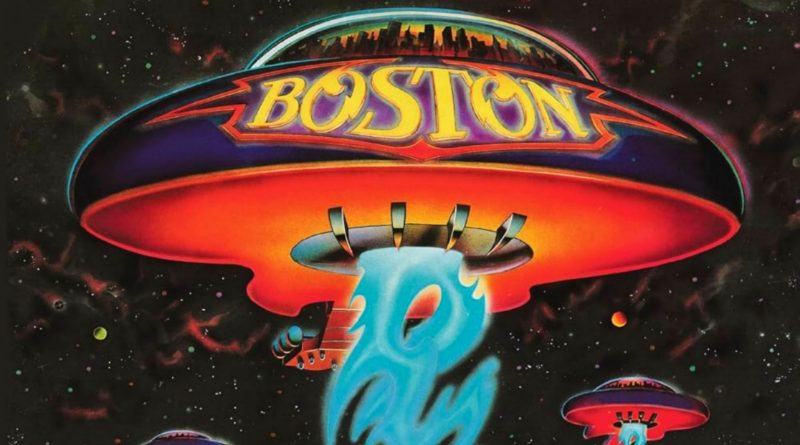
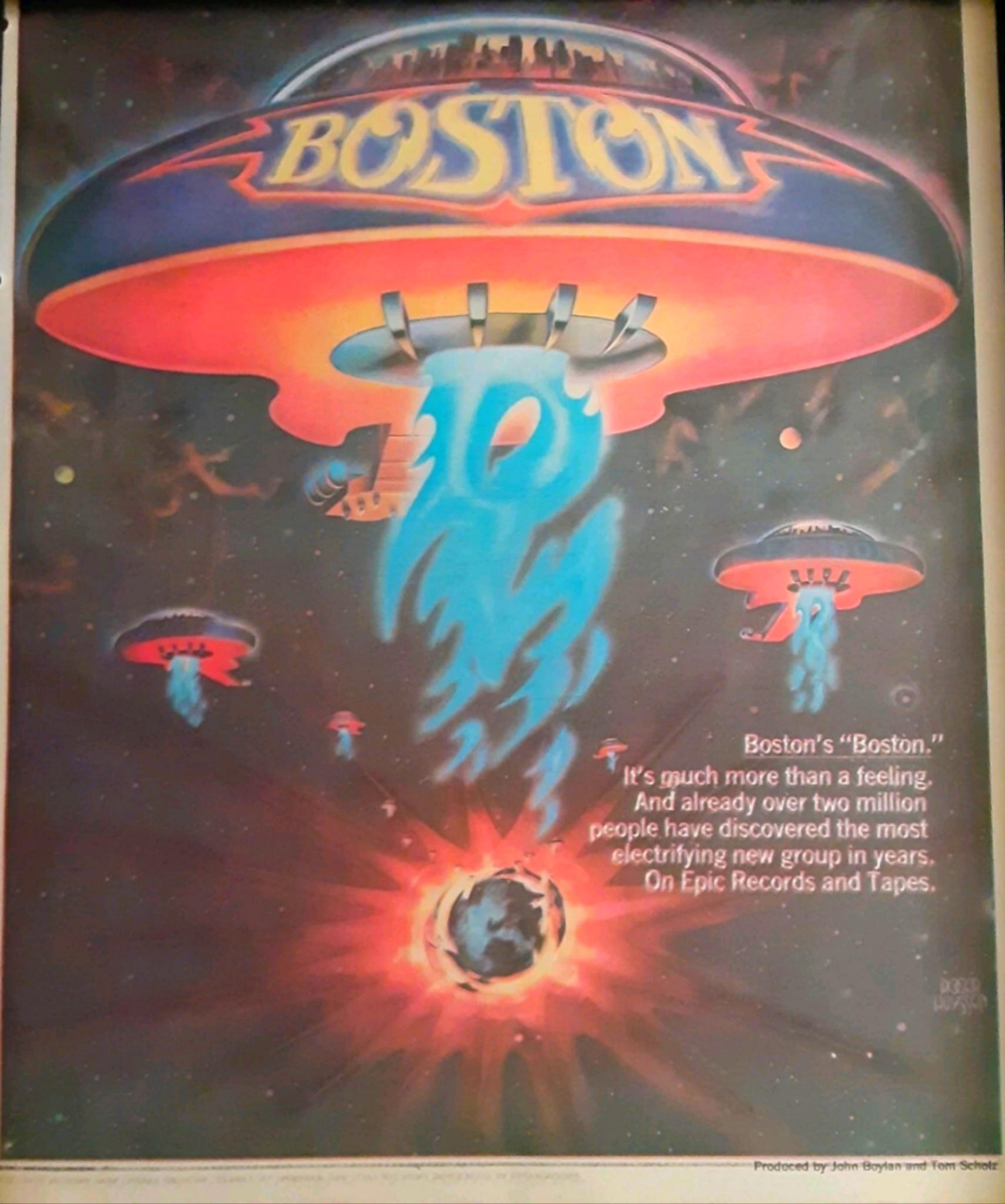
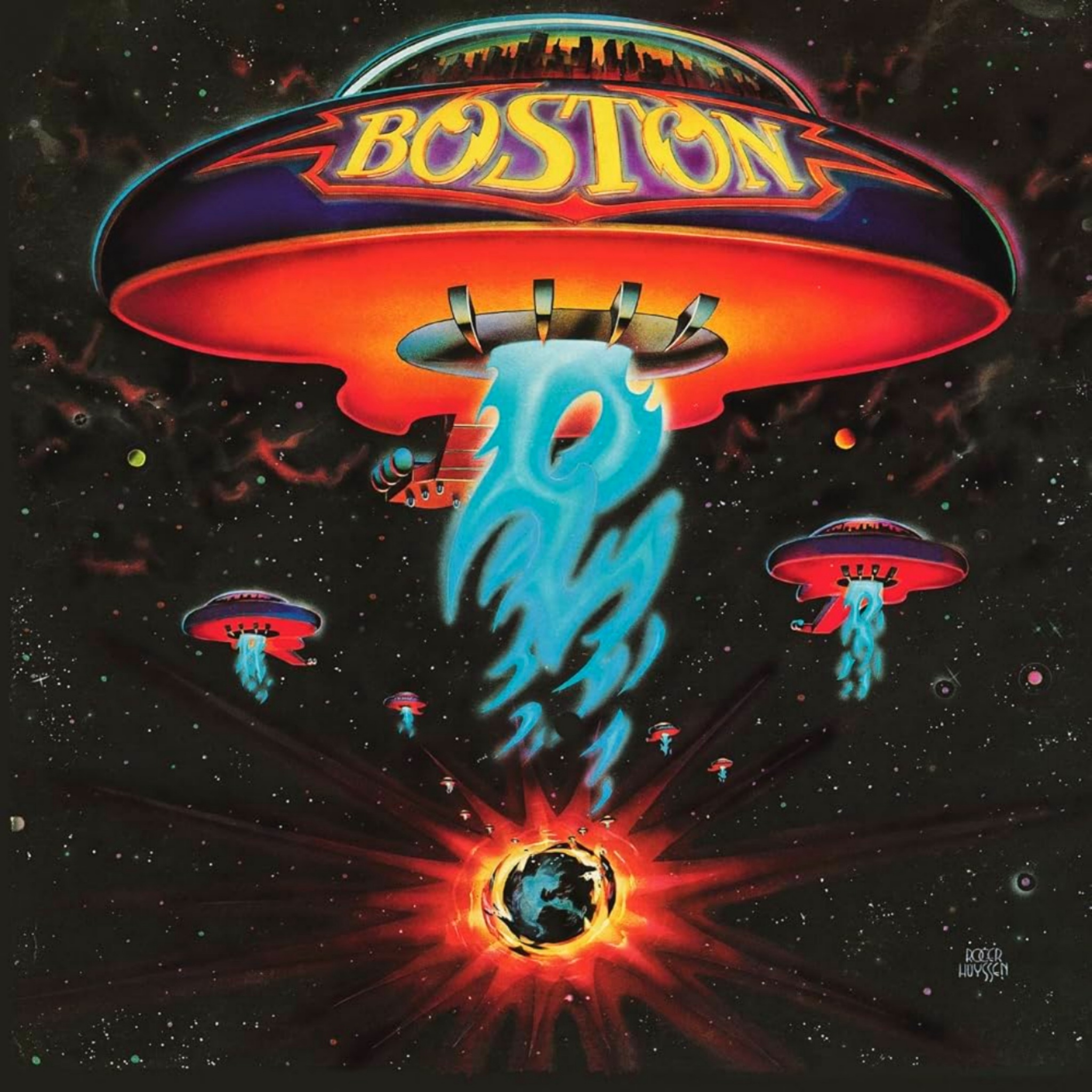
The album cover, a fantasized, multi-hued spaceship with flames shooting out from beneath its saucer-like shape, was intended to capture Scholz’s idea of a “starship guitar” and the idea of absolute escape. In actual fact, the starships looked more like psychedelic jellyfish, well in keeping with the music’s bold designs.
AUDIO: Boston “Peace of Mind”
Ultimately, it didn’t really matter. The eight songs were consistently bold and assertive, each encompassing a driving delivery and an unabashed rock and roll regimen courtesy of their tightly tuned arrangements. It was a precise yet highly articulate approach that permeated each of the album offerings, from the churning delivery that characterized the drama and dynamic “More Than A Feeling,” “Long Time” and “Peace Of Mind,” to the autobiographical opus “Rock & Roll Band” and on to the not-so-subtly suggestive “Let Me Take You Home Tonight.”
Boston left a lingering legacy, not only as an airplay staple, but a also as a dynamic example of what could be achieved through a creative combination of technology, imagination, precision and prowess. Other bands — Styx, Journey and Starship in particular — would take their cue from that oversized ambition, and, in turn, helped define FM radio in the late ‘70s and well beyond. Yet Boston still stands as the defining album of that era, evidenced by the fact that it ranks number 43 on the Rock and Roll Hall of Fame’s “Definitive 200” list.
By turns both articulate and expressive, it remains a singular example of the possibilities that existed beyond the scope of attitude and insurgence.

- High Voltage!: AC/DC’s ‘Dirty Deeds Done Dirt Cheap’ Turns 50 - September 21, 2026
- Remembering Dolly Parton - August 26, 2026
- More Than A Feeling: ‘Boston’ Turns 50 - August 25, 2026
You May Also Like
-
 August 26, 2018
 -
 August 15, 2022
 -
 July 24, 2024

Thanks for this. It remains one of my favorite albums of all time. Interestingly enough, I never had a desire to see them live. I’m sure they were great in concert, but I always feared the live show would not rival the perfection of this record.