
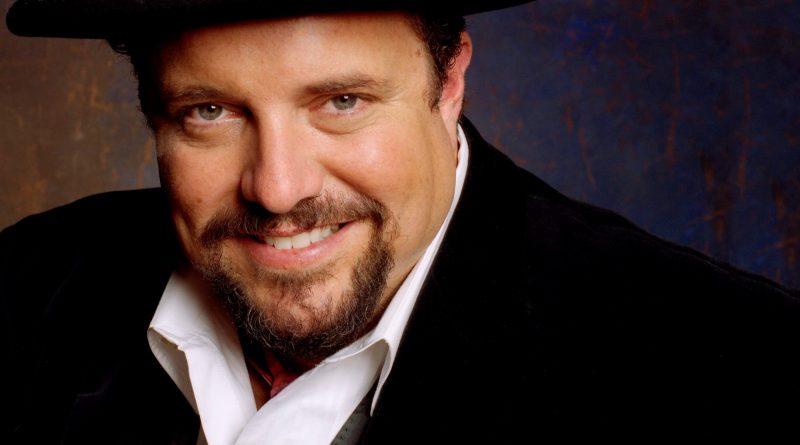
Remembering Raul Malo
Thoughts from a friend on the passing of The Mavericks’ frontman

Raul Malo of The Mavericks, who passed away this past Monday, Dec. 8, after a courageous bout with cancer, always knew what he wanted, and what he wanted was to make his mark as a singer and songwriter.
Having known Raul early on, he shared his ambitions with me on various occasions. I recall one conversation in particular that took place in one of Miami’s Coconut Grove cafes. We shared a table with him Rich Ulloa, the president of Y&T Records, the label that released The Mavericks’ eponymous album debut. The conversation centered on Raul’s hopes for what the future might hold as far as his career was concerned. He idolized Roy Orbison and his clear, commanding vocals reflected Orbison‘s obvious influence.
Well before that initial release, The Mavericks were well known as one of Miami’s most popular local bands. At the time, it seemed somewhat unlikely considering the fact they were a country combo and Miami, both then and now is not exactly a wellspring of Americana music. Yet The Mavericks had more to offer considering the fact that Raul was Cuban heritage and that was no small measure of importance on the city where Cuban culture reigns supreme.
VIDEO: The Mavericks “Back In Your Arms”
That said, The Mavericks never succumbed to typecasting. It was well before the term Americana came into any sort of popular usage as far as popular music was concerned. This was the late ‘80s after all, and any country-rock crossover was still something of a rarity. They were simply a terrific band that operated on all four cylinders. Even then, Raul was a commanding presence and it was clear from the outset that they had something special to offer well beyond the realms of South Florida. Rich Ulloa saw that and signed them to his Y&T Record label and released their debut album in 1990. I had the privilege of writing the liner notes and when I look back on what I wrote, it seems somewhat prophetic.
“The Mavericks are an important band. Important because they remind us of what real music is all about. And when it’s all said and sung, isn’t that what it’s all about.”
Indeed, there were some terrific songs on that album. All of them were written by Raul and infused with the spirit of Hank Williams, Elvis Presley, Roy Orbison, of course, and any number of classic country forebears. Although they faded from the setlist once the band signed with a major label and released hit album after hit album, they remain as potent and anthemic now as they were then.
The band went on to reap some of the most prestigious honors the music biz has to offer, all while altering the perception of what country music entails. While many bands expanded its stylistic parameters by imbuing elements of roots, rock, folk and bluegrass into the mix, The Mavericks added a distinctive element of Latin music into it as well, all of it culled from Raul’s pride in his Cuban heritage and the fact that he grew up in multicultural Miami.
While radio was once resistant to offering them airplay, due to it inability to typecast them with any singular sound, their commercial fortunes and critical kudos expanded regardless, resulting in a Grammy, accolades from the Academy of Country Music and the Country Music Association and honors from the Americana Music Association.
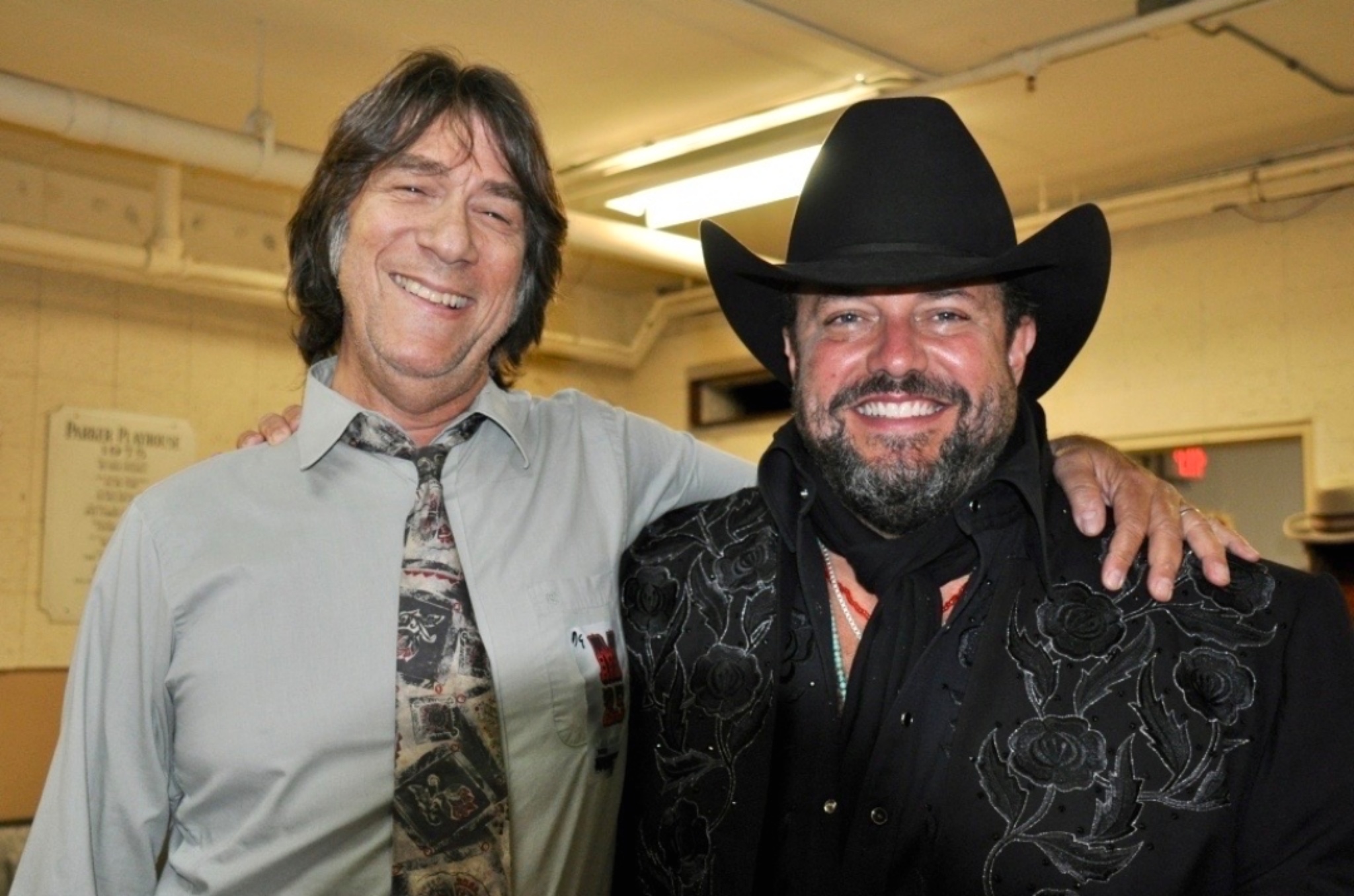
Nevertheless, Raul remained a humble and affable individual. That was evident early on. I taught an evening class at a Miami high school and I invited Raul to come and play some of his music for my students. There were only six people in attendance that particular evening, but Raul obliged and strummed some songs on his acoustic guitar. It typified his unfailingly gracious attitude and that fact that he never forgot those folks he knew from early on.
Over the years, we remained in touch. When the band made a triumphant return to Miami after having seen success worldwide, I went backstage and Raul and I reminisced. He greeted me like an old friend, and even when I played the role of journalist and interviewed him over the years, it was the friendship that mattered most. He always referred to me as “Pal.”
So, too, the ego never reared its head.
“I’m not one to sit back and go, ‘Oh, I’ve made it!’,” he told me once. “Yes, I won a Grammy and yes, I have nominations, but I don’t look at it as if I’ve done that stuff. I still want to keep creating and making music. So I don’t think about what I’ve done and I don’t think about where I’ve gotten to. I’m not one to rest on my laurels and I’m not one to congratulate myself, even though maybe I should (laughs). Occasionally you run into somebody that reminds you of where you’re at and what you’re doing. And I appreciate that, man. I really do. Because sometimes I do need to be reminded that we’ve done this and we’ve achieved that, and it’s a good thing to celebrate. I’ve learned that as I’ve gotten older, to at least acknowledge the work… it’s my way of staying grounded and not letting the success taint that creative job.”
Clearly, the band was much too engaged in moving forward as opposed to looking back.
“Maybe one day, when I get to really step back from this and see it from afar, I’ll have more of that kind of perspective,” he said. “But right now, it just feels like we’re in the trenches, and giving it the good fight. I think that’s a good, healthy attitude to have, because otherwise, I don’t think we’d be doing much. So on one hand, I do appreciate where we’re at and what we’ve been able to do, but on the other hand, I’m still doing it — we’re still doing it, we’re still clawing and we’re still fighting for whatever we’re trying to do. I think the main thing for us, as a band, is to deliver every night — deliver a performance that you can feel good about, and that people can take home with them and dig in and talk about. I think everybody in the band understands that, and grasps it completely.”
It was that bond that makes a Mavericks show so special, whether simply gazing at Raul front and center as he serenaded his audience, watching guitarist Eddie Perez in his classic rock star mode, observing keyboard player Jimmie Dale McFadden exuding his own enthusiasm while bounding across the stage, or witnessing drummer Paul Deakin steadily holding down the backbeat.
VIDEO: The Mavericks’ NPR Tiny Desk Concert
“I think that that’s been one of the key elements when you go see a Mavericks show, that you’re going to be entertained,” Raul continued. “And maybe you’ll get even a little more, because maybe it can provide a little bit of a soundtrack to your life. So if you deliver every night and if you do that on a consistent basis, I really believe that wins out over everything else.”
Even with all their success, Raul always retained a realistic, down-to-earth attitude.
“Let’s be truthful — we’re not 25 anymore,” he said. “So we’re not the band that the record labels necessarily want to promote as the latest thing, because our thing is different. I tell my Uber drivers whenever they take me anywhere, and then ask me what I do, ‘Well, I’m the most famous person you’ve never heard of.’ And that pretty much sums up my life. Which is great. I love it. I mean, I enjoy my fame and whatever perks that offers, but I don’t have TMZ cameras outside of my hotel room and around everywhere. I don’t have that kind of fame, and that’s fine. I get why we don’t. You ask ten different people what kind of music the Mavericks make, and you’re gonna get ten different answers.”
That said, the band took a decided return when they returned to their roots and recorded an album, The Mavericks En Espanol, that was entirely in Spanish.
“It wasn’t a fly by night idea at all,” Raul said. “It had been formulating and percolating for quite a while.” Ultimately, the effort paid off. The album debuted at number one in the Latin charts, no small accomplishment for any album in any genre. “The coverage on this has been quite extensive,” Raul added. “We may have a whole new audience to play to….So far as we can tell, everybody’s been loving the record. Our fans expected it, and the reaction has been super positive. I know there’s always a couple of people who will say, ‘this isn’t for me,’ but we expect that and that’s fine. The overall majority are with us on this. We tried to make it easier for people (with the translations), but we realize that’s not always going to be the case. However for the most part our fans have embraced it wholeheartedly.”
Nevertheless, for Raul himself, it felt both genuine and inevitable. “I grew up in Miami, and so I became aware of all these cultures around me,” he reflected. “I had Columbian friends and Mexican friends and Argentinian friends. We listened to all this music in my house, and so to me, this record is a kind of celebration of all these cultures and that diversity that I think is a beautiful part of this country. It’s a Mavericks record, hence the title, The Mavericks En Espanol. It’s just a Mavericks record in Spanish. If I was singing in English, nobody would think anything about it. The arrangements would be the same.”
VIDEO: The Mavericks “Recuerdos”
I once asked him if, in light of that cultural collusion, he saw The Mavericks as unofficial ambassadors of any sort, given the extra obligation of conveying Hispanic culture to a broader population that might not have taken notice before?
“Maybe,” he responded. “I haven’t thought of it that way, but I’m starting to see it more and more. With the interviews and questions I’ve been getting, it’s made me see things a little differently, that yeah, maybe this is that type of album that can turn people on to something that maybe normally they wouldn’t be turned on to. And that is a heavy responsibility, but it’s a beautiful thing too. And in this day and age, with the pushback against the ethnic community and what’s been said about the Latino community, it’s important to speak up.”
Raul Malo will be remembered for many things as an artist and entertainer. But as far as I’m concerned, it’s the honesty, humility and integrity which always shined through.

- Bob Dylan’s ‘Blonde’ Ambition - June 21, 2026
- Apeman Hop: The Ramones’ ‘Animal Boy’ Turns 40 - May 19, 2026
- Remembering Dave Mason - April 23, 2026
You May Also Like
-
 June 18, 2018
 -
 March 24, 2020
 -
 March 15, 2019
