
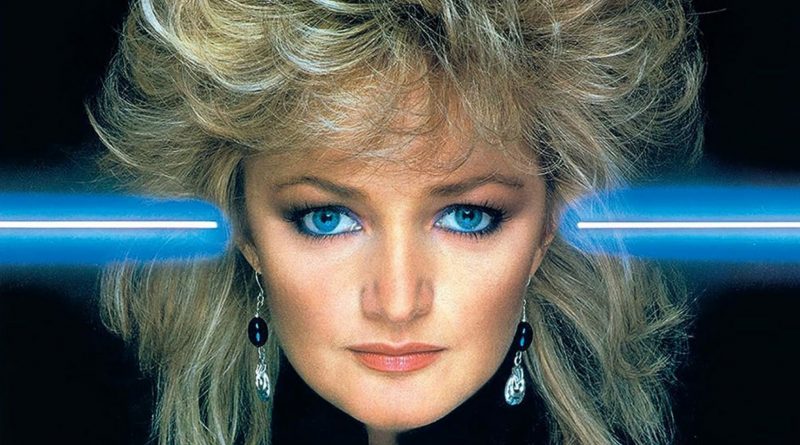
Remembering Bonnie Tyler
The Welsh hitmaker gone at 75
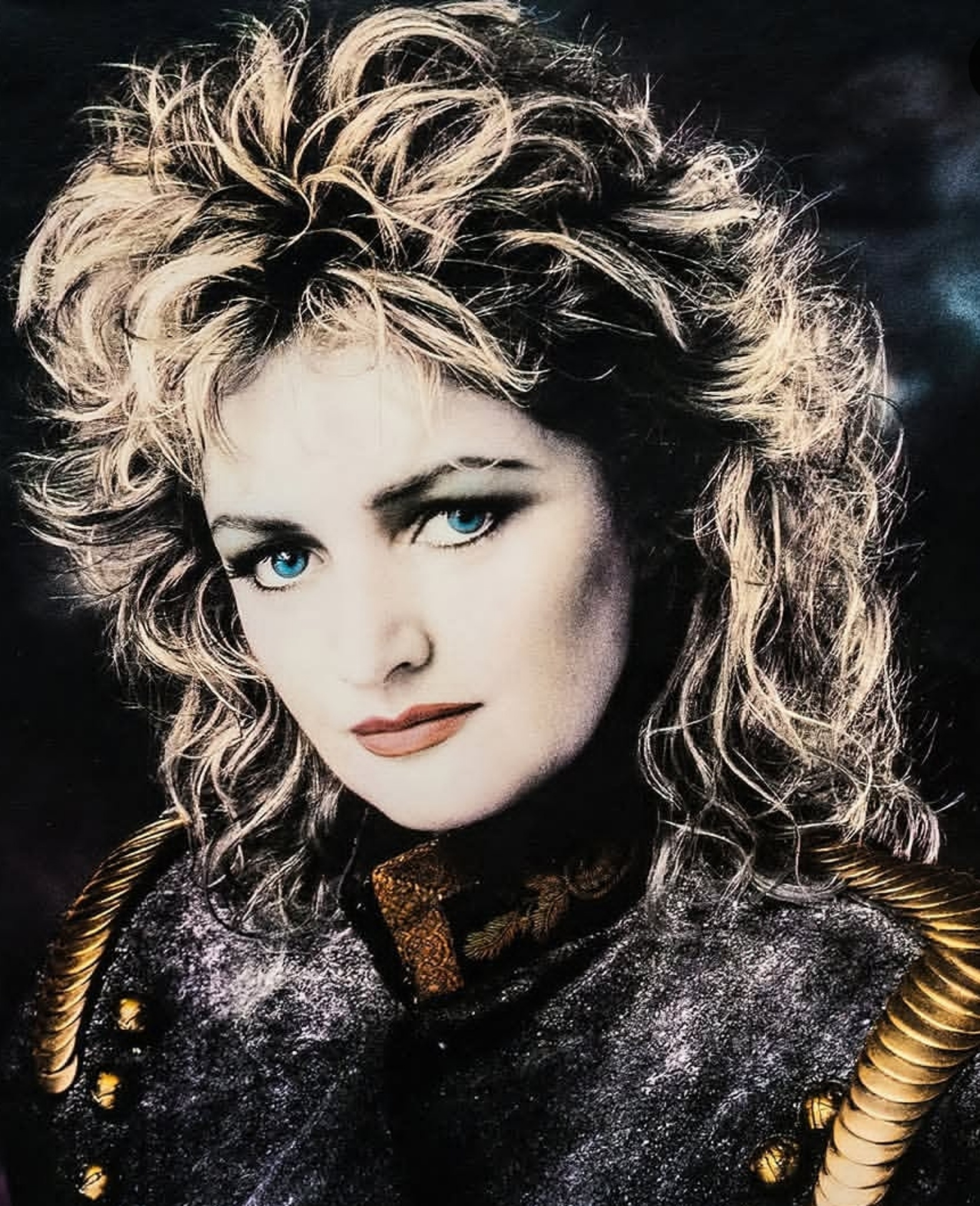
When news broke that Bonnie Tyler passed away at 75, the global jukebox instantly queued up the thunderous, operatic crescendos of “Total Eclipse of the Heart” and the cinematic rush of “Holding Out for a Hero.”
Her family confirmed she died unexpectedly in a Faro, Portugal, hospital, following complications from an emergency intestinal surgery she’d had back in May. We remember the bombast, the towering ’80s music videos, the massive wall of sound. But as someone who watched that whole musical era unfold from the streets of London, I find myself looking past the stadium-sized production and straight to the raw, human pulse underneath.
To really get Bonnie Tyler, you have to look past pop music and toward the movies instead. Think of the great Hollywood femme fatales — women who owned the screen not with high-pitched innocence, but with a smoky, dangerous edge. Think of Marlene Dietrich, whose cabaret purr made her a legend in classics like The Blue Angel. Think of Lauren Bacall’s low growl going toe-to-toe with Bogart in To Have and Have Not. Or Kathleen Turner’s whiskey-soaked dialogue in Body Heat. They all had that timeless “morning-after” voice — husky, effortless, dripping with lived-in experience.
VIDEO: Bonnie Tyler “Total Eclipse of the Heart”
In the music world of the late ’70s and ’80s, Bonnie Tyler became the living, breathing version of that same type. She shared a striking vocal DNA with her contemporary Rod Stewart, who paid tribute to her this week, calling her “a true soul stirrer” and noting they “shared similar styles of vocalizing.” But Tyler brought something all her own to the table. In an industry that usually wanted its female singers pristine, polished, and angelic, Tyler went the other way entirely — a heavy, cigarettes-and-velvet rasp that felt less like a pop recital and more like a late-night confession.
That signature sound wasn’t manufactured. It was forged out of pure human frustration. In 1976, born Gaynor Hopkins in a Welsh coal-mining town, she had surgery to remove nodules on her vocal cords. Looking back on that terrifying moment, she later said: “Then all of a sudden, I had all these nodules on my vocal cords — I thought my career was over.”
Doctors ordered her not to speak for six weeks during recovery. She famously cracked under the isolation and let out a frustrated scream — and it permanently scarred her vocal cords. Where most people would’ve seen a career-ending disaster, Tyler found her voice, in every sense. That newly textured throat turned her from a standard pop-country singer into something that could carry real, bruised emotion. When she sang “It’s a Heartache” in 1977, the lyrics stopped being words on a page. When she rasped “It’s a heartache, nothing but a heartache / Hits you when it’s too late, hits you when you’re down,” it carried the same world-weary weight as a Bacall monologue.
VIDEO: Bonnie Tyler “It’s A Heartache”
That connection between vocal scar tissue and emotional truth became her superpower when she teamed up with Meat Loaf’s longtime collaborator, songwriter Jim Steinman, in the ’80s. Steinman said he wrote “Total Eclipse of the Heart” specifically for her, because he realized her voice didn’t just carry a melody — it carried real, mortal stakes.
Take the line: “Once upon a time I was falling in love, now I’m only falling apart.” In the hands of an ordinary pop star, that’s catchy melodrama. In Tyler’s hands, it became an anthem for anyone who’d ever looked at the wreckage of a life gone sideways and realized the past wasn’t coming back. And yet, for all the drama in her tracks, Tyler stayed remarkably down-to-earth about her own success. “I still get excited when I hear the song on the radio,” she said in a recent interview. “Every time the eclipse comes, everyone all over the world plays ‘Total Eclipse of the Heart,’ and I never get tired of singing it.”
She didn’t write most of the songs that made her a household name, but she lived inside them so completely that the line between songwriter and performer disappeared. She sang those lyrics like someone who understood that the best rock and roll isn’t about being perfect — it’s about the cracks where the light gets in.
We’ll keep playing the big tracks, and rooms will keep shaking to her choruses. But next time “Total Eclipse” or “It’s a Heartache” comes on, don’t just listen for the production. Listen for the smoke. Listen for that classic morning-after grit of a woman who took a broken voice, found the human truth inside the lyrics, and turned it into a rock legacy that isn’t going anywhere.
VIDEO: Bonnie Tyler “Holding Out For A Hero”
P.S. As a lifelong student of the music business, I’ve got one lingering, beautiful frustration: we never got to see Bonnie Tyler and Rod Stewart stand center stage together at Wembley, trading verses before locking into a blistering, roof-raising harmony on something like “Piece of My Heart” or “I’d Rather Go Blind.” Picture it — Rod’s bright, whiskey-tinged swagger colliding with Bonnie’s heavy, cinematic velvet-and-smoke. It wouldn’t have been a clean blend. It would’ve been a glorious collision of two completely different kinds of vocal sandpaper.
Now that Bonnie’s gone, the stage is dark. But we live in an era where technology can bridge some of the gaps that time leaves behind. So here’s a challenge to the tech wizards out there: use AI to build that fantasy concert. Synthesize that impossible duet. Let those two kindred, soulful rasps interlock, just once — and prove that even after a great voice falls silent, the grit and the glory can still live on.

- Remembering Bonnie Tyler - July 12, 2026
- Murray the K and the Swingin’ Soiree - February 14, 2026
- Morgan James: A New Soul Sister - July 26, 2025
You May Also Like
-
 March 24, 2020
 -
 March 15, 2019
 -
 September 11, 2018
