

The ‘Madness’ of Europe
Joey Tempest talks about the Swedish band’s best LP in decades
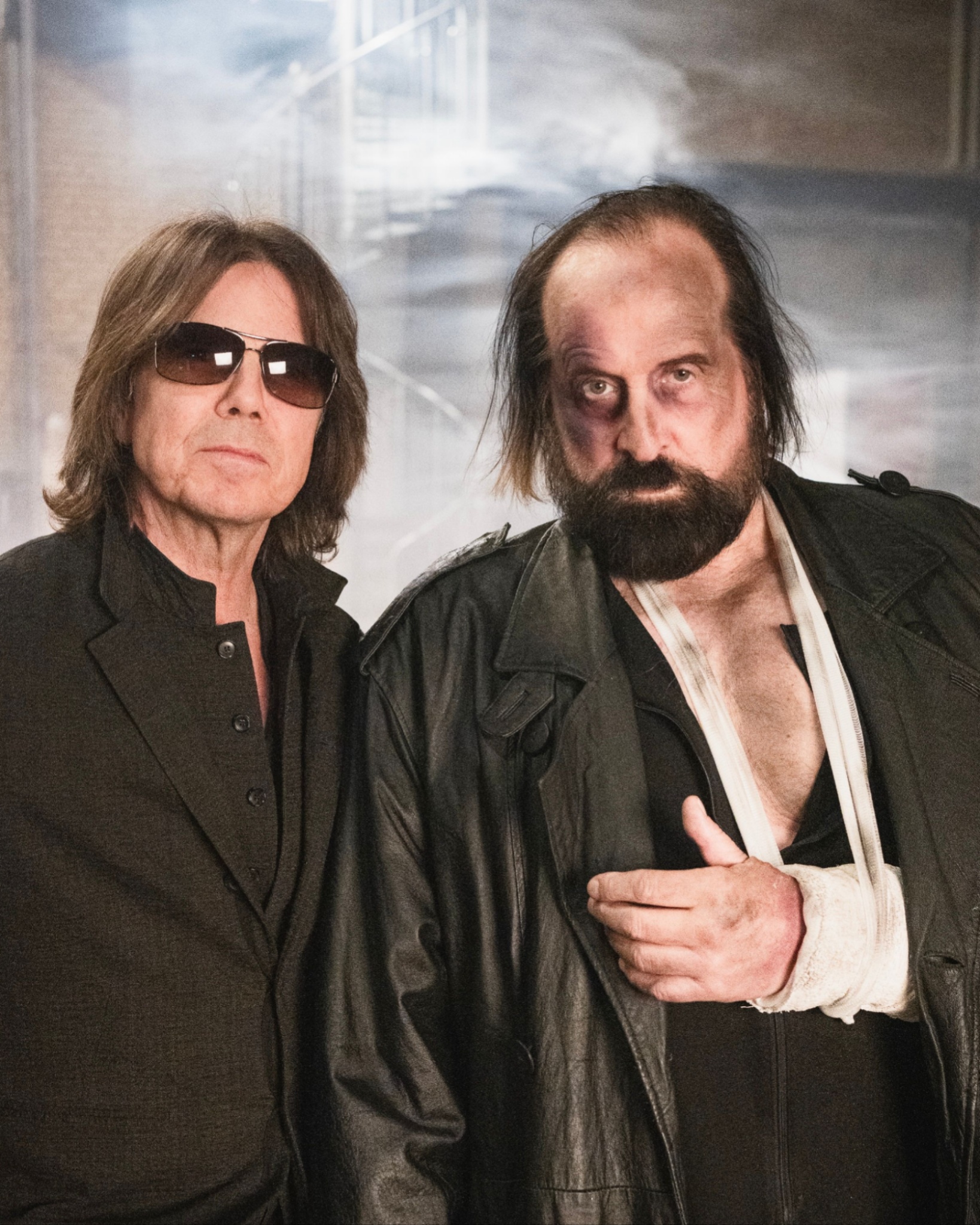
It’s been exactly 40 years since the Swedish hard rock band Europe unleashed their first massive international hits, including “The Final Countdown” and “Carrie.”
The band is still going strong today, with their 12th studio album on the way and a full touring schedule.
Taking a break from rehearsals for the band’s extensive European tour that’s kicking off on Sept. 30 in Glasgow, Scotland, frontman Joey Tempest is all smiles when he jumps on a video call to talk to Rock & Roll Globe.
But he sighs when it’s pointed out that there are no North American shows on the itinerary. “I know. I know; it’s all crazy, isn’t it?” he says. “We were supposed to go [to North America] in 2020, [but] COVID came. But I suppose that break made us start from the beginning again. We started writing from scratch again, which was really cool.” The result is Come This Madness, Europe’s first studio album in nearly a decade. It is set for release on Sept. 25 via Silver Lining Music / Hell & Back Recordings.

“This one feels exciting,” Tempest says. “The previous three albums, Bag of Bones [2012], War of Kings [2015], and Walk the Earth [2017] were very spontaneous. But now we thought, ‘No, we’re going to take our time.’ It’s almost like a debut album. It’s almost like, ‘All right, let’s start again.’ We feel very excited about the release — this is the best one in a long time.”
Longtime Europe fans will doubtless be glad to know that Come This Madness finds the band as spirited as ever. Tempest uses his signature emotive singing style to deliver lyrics that address the current turbulent state of the world, while the band plays anthemic hard rock melodies (and the occasional soaring ballad).
The title, Come This Madness, was the catalyst that kickstarted the entire creative process this time. “I wrote down ‘come this madness no more’ a long time ago, but I was disappointed because I didn’t have the music to support a cool title like that,” Tempest says, “but when [bassist] John Levén sent me a riff, I’m like, ‘Oh my God, that’s a crazy riff. I love that!’ I called him up [and said], ‘I think we’ve got it. I think we can do this.’” From there, the songwriting flowed easily.
Lyrically, Tempest says, “We’re just being observant and curious about what’s going on with democracy in general. Now people are mistreating democracy. Basically, there’s a handful of people around the world that’s lost their moral compass. I think it’s important to remain entertainers in a rock band, but we don’t mind maybe putting some layers and depth into the lyrics these days. It’s not just singing what’s cool.”
VIDEO: Europe “One on One”
This is, he admits, quite a contrast to the way he approached lyric writing in the band’s earlier years. “When we started, we were writing escapist lyrics. I was even proud of it, because I loved the ambiguity of it. You can read into lyrics in so many ways.”
Tempest credits living abroad for helping him master English, which in turn has expanded his lyric writing abilities. (He currently lives in London.) “It feels like I can handle the English language in a way that I can write more fluently,” he says. “That could never happen when I was a kid: [then] it was just like, ‘Just find something cool and just repeat it and put a riff on it!’”
He explains that he always understood that he’d need to sing in English, not his native Swedish, if he was going to have a music career on an international level. Beyond helping his music appeal to people outside of Sweden, Tempest says there’s another benefit to writing in English: “The Swedish language is quite direct, and hasn’t got nearly as many words as English, so it’s easier to color things in English. I noticed that from the beginning.”

In his very early days, though, Tempest didn’t think that he’d ever become a professional musician; he was simply a fan who was trying to be like his heroes. “I started listening to Elton John and David Bowie and stuff on the radio, and I tried to emulate them on the piano when I was only 8 or 9 [years old],” he says.
His parents had bought a piano and a guitar for his sister, who was four years older than him. “But she didn’t pick it up, I did,” Tempest says. “My dad said I used to sit and play guitar before school and when I came back. But I didn’t realize then that’s what I was going to do forever.”
He began joining bands when he was a pre-teen. Along the way, he met guitarist John Norum, who was also from the Stockholm suburbs. They formed the band Force in 1979, then changed the name to Europe in honor of the Deep Purple live album Made in Europe.
Tempest had been inspired by Deep Purple, Led Zeppelin, Rainbow, and Thin Lizzy. Those influences, along with his bandmates’ affinity for hard rock, helped him decide that his own songwriting should be in that genre: “John Norum and John Levén love heavier music. They always brought that element of danger, and I loved it when I was a teenager. So [I decided] I’m going to write more in that way to involve everybody, and then I started realizing it’s fun to write this kind of music.”
VIDEO: Europe “The Final Countdown”
After paying their dues in the Swedish club circuit, Europe finally landed a record deal after winning a competition where the prize was a record deal. The band’s self-titled debut came out in 1983. “Then we were on our way,” Tempest says. Their second album, Wings of Tomorrow, came out the following year. Both albums sold relatively well in Sweden, but nowhere else.
Their third album launched Europe into the stratosphere, though. The Final Countdown, released in 1986, was a worldwide smash. The title track became a massive hit in nearly two dozen countries, hitting the number one spot in more than a dozen of them.
The band went on hiatus in the 1990s (and Tempest kicked off his solo career with the album A Place to Call Home in 1995), but the band reunited nearly 25 years ago, and has released albums and toured the world ever since. Tempest says he is grateful for this legacy, especially because he and his bandmates have earned it on their own terms.
“The best feeling is that we stuck to our guns,” Tempest says. “[In] 2002, we came back together and said, ‘Let’s do this long term,’ and we did — and we’ve managed to make an album like Come This Madness. At this stage in our career, it’s like, the impossible task. That’s what I’m proud of, that we stuck to our guns and we’re still here.”

- Soft Cell Returns to ‘Danceteria’ - September 26, 2026
- The ‘Madness’ of Europe - September 23, 2026
- The Human League Spans ‘Generations’ - May 30, 2026
You May Also Like
-
 October 30, 2023
-
 February 12, 2026
-

