
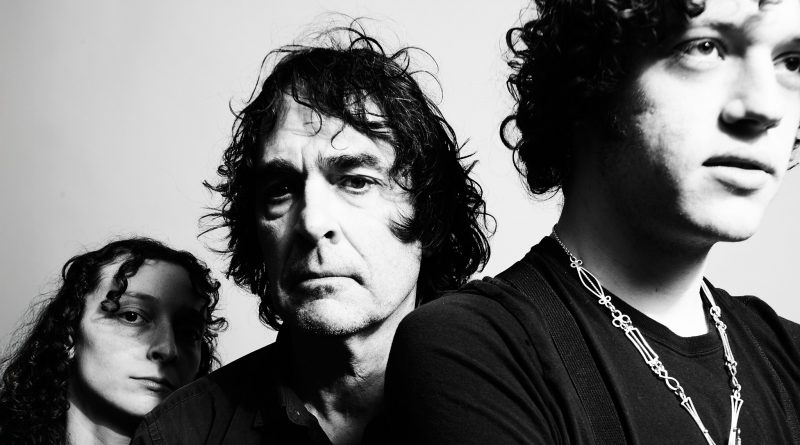
Jon Spencer’s New Explosion
Garage great talks about Songs of Personal Loss and Protest
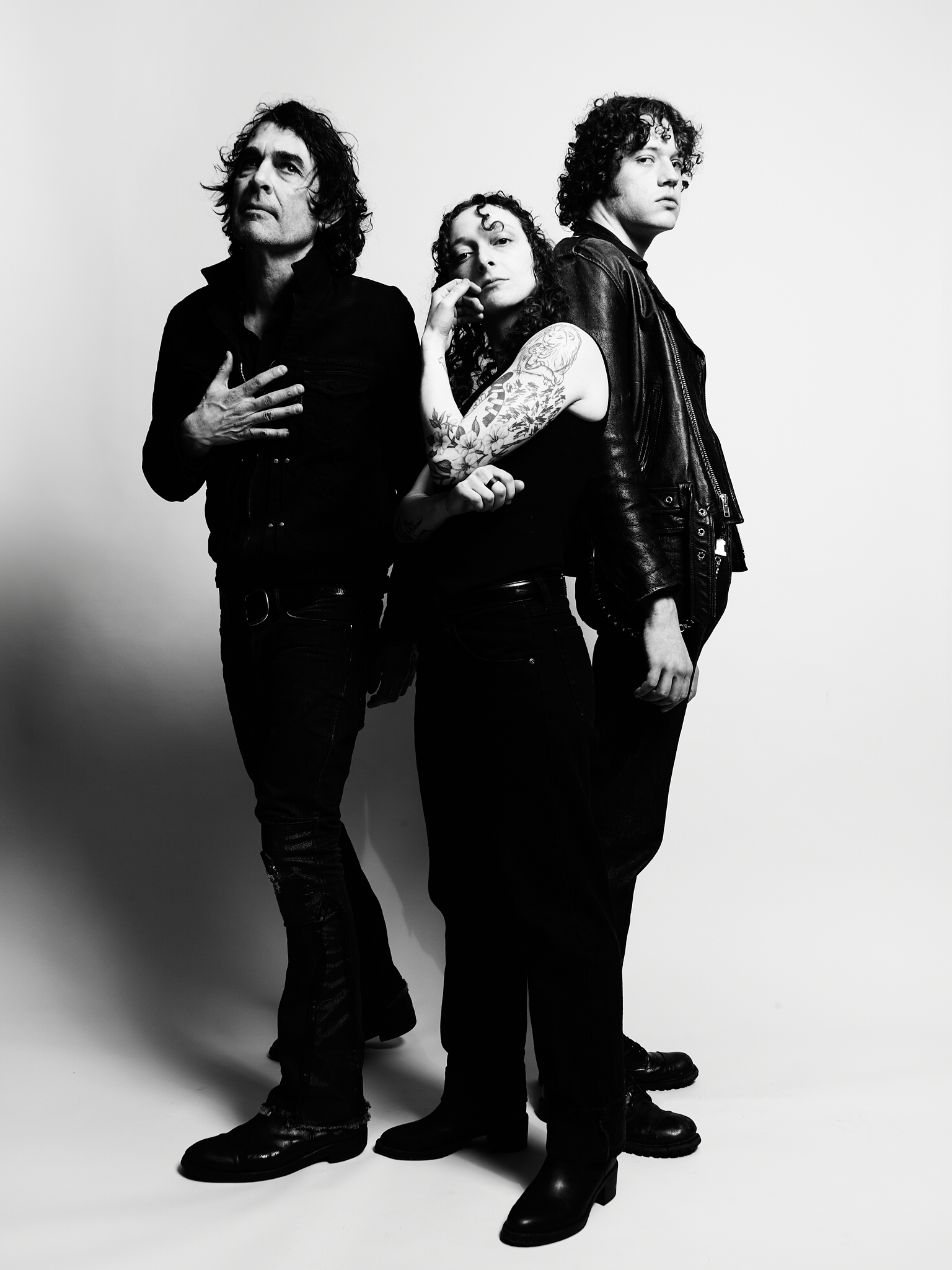
For over 40 years, Jon Spencer has persevered at the vanguard of rock ‘n’ roll.
Whether it was with Pussy Galore in the 1980s, Boss Hogg and the Jon Spencer Blues Explosion in the 1990s through the mid-2010s, his erstwhile groups Heavy Trash and The HITmakers and presently as a solo artist, the 61-year-old New Hampshire native has developed a sound and a style that pulls from noise, blues, punk, soul and hip-hop that owes as much to The Bomb Squad as it does The Cramps.
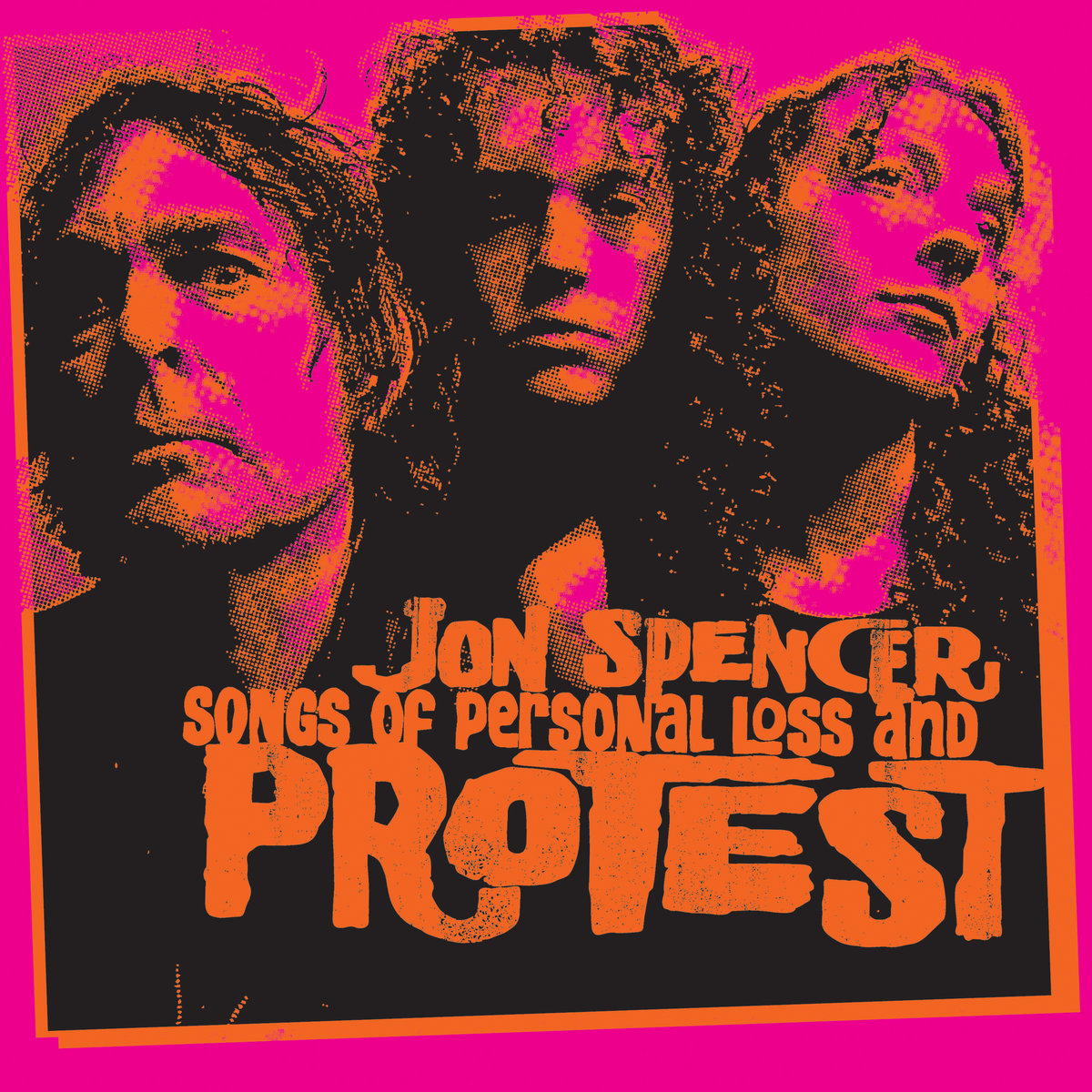
His latest album, Songs of Personal Loss and Protest, is his second with the new trio he formed with the rhythm section of Woodstock rockers The Bobby Lees — bassist Kendall Wind and drummer Macky Spider Bowman. A seamless continuation of the work they were doing on 2024’s Sick of Being Sick!, this is some of the most exciting music Spencer has created in years — right up there with such JSBX classics as Now I Got Worry and Plastic Fang (along with Pussy Galore’s version of The Rolling Stones’ Exile on Main Street).
Rock & Roll Globe had the opportunity to catch up with Spencer upon his recent trip to Japan, where the band played a couple of festivals and got stuck sitting on the runway for six hours, about Songs of Personal Loss and Protest, connecting with the Bobby Lees and more ahead of the trio’s forthcoming gig at New York City’s famed Beauty Bar on Sept. 13.
What about the new album? I love it. I love that you work with Kendall and Macky from the Bobby Lees. They really bring you back to something. I hear that Blues Explosion/Boss Hog essence with this new one and the last one, Sick of Being Sick.
Thanks. It’s certainly been a real joy to play with Kendall and Macky. It’s a little different because they’re very young and I’m now an old man, but it’s wonderful to play with them. Part of the reason is because they have so much energy.
We can play some really intense shows. It’s great to be playing with a band that can really go hard for the whole show. And, like the Blues Explosion, we’re not using a set list. Kendall and Macky are both really sharp, so I can just start a song or call something out and they’re right on top of it immediately.
I think there is definitely some of the power and energy of the Blues Explosion, but this isn’t me trying to recreate something. There’s an original and unique personality, or flavor, to this.
But it’s you, too. Anything you do is going to have the Jon Spencer sound.
Well, I hope so.
How did you connect with the Bobby Lees? Were they always on your radar?
About seven or eight years ago, Boss Hog was playing the Helsinki Club in Hudson. Somebody recommended the Bobby Lees, so we invited them to support the show. That’s when I first met them. It would have been about eight years ago because it was Kendall’s high school graduation. When I first met Kendall and Macky, they were still in their teens.
Kendall was 18 and Macky was 16. The Bobby Lees were very green at that time. At the end of the night, I casually mentioned to Sam (Quartin), the singer, “If you ever want help in the studio, you know…” And sometime later she reached out, and they asked me to produce what became their second album.
I spent more time with Kendall and Macky then, helping them make their album. Occasionally afterward, I’d ask the Bobby Lees to support whatever band was happening then.
A few years later I was hired by Samantha Fish to produce Death Wish Blues, her collaboration with Jesse Dayton. I was given the job of finding a studio and putting together a band, and I hired Kendall to play bass because I’d been so impressed with her playing when I worked with the Bobby Lees.
After we finished that record, Samantha asked me if I wanted to support them on tour. At the time I didn’t have a band. The Blues Explosion was long since over, Heavy Trash was over, and another thing I’d been doing, The HITmakers, had finished as well. So I took the gigs and figured I’d just get a rhythm section together.
Part of my inspiration was Kid Congo and the Pink Monkey Birds. When I would see them, Kid would play songs from some of the other bands he’d been in over the years. He’d play a Cramps song, a Gun Club song. I thought, “I’d like to do that. That would be a cool thing.”
So I thought I’d get a rhythm section together and play selections from my catalog: Pussy Galore, Blues Explosion, Heavy Trash, HITmakers.
My first idea was Kendall. I asked her if she would like to hit the road with me, and she said yes. At the time, the Bobby Lees had stopped. They had called it a day. So I asked her, “What do you think about asking Macky as well?” She said, “Yeah, I think that’s fine. I know he’s looking for work as well.”
Macky was up for it. We spent a couple of weeks rehearsing and then went out and started playing shows. The very first time we played was on the Samantha Fish/Jesse Dayton Death Wish Blues tour.
It was pretty clear from the beginning that there was something special with the three of us. You can put any people together to try and make a band, but it’s not always going to work. With us, it worked. It wasn’t long until I began writing songs and presenting them to Kendall and Macky, and we began coming up with new material.

It’s cool to see you in a trio — guitar, bass and drums.
It is. Kendall is — some people will remark, “Oh, it’s so unusual, Jon Spencer, you’re playing with a bass player.” But this is not the first time. Jens Jorgensen played some very heavy bass for many years in Boss Hog. In Heavy Trash, we had a lot of different double-bass players.
Kendall is playing bass guitar, but I would always refer to her as the lead guitarist. She’s really a very powerful force. I think she’s kind of the lead guitar player in this band, even though she’s playing a four-string electric bass.
You recorded some of the new album in Chile. How did that come about?
We did a South American tour in the spring of 2025, and the last show was in Santiago. There was a band from there called Porowski, which is kind of a punk-blues thing. There are two brothers in the band, and many years ago they came to New York City to make a record, which I produced.
When they saw that we were coming to Chile, they sent me an email saying, “Why don’t you stay an extra day and come to our studio and have a recording session?” They had their own recording studio in Santiago.
So we stayed an extra day at the end of the tour and recorded a bunch of stuff at their studio. From that, we took basic tracks for two of the songs, “Mr. Lion” and “Furman Attack.”
VIDEO: Jon Spencer “Orange Slice Blues”
And the rest of it was recorded in Woodstock?
Yeah. We worked again at Applehead Recording, which is where we did the first record, Sick of Being Sick. That’s also the same studio where I did the Samantha Fish and Jesse Dayton Death Wish Blues record.
It’s a beautiful studio. It’s a proper, world-class studio — an amazing physical space, a big, huge live room, fantastic selection of gear, microphones and outboard gear. They have a Neve console and an API sidecar. They also bought a beautiful two-inch 16-track Ampex machine for the Samantha record. It’s like the Cadillac of multitrack analog recorders. It sounds amazing.
Most of the credit for why the record sounds so good goes to the engineer, Chris Bittner, who works there. He’s a very clever, very skilled engineer.
It’s such a great sound on this album.
Thanks. I think we tried to stretch out a little bit. The first record was done very quickly. My intent was just to get something down and out — get something recorded and put something out as a way to announce the band so that we could continue working, performing and playing shows.
With the new record, we took a little bit more time. Some of the sounds are a little more fleshed out. There’s a little more production to it, if you will.
I know some of the new album is based on losing your dad.
The most obvious example is the last song on the record, “No More,” which is directly inspired by the immediate aftermath of my father’s passing.
I was staying with my mother up in New Hampshire, and the lyrics of the song are literally cataloging the things being thrown away — the clothing and possessions, clearing out the dresser of the deceased person.
Was your dad a music fan?
No, he wasn’t a big music fan. My mother is a big music fan. She likes classical music and opera. When I was a kid, that’s what was on in the house.
My dad liked music, but I wouldn’t call him a big music fan. My mother was the big music fan.
You started Pussy Galore in D.C. and then moved to New York. Do you consider Pussy Galore a D.C. band or a New York band?
We spent most of our time in New York. The first two records were made while we were still living in D.C., but I would think most people would call us a New York City band.
Did you ever hear from the Rolling Stones about the Exile on Main Street record?
No. I think there was a quote — an honest-to-goodness real quote attributed to Keith Richards — where someone was interviewing him and told him about this band, Pussy Galore, that covered the entire Exile on Main Street album.
Keith Richards asked, “Are they still together?”
The interviewer said, “No, they broke up.”
Keith said, “Well, that’s the trick, isn’t it? To record Exile and stay together.”
Interviewer: That’s nuts.
I mean, they’re the Rolling Stones. It’s like saying, “Have you ever had tea on the planet Mars?” Come on. They’re The Rolling Stones.
The closest kind of connection is that Steve Jordan, who is now the drummer for the Rolling Stones and was the drummer for Keith Richards’ Xpensive Winos, produced an album for the Blues Explosion.
Plastic Fang.
Plastic Fang, yeah.

You’ve been doing some great reissues in the last decade or so. Are you planning to do more of the older Pussy Galore and Blues Explosion records?
I have the rights to all of them. There are some titles which I’ve reissued on my own label, Shove. In the next year or couple of years, I’m going to try and get some more things out.
A few years ago I got serious about doing it, so I reissued what I consider the most essential Blues Explosion titles: Extra Width, Orange and Now I Got Worry. Those have stayed in print.
We also did Record Store Day reissues of the first three Pussy Galore EPs, but those were limited because they were Record Store Day things.
My plan is, this year or into next year, to reissue the Pussy Galore Sugarshit Sharp and Dial M albums and also to do more Blues Explosion albums.
There’s also a lot of Blues Explosion outtakes and B-sides and stuff — things that could be properly collected.
That would be great. I don’t think there’s ever really been an odds-and-ends thing.
The CDs tried to include everything that was recorded around the time of each album. But those were CD-only, and they’re now out of print.
The first time I saw the Blues Explosion when you opened for the Beastie Boys at Nassau Coliseum in 1995.
That was quite a big deal for (drummer) Russell (Simins), because his father had something to do with the construction of that arena. His father wasn’t around anymore, so Russell’s mom came to the show. That was a big deal. I think that was a pretty good show.
We did a few shows with the Beastie Boys. They were very kind to us, and we played with them a few times over the years. That initial run on that tour was two or three weeks long. That was a proper tour.
It was the hip-hop connection that led me to the Blues Explosion.
Hip-hop was a big influence. And not just hip-hop, but the records that were being sampled by some of our favorite hip-hop artists. The best example is Stax. Extra Width and Orange are both heavily influenced by not just hip-hop, but also the original source material.

- Revisiting the ‘Magic’ of The Grateful Dead ’85 - September 24, 2026
- Michael C. Hall’s Princess Goes Returns with New LP ‘3’ - September 23, 2026
- John Coltrane Turns 100 - September 23, 2026
You May Also Like
-
 April 6, 2022
 -
 October 21, 2020
 -
 September 23, 2024
