
The Very Possibly True Origin Story of Geese
(By Dylan Trungpa-Maxberg, as told to Tim Sommer)
Was Geese’s career shaped by a shadowy experiment in adolescent Post-Punk immersion?
My friend Dylan Trungpa-Maxberg has a fascinating story to share.
Take it away, Dylan:
It was 2005. Our third and youngest child, Ithaca Emerson Joyce-Marr, had just turned 4.
On my partner’s suggestion, I was perusing a listserv we subscribed to for new parents living in the Southeast South Slope area of Brooklyn (sometimes referred to as “Windsor Flats,” or, colloquially, “Lefty Lefferts”). Under a discussion group titled, “What Quaker-affiliated pre-school is right for my child who is named after the town and/or college where my partner and I first met and/or members of our favorite bands?” I saw this provocative post:
“Do you plan to send your child to a school with any of these words in the name: Friends, Ethical, Red, Seminary, Schoolhouse, Little or Brooklyn?
“At Thanksgiving dinner, did you ever try to explain to an utterly disinterested cousin or uncle why Big Star was so important?
“On a first date, have you ever told a girl and/or guy the story of Postcard Records?
“After making love, have you ever used the phrase, ‘Yes, I like that song, too, but to really, REALLY understand it you must listen to these eight other songs, and also read pages 44 through 108 of this book by Nick Tosches…I’ll just leave it here while I go to the bathroom and clean up. We’ll discuss it when the Thai food comes!’
“Have you ever raised your voice while expounding on the superiority of Gary Valentine-era Blondie over all other eras of Blondie?
“Have you ever scolded someone for mispronouncing ‘Borges’?
“Have you ever pretended to know far more about Sigur Rós than you actually know?
“Does Robyn Hitchcock know you by name?
“Do you frequently tell people you were a fan of the Raincoats before Kurt Cobain told everyone how cool they were?
“Have you ever wept while contemplating the genius of R. Stevie Moore?
VIDEO: R. Stevie Moore “Part of the Problem”
“Have you ever gotten in a heated discussion with a stranger regarding the ‘real’ date Paul Simonon smashed his bass?
“If you answered, ‘Yes’ to at least eight of those questions; live in one of the five boroughs of New York City (excepting Staten Island); have a child under 6 years old; and wish to prioritize raising your child with an acute awareness of the alternative and post punk music of the 1970s, ’80s, and ’90s…you may be interested in participating in a long-term study being co-sponsored by the Kings County Centre for Futuristic Musical Occlusion and Creative Strategies.”
I was immediately curious. After all, although our twins (both 7 years old in 2005), Buck Berry Mills Carrboro and Frantz Weymouth Annandale, were doing fine at their respective schools — Brooklyn Ethical Friends and Little Red Friends Friendly Red House — we were keenly aware that Buck and Frantz were significantly lacking in Post Punk awareness (that very week, Frantz had been completely baffled by an Elastica/Wire pun we left on a note in their lunchbox). We were eager not to repeat the same mistake with young Ithaca. By the age of four, she had already showed a curious predilection for 12-tone composition, Fauvism, Orange Juice (the band) and Cheerios (the snack), and they once appeared to get distinctly excited when we took them to see a six-hour performance of Morton Feldman’s String Quartet No. 2 (on the other hand, Buck screamed for a day and a half after we played them just forty minutes of Tony Conrad’s “Four Violins,” something which, sadly, caused a neighbor to call Child Protective Services; fortunately, the representative from CPS was a former college radio DJ and was sympathetic when we explained that we were merely trying to help little Buck understand the feral, La Monte Young-descended roots of the Velvet Underground).
With high hopes, we went to the website for the Kings County Centre for Futuristic Musical Occlusion and Creative Strategies (henceforth referred to as KCCFMOCS) and filled out an application for Ithaca. We quickly received, via email, a positive response and brought in little Ithaca for an interview. How exciting!
The part of the interview involving Ithaca seemed relatively simple: The woman from the KCCFMOCS (who I recognized from a happily obscure 1990s grunge band from Purchase University called Three Hole Punch) wanted to make sure Ithaca reacted positively, and with curiosity and engagement, to the music of the Au Pairs, Mogwai and múm, and that they didn’t become unduly restless while listening to all 28 minutes of The Cure’s Carnage Visors. The KCCFMOCS rep also did some simple tests, involving thumb pianos and melodica, to indicate that Ithaca had some degree of musical aptitude, but was not in any way a prodigy.
AUDIO: The Cure Carnage Visors: The Soundtrack
Ithaca passed with flying colors! We were accepted into the program that very day (with some important conditions I will note shortly). Apparently, Ithaca was the only four-year-old they interviewed able to distinguish the music of Luna from Galaxie 500, and she received extra credit — in the form of an additional 15% deduction of the tuition for the school of our choice — for being able to play a woodblock along with Six Finger Satellite, and for being particularly excited by the pre-Brix era of the Fall (to this day, Ithaca’s cheeks turn red when she hears “Fiery Jack”). However, the woman from the KCCFMOCS seemed equally as interested in our willingness to commit little Ithaca to an extraordinarily disciplined listening program; she explained that this was key to the research, and that any deviation from said program could (and likely would) result in immediate expulsion from the experiment and revocation of the scholarship to the Quaker private school of our choice (by the way, we opted for West Flatbush Ethical Friendly Seminary, which was within walking distance of our house).
When all was said and done and the initial paperwork and bloodwork was complete (amongst other things, we had to provide documentation that Ithaca had never spent any significant time in Staten Island, and nor had she ever been intentionally exposed to the music of Danny Elfman or Hootie & the Blowfish), the mission of the KCCFMOCS was explained to us. In simplest terms, this was the experiment: If a child was raised listening to a (highly) disproportionate amount of “mainstream” and “obscure-adjacent” post-punk music and as little else as possible, and if this child was also educated exclusively in a socially and culturally liberal New York City private school, would said child be more inclined to form a potentially legendary cutting edge alternative rock band when they achieved puberty and/or early adulthood?
(In case you’re wondering, my wife, Deva-Eva Trungpa-Maxberg — yes, from the legendary Trungpa family of Northern Vermont avant-garde loom artists — was pretty much on board with the plan; after all, while at Bard she had played in a 4AD-type band called Migraine Nouvelle, and we had met at the Sounds record store on St. Marks Place when we both reached for the same Shellyean Orphan 12”. And although she bristled at some of the extreme discipline involved in the listening regimen, she was very much behind the idea of a liberal private school education at a significantly discounted cost.)
We were required to keep detailed logs not only of what music Ithaca listened to, but also what they might be exposed to ambiently. For instance, when I reported that Ithaca, by that time in 6th grade, had spent an evening at a sleepover party where Justin Bieber might have been played, Ithaca then had to spend an entire week in what the KCCFMOCS called “an Alex Chilton Intensive”, after which they had to write a detailed paper on “Why apparently offhand and meaningless recordings of ‘Volare’ actually matter.” Another time when her supervisor at KCCFMOCS found a Rihanna track on Ithaca’s iPod (these, and other listening devices, were spot-checked, without notice, regularly) Ithaca had to attend a five-day seminar, from 8:30 a.m. until 3:00 p.m., on “Appreciating, I mean really appreciating, The Beach Boys Love You.” And there were other significant punishments, too: When Ithaca was caught not being suitably awed by the guitar solo in Television’s Marquee Moon, she had to write a longhand note apologizing to Interpol.
As the program progressed through the grades/years, these “intensives,” even when not prescribed as a remedy for ambient contamination, became more common. The topics of these focused seminars included: Martin Rushent — why he matters; Liquid Liquid, ESG, DNA and the fine but dark line between No Wave, Maxi-Minimalism and Noise in NYC’s Lower East Side in the early 1980s; Thomas Pynchon, and why pretending to read him is essential for appropriating song titles, album titles and general credibility; 12 ways to impress Geoff Travis; Why there’s no such thing as watching Stop Making Sense too many times; How to casually reference Factory Records and/or Wim Wenders in your NYU class in order to attract potential bandmates; Do you want to play bass for the Pixies one day? Here’s how; and How to tell Liliput from Kleenex for fun and profit.
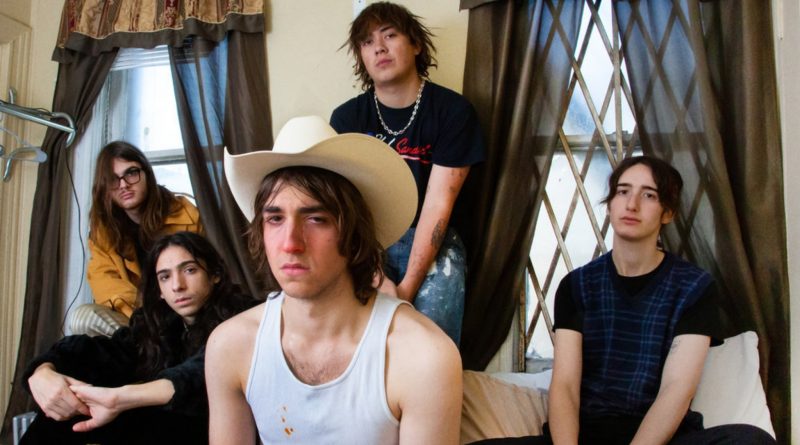
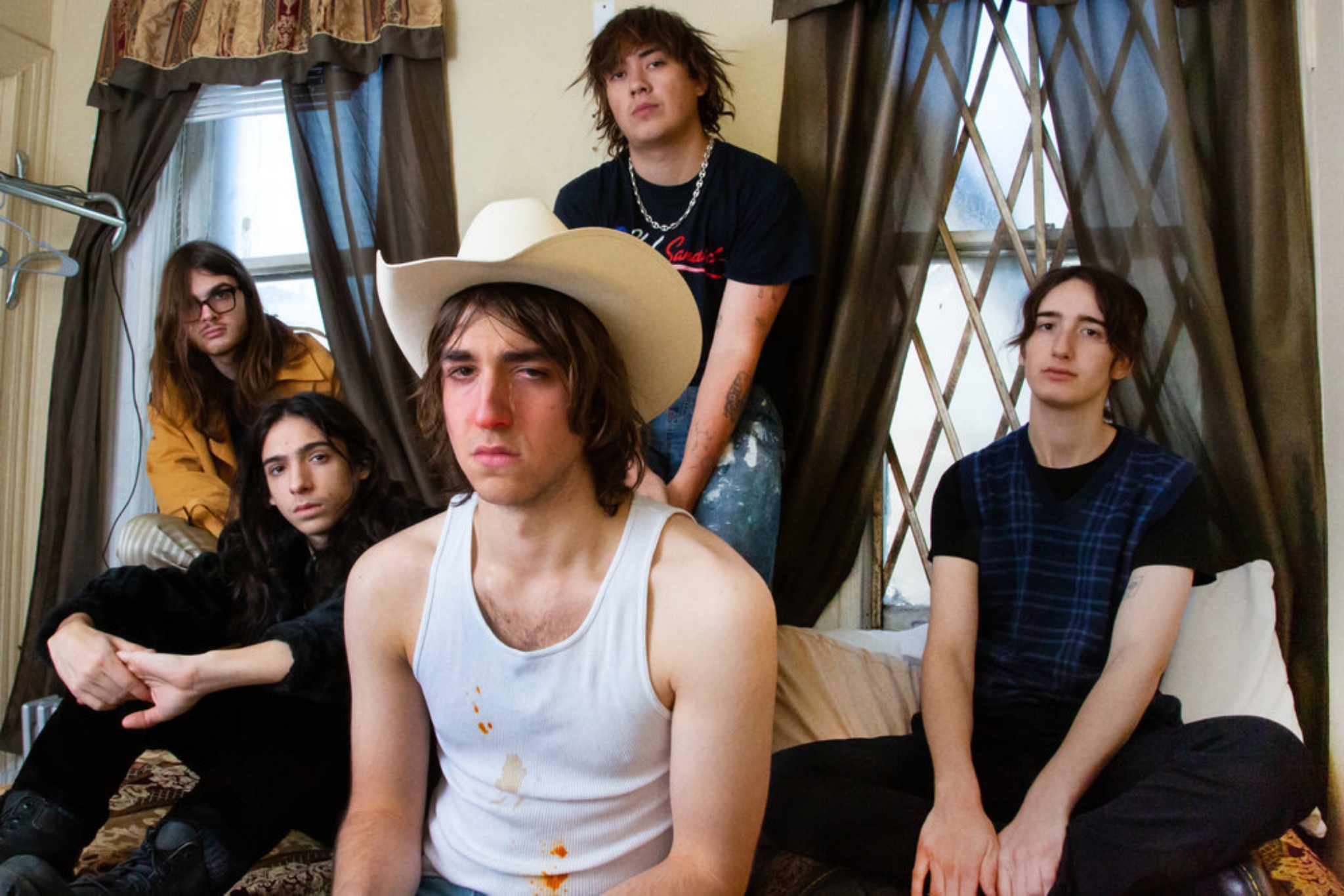
Now, here’s where it gets interesting: Only recently have I learned that the (future) members of Geese were also enrolled in this program. Of course, this makes perfect sense.
As Ithaca grew older, everything seemed to be going along according to plan. In 9th grade, Ithaca formed a band called Fiorè Würple and the Bat Hunters, whom she described as “a cross between the Birthday Party and Dusty Springfield, I mean, sort-of Krautrock shaking hands with Ye Ye.” Needless to say, we were very supportive (even if, frankly, I recognized that all the band were doing was playing Bauhaus songs really, really slow over a quadruple-timed old-school Casio rhythm machine). In many ways, the Fiorè Würples was the peak of Ithaca’s positive engagement with the KCCFMOCS: they were playing in a cutting-edge band who insisted on ironically promoting their music only via MySpace; they had never watched an episode of American Idol; and they had received excellent grades for their 9th grade second semester term paper, “Martin Atkins: The Heartbeat Where Industrial Meets Post Punk.”
VIDEO: Geese “Taxes”
But by 10th grade, Ithaca was showing significant resistance to the extreme discipline required by the Kings County Centre for Futuristic Musical Occlusion and Creative Strategies. They refused to participate in a seminar addressing ironic intent in the sexism and racism of Steve Albini; they kept on insisting that they “wanted a life beyond memorizing Pitchfork and mandatory communication with boring pen pals in Leeds”; they began to show an unironic interest in college football; and behind our back, they went to see Mumford and Sons. So, by the end of 10th grade, we allowed Ithaca to leave the KCCFMOCS, a process the organization referred to as “client-instigated defenestration.” Without the scholarship provided by organization, we were no longer able to afford the rather staggering tuition at West Flatbush Ethical Friendly Seminary; but fortunately, because of the good grades they had maintained in the non-musical curricula at school, Ithaca was accepted, with full scholarship, at Brooklyn International Amity Prep for the Social Sciences. True, the commute was now harder for her — to quote Alexander Wolcott, “No child of mine shall ever have to take the J Train, which is why I will never have children” — but Ithaca graduated, with vaguely flying colors – well, wafting colors – in 2019.
In case you are wondering, when freed from the confines of the experiment, Ithaca listened to almost nothing but Sleep’s Dopesmoker for two years, punctuated by occasional forays into German Schranz techno and the catalog of Lightning Bolt. Today, after a stint in Big Law, they live in Northampton, Massachusetts where they raise slugs for use in the alternative medicine industry and play in a band that’s a cross between (their words) “…a Jug Band and Sunn O))), sort of like of if Charlie Poole had been in Sabbath and Sabbath had covered The Cure’s Pornography album, but, like, in Berghain at 10 O’clock Sunday morning.” I understand they have half a billion streams. So maybe the program did work!

- Mitchell Cohen Sets the Story Straight - October 21, 2026
- Girlschool Release 1981 Reading Set - October 5, 2026
- Bob Dylan Live 2026 - August 1, 2026
You May Also Like
-
 July 6, 2022
 -
 February 3, 2019
 -
 February 27, 2019
😂😂👏👏🔥🔥