
Totally Necessaries
A new anthology celebrates an unsung New York City band
This past January, Omnivore Recordings released a long-overdue anthology celebrating the music of The Necessaries.
Who are The Necessaries, might you ask?
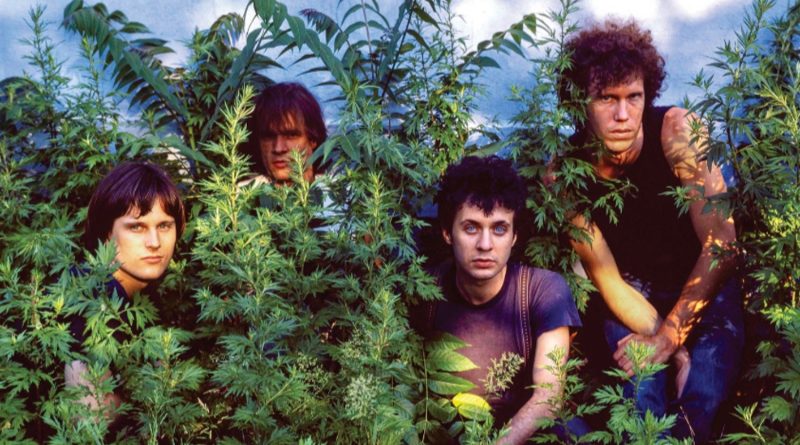
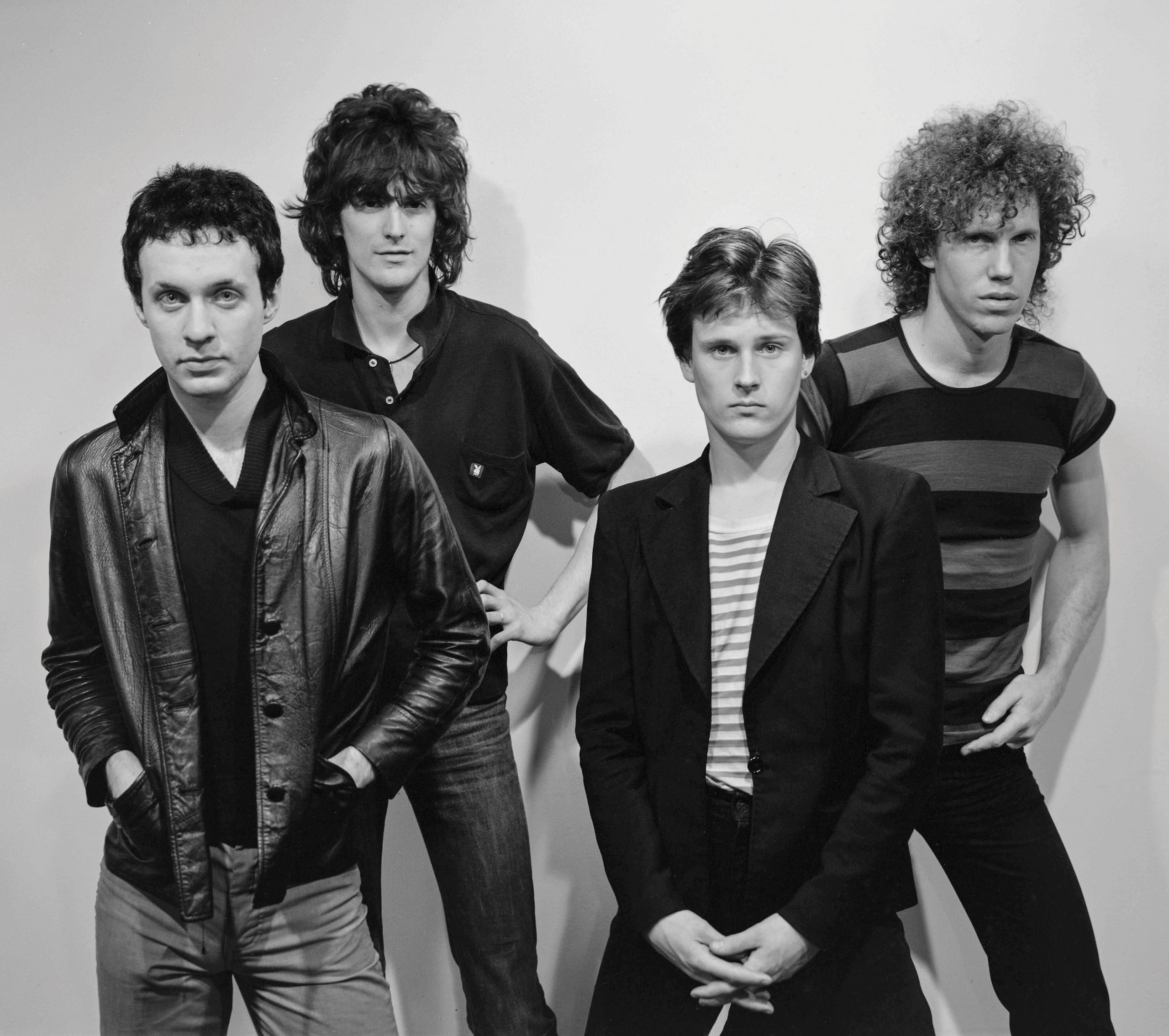
Well, they were a supergroup of sorts who rose from the depths of the robust New York City music scene in 1978 and who’s classic lineup was comprised of Ed Tomney (Rage To Live, Luka Bloom), Jesse Chamberlain (Red Crayola), Ernie Brooks (Modern Lovers), Arthur Russell (The Flying Hearts) and Randy Gun (Love Of Life Orchestra).
They were initially endorsed by The Velvet Underground’s John Cale, who produced the band’s first single for the I.R.S. Records subsidiary Spy Records, the momentum of which led to them getting signed by Seymour Stein’s Sire Records. However, the label wound up prematurely releasing the band’s demo tracks as their proper debut — 1981’s Big Sky — while The Necessaries were on tour.
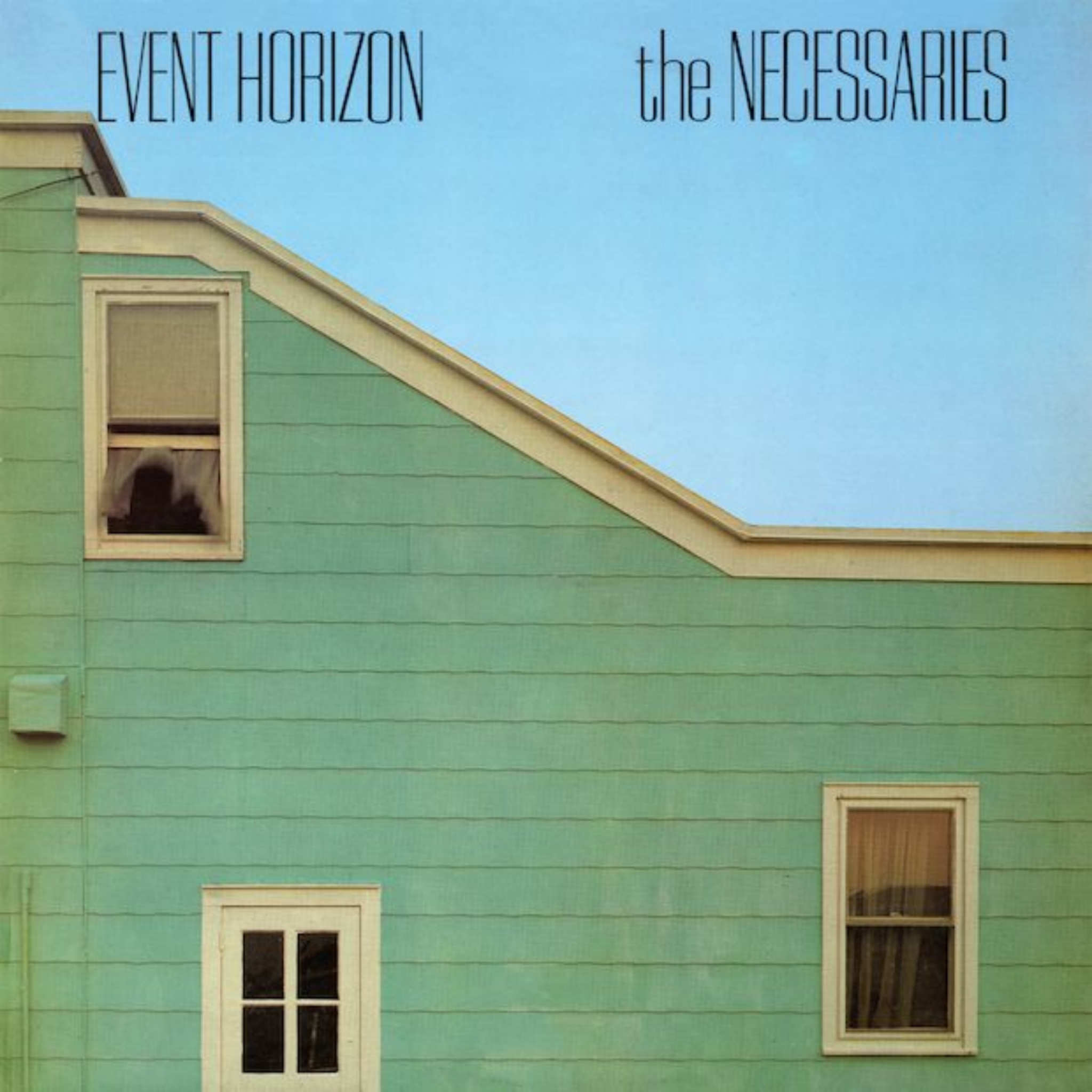
The band had the LP withdrawn from circulation and replaced it with another album, Event Horizon (issued in 1982), which included half the original tracks from Big Sky. The group spent much of 1982 in the studio and continued to record throughout 1982 aiming for a follow-up, amassing a cache of songs that remained unreleased until the good folks at Omnivore stepped in.

Completely Necessary represents the most accurate musical history of the band laid out across three albums. The first disc includes Event Horizon, followed by Pilots Facing North, a disc collecting studio recordings spanning 1978–1981 and disc three finally sees the release of their final sessions, Songs From The Blue Colony.
For fans of New York rock, the release of this anthology serves as a true paean to the missing link between CBGB and college radio here in the Tri-State area whose time for rediscovery is now.
Rock & Roll Globe had the pleasure of catching up with Ed Tomney and asking him a bunch of odd questions about the band and their history.
Completely Necessary is out now via Omnivore Recordings on Digital, CD, and LP.
What was the band’s vision of America upon the initial formation of The Necessaries?
We were a New York band so our vision drew on a city that was broke and operating in the wake of the great American urban exodus, so it was a place that had juice, danger amidst all the other appointments of a megalopolis. There was a reduced population so more elbow room to operate in cheaply, you could get a loft or a storefront studio or basement to rehearse in and have at it. The city was loaded with curbside dramas, like witnessing cops beating on a down-and-outer on the bowery (next to CBGBs when it was ‘the Bowery’, not what it is today), hence the song “Law & Order” got penned, or Times Square before it was sanitized by Disney and Viacom, back then it was loaded with arcades, movie theaters, strip joints, 3 card monte, so observing that all served to inspire “Rage,” which is the opener on Event Horizon. You could see amazing things, dodge the danger and write about it. You had to understand the potency of living at close quarters within the contamination range of a lot of scary things as well as great things.
Did John Cale ever tell you guys why he liked the name The Necessaries for your band?
Not really. I was in his office and we got to talking about names and I told him a few we were bouncing around which I don’t even remember now, but when he heard “The Necessaries,” he just said that should be the one. Jane Friedman — who was a publicist and his partner at the time — immediately responded as well to the name. Although it has an element of braggadocio, that was never our intent. It was more based on the concept of ‘necessaries’ defined as essential components, tools, supply, things needed for work or survival.
Seems like Cale’s 57th Street office was an important location in the genesis of The Necessaries. What was it like hanging out there?
There were two shared offices, one for the Spy Records operation and the other for Jane Friedman’s firm, “The Wartoke Concern.” John had been in demand for production gigs, so there was a lot of activity up there and we always had something to do regarding promoting our single or booking shows. On a given day, you could see Miles Copeland or Squeeze or some other new band John would be working with. Besides helping us with the Spy single release, they were involved in promoting and securing some gigs to help sell it. Jane Friedman was very generous in sharing knowledge regarding how the business operated. She taught me how music publishing works and how to shake the money tree in order to get paid. John would always have a newspaper on his desk and have really smart yet funny comments on current events, the music biz or whatever new thing was happening. John was a quick study, for being highly educated his POV was more instinctual …. “follow your gut, just do it, get it done, stop analyzing.” It was a great time and we learned a lot, they were very good to us.

What was the audience like back then for Necessaries shows? What were some of your favorite places to play in the city? Did you ever make it out to Long Island or North Jersey?
Our first gig was at CBGB so that became home base, our Spy single was on the juke box in the club which helped promote, our rehearsal studio for a while was across the street on the Bowery and we had great audience reactions playing there. We actually have a live recording of our first CBGB show. Hilly’s policy back then was to allow band members that played CB’s free admission, so on off nights you could hang out and commiserate with all the other usual suspects from different bands and trade notes. Besides CB’s, the other hierarchy at that time and some of our favorites were Max’s Kansas City which was a slightly different vibe, a little more show-biz with a longer history. Hurrahs, Mudd, Trax then came in later as well as a host of new clubs popping up all over and very quickly. The audiences started to evolve with an additional dose of bridge & tunnel clientele, so besides the usual downtown local crowds, things were expanding. We played one of the very first shows at Maxwells in Hoboken. Sometimes you would have some new promoter suddenly appear trying out a new club idea, obviously overwhelmed and on one occasion I can remember us playing a disastrous show at a fly-by-night club in Fort Lee, New Jersey, where you had an audience full of accountants responding with dropped jaws who really had no clue as to what we were doing (or maybe they just did not like the show). We played some of the more established south Jersey clubs which were always great audiences, “The Stone Pony” and another place in Asbury Park comes to mind. On Long Island we played on an almost regular basis at The Past Time in Amityville and we opened for Ultravox at My Father’s Place in Roslyn. When it came to live shows, besides the main clubs and venues, we played everything we could. We played VFW Halls, stripper bars, greaser bars, colleges, wherever there was a gig.
What inspired the sound of The Necessaries? What informed the songwriting and style?
It’s no coincidence that you sponge up the early media you’re exposed to for influence, e.g., Dylan for lyrical content and phrasing, Captain Beefheart for how far you can take abstraction with two guitar parts in counterpoint, the U.K. bands for new sounds. The newer anglophile outfits loomed large, that being Roxy Music, Eno’s early solo LPs, Wire, Gang Of Four, The Vibrators, Joy Division, all the then current British groups. On the other side of the pond acts originating from U.S. industrial urban centers like the Midwest, Chicago, Detroit, these were all super influential. Case in point, the timeline of The Stooges’ lineage to the Velvets to The Modern Lovers to The New York Dolls and then the new crop of bands coming out of New York. Living in the NYC of that time you were surrounded with beaucoup dramas, street narratives, individual stories of survival from direct observation, so it didn’t take much to get lyrical inspiration especially where life can get somewhat abstract, urgent or just weird. The lyrical mission was to challenge with unsanitized topic. Joe Strummer once said something like “love…. subject fully covered.” We felt the same. One goal was to try and do something different with the song handling instrument-wise. On a few occasions Arthur would trade places with Jesse where Arthur played drums and Jesse played keyboards. You have the basic song architecture as the overall guide, but the friction you get from players performing together is the other half that gives things life. We had a pretty muscular rhythm section, so we liked to color the backgrounds with electronic guitar sounds and alternate tunings as well as other instrument additions using synths, cello and keyboards. That’s one reason why we would often go back to playing instrumentals at times where you could tell a story purely through rhythms with guitar-keyboard blends and coloration. We always went with arranged parts which accounted for the low count on solos and when there were solos, they were all written parts, no improvisation.
AUDIO: WPIX-FM 1973
Did any of the New York radio DJs promote The Necessaries back then? Are there any fun radio stories?
Radio for us was sparse in that we only had the Spy single as product for the first four years of our run. Our Sire LP came out late in the game. DJ’s Jane Hamburger, Meg Griffin, Dan Neer, John Ogle championed our cause at WPIX, we actually did a live show at the station where they had us do some Q&A and then they let us DJ a bit. The day we were there they also had The Cramps and The B-52’s doing the same thing. I know we did on air with Rutgers Radio and something with WFMU who were fans.
How did this Anthology come together? It sounds incredible.
This anthology is really the creation of Cheryl Pawelski at Omnivore Recordings. A while back, Cheryl had been working with Ernie Brooks on some of “The Modern Lovers” re-releases for Omnivore, “The Necessaries” kept coming up and she asked Ernie if there were any unreleased “Necessaries” recordings. At her query, I sent her tracks to check out that would eventually be included on the new “Pilots Facing North” and “Songs From the Blue Colony” releases, she was obviously already familiar with “Event Horizon”. She loved the new songs and suggested putting together a comprehensive anthology involving all 3 releases in one package. She even came up with the name “Completely Necessary” which made perfect sense. For 40+ years, we’ve been sitting on these other recordings waiting for the right time and circumstance to release this unheard material. Through the years there have been bootleg versions of “Event Horizon” released in Europe none of which were authorized by the band and none of them manufactured from our master tape which is unique. This became the perfect solution to have our audience hear a newly restored & remastered “Event Horizon” as well as the other 2 releases of never heard before material. To help glue all this material together, Cheryl arranged to have Grammy winning mastering engineer Michael Graves bake and restore our original master tape of “Event Horizon” as well as master the other 2 albums and what he was able to do is nothing short of miraculous, we could not be happier with the results. These guys are very good at what they do, their art department put together a great, slick package with lots of new and unseen photos. Through the years there’s been a lot of inaccurate junk written about “The Necessaries” and to help straighten it all out, the Michael IQ Jones biography that’s included in the package is the only true, authorized bio on us written. He spent hours of interview time with us correcting a lot of the hyperbole amassed through the years regarding the band’s history.
I was first introduced to Arthur Russell through his solo material, so it’s quite intriguing to hear him in a rock band such as The Necessaries. How was he as a bandmate and collaborator?
During the early ’70s I was involved in the experimental downtown loft music scene performing with a band called Kerneldack and also, at times, with John Zorn and Phillip Johnston in various projects and Arthur was around that clique at the same time, so we were sort of familiar with each other. Ernie Brooks was involved in a band with Arthur called The Flying Hearts, so that was my real introduction to Arthur.
During our brief five-year history, we had three different fourth members in the band, Arthur was the last one to join in our late phase. At the beginning, there was Randy Gun, who went solo after which, Chris Spedding joined up and after Spedding’s departure, Arthur came in with us for about a year, so he was the last 4th member to come in to the group for a short period. Seeing that we were all familiar, we thought it would be interesting to add Arthur to the lineup, especially given that the direction of the songwriting was changing and Arthur could move around on cello, guitar and keyboards, which would broaden our sound. A lot of our 4-track recordings were done at our rehearsal studio with Arthur switching around between instruments which in some ways gave a truer representation of our sound which was rawer and rougher. Arthur could be very difficult at times, missing rehearsals, but we always worked through things and had a lot of fun working together. There has been a lot of inaccurate information written about Arthur’s tenure with us, especially the story about him jumping out of the band’s van suddenly ‘quitting’, that is wrong. What really happened was we were set to go out on a small tour and he misread the itinerary and suddenly realized he had a conflicting gig with one of his solo projects, so he had to stay in NY to fulfill that commitment, we went on and did our tour as a trio. When we returned to NYC after our tour, he was very contrite and apologized but we mutually agreed seeing that his solo projects were expanding and doing well, it would be better for both parties that he concentrates his time and effort on his solo works with Sleeping Bag Records, so we parted on friendly terms.
AUDIO: Dinosaur L full album
Were you all fans of Dinosaur L?
Dinosaur L was happening simultaneously to “The Necessaries” so the 2 projects shared the same timeline. Arthur was experimenting with creating an intelligent dance music and was producing lots of tracks recorded during overnight graveyard shifts at recording studios. For Dinosaur L, 24 – 24, it was an assortment of musicians recording at different times, I got a phone call from Arthur at 2 a.m. from Blank Tapes studio telling me he just grabbed some overnight studio time, do I want to come up and play on some tracks. When I got up there, the bass and drums were already laid down and for that session it was just myself on electric guitar and Julius Eastman on vocals. With Arthur, there was no specific direction, he said just “play anything,” no dry run, he would record everything and then have me do more tracks and keep repeating that process. Later on, he would comp the tracks and collage everything together at mix, but I was never around for that part. It was a lot of fun to play on.
How was touring with the Pretenders? Any interesting stories?
The Pretenders had come to a gig we had at a NYC club called Trax to check us out, liked what they saw and asked us to be the opener for their first US tour. This would involve the Northeast, Midwest and Canada so this meant huge exposure to a wider audience. It went like clockwork; the tour was one of our high points and it helped pave the way for us to eventually get signed. Their guitar player James Honeyman-Scott became quick friends and would at times join us onstage for a few numbers and for the return, Chris Spedding who was with us at the time would join the Pretenders sitting in on a few songs on their set. They were rock solid and consistent every night, just an incredibly great band. Besides The Pretenders, we toured and opened for The Clash, The B 52’s, Talking Heads, Tom Verlaine, Jeff Beck, Squeeze, The Dead Boys, these were all high exposure gigs and very helpful in expanding our audience.
What did you learn from your time at Sire Records? Were you happy?
The times were fiercely dynamic, had we been signed earlier on things would have been very different but the business was also changing. In late ’70s a lot of industry A&R were still figuring out how to deal all these new bands at CBGB, early punk in the U.S. was a different pill than punk in the U.K. New wave and other styles were starting to come in, things were changing quickly and they had to figure out how to sell all this stuff to the rest of the world. We were evolving constantly so we were very hard to peg, a hybrid mix, arty at times and as Jesse once said, there’s no niche we fit into. We were initially courted by Warner Brothers who had us produce some demos. They signed us to a publishing deal but passed us on to Sire for releasing product. By the time we got signed around ’81, Sire NY had depleted much of its yearly budget so we got passed on to Sire Europe with the provision of tour support so that a U.S. act could go help sell a European release. During that time around ’82 a recession had hit the record biz and Sire, having cooked their budget, reneged on our European tour support which essentially cooked us, unable to go over and showcase a product being a U.S. band that nobody knew over there. Due to the budgetary issue, we were also short changed on studio time so things were rushed and, in some cases, unfinished. The music business has always been and will probably continue to be brutal and you have to be able to adapt to its many changes and adjust to every knuckleball ball it throws at you.
What is it like for you to have this Anthology out in 2026? Does 1978 to 1982 feel far away for you? Or, do you feel there’s a throughline connecting what The Necessaries were doing then to the way music is created and distributed in the modern age? I hope that makes sense.
In a sense, I feel no time-warp at all, much of our recording and rehearsal sessions and gigs feel like yesterday. Ironically, I still have and use the same vintage guitars, pedals and amplifiers, they still all work and sound great and I find it interesting that you see new bands today using the exact same type of vintage gear we used to use. For us, that gear was pawn-shop affordable and governed some of our choices made out of budgetary necessity, seeing the same equipment now in modern use feels like a timeless and nostalgic standard came about by accident. The same sensibility we had in making music back then I also hear revitalized in select bands today, all the components of song to instrument to recording to production seem timeless. It’s also ironic in that so much of recording plug-ins today feature vintage graphics and design. It’s almost anti-evolutionary. The business side is entirely different. It is much harder for a startup band today to function much less balance the books. Before being signed, we were able to tour, come home with money (meager as it was), pay the rent (meager as that was) and survive, and that’s with no merch activity. That would be impossible today. It’s great to have the sweetness of vinyl availability, another reality now is that we live in a streaming environment which is a whole different audio standard. Back then, no sooner had consumer Sony Walkman cassette players come out, consumer CDs started to appear which began to nudge out vinyl. So now we fast forward and loop back to issuing high grade vinyl, the streaming replaces what the cassettes did in filling up an affordable gap, it’s a wild ride regarding the physical delivery system. The world gets stuck on old metaphors that, although true to their time, have to adapt to a new set of metaphors for a new time.
What new music are you listening to these days?
Love Of Diagrams, Horsegirl, Tinariwen, Interpol, Fleet Foxes, some shoegaze; Cold Cave, Ravonettes, Chromatics, Sigur Ros, a lot of Russian, Ukrainian and Eastern European cold-wave; Blagodat, Ploho, Molchat Doma, dark-wave like Haus Arafna, November Novelet, lots of microhouse; Oval, Richie Hawtin, Ricardo Villalobos, Stephan Bodzin, glitchcore; Microstoria, Ryoji Ikeda, Toshimaru Nakamura, lots of ambient that is not Eno, certain composers like Marcus Popp, Thomas Koner, Mark Stewart, Bill Orcutt.
Do the surviving members of The Necessaries stay in touch? Is there any talk of shows in support of the Anthology?
Yes, we stay in touch through the ether and the phone, we live in different places but are still in the NYC area. Ernie fronts a group called Tape Hiss, which keeps him busy as well as playing in numerous projects. Randy Gun still plays and tours with Peter Gordon’s Love Of Life Orchestra. I went in an entirely different direction working in electronic music, was signed to Mute records for soundtrack work, (Safe directed by Todd Haynes) but have also been a visual artist which consumes most of my time. We feel the recordings speak for themselves regarding our history.
What has been the biggest takeaway for you from this experience revisiting these albums and this music?
If you try to challenge or innovate on the familiar models and standards and make something different, you have no guarantee as to how your audience is going to absorb it all or how the record business you are trying to operate in is going to receive and market. You can get stuck in the “today’s trash, tomorrow’s art” syndrome. Waiting for the right time, the right label and the right collaborators is crucial and, in this case, it was 40+ years but it feels even better now. If you get to do it the right way and your way, that can cure most former ill treatment you feel you’ve received. We were always underbudgeted, short changed on studio time and signed too late. With this new release, we’re able to undo a lot of that early damage, so the notion that you can salvage what you think is lost rings true. A major player here is what you can do with the technology now (a tech with abilities we never saw coming) to restore and remaster, but you still have to make the right choices about everything with the right people. We now have that for the first time.

- Ween Unveils ‘Boognish Provides’ - October 1, 2026
- Artists Praise ‘Songs in the Key of Life’ for its 50th Anniversary - September 28, 2026
- Ringo Gets Back to the Garden - September 27, 2026
You May Also Like
-
 June 9, 2022
 -
 June 8, 2024
 -
 August 20, 2021
