
Guess Who’s Coming: DJ Shadow’s ‘Endtroducing…..’ Turns 30
Looking back on an instrumental hip-hop landmark
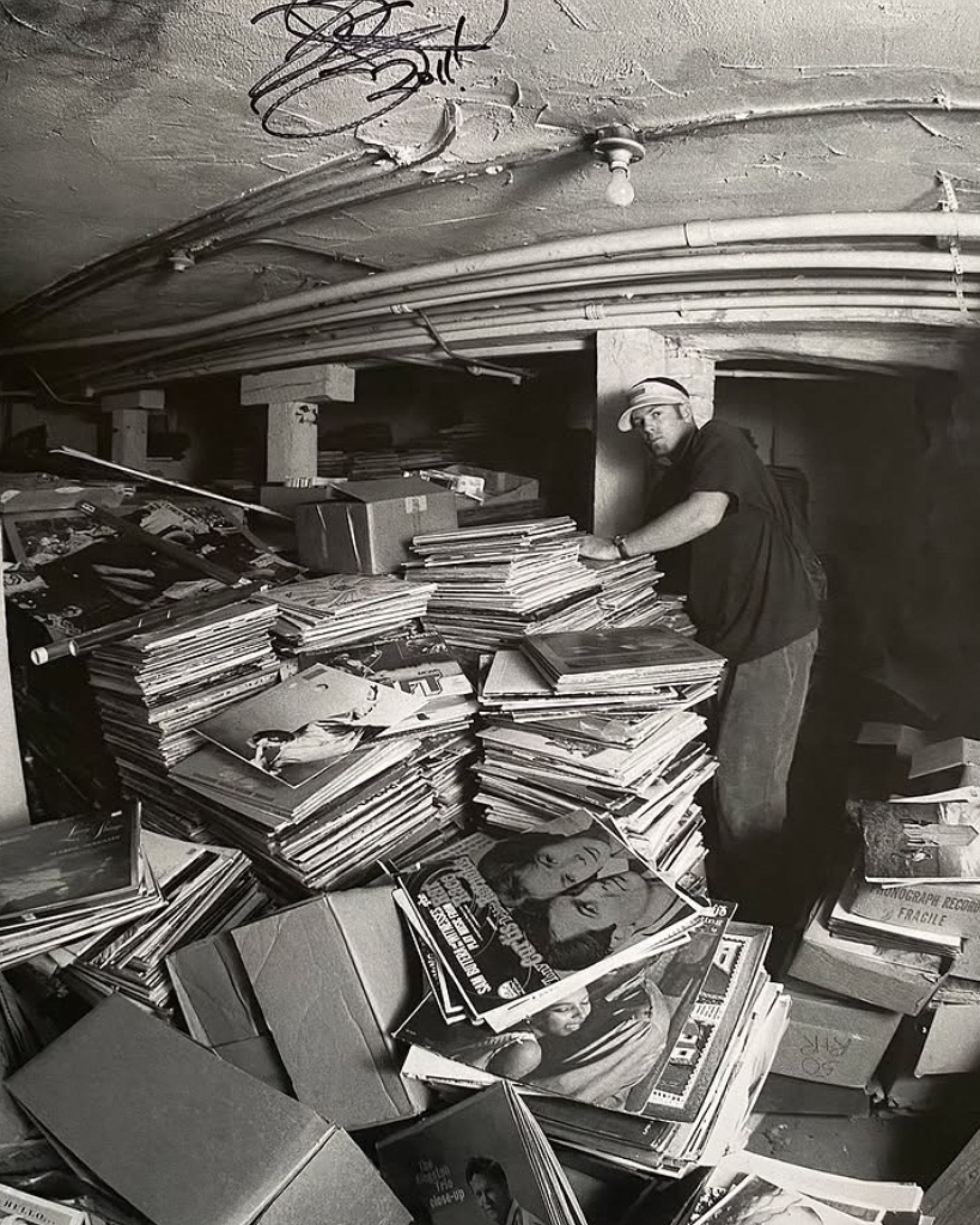
I’m sure Endtroducing….. DJ Shadow wasn’t the first album comprised entirely of samples as certified by the Guinness Book of World Records.
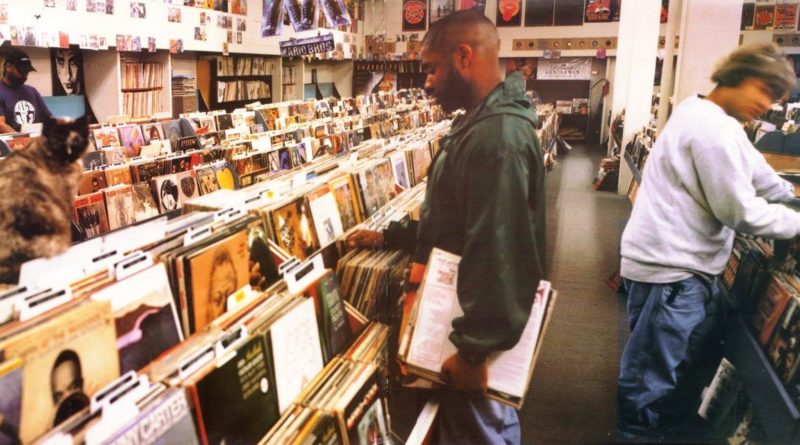
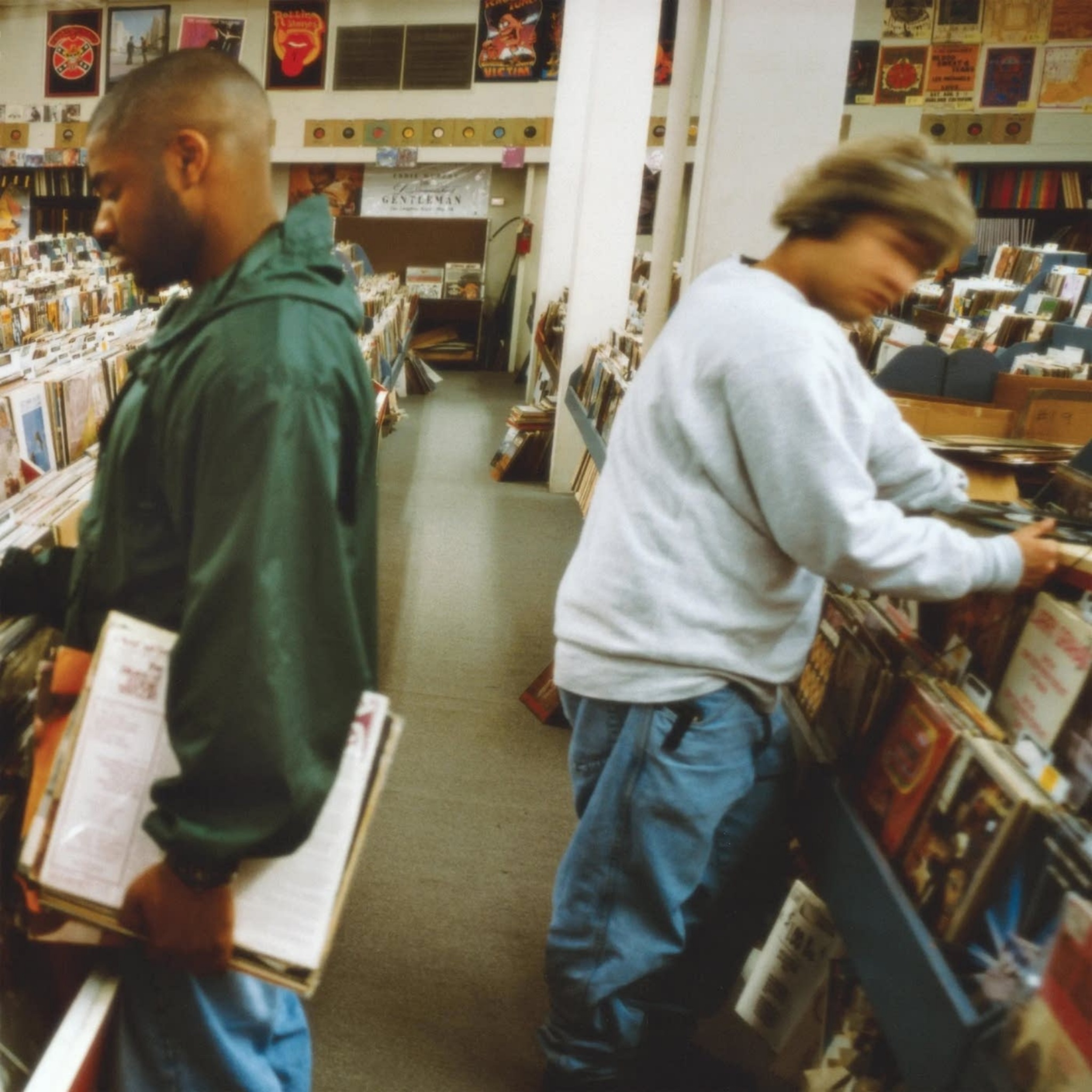
Perhaps Double Dee and Steinski would have to bone to pick about what constitutes an “album,” for instance, but the honor is a start, even though it’s not even entirely sampled. That’s very clearly Lyrics Born answering “it’s the money,” over the pilfered g-funk of the brief interlude “Why Hip Hop Sucks in ‘96,” and Blackalicious’ Chief Xcel gets an ad-lib in the 63-minute mix, too. And those same dudes are record shopping on the famous album cover, with Born blurred in a blond wig. But as history supports, those allowed to write new rules tend to break a few of their own. On its face, that’s what the man born Josh Davis was daring: a hip-hop album without rapping.
Mixmag journalist Andy Pemberton coined the term “trip-hop” when he wrote about Shadow’s first single, “In/Flux” a couple years prior — a creeping, downtempo style that would also come to be synonymous with Massive Attack’s baked hybrid of blues, ragga and soul, as well as Portishead’s eerie deconstruction of spy film scores, and Tricky’s lurid, sometimes pornographic landscapes of beatwise phantasmagoria. But those three acts, all of whom released one classic album apiece (Protection, Dummy and Maxinquaye) before Shadow’s debut, still trafficked in singable songs with verses and choruses. Shadow’s magnum opus comes remarkably close to instrumental music you can sing along to — try those la-la-las on “Building Steam With a Grain of Salt” if you need an example more literal than the ultra-catchy “Organ Donor” — but the actuality was much closer to a kind of breakbeat symphony.
There were a couple motifs, or “Transmissions” as the auteur dubbed them, as well as half the movements included from the four-part single “What Does Your Soul Look Like?” “Stem/Long Stem” teased a bit of the tracelike organ riff that foreshadowed “Organ Donor” before putting the title instrument on full display and giving what sounds like a church organist’s solo center stage over cut-up boom-bap in one of the album’s simplest and most memorable bits. The original sample is only from a slightly longer context than the song’s two minutes but it’s a shocking one: Giorgio Moroder’s “Tears,” which grows into a cheesy orchestral-synth vamp. Instead, Shadow loops half of the riff to blunter ends and lets the beat drop out so he can fashion a solo of his own from the isolated notes. Not some downhome church tape from someone’s yard sale but a deep-crate tease.
Some of Davis’ best tricks are sleight of hand: that sawing two-note bassline on “The Number Song” which sounds like a grinding synth sustain? Just the intro to Metallica’s “Orion” instrumental from Master of Puppets pitched down to a wavelength that’s actually more ominous than the original (and interrupted momentarily by a welcome funky brass band). The melancholy melody that loops through “Mutual Slump” after its jarring-to-terrifying intro effect? That’s Björk’s “Possibly Maybe” verse in a different key, a more gripping one to match the frantic drums laid under it. He wasn’t above breaking his own guideline to eschew the obvious when it made for better results. Did you make out that few bars of Loudon Wainwright III singing “The Man Who Couldn’t Cry” beneath the solar plexus of the blunted masterpiece “Changeling?” Me either. I can’t tell you enough how rewarding it is to follow along on something like my 500th listen to this album over the last 30 years with a chronological list of the samples like this one and play scavenger hunt.
While every single track has something you’ll look forward to nodding your head to again (stand up, flute and sax on “What Does Your Soul Look Like (Part 1): Blue Sky Revisit / Transmission 3”), the samples of human voices are something else. “The Number Song” was a canny way of blending various countoffs into the album’s most aggressive threat to breakdance, like, yes, Double Dee and Steinski’s James Brown megamix. “The clock on the wall reads a quarter past midnight,” extended, shrunk, and repeated over and under the album’s dreamy first single, “Midnight in the Perfect World.”
VIDEO: DJ Shadow “Midnight In A Perfect World”
The 48 furious seconds of turntable-shredding on opener “Best Foot Forward” will put a smile on your face like ultra-bright, and the antigravity piano epic that follows, “Building Steam With a Grain of Salt,” in which a self-taught drummer laughs awkwardly before Shadow proceeds to show us for nearly six minutes how much he can do with an instrument he can’t even play. There’s also of course the now-ubiquitous Twin Peaks line that takes the entire record out. Now let’s recite the holy 24 seconds of Endtroducing’s briefest bit, which I hope to do along with all of Philly’s Franklin Music Hall with linked arms in October: “Maureen’s got five sisters. They all got ass. One of ‘em has eyes as big as Jolly Ranchers. Beautiful girl, she’s a beautiful girl. Hm!”

In attempting to create the perfect album via mostly imperfect music, Shadow grounded himself just as he ascended to artistic genius. This was music that aimed so high without proclaiming itself above anything, keeping the integrity of its numerous lifted basslines and syncopated drum breaks intact and boosting them in a mix designed for rhythm lovers even as it laid wah-wah guitars over spirited chorales and classical piano ostinatos. The pancake-batter thickness of the bassline on “What Does Your Soul Look Like (Part 4)” was made for drugs even if you only choose to imagine them, laid carefully over jazz trills and a rhythm bed so aesthetically pleasurable that it hooks you each time the drumstick comes down just right between the rim and the head of the snare to catch both.
And Davis wasn’t above the microscopic slices of comedy let in by opening the window of human voices a crack, to say nothing of the humanity, which helped balance a solemn meditation like “Stem/Long Stem” as it lets the strings and glockenspiels pile on. “Mutual Slump” and “The Number Song” and those Transmissions ensure that falling asleep to the thing is a fool’s errand even though the velvety parts lull you into a false sense of security. Even at its most E-Z listening, Shadow’s interpretation of hip-hop heeded Nas’ warning that sleep is the cousin of death. Why drift off when this soundscape defines midnight in a perfect world, not to mention building steam with a grain of salt, or several grains of mostly minor recordings woven into a careful tapestry to show us what DJ Shadow’s soul looks like?
He’d never try to make anything close to this delicate again, which was probably wise; as Christgau put it, 2002’s long-brewing follow-up The Private Press was “popper, rocker and R&Ber” (he meant rapp-ier) and pretty great itself, though a fresh listen to even the early singles compiled on 1998’s Preemptive Strike proves that Endtroducing… was the kind of lightning that only struck once, including the shrewd editorial tactic to repurpose two parts of his “Soul” epic.
It’s not easy to convey in words why it’s one of the best, most listenable, satisfying start-to-finish albums ever made (second to only one other for me, in fact) but that’s mostly how it succeeds: wordlessly, celebrating dribs and drabs of music from all different eras, tax brackets, and letting the findings speak for themselves.
Perhaps someone can ask Bob Wood, national program director of the Chum Group, if he’s tickled, too.

- Guess Who’s Coming: DJ Shadow’s ‘Endtroducing…..’ Turns 30 - September 16, 2026
- Where It Got Them: R.E.M.’s ‘New Adventures in Hi-Fi’ Turns 30 - September 10, 2026
- Off They Go: Pearl Jam’s ‘No Code’ at 30 - August 28, 2026
You May Also Like
-
 March 21, 2019
 -
 October 10, 2018
 -
 July 21, 2021
