
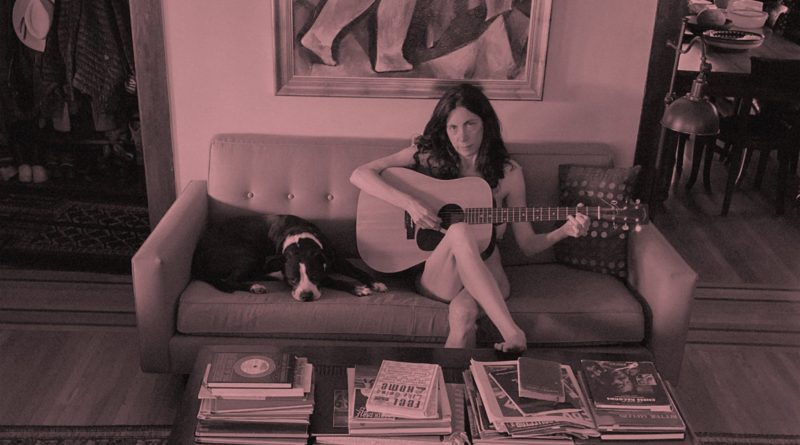
Diana Darby Honors Old Friend on ‘Otterson’
Singer-songwriter expands her sound on new LP
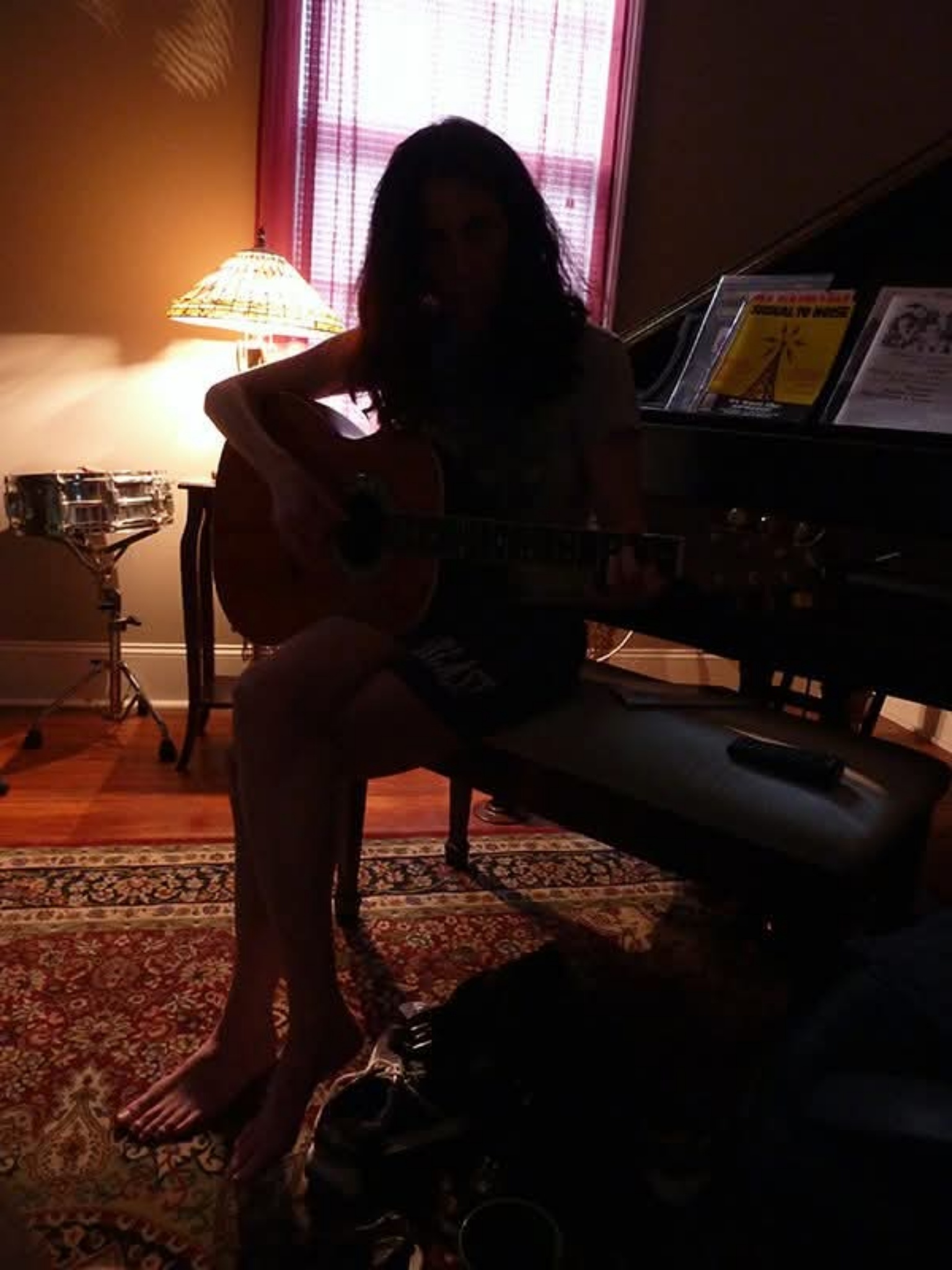
Houston-born singer-songwriter Diana Darby took six years to finally unveil her latest album Otterson earlier this spring — her first LP since 2012.
The began work on the record, in fact, during the COVID-19 shutdown — channeling her immediate experiences through song as a means to cope with the isolation.
“I was locked away like pretty much everyone else on the planet,” she explains. “And it was that isolation that let me go deeper into myself, and then these songs started coming. At the time, I didn’t understand what they were all about, but a unifying theme emerged — loss. Loss of a relationship, an animal, self, faith, and a shedding of emotions I had carried around for years.”
What emerged from these sessions is a song cycle as intimate and intense as anything she has ever recorded in her years as an artist, rooted in tribute to her friend John Otterson — who the new album is named after and whose painting graces the cover.
“It’s that ghostliness that drew me to use a painting which has hung on my living room wall for years, as the album cover.” It is a painting of a young, introverted woman with large eyes, and long dark hair, who seems otherworldly. “When people see it, they almost always ask if it’s me.”
Rock & Roll Globe spoke with Ms. Darby about the creation of Otterson and the stories behind some of its songs in this exclusive interview.
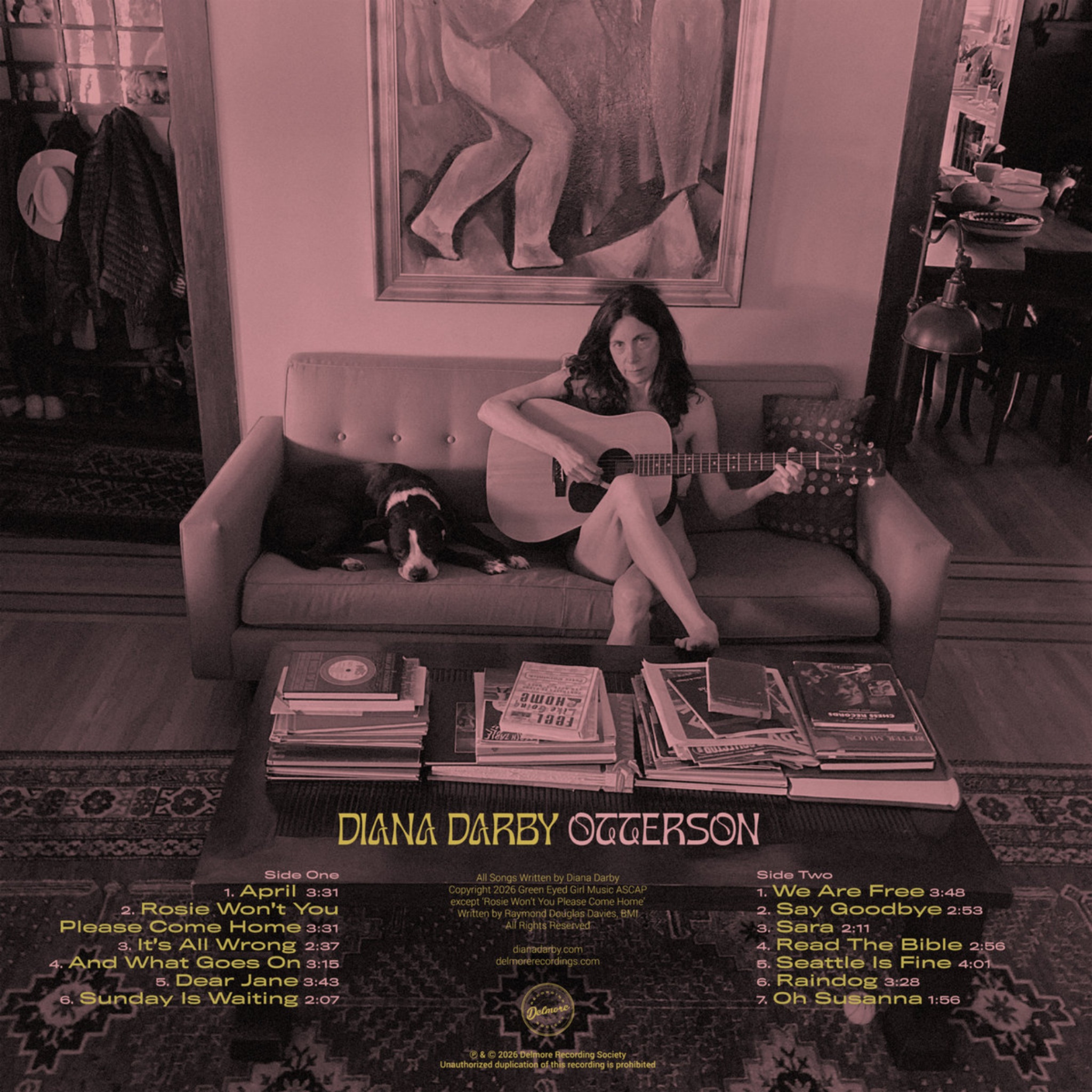
Otterson is out now on Delmore Recording Society.
Otterson is named after your friend John, from what I read. What was he like and how did his presence in your life inform these songs? Also, please tell me about the painting of his that is featured on the cover.
John and I lived in the same building in Santa Monica for many years. His apartment was around the corner from mine, so it required him to pass by my door whenever he came or left. Most days he’d stop by and show me a painting he had just finished. I didn’t really get to know John well until he agreed to be the subject of a documentary I made for film school. During the filming, I spent hours interviewing John and finding out about his life. One of the things I learned was that John lost his wife and child in a car accident. That same accident left him unable to walk. He got through his worst days by painting and having faith he would overcome his injuries and learn how to walk again.
He lived simply in his rent controlled apartment. And he was always painting. Always.
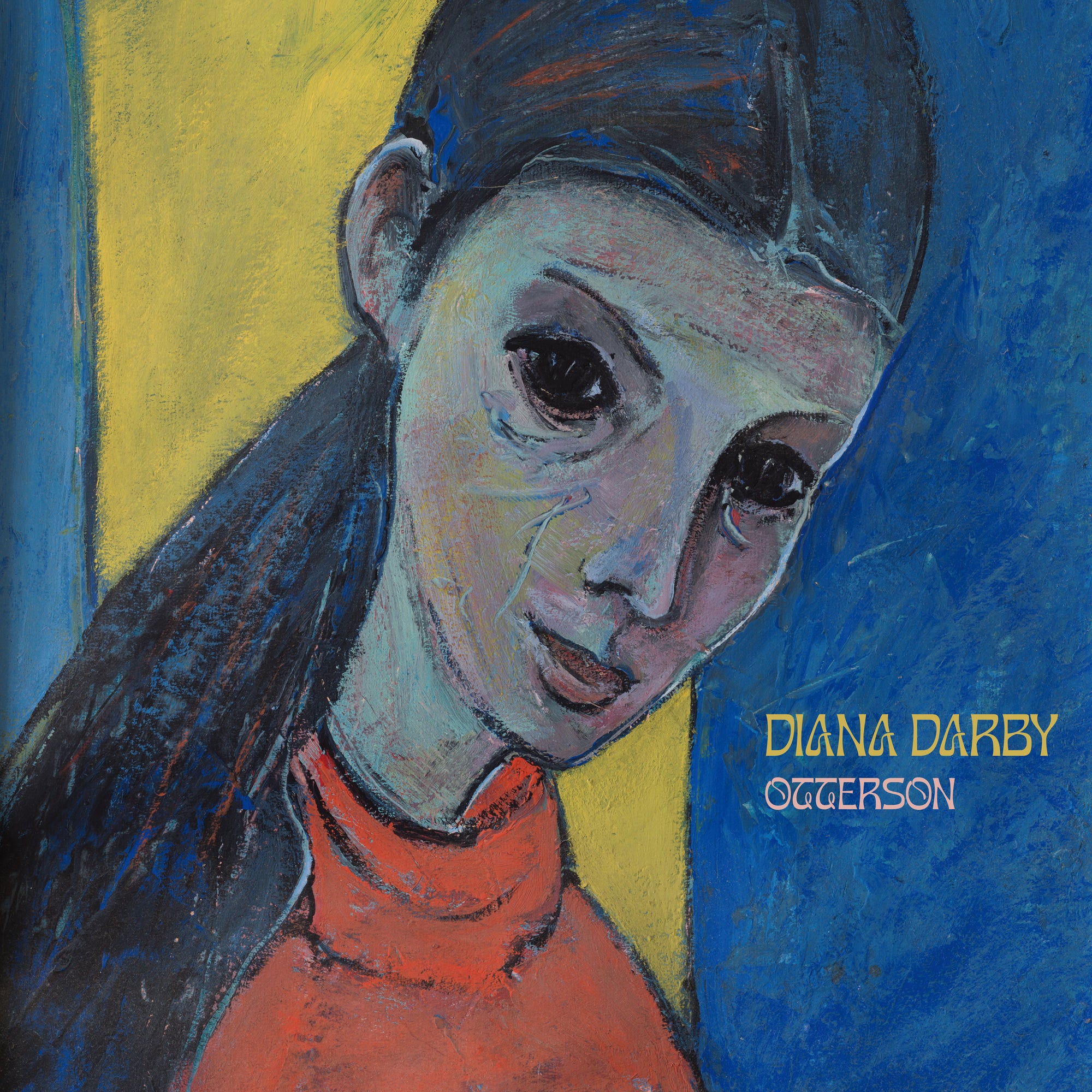
The album cover is a painting of John’s that I always admired. John gave it to me and now it hangs on my living room wall. Most people who see the painting think it’s me, but it isn’t. It is of a woman John loved long ago. But I’ve always seen myself in the painting. A young woman with large haunting eyes, who seems a bit other worldly, staring out as if she knows something. I like to think of myself like that…knowing something. And I’ve always felt like I was from another planet and didn’t really fit in on this one. Her eyes are so large, it’s as if she’s absorbing everything she sees.
Who is the opening song “April” about?
April was inspired by my dog, “Trouble.” He magically appeared one day when I was getting out of my car in the back drive of my house. I had a bag of groceries in my hand and suddenly I was tripping, and I didn’t know why. I looked down and this beautiful black puppy had my tennis shoe laces in his mouth and I couldn’t walk straight. I petted him and went inside, and started going about my day, but when I looked out the window, he was on my back porch ripping up my welcome mat. He didn’t have a name tag, or seemingly anywhere to go. So, I gave him some sliced organic turkey breast and after that, he never left. My house sat on an acre of land and I had it fenced in for Trouble, so he could roam free. He used to sit up on the hill right before a storm would roll in. He’d sit there with the wind blowing, and the thunder and distant lightning coming, and just watch it all. He wasn’t afraid. He was more afraid of the vacuum.
What was it about The Kinks’ “Rosy Won’t You Please Come Home” that inspired you to cover it?
I’m a huge Kinks fan! “Rosy” began because I’d heard about a Kinks tribute album in production in Nashville, which I hadn’t yet been invited to be a part of. But I had been invited to contribute a song to the Kris Kristofferson tribute album Nothing Left to Lose and had some studio time booked. We recorded “Jesus Was A Capricorn” which turned out great and had some studio time left so I suggested we try Rosy. Mark Spencer and Ken Coomer were there and willing, so we did a few takes. … but ultimately, I never ended up submitting it to the tribute album.
AUDIO: The Kinks “Rosy Won’t You Please Come Home”
What is your favorite Kinks album and why?
Face To Face. I love that album. I have taken it on so many road trips. It just makes the time fly. It starts off with the phone ringing and and it’s non-stop after that. “Rosy,” “Dandy” and “Session Man” are all just incredible songs. It’s an amazing album. “Too Much On My Mind,” which I first heard when I was watching a Wim Wenders’ film (The American Friend), is my theme song. I wish it weren’t. I practice meditation but that still isn’t enough to stop my mind from thinking.
You are largely known for balladry, but is there a side of you that wants to create a noisy, cathartic rock album? Why or why not?
Oh, God, YES! I am dying to rock out! I’ll hear a Wet Leg song, or a Stones song like “Satisfaction,” or the New York Dolls, and I’ll always say, “I want to do that.” But then I pick up my guitar and what comes out is nothing like that. I think in a way, I really am a punk rocker, at least inside, and my version of rocking is these songs. They are much more intense than most people believe. The intensity of the emotions is definitely as hard core as any rock n roll song, they just aren’t loud, or fast, or have drums. But there’s still a driving quality to them. I do have one song…“From Where I Sit On The Bridge, Or The Water’s Waiting”. But yeah, if I could make a rocker album…I would in a second.
It has been 12 years since your last album. Besides COVID-19, of course, and the rise of Donald Trump, what kept you from recording during that span of time? Or did you need a break?
I’d like to blame everything on Donald Trump, but I won’t. I didn’t need a break either. Unfortunately, I was dealing with a lot of health issues at the time as well as caring for my parents. My sister and I were their caregivers for almost 15 years. It was a challenging time for both of us and I felt like I was swimming with no arms or legs for most of that time. There was always a crisis and my music ended up being put on hold way more than I wanted it to be. I’m just not that good at compartmentalizing. I think that’s the thing Woody Allen says he does so well. Me, not so much. I wrote during that time and have a bunch more songs I am in the middle of recording for my next album. And the passing of both of my parents has left me with an albums’ worth of material. Songs about them, left over emotions. Unresolved feelings. A lot of anger (maybe that rock song will come after all).
What are you listening to these days and who are some of the artists you’ve grown up with?
I really like Wet Leg. I love how tongue in cheek they are and how they incorporate humor into their songs. And I like how sexually free Rhian Teasdale is on stage. She really owns the stage when she’s up there. I’m much more of a shy exhibitionist.
Artists I’ve grown up with…Ok. The Beatles, the Rolling Stones. Bob Dylan, Leonard Cohen, Love, Joni Mitchell, The Kinks, Nick Drake. I’m not sure how much they inform my songwriting, but I’ve certainly had their voices and melodies in my head most of my life. So, some of it must have been absorbed into my psyche and consciousness, and certainly their chord changes, and progressions and lyrical style have seeped in as well. Leonard Cohen writes from the “Deep Voice” and I try to do that in my music as well. Writing from the emotion rather than about the emotion. Arthur Lee’s musical changes on Forever Changes and his haunting words, will always be at the top of my list for favorite record of all time. He’s what I aspire to do in an album. And Dylan is still rocking and changing and morphing his songs every time he approaches them. I would love to have that ability. He always mixes it up and isn’t afraid to change things. He isn’t afraid to disappoint an audience. He isn’t afraid to be completely Bob Dylan. But some of my tunes on the new album, like “It’s All Wrong,” I hear as being very Beatle-esque. The chord changes, the sentiment. It felt like a song they could have sung. At least, I hope it is.
There is also a record from the 1990s, The Magical World Of The Strands by Michael Head And The Strands, which I’ve listened to thousands of times. It has undoubtedly seeped into my subconscious by now:
How is music a source of healing for you in these unsettling times?
Music has always been a source of healing for me. It’s how I process my deepest feelings and where I go when I feel frightened, or sad, or traumatized. Without my music, I don’t know where I’d be. I can’t imagine having to go though this life without something like music to be able to comfort myself.

- Diana Darby Honors Old Friend on ‘Otterson’ - October 17, 2026
- Joe Strummer’s Early Days Compiled in New Box Set - October 16, 2026
- The Human Hearts Share ‘(Too Many) Illusions’ - October 12, 2026
You May Also Like
-
 July 12, 2022
 -

-

