
Bob Dylan’s ‘Blonde’ Ambition
A look back at 60 years of Zimmerman’s first grand opus
1966 was a pivotal year in rock’s overall trajectory.
The Beatles’ Revolver, The Beach Boys’ Pet Sounds, The Rolling Stones’ Aftermath, Fresh Cream — the first Cream LP, A Quick One by the Who, the Kinks’ Face To Face, Parsley, Sage, Rosemary and Thyme by Simon and Garfunkel, Buffalo Springfield’s eponymous debut and the Byrds’ Fifth Dimension were among the innovative albums that ushered in a new era where pop gave way to progression, and music became an immersive experience and far more than merely passive entertainment.
Released on June 20, 1966, Bob Dylan’s extraordinary opus Blonde On Blonde was one of those epic offerings, but more importantly, it helped further define him as an artist of singular distinction. Following on the heels of Bringing It All Back Home and Highway 61 Revisited, both released the previous year, it marked his progression from a furtive folkie to a fully committed and charismatic rock star who redefined the boundaries of American song while embracing the amped up sound that galvanized his faithful following at the Newport Folk Festival and a subsequent tour of the U.K. with a rock band in tow.
With sessions in both Nashville and New York, Blonde On Blonde featured a mix of Music City’s finest studio musicians — among them, Kenneth Buttrey (drums), Jerry Kennedy (guitar), Charlie McCoy (bass, guitar, harmonic, trumpet, Hargus “Pig Robbins (keys), and Joe South (bass, guitar) — and two members of The Hawks, which would soon become known as The Band, his erstwhile back-up players — guitarist Robbie Robertson and bassist Rick Danko. Drummers Sandy Konikoff and Bobby Gregg stood in for a reticent Levon Helm who, at the time, decided to opt out from his role as a backing musician. In addition, Al Kooper and Paul Griffin contributed keys.
Dylan himself took center stage on vocals, guitar, harmonica and piano.
AUDIO: Bob Dylan “Rainy Day Women #12 & 35”
Sessions started in New York but eventually moved to Nashville, despite manager Albert Grossman’s initial objections. Dylan’s frustration became apparent in both locales and resulted in several false starts and on again, off again results. Nevertheless, they eventually yielded the results Dylan was looking for, although Charlie McCoy once told this writer that Dylan was often uncertain regarding the direction he wanted to take and yielded the decisions to others.
McCoy related that when asked for his opinion, Dylan would simply shrug and say that whatever the others were willing to go with was fine with him. “That’s about all he said during the four albums we did together, even when we were face to face,” McCoy recalled. “I heard someone once say he didn’t have an answer for hello.”
Even so, every song on the finished album is now considered a defining moment in Dylan’s career. Draped in a haze of ambiguity and mystique, it marked Dylan’s obsession with symbolism and suggestion — as evidenced by many of the titles themselves, specifically, “Temporary Like Achilles,” “Rainy Day Women,” “Obviously 5 Believers” and “4th Time Around,” among the many.
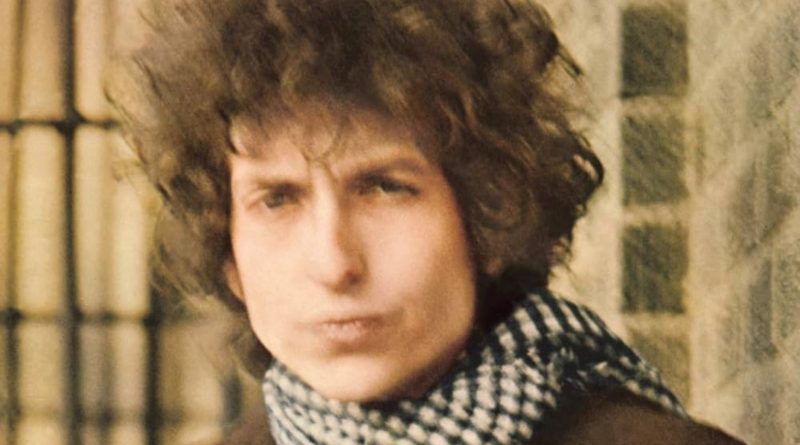
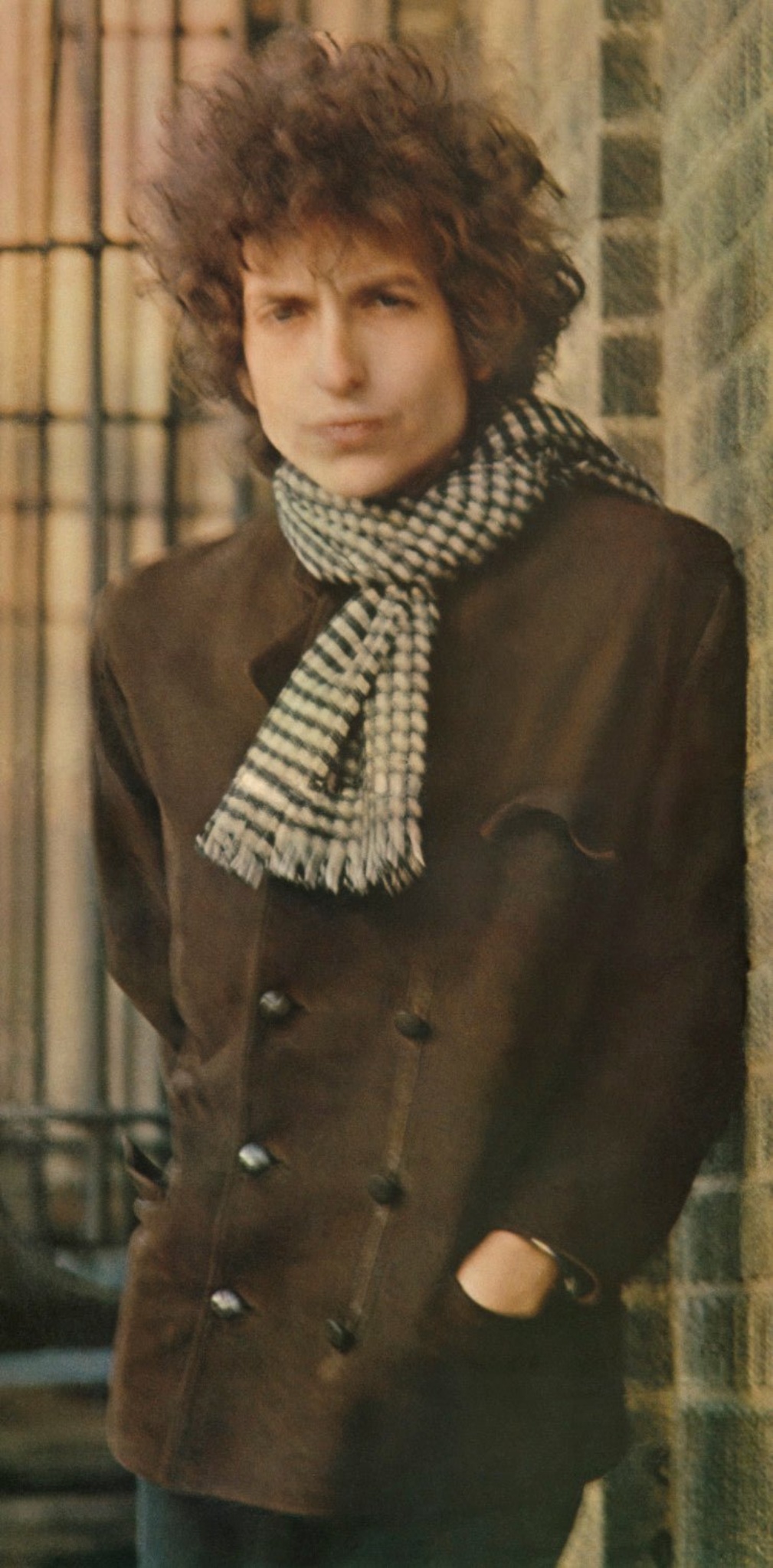
So too, the melodies reflected a desire to cross any and all barriers. The unabashed revelry and celebratory stance conveyed with “Rainy Day Women #12 & 35” offered an absolute inducement courtesy of its compelling chorus, “Everybody must get stoned!” On the other hand, Dylan held firm to his irascible attitude, as evidenced by his scowling expression on the front cover. “One of Us Must Know (Sooner or Later),” “Most Likely You Go Your Way and I’ll Go Mine,”“Leopard-Skin Pill- Box Hat” and “Temporarily Like Achilles” came across as bitter rebukes to thoughtless and unfaithful lovers. Still, his anger was never more apparent than the dismissal he dealt on “Positively 4th Street,” an absolute admonishment that left no doubt about his feeling of abandonment and betrayal.
On the other hand, there were several stunning love songs. The often-covered classic “Just Like a Woman,” kicked off by Kooper’s classic organ intro, suggested a certain amount of sympathy for his object of desire (“She aches just like a woman/but she breaks just like a little girl”). On the other hand, he’s willing to shift the tone when the situation dictates (“Everybody knows that baby’s got new clothes/But lately I see her ribbons and her bows/Have fallen from her curls”). Some might consider it an early feminist anthem, but certain flaws are underscored by Dylan’s otherwise assertive stance. Likewise, “Stuck Inside Of Mobile With the Memphis Blues Again” further hints at his frustration, another indication of the album’s tangled tapestry
That said, “Pledging My Time,” “4th Time Around,” “Absolutely Sweet Marie” and “I Want You” offers no doubt about Dylan’s romantic intentions. Likewise, Dylan offers an ode to his ideal women courtesy of “Visions of Joanna” and “Sad-Eyed Lady of the Lowlands,” placing them on pedestals in hopes they’d be inspired by his infatuation.
Released as a double album — rather rare at the time and considered an added price burden on the consumer — Blonde on Blonde still managed to find its way into the Top 10 in the U.S. and, perhaps more impressively, the Top 5 in the U.K. It also spawned two hit singles courtesy of “Rainy Day Women #12 & 35” and “I Want You.” So two, several of the songs went on to become intrinsic examples of Dylan’s poetic proficiency, and are considered standards even now.
AUDIO: Bob Dylan “I Want You”
As far as the album title itself is concerned, various theories exist as to its origins. Dylan himself was once quoted as saying, “Well, I don’t even recall exactly how it came up, but I know it was all in good faith … I don’t know who thought of that. I certainly didn’t.”
Other theories suggest it was inspired by Edie Sedgwick, one of Andy Warhol’s muses and a celebrity in New York society circles. Blonde-haired lovers and uncanny lookalikes Brian Jones and Anita Pallenberg were also said to have caught Dylan’s eye. So too, some have suggested that Dylan named the album as a bow to Brecht On Brecht, a musical tribute to the German playwright and poet that Dylan supposedly admired. Notably, the first letter in each words becomes an acronym that spells out the word “Bob.”
Some have attributed a more abstract meaning to the title. In his book Who Is That Man? In Search of the Real Bob Dylan, author David Dalton suggests the title is a double entendre that refers to a rock star’s stable of lovers as well as to Kazimir Malevich’s painting titled “Suprematist Composition: White On White.” A more practical explanation was borne out more recently when it was mentioned that Dylan and Robertson had a tendency to play face to face, each brandishing guitars bearing a light wood and pale blond finish.
Of course, Dylan’s legend is built on a certain mythology and the true meaning of the title may never be known, especially if it’s left to Dylan himself to explain. It hardly matters though. Blonde On Blonde remains a quintessential masterpiece and it’s likely both fans and scholars will pour over every note and nuance for centuries to come. After all, no individual artist commands fuller fascination.

- Someday Soon: Wilco’s ‘Being There’ Turns 30 - October 28, 2026
- High Voltage!: AC/DC’s ‘Dirty Deeds Done Dirt Cheap’ Turns 50 - September 21, 2026
- Remembering Dolly Parton - August 26, 2026
You May Also Like
-
 May 24, 2019
-
 May 18, 2021
-
 August 26, 2018
