
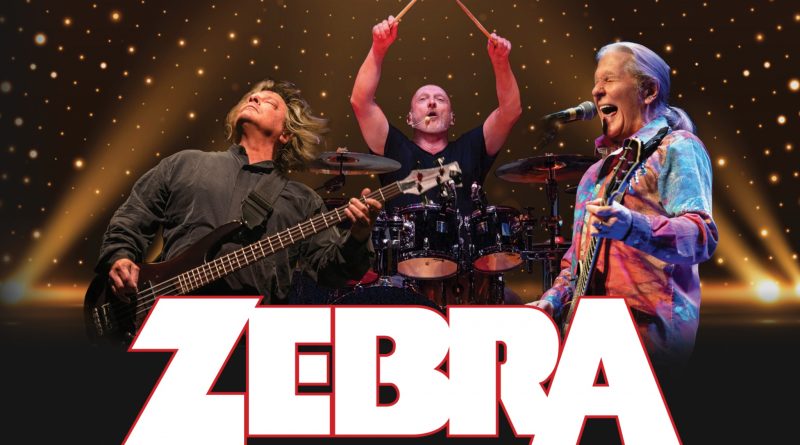
Zebra Returns with ‘V’
Randy Jackson tells all

Led Zeppelin’s decision to call it quits at the dawn of the 1980s — though admirable in the wake of John Bonham’s death — left a void in the world of rock ‘n’ roll.
The early ’80s were an embarrassment of musical riches. But Zeppelin had arguably been to the 1970s what The Beatles were to the ’60s: Four guys from England who had absorbed early rock and roll (in their case mostly the blues) but taken it in new and exciting directions. And in the process, they had dominated both arenas and album rock radio. Sure, Pink Floyd released The Wall to usher in the new decade — but they were in the process of tearing themselves apart and would not last much longer. The void left by Zeppelin was filled — albeit for a short time — by an American band called Zebra.
Zebra’s roots lay in Shepherd’s Bush, a New Orleans bar band that included singer-guitarist Randy Jackson and bassist Felix Hanemann. They got together in the early ’70s, playing covers (often of Zeppelin tunes) but called it quits after a couple of years. Jackson and Hanemann then teamed up with drummer Guy Gelso (a California native) and keyboardist Tim Thorson in a band called Maelstrom. When Thorson left not long after, the remaining trio carried on as Zebra.
For the remainder of the ’70s, Zebra toured relentlessly. They also began incorporating more originals into their set. The trio became an especially big draw on Long Island — to the point where all three band members wound up moving there! Both WBAB on the Island and WRNO in New Orleans began playing their music. Finally, after years of hard work, Zebra signed with Atlantic Records in 1982. A year later, their self-titled debut was released.
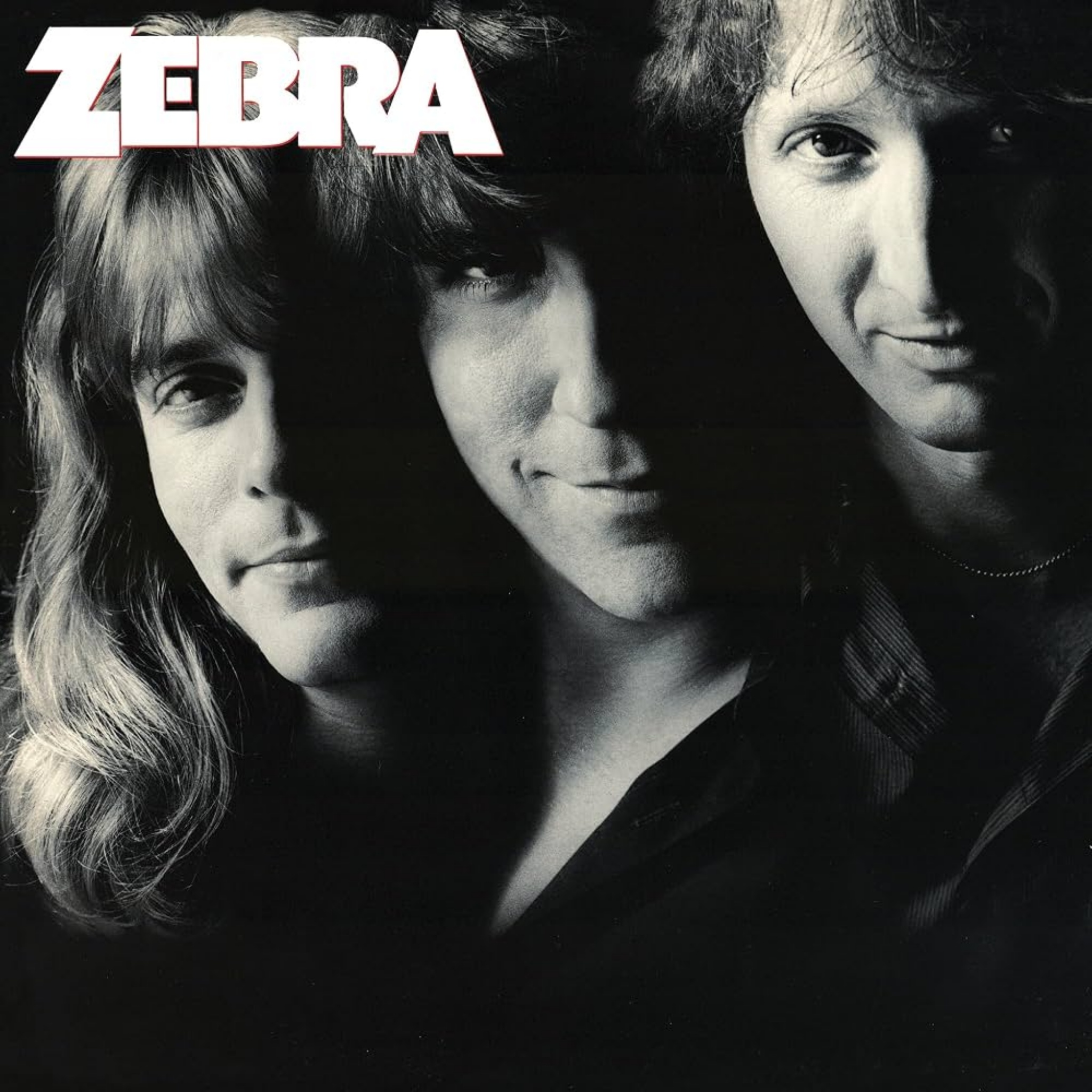
It may seem unlikely but Zebra (the album) was, for a brief time, the fastest selling debut in Atlantic Records history — no small feat for a label whose roster had included not only Zeppelin but everyone from Aretha Franklin to Crosby, Stills & Nash. The disc was produced by Jack Douglas — who had worked with John Lennon and Aerosmith, among others. Zebra, in fact, supported Aerosmith on some dates, not to mention bands like Cheap Trick, Loverboy and Journey. Two songs from the debut — the concise rocker “Tell Me What You Want” and the cosmic masterpiece “Who’s Behind the Door” — got tons of airplay on AOR stations. The stage seemed to be set for Zebra to be massive.
Needless to say, that didn’t happen — and it’s difficult to say why it didn’t. Zebra returned in 1984 with their sophomore set, No Tellin’ Lies. Again produced by Douglas, the album continued more or less in the vein of their debut. Side one in particular was top-notch, offering the rocking but pensive opener “Wait Until the Summer’s Gone,” the anti-hunting anthem “Bears” (a minor hit), the driving “I Don’t Care” and the ballad “Lullaby,” which was dedicated to John Lennon. If side two wasn’t quite up to that standard, it still offered the title track and “Little Things,” one of the few songs with bassist Hanneman on lead vocals.
No Tellin’ Lies charted briefly but wasn’t the success that some had expected. When Zebra finally returned in 1986 with their third effort 3.V, the musical landscape had changed and the album didn’t receive much promotion. The band called it quits not long after — at least as a studio act. But Zebra continued to tour off and on throughout the years. That said, their only album of new material, Zebra IV, came out back in 2003.
Now, more than two decades later, Zebra is back. Their new disc V arrived on Nov. 13th. It not only finds them re-energized but also reunited with Jack Douglas (who sadly passed away in May of this year). Zebra V includes 11 new songs — some that were written recently, others that have been part of the band’s live show for years. The opening trio of “Dog Day Night,” the more reflective “Conqueror Worm” and the infectious rocker “All Your Love” is right up there with the band’s best work. Other highlights include “Louisiana Way” (which despite its title resembles the Zep classic “Kashmir” musically) and the beautiful album closer “Eulalie.”
I recently interviewed Randy Jackson for Rock & Roll Globe about Zebra’s past and present. He was a pleasure to speak with.
I wanna start by asking you about the new album. It’s a long time coming! Tell me a little about recording it and about why now, after more than 20 years, is there a new Zebra LP?
That’s a good question. I think a lot of not doing it had to do with laziness — and grandkids! (laughs) You know, we’ve been playing live. People ask, “When are you gonna do a new record” occasionally. But the world wasn’t screaming for a new Zebra record. Our manager Dave Rothstein — I think he was the impetus to get us going on it. He said, “Get this record done. You guys should do it.”
So we started organizing material back in 2022 [or] 2023 — just going over all the material that I had over the years — and came up with the songs on the new record. They all seem to work together. They span 50 years, you know? It’s a lot to think the song you wrote in 1975 and the song you wrote in 2023 are gonna end up on the same record and sound like they should be! But I’m really happy with the record.
I wanna ask you about [working with] Jack Douglas. I’m guessing this is one of the last albums he produced?
Probably one of the last projects he worked on. I don’t know if it’s the last. But I was shocked by the whole thing; I had no idea that he was even sick while we were working together.
It must have been cool reuniting with him after so many years.
Oh yeah! His sense of humor was just off the charts. Just a great guy, besides being a great musician. And we picked up pretty much where we left off 40 years ago. I mean, I”d been in touch with Jack over the years — but we hadn’t worked on a project together.
He had kept up with the technology and everything . He was ready to go! And we did it a lot of different ways. He came to my studio, here on Long Island. [But] we did a lot of the work over the Internet too. You know, I was being the engineer and he would kinda be guiding me and giving me ideas. He came up with a lot of great stuff like he always does.… I’m gonna miss him.
The first song on the album is “Dog Day Night,” which is a strong leadoff track. I always wonder why a band chooses to lead with a certain track. Any thoughts about what went into that song or why you picked it to be the opener?
Well, just what you said: It’s strong. I think it’s one of the most uptempo songs on the record and it gets you going. It works really well live.
I think it was always gonna be the leadoff track. We had a bunch of different formats for the record; the songs were in a lot of different orders, but that song was always first.
I [also] wanted to ask about “I’ll Be There Beside You,” which I think you co-wrote with a couple of the guys from Skid Row.
Right. [Dave] The Snake [Sabo] and Rachel [Bolan].
What was it like working with them?
Easy. I mean, they’re great musicians. We just sat in a room together exchanging ideas. You know when it’s gonna work within the first five minutes. And it was just really comfortable working with these guys. We got several different ideas together and that was one of them. It always struck me as being special, that song. All I had to do was iron out the lyrics and arrangement — and it worked. It’s one of my favorite songs on the record.
I happen to like a lot of Zebra’s ballads. “Eulalie,” which closes the album, is really lovely. I’m wondering what the inspiration for [the song] was.
Felix and I were asked to do some music for a CD that a friend of ours was making. [He] was a DJ and he was making a CD of Edgar Allen Poe poems. Most of the people that were on it read the poems; it was like a reading of Edgar Allen Poe. But he was wondering if we could put some music to it. So I chose “Eulalie” and “The Conqueror Worm” to do.
These were done several years ago — just acoustic versions. But they worked! When I first started doing it, the way [Poe] uses English, you go, “Wow! How [are] you gonna make it sound rock and roll,” you know? But it did work. And Jack loved it. [He] added some stringed instruments and stuff — and they turned out good.
I know that, like a lot of musicians, The Beatles transformed you. You even wrote a song about John Lennon. I ask a lot of musicians this and I never get tired of hearing the answers. Do you remember the first time you heard or saw The Beatles?
Yeah, I was probably 9 years old. And a friend of mine from down the block — her name was Linda Rosenbaum — came to my front door saying “Look at this!” She was holding a record: it was the 45 of “I Wanna Hold Your Hand” and “I Saw Her Standing There.” I said, “What’s this?” She says, “Oh, it’s great. It’s The Beatles!” That was the first time I heard of them.
So we went inside and put it on my turntable and started listening. I think “I Wanna Hold Your Hand” was the first one that I heard. It was funny because I’d been listening to Les Paul and Mary Ford. You know, a lot of Frank Sinatra — classic ’40s kind of stuff. But Les Paul and Mary Ford was the closest thing to rock and roll I had heard until that point — and my brother and I loved it. But when I [heard] “I Wanna Hold Your Hand,” I knew I liked the way it sounded but I couldn’t figure out the beat! I couldn’t tap my foot to it, as weird as that sounds. I remember that.
Then a couple of months later, my parents took my brother and me to see The Beatles at City Park Stadium in New Orleans. That kinda sealed the deal! (laughs)
I don’t get awed by too many people. But I saw Paul McCartney walking down the street several years ago and almost levitated. He was just out with his wife — summer evening, walking down Third Avenue. My friend and I couldn’t believe it.
I think 500 years from now, they’ll look back at the 20th century and it’ll be Gershwin and The Beatles. It’ll be those two — especially The Beatles. [They made] such a big change, not only in music but in culture. That’s why you’d get that feeling when you see him walking down the street — ‘cause in the back of your mind you know.
It’s been 50 years — 51 years actually — since Zebra formed. And it’s the same three guys, which is almost unheard of in rock and roll. So I wanna ask you about that — and maybe what Felix and Guy bring to the band that’s unique. How is it that the three of you have been able to continue playing together for 50 years and counting?
Well, at this point we’re family. We had a little bit of struggle at the beginning. I think the biggest arguments we had were in the first few years.
I tell the people the story — Guy and I got into a fight. We were in New York and we couldn’t rehearse in the place we were living. So we were trying to rehearse at shows — you know, at the sound checks. And [we] needed to get there early to do it. So Guy and I are fighting ‘cause one of us isn’t ready. (laughs) I think Guy was ironing some clothes. We started getting into it verbally and I went over and I hit the ironing board — and we started wrestling. And it was the winter! I had my jacket on, I’m ready to roll — and Guy is butt naked at this point. He had a towel wrapped around him. We were rolling around on the floor and Felix comes out and says, “What the hell is goin’ on out here?!” And you know, it stopped pretty soon. But that was the worst of it, I think.
You know, Guy — when I saw him the first time, I could tell he was an unbelievable drummer. His favorite drummers were jazz drummers; Mitch Mitchell was the rock drummer he admired the most. And he had the chops back then; you didn’t see people that played like this.
Felix and I had been in a band before [called] Shepherd’s Bush. Felix wrote all the songs for Shepherd’s Bush [and] played rhythm guitar at that point. And he played some keyboards — so he could do both. So he brought his versatility to the band. And all three of us sang, which made a big difference. I think [that made it] easier to write songs and work together. You had everything you needed to write just about anything — and make it work.
At the end of the day, we’re all still here. We’re still alive and we became great friends — family at this point. I mean, Guy just turned 75 yesterday!
VIDEO: Zebra “Who’s Behind the Door”
Could I ask you about one old song? I think my intro to Zebra was “Who’s Behind the Door” and still think it’s a great song. Any memories of writing or recording that one?
I wrote it in an open G tuning. I had pieces of it on tape, and I was up at my grandparents’ house; they had a farm in Texas. It was a great place to go out at night and just hang out under the stars. It was a little town called Point, Texas. No lights at all. There was nothing around, you know? The population at that point I think was around 300! And it was there that I got the lyrics together. They came to me pretty quickly.
The song was really inspired by 2001: A Space Odyssey. I always loved the movie because they left so much up to interpretation. And I love The Moody Blues, too; their lyrics kinda did the same thing. So I was focused on making sure this borrowed from that idea. And it seemed to work. It’s everything you’re thinking about, you know? Why are we here, are we the highest on the evolutionary chain — which I really doubt — and where does it end? That’s really what it was. I was just trying to open people’s minds to other possibilities with the lyrics.
I know that the band is gonna be touring soon. Will it be a mix of new and old stuff?
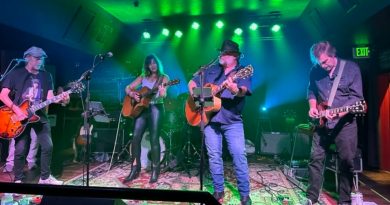
We’ve been playing a lot of the new material lately. We might be playing too much of it! I think the other [night] we ended up playing five of the new songs on the record. But yeah — there’s gonna be a combination. We’re probably gonna be able to do most of the new album live. I’d like to get those ready to go and maybe change the set list every night. And we always play the classic stuff. You know, everybody wants to hear “Tell Me What You Want” and “Who’s Behind the Door.” It’s Zebra, you know?
Guy — like I said, he’s 75 years old [and] he’s playing better than ever. I watch him and I’m exhausted! (laughs) Every day, he still amazes me.
I was thinking about this last weekend because Bill Wyman turned 90! It’s become commonplace for musicians in their 70s to play and sometimes even in their 80s. It’s funny because we wouldn’t have thought that would happen 30 years ago.
We can’t let go, you know? Grace Slick was the first to say “You can’t get old guys up there! Who wants to see that?” But it turns out people will still come out to see the old guys play. And I’m glad to do it.

- Zebra Returns with ‘V’ - November 25, 2026
- The Wild One, Forever: ‘Tom Petty and the Heartbreakers’ at 50 - November 9, 2026
- Gumboots: Paul Simon’s ‘Graceland’ Turns 40 - August 27, 2026
You May Also Like
-
 May 27, 2026
-
 September 11, 2026
-

