
Ovation Records: The Quadfather and Me
Looking back on the Chicagoland label where I began my music biz journey
At 24, I was a punk rock and roots music fan learning the record business from a man known as “The Quadfather.”
Ovation Records, tucked into an odd stone building in suburban Glenview, was an unlikely place to start. But between Nashville country hits, Chicago rock bands and a catalog I wished people still talked about, it gave me an education I couldn’t have gotten in college.
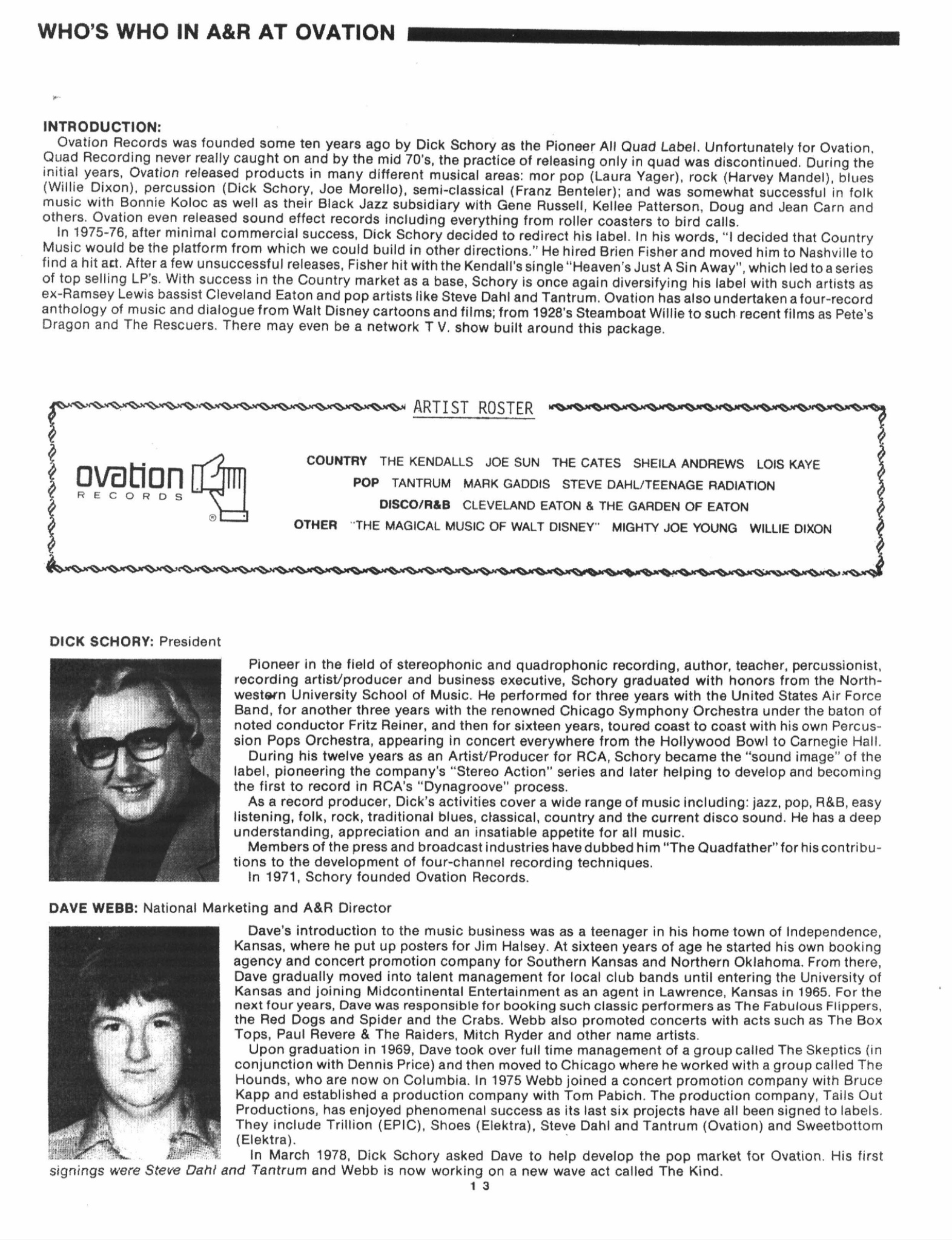
From 1969 until about 1982, Ovation operated out of Glenview, Illinois, and Nashville’s Music Row. Its founder and president was former jazz percussionist and orchestra leader Dick Schory, a onetime A&R man and Dynagroove sound developer for RCA out of that label’s long-defunct Chicago bureau.
Schory — a man just a few years younger than my dad — set up shop in an old stone-facade cave of a building at 1249 Waukegan Rd. in Glenview. Like Elektra’s Jac Holzman, he followed the music far outside his own jazz orientation. For decades, Schory was known as “The Quadfather,” given that all early Ovation releases were in quadraphonic sound — initially in the EV Stereo 4 format and later in the QS matrix format. (Not that many consumers actually had quadraphonic systems, and that was the trouble.) For his next act, he became the king of indie country.
Among the early artists on Ovation were underrated Chicago folkie Bonnie Koloc, Harvey Mandel, Willie Dixon, Mighty Joe Young, Sonny Curtis and Joe Morello. Koloc, one of the distinctive voices of Chicago’s Old Town folk scene alongside John Prine and Steve Goodman, made her recording debut with After All This Time. Mandel brought his adventurous blues-rock guitar to Get Off in Chicago, while Dixon’s Catalyst and Young’s Chicken Heads helped give the catalog its Chicago blues credentials. Catalyst earned Dixon a GRAMMY nomination in 1975, before my time at Ovation.
There was also the influential Black Jazz label — Doug Carn, Jean Carn, Cleveland Eaton, the Awakening, Walter Bishop Jr. and others. Pianist and producer Gene Russell provided Black Jazz’s musical direction, while Schory’s Ovation supplied financing and distribution — an unlikely alliance that produced an enduring catalog. Many of the masters have been reissued by Gordon Anderson’s Real Gone Music.
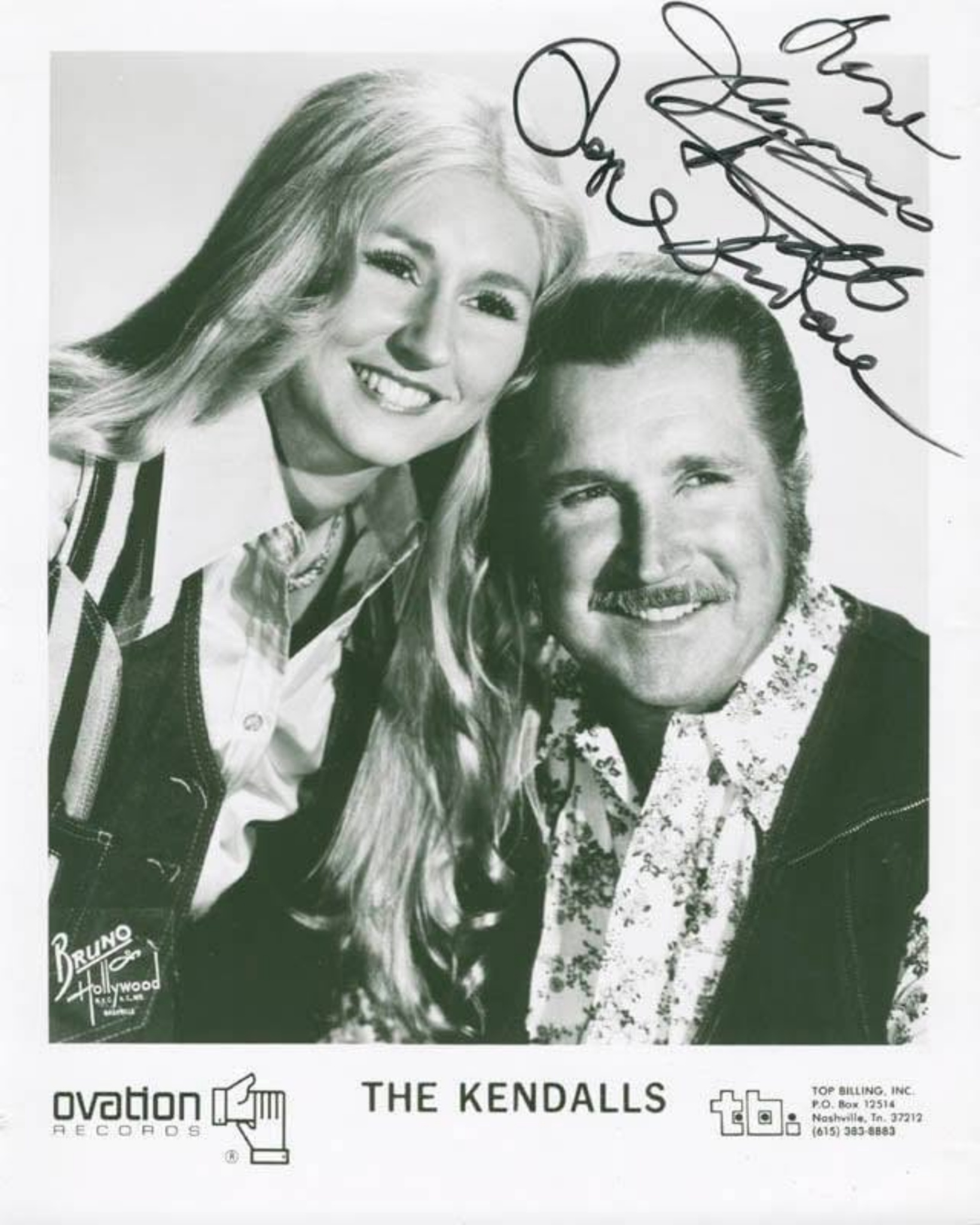
By 1977 or so, it was clear that quad was a nonstarter. Subsequent Ovation releases were in regular stereo. Schory opened an A&R office on Nashville’s Music Row, helmed by producer Brien Fisher, who brought in a father-and-daughter duo called the Kendalls. Royce and Jeannie Kendall had a smash hit with “Heaven’s Just a Sin Away,” which was certified gold and won a GRAMMY, plus CMA and ACM Awards and SESAC Song of the Year. (The trophies and plaques were prominently displayed in the Ovation office.) Subsequent hits with the word “sin” in the title — “It Don’t Seem Like Sinnin’ to Me,” “Teach Me to Sin” — would follow.
The radio promotion man at Ovation’s Nashville office was named Joe Sun. He was also an artist, and the deal was that if he could bring the Kendalls to No. 1 at country radio — which he did — he too would get a record deal. Joe had a No. 14 country hit of his own, “Old Flames (Can’t Hold a Candle to You),” later a No. 1 country hit for Dolly Parton. From my viewpoint, he was one of the first alt-country artists, more than a decade before No Depression. I had hoped to help him forge a path onto the Americana radar; in so many ways, he’d been a pioneer. Sadly, he passed away before I could make the overture.
In about 1978, Ovation reconstituted its pop A&R division at the home office in Glenview. My friend David Webb, whom I met when he was manager of Columbia Records new wave band Hounds, was named Vice President of Marketing and Director of A&R. Soon after I graduated from college, I was asked to become the label’s National Director of Publicity, Advertising & Artist Relations.
I was 24 and a punk rock, new wave and roots music fan. To my disappointment, by the time I arrived, no one seemed to be talking about Black Jazz, Harvey Mandel, Bonnie Koloc, Willie Dixon or Mighty Joe Young. The part of Ovation’s catalog that most appealed to me already seemed to belong to another era.
Webb remembered those artists as more than catalog filler: He felt Schory had signed them because he believed in their talent. Dixon, he recalled, was a steady album seller to the distributors, with manager Scott Cameron continually pressing the label to do more. Koloc had the makings of a hit artist, Webb felt, but needed national radio promotion and touring support. To his knowledge, neither materialized beyond Chicago. Apart from local independent promoters, he recalled, Schory didn’t invest in promotion people until Tantrum. Webb didn’t remember much radio or print promotion for Black Jazz, either. Talent was one thing; getting it heard was another.
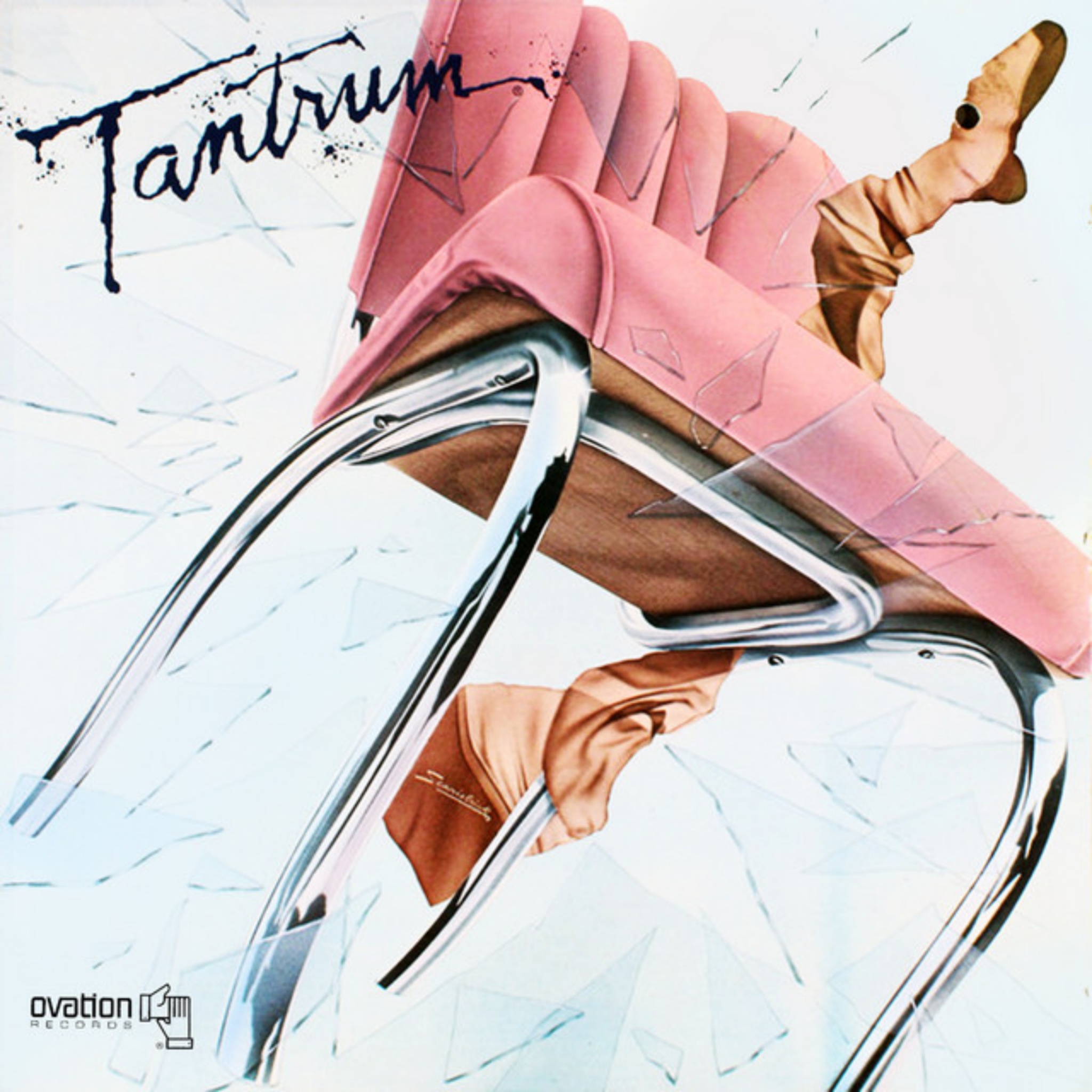
By then, the thrust of Ovation’s rock A&R was a local septet called Tantrum. The band was fronted by three female singers backed by four rock guys. It wasn’t the epicenter of my passions, or those of the new wave-centric rock critics of the day, but we managed to get them some good press, and they received strong AOR airplay nationwide, thanks to two tuneful albums, a self-titled debut and a powerhouse follow-up, Rather Be Rockin’.
I hadn’t done much traveling at that point in my life. That was about to change.
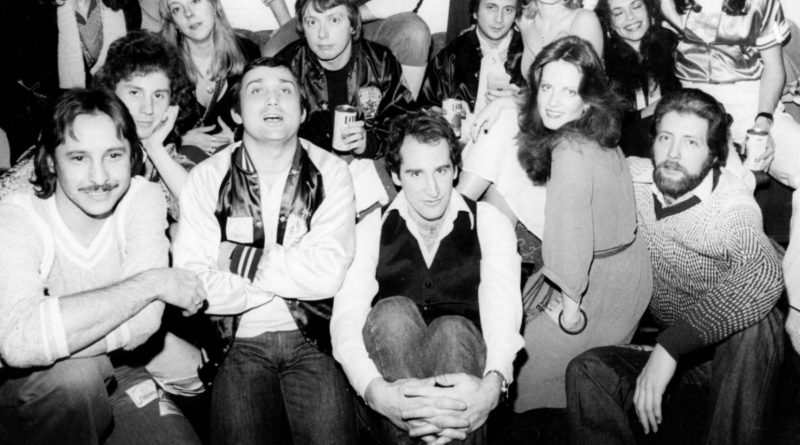
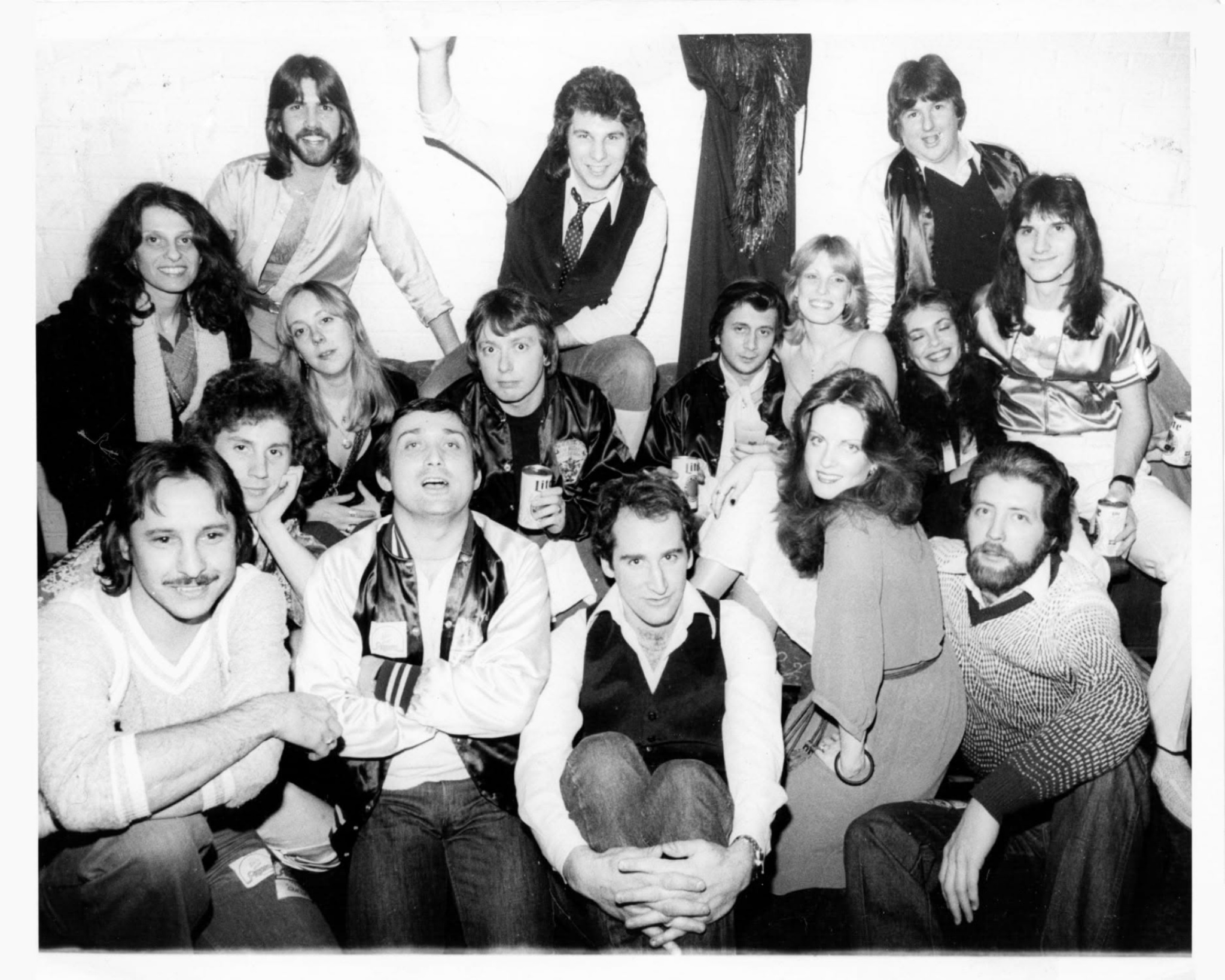
There was a lost, thoroughly late-’70s night in Cleveland with Tantrum at the Agora. All the Ovation execs were staying at Swingo’s, the rock ’n’ roll hotel, and the gathering included the full staff of PIKS Distribution — the label’s leading regional indie distributor — and programmers from WMMS-FM, one of the nation’s most influential album-rock stations. The photo (herein) tells the entire story.
I went to Nashville about three times on Ovation’s dime — my first trips there. It was a very different place in 1979. The only ballgame was Music Row, and this 20-something Yankee felt very much the outsider sitting in those offices. But eventually, I believe I earned the respect of the Nashville office, as well as the Nashville press. I was fortunate to find mentors and friends in critics Robert K. Oermann and John Lomax III, who invited me to their homes for listening sessions and helped deepen my knowledge of country — which admittedly hadn’t been great until then. In effect, they prepared me for a life in Americana that would begin 20 years later.
I also traveled to Tulsa to see one of our country artists, Sheila Andrews. Webb and I were seated next to Leon Russell at the venue. I went to Cleveland a couple of times with Tantrum and other rock acts — Cleveland was Ovation’s biggest distribution point, thanks to PIKS Distribution. I went to L.A. to help promote a Walt Disney soundtrack box set, visited Minneapolis for a company function and had a wild night in Richmond, Virginia, with the Robbin Thompson Band, a durable Southern rock band that Ovation had signed. I also went to St. Louis, hometown of the Kendalls, when the duo was awarded the key to the city.
Meanwhile, back in Chicago, Steve Dahl and Gary Meier were holding down morning drive at WLUP-FM, the Loop. Dahl, best known for his controversial 1979 Disco Demolition stunt at Comiskey Park, had made a homemade parody of Rod Stewart’s “Da Ya Think I’m Sexy?” called “Do You Think I’m Disco.” Webb heard it while driving to work on I-294 and laughed so hard he pulled off at a ramp near O’Hare. What had been intended as a comedy bit sounded to him like a single.
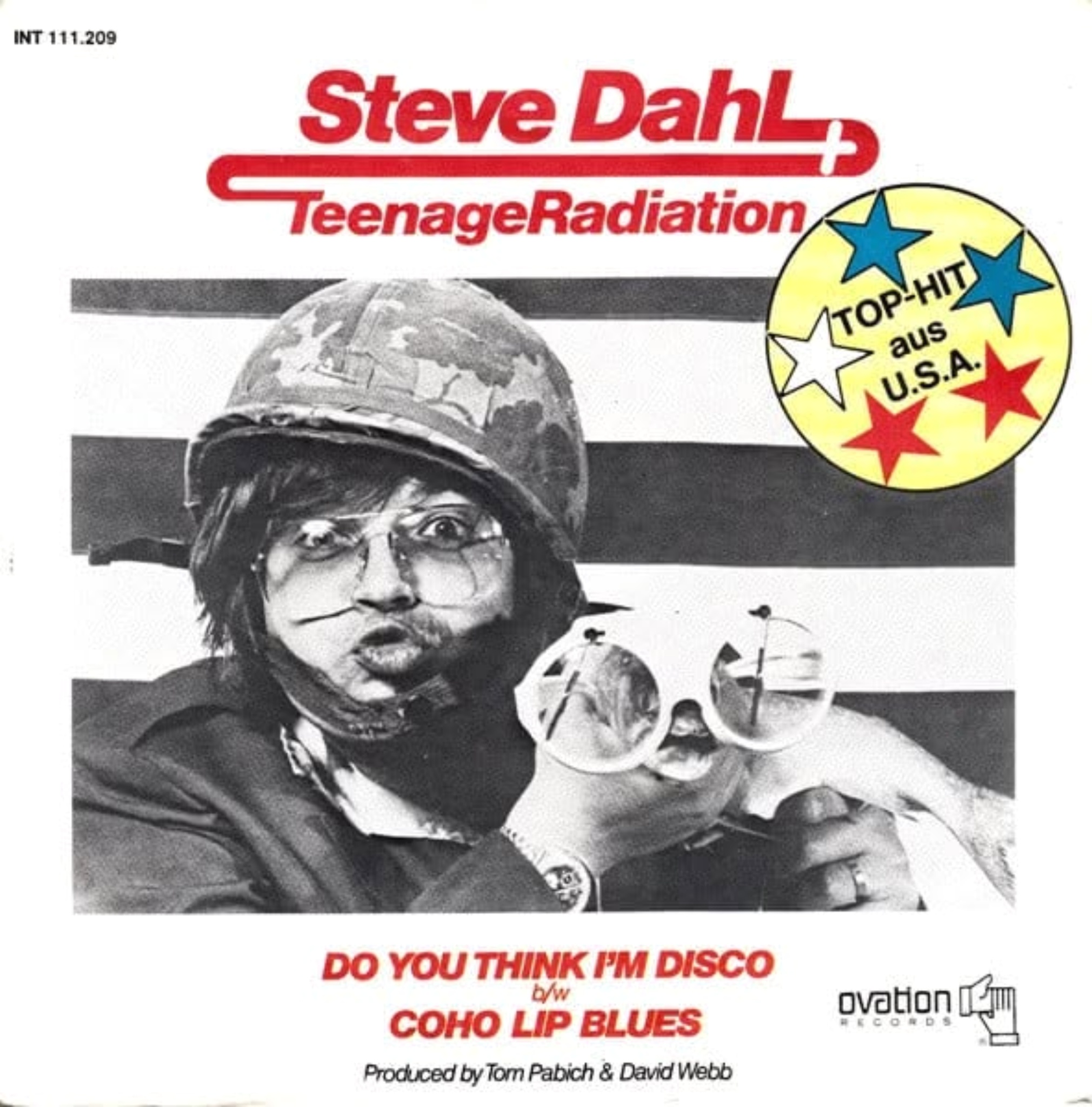
With Schory’s blessing, Webb called Dahl after his show. Dahl came to the office that afternoon, and they worked out a three-single deal with album options. Webb and Tom Pabich produced the record at Streeterville with engineer Jimmy Dolan, Dahl’s band Teenage Radiation and Kendal Kardt on keyboards. The picture-sleeved 45 climbed to No. 58 on Billboard’s Hot 100; Webb recalled sales exceeding 500,000 copies. In hindsight, I have some very mixed feelings about death wishes to disco.
I was trying to push for some new wave on Ovation, but there was still a belief that new wave and AOR airplay didn’t mix — and Ovation was radio-driven. Our radio promo people were old-school. But the label did sign a quirky, hyper-melodic power-pop band called Citizen. Webb found them while working his way through a closet stacked to the ceiling with unsolicited reels and cassettes. He believed anyone who had made a song and sent it in deserved a hearing. “Most painful thing I have ever done in my life!” he recalled. But buried in the submissions was a video for “I’m a Citizen,” with just a name and phone number. Webb called Donn Marier, and he and Tom Pabich went to meet the musicians.
The musicians wore A Clockwork Orange-like uniforms with big shoulder pads. They had one of the first rock videos to be added to MTV. They were very cool. We got them some press and many CMJ college radio adds. But the record fell short of breaking through.
AUDIO: Citizen “Secret Rock ‘n’ Roller”
Ovation also distributed the Los Angeles-based Regency Records label, which had the Minneapolis band Sussman Lawrence, fronted by a young Peter Himmelman. But Peter and I didn’t connect until much later, after we had both moved west. In addition to recording and touring, Peter writes a riveting and often controversial Substack these days, by the way.
Meanwhile, the country division in Nashville had signed honky-tonker Vern Gosdin and songwriter Max D. Barnes and kept turning out country hits. But it became clearer each day that the pop division was running out of steam. That’s not to say there weren’t pop signings: U.K. soul-pop band the Brothers Jones and — drum roll — Judas Priest (as you were) were the final ones. The Priest connection was a licensing deal Webb arranged with England’s Gull Records for Sad Wings of Destiny and Rocka Rolla. According to Webb, only Sad Wings came out on Ovation; the label did not pick up the option. Sad Wings nevertheless became one of the label’s most dependable sellers.
AUDIO: Judas Priest “Victim of Changes”
I was neither surprised nor particularly saddened when, in 1981, I was laid off along with several other people in the Chicago office. I had maintained a second career as a freelance music journalist, occasionally creating a conflict of interest when I was brutally honest in my writing. That is to say, I pissed off the program director of a short-lived Chicago album-rock radio station, which consequently boycotted Ovation releases. My bosses were not pleased.
I’d also been writing a lot about artists on I.R.S. Records, most of whom I seemed to like. So after a few years back in journalism, writing for the Chicago Reader, Jann Wenner’s Record magazine, Trouser Press and the Illinois Entertainer, I packed my bags for L.A. in February 1984 to work for my favorite label of the day, I.R.S. Records.
Ovation continued after my departure without a publicity department, its focus increasingly on the Nashville office and country-radio hits.
I owe Dick Schory a lot. He gave me my first music PR gig — more than a decade before the advent of email. The only items on my desk were a phone, a Rolodex, an IBM Selectric typewriter and an always-full coffee mug. Thanks to that telephone and bottomless coffee cup, I forged a world of contacts in cities across the country. The label always lacked a certain hip factor. But if I could publicize Tantrum creditably enough, I was pretty sure I could handle the Fleshtones and R.E.M.
The ivy-covered, boulder-facade cave at 1249 Waukegan Rd. in Glenview was a holistic medicine center when I last drove by it. I’m glad it wasn’t torn down. It’s hardly a stop on the Chicago music history tour alongside Chess Records, Vee-Jay Records, Record Row, Maxwell Street and the Checkerboard Lounge are. Dick Schory is still alive. And I’m still in touch with David Webb, nowadays residing in the growing music mecca of Tulsa — present-day home to the Dylan and Guthrie museums, not to mention Cain’s Ballroom, which has rocked since 1930.
Sadly nearly every other Ovation executive — the Nashville bureau chief, the entire promotion department, the sales “street fighter,” the head of international, the accountant — have passed on.
More than four decades later, I find myself thinking about Ovation Records again. It was an odd little label in an odd stone building in suburban Chicago, caught somewhere between quadraphonic sound, Nashville country and the music I thought was going to change the world.
Ovation didn’t always know what to do with that 24-year-old punk-rock and roots-music fan it had hired.
But it gave him a telephone, a Rolodex … and a start.

- Ovation Records: The Quadfather and Me - October 14, 2026
- Poi Dog Pondering: Aloha to Austin - October 30, 2024
You May Also Like
-
 June 2, 2020
 -
 June 17, 2024
 -
 June 11, 2024
